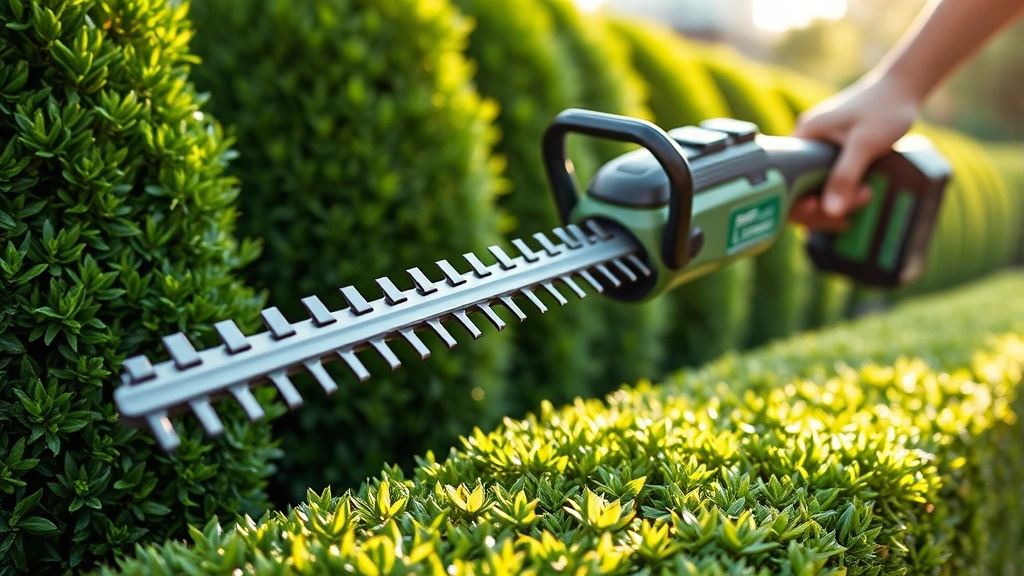
Gas vs Electric Hedge Trimmers: Sustainability Insights
Choosing the right hedge trimmer involves more than just considering cutting power and convenience. The environmental impact of your gardening tools plays a significant role in your overall sustainability goals. Whether you opt for a gas powered hedge trimmer or switch to an electric alternative, understanding the ecological consequences of your choice helps you make a decision aligned with your values and long-term environmental commitments.
The debate between gas and electric hedge trimmers reflects broader conversations happening across the landscaping and gardening industries. As climate awareness grows and homeowners become increasingly conscious of their carbon footprints, the tools we use for yard maintenance deserve careful consideration. This comprehensive guide explores both options through a sustainability lens, examining emissions, energy consumption, maintenance impacts, and long-term environmental effects.

Environmental Impact of Gas Powered Hedge Trimmers
Gas powered hedge trimmers rely on internal combustion engines that burn fossil fuels, creating direct emissions that contribute to air pollution and climate change. A typical gas hedge trimmer produces approximately 80 grams of carbon dioxide per hour of operation, according to research from environmental monitoring organizations. These emissions include not just CO2, but also nitrogen oxides (NOx) and volatile organic compounds (VOCs) that harm air quality and contribute to ozone formation.
The fuel consumption of gas trimmers represents a continuous environmental cost. These tools typically consume between 0.5 to 1.5 liters of fuel per hour, depending on engine size and operating conditions. This fuel dependency creates a supply chain impact, involving extraction, refining, transportation, and distribution—each stage contributing to environmental degradation. When you consider that many homeowners use their hedge trimmers for multiple sessions throughout the growing season, the accumulated fuel consumption becomes substantial.
Beyond direct emissions, gas powered equipment often requires two-stroke engines that demand fuel mixed with oil. This mixture means that a portion of fuel doesn’t combust completely and instead exits as unburned hydrocarbons. Studies from the EPA on small spark ignition engines indicate that small non-road engines like those in hedge trimmers contribute significantly to local air pollution despite their individual size.
The lifecycle of a gas powered hedge trimmer extends beyond operation. The manufacturing process for fuel tanks, carburetors, and combustion components requires energy and materials extraction. Additionally, the ongoing need for fuel purchases perpetuates dependence on fossil fuel infrastructure, supporting industries that resist transitions toward renewable energy sources.
Electric Hedge Trimmers and Grid Energy Considerations
Electric hedge trimmers present a cleaner operational profile, but their environmental impact depends significantly on how your local electricity grid generates power. In regions powered primarily by renewable energy sources like wind and solar, electric trimmers approach near-zero operational emissions. However, in areas relying heavily on fossil fuel power plants, the emissions associated with charging batteries shift upstream to generation facilities.
Modern battery-powered hedge trimmers typically use lithium-ion technology, offering improved efficiency compared to older nickel-cadmium batteries. A full charge for most residential electric trimmers requires approximately 0.5 to 1.5 kilowatt-hours of electricity. If your grid’s average carbon intensity is 400 grams of CO2 per kilowatt-hour, charging a trimmer battery produces roughly 200-600 grams of CO2 equivalent—often less than a single hour of gas engine operation.
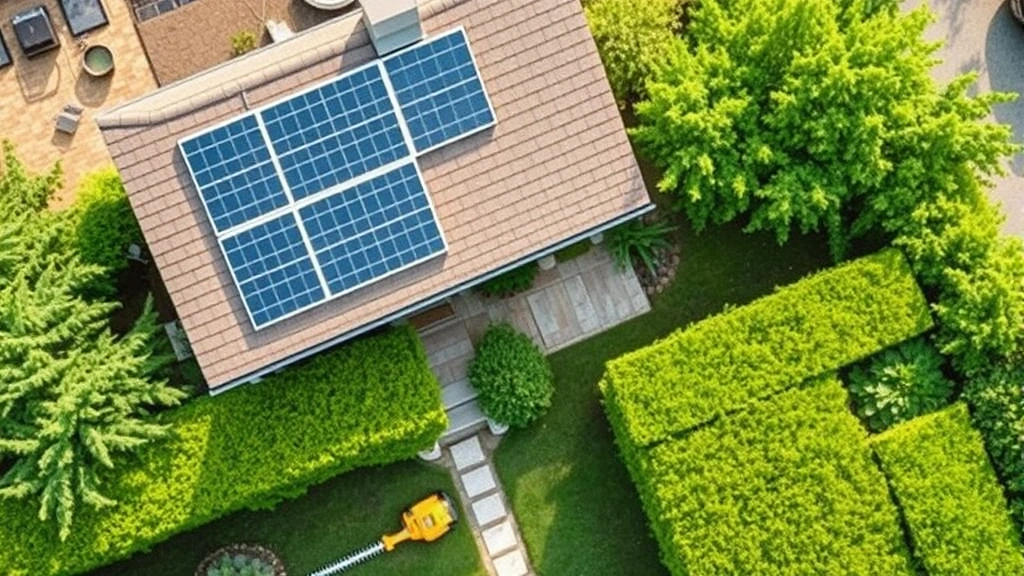
The advantage of electric tools becomes apparent when considering sustainable energy solutions available to homeowners. If you pair your electric hedge trimmer with rooftop solar panels or source renewable energy from your utility provider, you can achieve genuinely zero-emission yard maintenance. This flexibility represents a significant sustainability advantage unavailable with gas-powered alternatives.
Corded electric trimmers eliminate battery concerns entirely, drawing power directly from household circuits. These options work excellently for properties where extension cords reach all trimming areas, providing unlimited runtime and the simplest energy profile. The power consumption remains modest—typically 500-600 watts during operation—making them efficient additions to household electricity use.
Emissions Comparison and Air Quality
Direct emissions comparisons reveal stark differences between technologies. A gas powered hedge trimmer produces approximately 500-800 grams of CO2 per hour, while the same trimming task using an electric tool powered by average U.S. grid electricity produces 100-150 grams of CO2 equivalent. In renewable-powered regions, electric trimmers produce virtually zero operational emissions.
Beyond carbon dioxide, gas trimmers emit harmful particulates and volatile organic compounds that degrade local air quality. These emissions prove particularly concerning in residential neighborhoods where children, elderly residents, and people with respiratory conditions live in close proximity. The American Lung Association has documented the air quality impacts of small gas engines, noting that a single gas-powered landscape tool can produce emissions equivalent to multiple automobiles.
Electric trimmers eliminate these harmful local emissions entirely. By choosing electric alternatives, you protect your own respiratory health and that of your neighbors. This becomes especially important if you’re trimming hedges in densely populated areas or near schools and parks where vulnerable populations congregate.
The cumulative air quality benefit across communities represents an underappreciated advantage of electric yard tools. If just 30% of homeowners in a neighborhood switched from gas to electric trimmers, local air pollution from landscaping activities would decline dramatically, creating measurable improvements in community health outcomes.
Lifecycle Analysis and Manufacturing Impact
A comprehensive sustainability assessment requires examining the entire lifecycle of both trimmer types, from raw material extraction through end-of-life disposal. Gas powered hedge trimmers involve mining for metals, petroleum extraction for fuel system components, and manufacturing processes that consume significant energy. The fuel infrastructure required to support gas equipment—refineries, distribution networks, storage facilities—represents substantial cumulative environmental investment.
Battery-powered electric trimmers do involve manufacturing impacts, particularly in lithium extraction for battery production. However, modern battery technology has improved dramatically, with manufacturers implementing better extraction practices and recycling programs. The environmental cost of battery production is recovered through operational efficiency within 1-2 years of use, after which the electric trimmer operates with net environmental benefit.
When examining green technology innovations transforming our future, battery recycling represents a critical advancement. Most modern lithium-ion batteries can be recycled at 90%+ efficiency, recovering valuable materials and reducing the need for new extraction. Gas engines, by contrast, contain no comparable recycling value—old engines typically end up in landfills where they contribute to soil and water contamination through leaked oil and fuel residues.
The manufacturing footprint of electric tools continues to improve as production scales up and renewable energy powers more factories. Many leading electric tool manufacturers have committed to carbon-neutral manufacturing by 2030, meaning the embodied carbon of new trimmers will decrease significantly. Gas equipment manufacturers face no such transition pressure, perpetuating high-emission manufacturing processes.
Noise Pollution and Community Impact
Often overlooked in sustainability discussions, noise pollution represents a genuine environmental and quality-of-life concern. Gas powered hedge trimmers operate at 85-100 decibels, comparable to heavy traffic or a lawnmower. Prolonged exposure to this noise level causes hearing damage and creates stress in humans and wildlife. Electric trimmers typically operate at 70-80 decibels, significantly quieter and less disruptive to neighborhoods.
The noise reduction benefit extends beyond comfort. Research demonstrates that noise pollution affects wildlife behavior, migration patterns, and breeding success. Birds and small mammals experience stress from continuous mechanical noise, disrupting their natural rhythms. By choosing quieter electric equipment, you contribute to a more peaceful environment for all community members, human and animal alike.
Noise regulations in many municipalities restrict gas-powered equipment use to specific hours, typically 8 AM to 5 PM on weekdays. Electric trimmers face no such restrictions in most areas, allowing you to maintain your hedges at times convenient to your schedule without disturbing neighbors. This flexibility represents a practical sustainability advantage alongside the environmental benefits.
Cost Analysis and Sustainability Economics
The economic dimension of sustainability deserves careful consideration. Gas powered hedge trimmers typically cost $150-400 for residential models, while electric alternatives range from $100-500 depending on battery capacity and brand. The initial purchase price appears comparable, but operating costs diverge significantly.
A gas trimmer consuming 1 liter of fuel per hour at current prices ($2-3 per liter) costs $2-3 per operating hour. Over a typical growing season of 20-30 hours of trimming, annual fuel costs reach $40-90. Over a trimmer’s 5-10 year lifespan, fuel expenses accumulate to $200-900. Battery charging, by comparison, costs $0.10-0.30 per charge, or $2-6 per season, totaling $10-60 over the equipment lifetime.
Maintenance costs amplify the economic advantage of electric trimmers. Gas engines require regular tune-ups, spark plug replacements, air filter changes, and carburetor cleaning—annual maintenance costing $50-150. Oil changes, fuel stabilizer purchases, and seasonal winterization add further expenses. Electric trimmers need occasional blade sharpening and battery inspection, costing $10-30 annually.
When calculating true operating costs, electric trimmers prove 60-70% cheaper than gas alternatives over their lifetime. This economic advantage aligns perfectly with environmental benefits, demonstrating that how to reduce your environmental footprint often involves financially sensible choices.
Maintenance Requirements and Waste Generation
The maintenance demands of gas equipment create additional environmental impacts beyond operational emissions. Oil changes produce hazardous waste requiring special disposal. Many homeowners improperly dispose of used oil, contaminating groundwater and soil. Spark plugs, air filters, and fuel filters generate e-waste and manufacturing byproducts. Over a trimmer’s lifetime, maintenance waste accumulates significantly.
Battery-powered electric trimmers generate minimal maintenance waste. Modern lithium-ion batteries last 3-5 years and can be recycled through manufacturer programs or certified e-waste facilities. The environmental cost of battery recycling is minimal compared to the lifecycle benefits of avoiding years of gas consumption and oil disposal.
Seasonal storage also differs between technologies. Gas equipment requires fuel stabilizer additives and careful winterization to prevent carburetor damage and fuel degradation. These additives contain chemicals that persist in the environment if improperly disposed. Electric trimmers require only basic storage—charge the battery before winter and store in a dry location. This simplicity eliminates chemical storage and disposal concerns.
The blade maintenance aspect applies equally to both technologies, but electric trimmers’ superior balance and lighter weight often result in less blade damage, requiring fewer replacements. Gas engine vibration can loosen blades and cause damage more frequently, generating more replacement parts waste.
Making Your Sustainable Choice
Selecting between gas and electric hedge trimmers requires evaluating your specific situation while prioritizing sustainability. Consider your property size, hedge thickness, and available charging infrastructure. For most residential properties with typical hedge maintenance needs, electric trimmers deliver superior performance with dramatically lower environmental impact.
If you have extensive hedge work or particularly thick growth, modern electric trimmers with larger batteries provide adequate runtime. Battery technology continues improving, with new models offering 45-60 minutes of continuous operation—sufficient for most homeowner applications. For occasional professional landscapers, investing in multiple batteries ensures uninterrupted workflow without compromising sustainability.
Connect your trimmer choice to broader sustainability goals by exploring advantages of electric vehicles and similar technology transitions. Just as electric vehicles reduce transportation emissions, electric yard tools contribute to comprehensive household decarbonization strategies. Each tool you electrify reduces your overall carbon footprint and supports market demand for cleaner technologies.
For those committed to maximum sustainability, combining electric trimmers with renewable energy sources creates genuinely zero-emission yard maintenance. Installing solar panels to power your tools represents a long-term investment that eliminates fossil fuel dependence from this aspect of home management.
Consider also the broader message your equipment choice sends to your community. Neighbors observing quiet, clean electric tools may reconsider their own gas equipment purchases. This social influence multiplier effect means your sustainability choice influences others, creating broader environmental benefits beyond your individual impact.
Research specific models before purchasing, examining battery runtime, blade quality, warranty coverage, and manufacturer sustainability commitments. Leading manufacturers like Makita, DeWalt, and EGO have invested heavily in battery technology and offer comprehensive recycling programs. Supporting companies committed to sustainability encourages continued innovation in this direction.
FAQ
Are electric hedge trimmers as powerful as gas models?
Modern electric hedge trimmers deliver comparable cutting power to gas alternatives for typical residential hedges. They excel at medium-thickness branches and handle most common hedge types effectively. For extremely thick or woody hedges, gas models retain a slight advantage, but this scenario applies to only 5-10% of homeowner situations. Battery technology improvements continue narrowing this gap.
How long do electric trimmer batteries last?
Quality lithium-ion batteries in electric trimmers typically provide 3-5 years of reliable service before capacity degrades noticeably. Most manufacturers warranty batteries for 2-3 years. With proper care—avoiding complete discharge and extreme temperatures—many batteries exceed rated lifespan. Replacement batteries cost $80-200, far less than years of gas and maintenance costs.
Can I use extension cords with corded electric trimmers?
Yes, corded electric trimmers work well with properly rated extension cords. Use 12-gauge cords for runs under 50 feet and 10-gauge for longer distances to maintain adequate power delivery. Corded models eliminate battery concerns and provide unlimited runtime, making them excellent for properties where extension cord reach covers all trimming areas.
What’s the environmental impact of charging electric trimmer batteries?
Battery charging environmental impact depends on your grid’s energy sources. In renewable-powered regions, charging produces virtually zero emissions. Even in areas relying on fossil fuels, a typical charge produces 100-200 grams of CO2 equivalent—less than 30 minutes of gas trimmer operation. Pairing electric tools with home solar panels achieves genuine zero-emission yard maintenance.
How do I dispose of old gas trimmer equipment?
Most municipalities have hazardous waste disposal programs accepting old gas equipment. Contact your local waste management facility for drop-off locations and procedures. Never dispose of gas equipment in regular trash, as fuel residues contaminate landfills. Some retailers offer trade-in programs providing discounts on new electric equipment in exchange for old gas tools.
Are battery-powered trimmers suitable for commercial landscapers?
Increasingly, yes. Professional landscapers now use battery-powered equipment for efficiency and reduced operating costs. Investing in multiple batteries enables continuous operation throughout the day. The reduced noise allows early morning and evening work without disturbing residential areas, expanding service availability and customer satisfaction.
What maintenance does an electric trimmer require?
Electric trimmers need minimal maintenance: occasional blade sharpening, battery inspection before seasonal storage, and checking for debris buildup around the motor. Most require no more than 30 minutes of annual maintenance. Compare this to gas equipment requiring spark plug changes, air filter replacement, oil changes, and seasonal carburetor cleaning—often requiring professional service.


