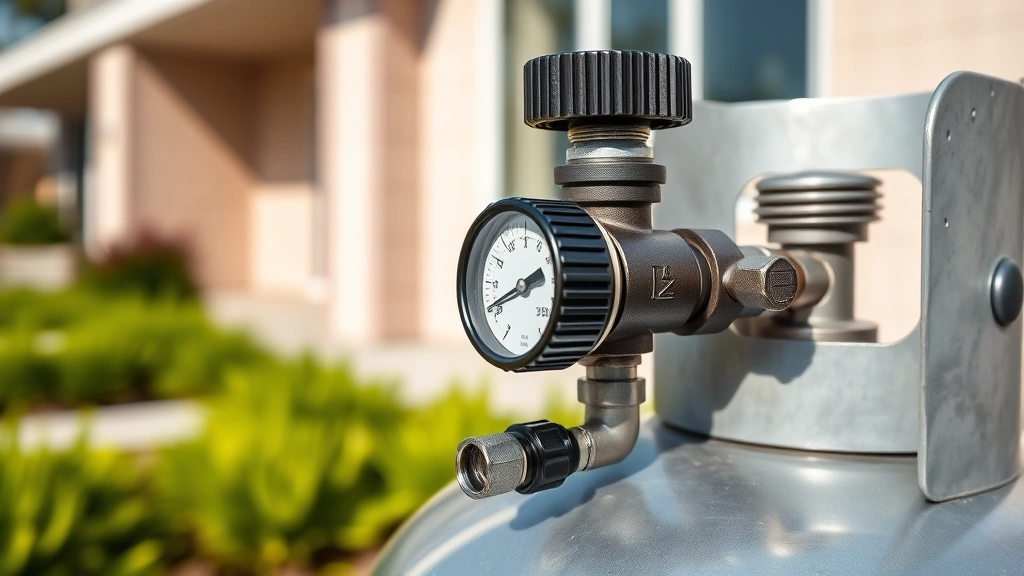
Propane vs Natural Gas: Key Differences Explained
The question “is propane natural gas?” is more nuanced than a simple yes or no answer. While both propane and natural gas are fossil fuels extracted from the earth and used for heating, cooking, and energy production, they are distinct substances with different properties, sources, and environmental implications. Understanding these differences is crucial for homeowners and businesses making energy decisions that affect both their wallets and their carbon footprint.
Many people use the terms interchangeably, but this confusion can lead to incorrect purchasing decisions, safety oversights, and missed opportunities for optimizing energy efficiency. This comprehensive guide breaks down the key distinctions between propane and natural gas, exploring their chemical compositions, extraction methods, storage requirements, efficiency ratings, cost structures, and environmental impact. Whether you’re considering switching fuels or simply want to understand what powers your home, this article provides the clarity you need.
Are Propane and Natural Gas the Same Thing?
No, propane and natural gas are not the same thing, though they are often confused because they serve similar purposes and come from comparable sources. Both are hydrocarbon gases used as fuels, but they differ fundamentally in their chemical structure, how they’re processed, and how they’re delivered to consumers.
Natural gas is primarily methane (CH₄) and occurs naturally in underground deposits. It travels through extensive pipeline networks directly to homes and businesses. Propane, conversely, is a byproduct of natural gas processing and crude oil refining. It’s stored in portable tanks and requires different distribution infrastructure.
The confusion likely stems from the fact that both fuels provide similar heating capabilities and are commonly used in residential and commercial settings. However, treating them as interchangeable can be problematic—appliances designed for one fuel cannot safely operate on the other without modification.

Chemical Composition and Properties
Natural Gas Composition: Natural gas is predominantly methane (typically 70-90%), with smaller amounts of ethane, propane, butane, and nitrogen. The simplicity of its molecular structure (one carbon atom bonded to four hydrogen atoms) makes it lightweight and highly gaseous at standard temperatures and pressures.
Propane Composition: Propane contains three carbon atoms and eight hydrogen atoms (C₃H₈). This heavier molecular structure means propane remains liquid under moderate pressure or at cold temperatures, making it storable in portable tanks—a key advantage over natural gas.
The density difference is significant: propane is approximately 1.5 times heavier than natural gas. This density difference affects how each fuel behaves in appliances, storage systems, and distribution networks. Natural gas, being lighter, rises and dissipates quickly, while propane settles and accumulates, which has important safety implications for leak detection and ventilation requirements.
Both fuels are odorless in their natural state. For safety reasons, utility companies add mercaptan—a chemical odorant—to both fuels so users can detect leaks by smell. This is why natural gas and propane have that distinctive “rotten egg” odor.
Extraction and Production Methods
Understanding how these fuels are sourced reveals important differences in their availability and environmental footprint. Learn more about whether natural gas is renewable or nonrenewable to better contextualize their sustainability profiles.
Natural Gas Extraction: Natural gas is extracted directly from underground reservoirs through drilling operations. Wells are drilled into geological formations containing natural gas deposits, typically at depths of 1,000 to 30,000 feet. The gas flows naturally due to pressure within the reservoir or is pumped to the surface. Once extracted, natural gas undergoes minimal processing—primarily dehydration to remove water vapor and separation of liquid hydrocarbons—before entering pipeline distribution systems.
Propane Production: Propane is not extracted directly from the ground. Instead, it’s produced as a byproduct through two processes: natural gas processing and crude oil refining. When natural gas is extracted, it contains propane and other heavier hydrocarbons that must be separated. Similarly, crude oil refining produces propane as a byproduct. Approximately 70% of propane supply comes from natural gas processing, while 30% comes from oil refining. This makes propane inherently dependent on other energy extraction activities.
This production difference has environmental implications. Propane production is intertwined with oil and gas industries, meaning reducing propane consumption doesn’t necessarily reduce overall fossil fuel extraction—the propane will be produced regardless as a byproduct. Natural gas, by contrast, is extracted as a primary product, so decreased demand can reduce extraction operations.
Storage and Distribution Systems
The storage and distribution differences between these fuels represent one of the most significant practical distinctions for consumers and affect infrastructure investments, accessibility, and reliability.
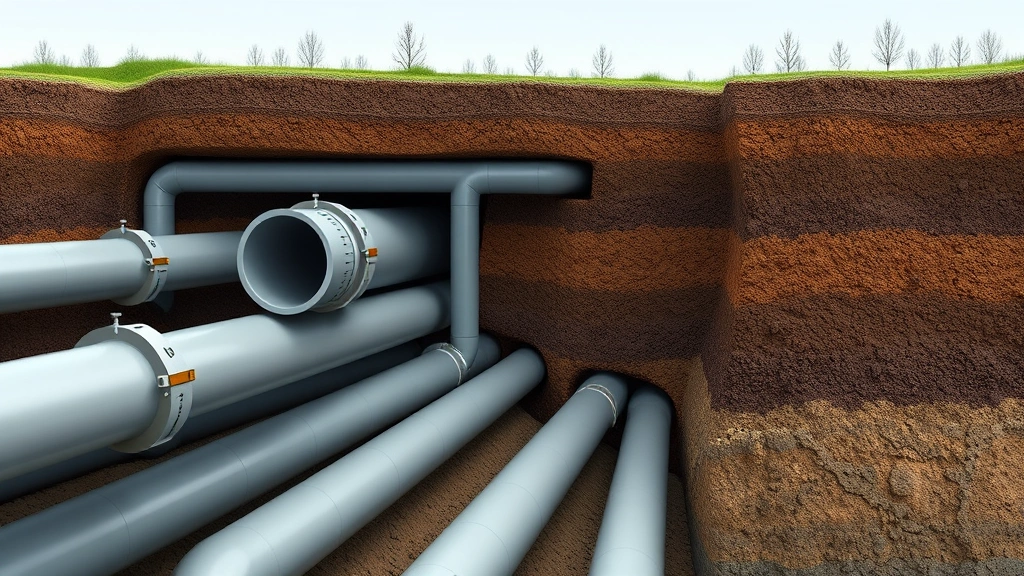
Natural Gas Distribution: Natural gas travels through extensive underground pipeline networks from production facilities to distribution centers and ultimately to consumer homes and businesses. These pipelines operate under pressure, keeping gas in its gaseous state. The system requires significant infrastructure investment but offers reliability and convenience—gas flows continuously without requiring consumer action or tank management. However, pipeline dependence means rural areas may lack access, and natural gas availability is geographically limited by existing infrastructure.
Propane Storage and Distribution: Propane’s higher density allows it to be liquefied under moderate pressure (around 200 psi) or at cold temperatures, making it storable in portable tanks. Consumers can store propane on-site in aboveground or underground tanks, providing independence from pipeline infrastructure. Propane is transported via truck, train, or barge to distribution centers, then delivered to individual tanks. This flexibility makes propane accessible in rural areas without pipeline infrastructure.
The trade-off is that propane users must monitor tank levels and arrange deliveries, while natural gas users typically have automatic supply. Propane tank maintenance, leak inspections, and periodic certifications add to ownership responsibilities. However, propane’s portability enables use in applications like portable grills, forklifts, and agricultural equipment where natural gas is impractical.
Energy Efficiency and BTU Output
Both fuels deliver substantial energy, but they differ in energy density and heating output, which affects their efficiency ratings and suitability for different applications.
BTU Output Comparison: A BTU (British Thermal Unit) measures heat energy. Propane delivers approximately 91,500 BTUs per gallon, while natural gas provides roughly 1,030 BTUs per cubic foot. To compare directly: one gallon of propane contains energy equivalent to approximately 88.6 cubic feet of natural gas.
Propane’s higher energy density per unit volume means smaller quantities produce more heat, making it particularly efficient for portable applications and areas without pipeline access. Natural gas’s lower density per volume requires larger quantities for equivalent heat output but benefits from pipeline efficiency and lower transmission losses.
Appliance Efficiency: Modern furnaces, water heaters, and cooking appliances achieve similar efficiency ratings regardless of fuel type—typically 90-98% for high-efficiency models. The fuel choice doesn’t significantly impact appliance efficiency; rather, it affects operational costs and availability. An ENERGY STAR certified propane furnace operates at comparable efficiency to its natural gas equivalent, though fuel costs and delivery logistics differ.
When evaluating heating systems, focus on AFUE (Annual Fuel Utilization Efficiency) ratings rather than fuel type for efficiency comparison. Both natural gas and propane systems can achieve excellent efficiency ratings when properly maintained.
Cost Comparison and Pricing
Fuel costs significantly impact heating and energy expenses, and propane and natural gas pricing structures differ substantially.
Natural Gas Pricing: Natural gas prices are typically lower per unit than propane, averaging $10-15 per thousand cubic feet depending on market conditions and location. Pricing is influenced by global oil markets, seasonal demand, production levels, and pipeline capacity. Natural gas utilities usually charge monthly based on usage, with transparent billing and relatively stable pricing.
Propane Pricing: Propane typically costs $2.00-4.00 per gallon, significantly higher than natural gas’s per-unit cost. However, propane’s superior energy density means you need less volume for equivalent heat. Overall heating costs depend on local prices, consumption patterns, and climate. Propane pricing fluctuates more dramatically than natural gas due to weather impacts on demand and transportation costs.
Total heating cost comparisons require calculating fuel consumption based on your specific situation. A propane system using 500 gallons annually at $3/gallon costs $1,500, while natural gas providing equivalent heat at $12 per thousand cubic feet might cost $1,200-1,400. Regional variations are substantial—propane in rural areas may cost more than urban areas, while natural gas availability and pricing vary by utility.
Consider long-term cost stability when making fuel decisions. Natural gas prices have been relatively stable historically, while propane experiences greater seasonal and annual volatility. Explore sustainable energy solutions to understand alternatives beyond traditional fossil fuels.
Environmental Impact Assessment
Both propane and natural gas are fossil fuels with environmental consequences, though their impacts differ in important ways. Understanding their propane versus natural gas environmental profiles helps inform sustainable energy choices.
Greenhouse Gas Emissions: Both fuels produce carbon dioxide and water vapor when burned—unavoidable byproducts of hydrocarbon combustion. Natural gas produces approximately 53 kg of CO₂ per million BTUs, while propane produces roughly 63 kg per million BTUs. While propane’s slightly higher emissions per unit energy seem disadvantageous, remember that propane’s superior energy density means less volume required, potentially offsetting this difference in practical applications.
Methane leakage represents a critical environmental concern for natural gas. Methane is a potent greenhouse gas—approximately 28-34 times more effective at trapping heat than CO₂ over a 100-year period. Leaks during extraction, processing, transportation, and distribution release methane directly into the atmosphere. Studies indicate leakage rates of 1-8% of production, though industry improvements continue reducing these percentages. Propane leakage is less environmentally consequential since propane’s atmospheric lifetime is shorter, though minimizing all emissions remains important.
Extraction Environmental Impact: Natural gas extraction involves drilling, which can impact groundwater, require significant water volumes for hydraulic fracturing, and disturb ecosystems. Propane production as a byproduct means its extraction impacts are primarily associated with oil refining and natural gas processing rather than dedicated propane operations.
Sustainability Comparison: Neither propane nor natural gas represents a sustainable long-term energy solution since both are non-renewable fossil fuels with finite reserves. However, natural gas often serves as a bridge fuel in energy transitions because it produces lower emissions than coal and oil. Both fuels are better regarded as transitional solutions while reducing your environmental footprint through renewable energy adoption.
For climate-conscious consumers, the most sustainable approach involves transitioning to renewable energy sources—solar, wind, geothermal, or heat pumps—rather than optimizing between fossil fuel options. However, when fossil fuels remain necessary, natural gas typically produces lower lifecycle emissions than propane.
Safety Considerations
Both fuels require respectful handling, but safety considerations differ due to their physical properties and storage methods.
Natural Gas Safety: Natural gas is lighter than air, so it rises and disperses quickly in open spaces. This property makes natural gas relatively safe outdoors but requires careful indoor ventilation to prevent accumulation. Natural gas appliances must be properly vented to prevent carbon monoxide buildup. Annual inspections and maintenance of furnaces and water heaters are essential. Gas leaks should be reported immediately—smell mercaptan odorant, evacuate the area, and contact utility emergency services.
Propane Safety: Propane is heavier than air and accumulates at ground level, creating explosion risks if ignited. Propane requires robust leak detection and ventilation protocols. Propane tanks must be regularly inspected and certified; periodic recertification is mandatory. Propane systems require pressure regulators, safety relief valves, and proper grounding. Never attempt repairs on propane systems—certified technicians must handle all service.
Both fuels produce carbon monoxide when burned incompletely, making carbon monoxide detectors essential in any home using either fuel. Proper appliance venting, regular maintenance, and professional inspections minimize safety risks for both fuels.
Which Fuel Is Right for You?
Choosing between propane and natural gas depends on several factors specific to your situation, location, and priorities.
Choose Natural Gas If: You have access to pipeline infrastructure in your area, prefer lower operational costs and stable pricing, want minimal involvement in fuel management, and prioritize slightly lower environmental impact. Natural gas is ideal for urban and suburban homes with established utility connections.
Choose Propane If: You live in rural areas without pipeline access, need portable fuel for multiple appliances or equipment, want on-site fuel storage independence, or require fuel for applications like grills, generators, or agricultural equipment. Propane’s flexibility makes it invaluable where natural gas infrastructure doesn’t exist.
Consider Alternatives: For maximum environmental benefit, evaluate renewable energy options. Electric heat pumps powered by renewable electricity, solar thermal systems, geothermal heating, and other alternatives eliminate fossil fuel dependence entirely. While upfront costs may be higher, long-term savings and environmental benefits are substantial.
Consult with local utility companies and HVAC professionals to understand available options, costs, and efficiency potential in your area. Many regions offer incentives for transitioning to efficient systems or renewable energy, potentially offsetting conversion costs.
FAQ
Is propane considered natural gas?
No. While propane may be found naturally in some geological formations, it’s typically produced as a byproduct of natural gas processing and crude oil refining. Natural gas is primarily methane extracted directly from underground deposits. They are distinct substances with different chemical compositions, storage requirements, and distribution methods.
Can I use propane in a natural gas appliance?
No. Appliances are specifically designed for one fuel type. Using propane in a natural gas appliance or vice versa can cause equipment damage, safety hazards, and inefficient operation. Conversion requires professional modification of orifices, regulators, and other components. Never attempt to convert appliances without professional assistance.
Which fuel is cleaner?
Natural gas produces slightly lower emissions per unit of energy and is generally considered the “cleaner” fossil fuel option. However, methane leakage during natural gas production and distribution is a significant environmental concern. For truly clean energy, renewable sources like solar and wind are superior to either fossil fuel option.
Why is propane more expensive than natural gas?
Propane costs more per unit because it requires specialized storage, transportation, and handling infrastructure. Natural gas benefits from extensive pipeline networks and economies of scale. Propane’s portability and accessibility in rural areas justify premium pricing for many consumers.
How do I know which fuel my home uses?
Check your utility bills—they specify the fuel type. Look for natural gas meter readings or propane tank information. If you’re unsure, contact your utility company or examine your furnace/water heater for fuel type labeling.
Can switching fuels reduce my heating costs?
Potentially, but costs depend on local pricing, your current system’s efficiency, and switching expenses. Upgrading to a high-efficiency system may save more than switching fuels alone. Request cost-benefit analyses from HVAC professionals before making decisions.
What’s the environmental impact of switching from propane to natural gas?
Switching typically reduces your direct emissions slightly due to natural gas’s marginally lower carbon content. However, the environmental benefit is modest—both are fossil fuels with significant lifecycle impacts. Maximum environmental benefit comes from transitioning to renewable energy sources rather than switching between fossil fuels.


