
Are Napoleon Gas Grills Eco-Friendly? Expert Review
When it comes to outdoor cooking, Napoleon gas grills have built a reputation for quality and performance. But as environmental consciousness grows, many homeowners ask whether these popular grills align with sustainable living practices. This comprehensive review examines the ecological impact of Napoleon gas grills, comparing them to alternative cooking methods and exploring what makes a grill truly eco-friendly.
Understanding the environmental footprint of your outdoor cooking equipment matters more than ever. From fuel source selection to manufacturing processes and operational efficiency, multiple factors determine whether a grill deserves the eco-friendly label. We’ll break down the science, the facts, and practical considerations to help you make an informed decision about Napoleon gas grills.
What Makes a Grill Eco-Friendly?
An eco-friendly grill balances several environmental considerations. First, the fuel source matters significantly—whether it comes from renewable resources or fossil fuels impacts the overall carbon footprint. Second, operational efficiency determines how much fuel you burn per meal and how effectively that energy converts to heat. Third, manufacturing processes, material sourcing, and the grill’s lifespan all contribute to its total environmental cost.
Many consumers assume that any grill burns fuel and therefore cannot be environmentally responsible. This oversimplifies the issue. Some grills operate with exceptional efficiency, lasting decades with minimal maintenance. Others require frequent replacement and consume excessive fuel. The difference between a poor and excellent grill can mean thousands of pounds of carbon emissions over its lifetime.
When evaluating Napoleon gas grills specifically, we must consider how they perform across these metrics compared to charcoal, wood-fired, electric, and pellet alternatives. The answer isn’t simply yes or no—it’s more nuanced and depends on your specific usage patterns and available alternatives.

Napoleon Gas Grills: Manufacturing and Design
Napoleon, a Canadian company with over 40 years of grill manufacturing experience, produces grills in both North America and overseas facilities. The manufacturing process involves steel fabrication, welding, assembly, and quality control testing. Like all manufacturing, this requires energy input and generates waste, though the extent varies by facility and production methods.
The company has made strides in green technology innovations transforming industrial production. Many Napoleon grills feature stainless steel construction, which offers superior durability compared to painted steel models. Durability directly impacts environmental friendliness—a grill lasting 15-20 years produces a lower per-year carbon footprint than one requiring replacement every 5 years.
Napoleon’s design philosophy emphasizes longevity through quality materials and engineering. Their grills typically feature:
- Heavy-gauge stainless steel bodies resistant to rust and corrosion
- Precision-engineered burners that maintain consistent performance
- Modular components allowing individual replacement rather than full unit disposal
- Comprehensive warranty coverage encouraging long-term ownership
However, manufacturing still consumes energy and resources. Transportation from factory to retailer adds carbon emissions, and packaging materials contribute to waste streams. These upfront environmental costs matter, though they’re offset by the product’s extended lifespan.
Natural Gas vs. Propane: Environmental Comparison
Napoleon gas grills operate on either natural gas or propane. Understanding the environmental differences between these fuels is crucial for making an eco-conscious choice. Both are fossil fuels, but their sources, extraction methods, and carbon profiles differ meaningfully.
Natural gas primarily consists of methane and comes from underground reserves accessed through drilling. Natural gas is nonrenewable, though it burns cleaner than coal or oil. When burned, natural gas produces approximately 117 pounds of CO2 per million BTUs. Propane, a byproduct of oil and natural gas refining, generates roughly 139 pounds of CO2 per million BTUs—about 19% more emissions than natural gas.
Natural gas connected to your home’s utility line eliminates the need for propane tank production, transportation, and replacement. This reduces manufacturing emissions and transportation carbon significantly. For homeowners with existing natural gas infrastructure, a natural gas Napoleon grill represents the more eco-friendly gas option.
Propane grills offer portability and don’t require utility line installation, making them practical for renters and those without natural gas access. However, the propane supply chain—from refineries to distributors to retail locations—generates additional emissions. Choosing propane should factor in these supply chain considerations alongside the higher per-unit emissions.
Both fuels produce nitrogen oxides (NOx) and volatile organic compounds (VOCs) when burned, contributing to ground-level ozone formation. Modern EPA-compliant burners minimize these emissions, and Napoleon grills meet current environmental standards. However, neither natural gas nor propane represents a truly renewable or zero-emission cooking solution.
Energy Efficiency and Fuel Consumption
One of Napoleon gas grills’ strongest environmental attributes is their exceptional fuel efficiency. Modern Napoleon models achieve impressive heat output while minimizing wasted energy. Their burners distribute flame evenly across cooking surfaces, reducing hot spots that waste fuel or require longer cooking times.
High-quality grill construction matters tremendously for efficiency. Napoleon’s stainless steel bodies and insulated designs retain heat effectively, meaning the grill reaches target temperatures faster and maintains them with less fuel consumption. In contrast, cheaper grills with poor insulation require extended preheating and constant fuel input to maintain cooking temperatures.
Consider real-world efficiency: a well-made Napoleon grill might consume 30,000-40,000 BTUs per hour during typical cooking, while poorly insulated alternatives might require 50,000+ BTUs for identical results. Over a grilling season, this difference translates to hundreds of dollars in fuel costs and proportional reductions in carbon emissions.
The most sustainable energy solutions emphasize efficiency as a primary strategy. Upgrading from an older, inefficient grill to a modern Napoleon model actually reduces your environmental impact, even though you’re still burning fossil fuels. This principle applies across energy consumption—improving efficiency often provides faster environmental benefits than eliminating a technology entirely.
Proper maintenance further optimizes efficiency. Regular grill cleaning, checking burner alignment, and ensuring proper gas flow all maintain peak performance. A well-maintained Napoleon grill operates at maximum efficiency throughout its lifespan.
Emissions and Air Quality Impact
When evaluating whether Napoleon gas grills are eco-friendly, we must address their emissions profile. Gas grills produce carbon dioxide (a greenhouse gas), water vapor, and smaller quantities of nitrogen oxides and particulate matter. The emissions profile differs significantly from charcoal and wood-fired grills.
Charcoal grilling produces substantially more particulate matter and volatile organic compounds than gas grilling. Wood-fired grills generate even more air pollution per pound of food cooked. Natural gas, by contrast, burns relatively cleanly. EPA air quality standards recognize natural gas combustion as one of the cleaner fossil fuel options.
However, local air quality impacts matter. In regions with poor air quality or ozone problems, even cleaner-burning gas grills contribute to environmental issues. In these areas, electric grilling or heat pump technology might represent better choices. For most residential areas, gas grilling’s direct air quality impact remains minimal compared to other household activities like driving.
The climate impact of CO2 emissions is more universally concerning. Every gallon of natural gas burned releases approximately 5.3 pounds of CO2. A typical household grilling 2-3 times weekly for 6 months consumes roughly 20-30 gallons of natural gas, producing 100-160 pounds of CO2. While not insignificant, this represents a small fraction of typical household carbon emissions.
Advanced Napoleon models feature electronic ignition systems that eliminate the need for lighter fluid or starter fluid, reducing chemical emissions and simplifying operation. This represents a practical eco-improvement over basic grill designs.
Durability and Product Lifespan
Environmental impact calculations must account for a product’s complete lifecycle. A grill used for 20 years distributes its manufacturing emissions across two decades of cooking. The same emissions concentrated into a 5-year lifespan create a far worse environmental profile per year of use.
Napoleon gas grills are engineered for longevity. Their stainless steel construction resists corrosion, and modular burner designs allow replacement of individual components rather than disposal of entire units. Many owners report 15-20+ years of reliable service with minimal maintenance. This extended lifespan is perhaps the strongest environmental argument for choosing Napoleon.
Compare this to budget grill brands where rust and burner failure often necessitate replacement within 5-7 years. The environmental cost of manufacturing and transporting a new grill every 5-7 years far exceeds the impact of one durable Napoleon grill lasting 20 years. When amortized over time, the per-year environmental footprint becomes substantially lower.
Warranty coverage reflects manufacturer confidence in product longevity. Napoleon’s comprehensive warranties—often 10 years on firebox and burners—indicate the company expects long-term ownership. This confidence supports the environmental case for choosing their products. A company wouldn’t offer such warranties if durability weren’t central to their design philosophy.
Parts availability for repairs further extends grill lifespan. When replacement parts are easily obtainable, owners can repair rather than replace, reducing waste. Napoleon’s established distribution network ensures parts availability for models spanning decades, supporting repair culture over replacement consumption.
Sustainable Alternatives to Gas Grilling
While Napoleon gas grills perform well environmentally, alternatives worth considering include electric grills, pellet grills, and charcoal options. Each presents different environmental tradeoffs.
Electric Grills: If powered by renewable electricity, electric grills represent the lowest direct-emission cooking option. However, electricity generation still produces emissions in most regions. The environmental benefit depends on your local power grid’s energy mix. In areas with high renewable energy percentages, electric grilling significantly outperforms gas. In coal-heavy regions, the benefit diminishes.
Pellet Grills: These burn compressed wood pellets and can be carbon-neutral if sourced from sustainably managed forests. They offer superior flavor profiles and versatility compared to gas grills. However, they require electricity for auger operation, consume more fuel per cooking session than gas grills, and depend on sustainable forestry practices that aren’t always guaranteed.
Charcoal Grills: Traditional charcoal produces more emissions and air pollution per pound of food cooked than gas grilling. However, charcoal sourced from sustainable forestry or made from agricultural waste represents a renewable fuel option. The environmental case for charcoal depends entirely on sourcing and land management practices.
Reducing your environmental footprint involves evaluating the complete impact of consumption choices. The best grill isn’t necessarily the lowest-emission option available—it’s the one you’ll actually use, maintain, and keep for decades. A gas grill you enjoy and maintain properly beats a theoretically superior alternative you abandon or replace frequently.
Tips for Greener Gas Grilling
If you choose Napoleon gas grills, several practices enhance environmental performance:
- Select Natural Gas Over Propane: If available, natural gas connections eliminate supply chain emissions and produce slightly lower per-unit emissions than propane.
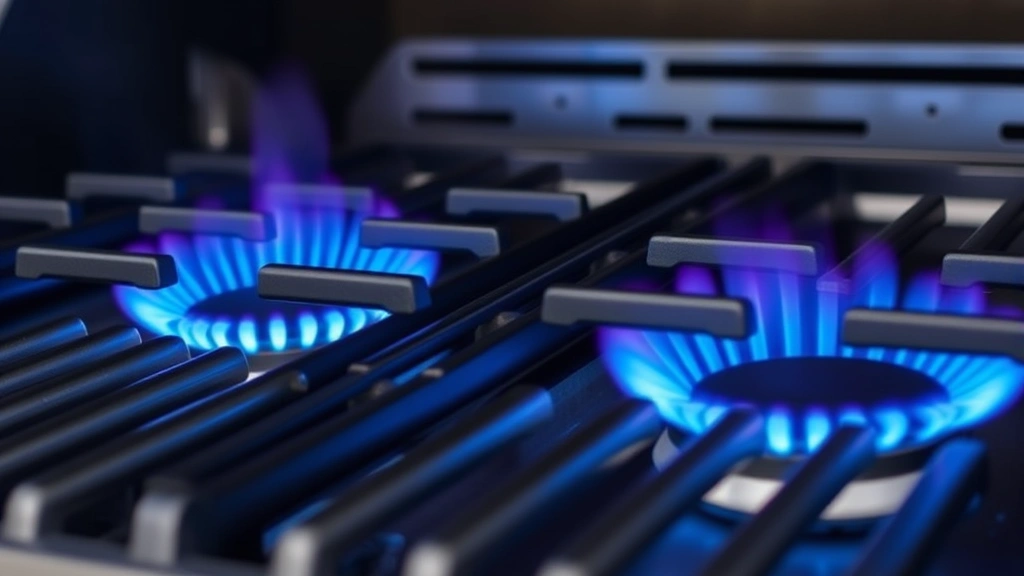
- Maintain Proper Burner Function: Ensure burners align correctly and produce even, blue flames. Yellow flames indicate incomplete combustion and wasted fuel.
- Clean Grates Regularly: Debris buildup forces flames to work harder, reducing efficiency. Monthly cleaning maintains peak performance.
- Use Grill Covers: Protecting your grill from weather extends lifespan and prevents rust requiring replacement.
- Preheat Efficiently: Preheat only as long as necessary. Modern grills reach cooking temperature in 10-15 minutes.
- Cook in Batches: Invite friends and cook multiple meals during single grilling sessions, maximizing fuel efficiency per guest.
- Proper Maintenance: Annual inspections, burner cleaning, and valve checks prevent efficiency-reducing problems.
- Offset Carbon Emissions: Consider supporting carbon reduction initiatives through verified offset programs to neutralize grill-related emissions.
These practices work with your Napoleon gas grill to minimize environmental impact while maximizing the enjoyment and utility of your investment. Small behavioral changes compound into significant emission reductions over time.
FAQ
Are Napoleon gas grills more eco-friendly than charcoal grills?
Yes, generally. Napoleon gas grills produce fewer emissions per pound of food cooked than charcoal grills. Gas burns cleaner with less particulate matter and volatile organic compounds. However, if charcoal is sourced from sustainable forestry, it represents a renewable fuel option that gas cannot match.
What’s the carbon footprint of a typical Napoleon gas grill?
A household using a Napoleon grill 2-3 times weekly for 6 months produces approximately 100-160 pounds of CO2 from grill usage alone. This represents a small fraction of typical household emissions but varies based on cooking frequency and fuel efficiency.
How long do Napoleon gas grills typically last?
Most Napoleon models last 15-20+ years with proper maintenance. The stainless steel construction and quality engineering support extended lifespan, making them more environmentally responsible per year of use than cheaper alternatives requiring replacement every 5-7 years.
Should I choose natural gas or propane for environmental reasons?
Natural gas is preferable if available. It produces about 19% less CO2 per unit than propane and eliminates supply chain emissions from tank production and transportation. Propane is acceptable for those without natural gas access.
Can electric grills be more eco-friendly than Napoleon gas grills?
In regions with high renewable energy percentages, electric grills can be significantly more eco-friendly. However, in coal-heavy areas, the environmental advantage diminishes. The best choice depends on your local power grid’s energy mix and your personal preferences.
Do Napoleon grills meet EPA emissions standards?
Yes, Napoleon gas grills meet current EPA emissions standards for residential cooking equipment. They’re designed to minimize nitrogen oxides and volatile organic compounds within regulatory limits.
What’s the most eco-friendly way to use a gas grill?
Maintain your grill properly, preheat efficiently, cook in batches to maximize fuel use, and keep your grill for decades rather than replacing it frequently. These practices reduce environmental impact more than the grill model itself.


