
Eco-Friendly ATV for Kids: Sustainable Choices for Young Riders
As parents increasingly prioritize environmental responsibility, the question of what recreational vehicles to introduce their children to becomes more complex. Traditional children’s gas ATVs have long been a staple of outdoor play, but their environmental impact—from fuel consumption to emissions—raises important concerns for eco-conscious families. The good news is that sustainable alternatives are emerging, offering parents the opportunity to teach their children about outdoor adventure while modeling environmental stewardship.
Making the transition from conventional gas-powered children’s ATVs to eco-friendly options represents a meaningful step toward reducing your family’s carbon footprint. This comprehensive guide explores the landscape of sustainable ATV choices for kids, examining both electric alternatives and responsible gas-powered options, helping you make an informed decision that aligns with your family’s values and your child’s needs.
Why Environmental Impact Matters for Children’s Recreation
The environmental footprint of recreational vehicles extends far beyond their immediate use. Traditional children’s gas ATVs contribute to air pollution, greenhouse gas emissions, and fuel consumption patterns that establish lifelong habits in young riders. According to the EPA’s air quality initiatives, small engines used in recreational equipment produce disproportionately high emissions relative to their size, contributing to both local air quality degradation and climate change.
When children learn to ride on gas-powered vehicles, they internalize assumptions about recreational freedom that often come with environmental costs. Conversely, introducing them to electric or low-emission alternatives from an early age establishes different expectations about technology, energy use, and personal responsibility. This early exposure shapes their future consumer choices and environmental consciousness.
The reduction of your environmental footprint begins with choices in every area of life, including children’s recreation. By selecting sustainable options now, parents demonstrate that environmental values apply consistently across all activities, not just in selective circumstances.
Electric ATVs: The Sustainable Future
Electric ATVs for children represent the most environmentally responsible option currently available. These vehicles produce zero direct emissions, operate quietly, and require minimal maintenance compared to their gas-powered counterparts. Leading manufacturers now offer electric models specifically designed for children aged 5-16, with varying power levels and safety features appropriate for different age groups and skill levels.
Key advantages of electric children’s ATVs include:
- Zero tailpipe emissions during operation
- Significantly lower operational noise, protecting hearing and reducing noise pollution
- Lower maintenance requirements—no oil changes, spark plug replacements, or fuel mixing
- Reduced risk of fuel spills and chemical exposure
- Quieter operation that respects neighborhood and trail environments
- Lower long-term operating costs when charged using renewable energy
- Instant torque delivery providing responsive, smooth acceleration
The advantages of electric vehicles apply directly to children’s recreational equipment. Modern lithium-ion battery technology has made electric ATVs practical for extended riding sessions, with many models offering 45-90 minutes of continuous operation per charge—sufficient for most recreational use patterns.
Several manufacturers have developed reputable electric ATV lines for children. Brands like Razor, Taiga Motors, and others have invested in durable designs that can withstand the rigorous use patterns typical of children’s play. When evaluating electric options, consider battery capacity, motor power (measured in watts), maximum speed, weight capacity, and charging time.
Comparing Gas vs. Electric Options
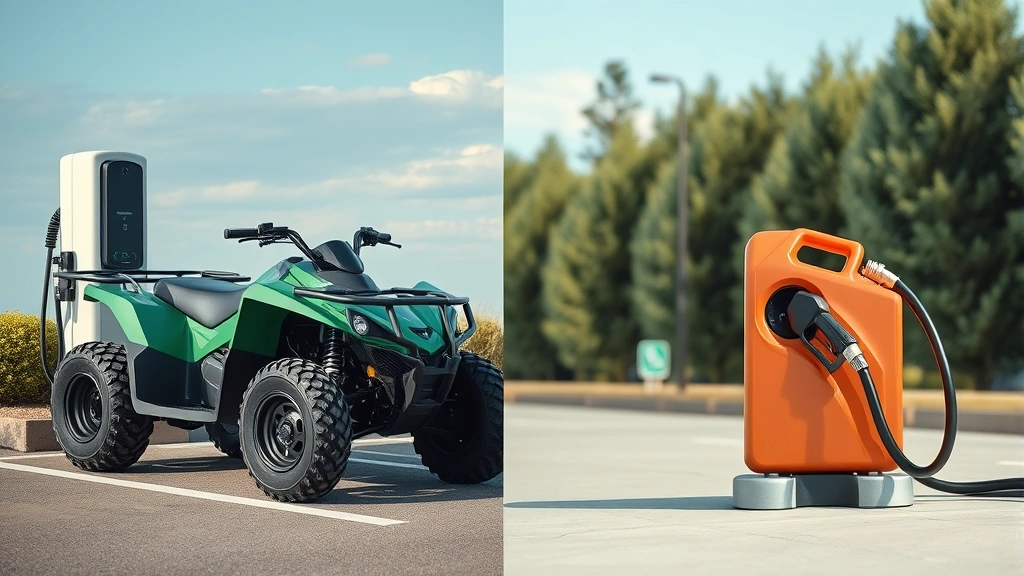
While electric ATVs represent the most sustainable choice, some families may face constraints that make gas-powered models necessary. Understanding the comparative environmental impact helps you make the best decision for your circumstances.
Environmental Impact Comparison:
Traditional children’s gas ATVs typically use small 50cc to 110cc engines that produce emissions equivalent to or exceeding those of full-size motorcycles. A single gas ATV engine can emit as much pollution as 40 cars in some cases, according to environmental research. These engines also generate noise pollution that disrupts wildlife and community environments.
When examining vehicles with best gas mileage, the same efficiency principles apply to children’s ATVs. If you must select a gas-powered option, prioritize models with fuel-injection systems, catalytic converters, and modern emission controls that minimize environmental damage.
Cost Analysis Over Time:
Initial purchase price often favors gas ATVs, which typically cost $200-$800 compared to $300-$1,200 for comparable electric models. However, lifetime operating costs tell a different story. Gas ATVs require regular maintenance: oil changes every 20-30 hours of operation, air filter replacements, spark plug changes, and fuel additives. These costs accumulate quickly with regular use.
Electric ATVs eliminate most maintenance expenses. Charging costs depend on local electricity rates but typically amount to $0.50-$2 per full charge, compared to $3-$8 in fuel costs for equivalent gas usage. Over a vehicle’s lifetime, electric models often prove more economical despite higher upfront investment.
Performance Characteristics:
Gas-powered ATVs excel in sustained power delivery and maximum range, making them suitable for extended trail riding in remote areas. Electric models offer superior acceleration, quieter operation, and lower vibration, creating a more comfortable riding experience for many children. Electric vehicles also provide better hill-climbing ability due to instant torque characteristics.
Safety and Performance Considerations
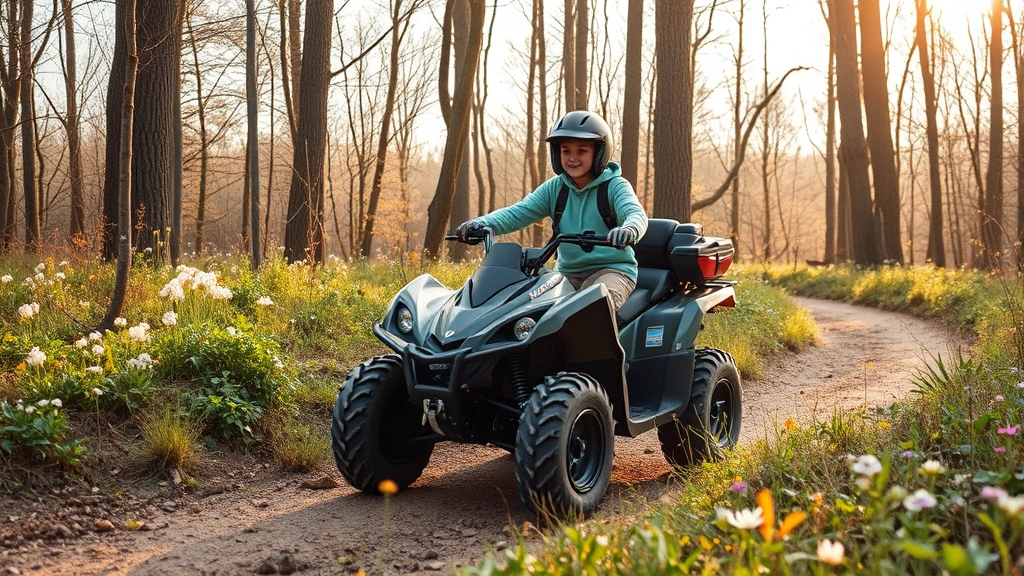
Regardless of power source, safety must remain paramount when selecting recreational vehicles for children. Electric and gas ATVs present different safety profiles that deserve careful consideration.
Electric ATV Safety Features:
- Lower maximum speeds appropriate for developing motor skills
- Reduced injury risk from burns due to absent hot engines and exhaust systems
- Better traction control through electronic power management
- Automatic shut-off systems when riders dismount
- Lower noise levels allowing better hearing of surrounding hazards
- Smoother acceleration reducing sudden jerking motions
Gas ATVs require careful handling of fuel and proper ventilation to prevent fume exposure. Young riders also face burn risks from hot engines and exhaust systems. However, some gas models offer superior power and capability for older children with significant riding experience.
Essential Safety Equipment:
Regardless of ATV type, children require proper protective gear: DOT-certified helmets, body armor, gloves, boots, and eye protection. Parents should also ensure proper training, starting with supervised riding in safe environments before allowing trail use. Consider enrolling children in ATV safety courses offered by organizations like the ATV Safety Institute.
Age-appropriate vehicle selection proves critical. Manufacturers design specific models for different age ranges, and violating these recommendations significantly increases injury risk. A 7-year-old should never operate an adult-size ATV, just as a teenager would find a toddler model insufficiently challenging and potentially boring.
Maintenance and Longevity
The maintenance burden of children’s ATVs significantly impacts both environmental responsibility and long-term value. Electric vehicles demonstrate clear advantages in this category.
Electric ATV Maintenance:
Electric vehicles require minimal ongoing maintenance. Primary tasks include periodic battery health checks, tire maintenance and rotation, brake pad inspection, and general cleaning. Battery management software monitors health automatically in most modern models, alerting owners to potential issues before they become serious. Proper storage—particularly in temperature-controlled environments—extends battery lifespan to 5-10 years or more.
Gas ATV Maintenance:
Gas engines demand regular attention to remain operational. Oil changes every 20-30 operating hours, air filter cleaning or replacement every 15-30 hours, spark plug replacement annually, and fuel stabilizer addition for storage represent baseline requirements. Seasonal storage requires fuel system stabilization to prevent gum buildup. Neglecting these tasks leads to performance degradation and premature engine failure.
The environmental impact of improper maintenance extends beyond the vehicle itself. Spilled oil contaminates soil and groundwater. Worn engines produce increased emissions. Improperly stored fuel evaporates into the atmosphere, contributing to air pollution.
Longevity and Durability:
Well-maintained electric ATVs often outlast their gas counterparts in actual lifespan. Electric motors have fewer moving parts and experience less wear. Battery degradation follows predictable patterns, with most quality batteries retaining 80% capacity after 1,000 charge cycles. When batteries eventually require replacement, recycling programs increasingly offer responsible disposal and material recovery options.
Gas engines face progressive wear from combustion cycles, carbon buildup, and mechanical stress. A gas ATV’s useful lifespan typically reaches 5-10 years with proper maintenance, while electric models often exceed 10 years with appropriate care.
Teaching Kids Environmental Responsibility
Selecting an eco-friendly ATV provides more than just reduced environmental impact—it creates teaching opportunities that shape your child’s values and future choices.
Creating Environmental Consciousness:
When children understand why you chose an electric ATV, they begin connecting their recreational choices to environmental outcomes. Discussing battery technology, renewable energy, and emissions helps them grasp complex environmental concepts through personal experience. Explaining how electric vehicles reduce air pollution becomes concrete when they see their chosen recreational vehicle producing zero emissions.
Take time to explain sustainable energy solutions that power their ATV. If your home uses renewable energy sources, highlight how their electric ATV operates on wind or solar power. This connection between energy generation and vehicle operation deepens environmental understanding.
Responsible Trail Use:
Electric ATVs’ quiet operation makes them ideal for teaching trail ethics. The reduced noise allows riders to appreciate natural soundscapes and demonstrates respect for wildlife and other trail users. Children learn that recreational enjoyment needn’t come at the cost of environmental disruption.
Establishing rules about where riding occurs—staying on designated trails, avoiding sensitive habitats, respecting private property—teaches broader environmental stewardship principles. These habits, established early, often persist into adulthood.
Modeling Environmental Values:
Your choice to prioritize sustainability in children’s recreation sends powerful messages about your household’s values. Children internalize that environmental responsibility applies consistently across all activities. They observe that you’re willing to invest in alternatives that align with your principles, demonstrating that environmental values matter enough to affect purchasing decisions.
Consider involving children in the selection process. Researching options together, comparing environmental impacts, and discussing trade-offs teaches critical thinking about sustainability. This participation creates ownership of the choice and reinforces environmental learning.
Additionally, discuss how your decision connects to broader climate action. Explain how reducing emissions from recreational equipment contributes to addressing climate change. Help them understand that individual choices, multiplied across millions of families, create meaningful environmental impact.
FAQ
What’s the typical price range for electric children’s ATVs?
Electric children’s ATVs range from $300 for basic models to $1,200+ for premium options with extended range and advanced features. This pricing compares favorably to quality gas models when considering lifetime operating costs and maintenance requirements.
How long does it take to charge an electric children’s ATV?
Most electric children’s ATVs charge fully in 4-8 hours using standard household outlets. Some models offer fast-charging options reducing this to 2-3 hours. Charging time varies based on battery capacity and charger specifications.
What’s the typical riding time per charge?
Most electric children’s ATVs provide 45-90 minutes of continuous riding per full charge, with range depending on terrain, rider weight, and riding style. This duration suits typical recreational use patterns for children’s play sessions.
Are electric ATVs suitable for all ages?
Electric ATVs come in models designed for ages 5-16, with appropriate power levels and safety features for each age group. Always match the vehicle to the child’s age, size, and experience level as specified by manufacturers.
Can electric ATVs handle rough terrain?
Modern electric children’s ATVs handle most recreational terrain effectively. However, extreme conditions requiring extended range or maximum power may still favor gas models. For typical trail riding and backyard use, electric models perform admirably.
What happens when the battery degrades?
Quality lithium-ion batteries retain approximately 80% capacity after 1,000 charge cycles, typically lasting 5-10 years. When replacement becomes necessary, established recycling programs recover valuable materials and dispose of components responsibly.
Is there a charging infrastructure for children’s ATVs?
Children’s ATVs charge using standard household outlets, eliminating infrastructure concerns. This home-charging convenience represents a significant advantage over vehicles requiring specialized charging stations.
How do electric and gas ATVs compare for noise levels?
Electric ATVs operate at 60-70 decibels, while gas models typically produce 80-90+ decibels. This dramatic difference reduces hearing damage risk, respects community noise standards, and minimizes wildlife disruption.
What maintenance does an electric children’s ATV require?
Minimal maintenance is needed: periodic tire checks, brake inspection, battery health monitoring (usually automatic), and general cleaning. This contrasts sharply with gas models requiring oil changes, filter replacements, and spark plug service.
Are there environmental certification programs for children’s ATVs?
While not all children’s ATVs carry specific environmental certifications, manufacturers increasingly highlight emissions reductions and sustainable manufacturing practices. Research individual brands’ environmental commitments and manufacturing transparency.


