Gas vs Electric Scooters: Which is Greener?
The rise of personal mobility devices has transformed urban transportation, but an important question remains: are gas powered scooters or electric alternatives better for our planet? As cities worldwide grapple with air quality and carbon emissions, understanding the environmental impact of these two technologies becomes crucial for eco-conscious consumers. This comprehensive comparison examines the lifecycle emissions, energy efficiency, manufacturing processes, and long-term sustainability of both scooter types to help you make an informed decision.
The debate between gas and electric scooters extends far beyond simple performance metrics. It encompasses manufacturing impacts, fuel sourcing, electricity generation methods, maintenance requirements, and end-of-life recycling considerations. By evaluating each aspect thoroughly, we can determine which option truly aligns with sustainable transportation practices and environmental responsibility.

Emission Comparison: Direct and Indirect
When evaluating the environmental credentials of gas powered scooters versus electric models, direct emissions represent only part of the equation. Gas-powered scooters emit carbon dioxide, nitrogen oxides, and volatile organic compounds directly during operation. A typical gas scooter produces approximately 50-100 grams of CO2 per kilometer traveled, depending on engine efficiency and fuel consumption rates.
Electric scooters produce zero direct emissions during operation, which seems like a clear victory for environmental sustainability. However, the electricity powering these devices must come from somewhere. In regions relying heavily on fossil fuel power plants, the indirect emissions from charging electric scooters can be substantial. According to the EPA’s electric vehicle charging guidance, the carbon intensity of grid electricity varies dramatically by location—from near-zero in hydroelectric-heavy regions to significant in coal-dependent areas.
Studies show that even in regions with moderate renewable energy penetration, electric scooters typically generate 50-70% fewer emissions than gas-powered alternatives when accounting for electricity generation. In areas with cleaner grids powered by wind, solar, and nuclear energy, this advantage increases to 80-95% lower emissions. This makes the choice location-dependent, though electric options maintain a consistent environmental advantage across most developed nations.
Manufacturing and Resource Extraction
The environmental cost of producing a scooter extends far beyond its operational lifetime. Manufacturing processes for both gas and electric scooters require energy, raw materials, and generate waste. Gas scooters typically feature simpler construction with fewer electronic components, resulting in lower manufacturing emissions—approximately 100-150 kg CO2 equivalent per unit.
Electric scooters, particularly those with lithium-ion batteries, demand more complex manufacturing processes. Battery production alone generates 150-200 kg CO2 equivalent per scooter, with mining for lithium, cobalt, and nickel creating additional environmental concerns. The complete manufacturing footprint for electric scooters ranges from 250-400 kg CO2 equivalent, nearly double that of gas models.
However, this manufacturing disadvantage is typically offset within the first 6-12 months of operation through cleaner energy usage. After this “payback period,” the electric scooter’s operational advantages compound, making it the greener choice over its lifespan. Learn more about how advantages of electric vehicles extend beyond individual operation to broader environmental benefits.
Mining practices for battery materials present genuine sustainability challenges that warrant attention. Lithium extraction consumes significant water resources in arid regions, while cobalt mining raises human rights and environmental concerns. The industry is progressively adopting more responsible sourcing practices and developing alternative battery chemistries with lower environmental impact, including sodium-ion and solid-state technologies.
Energy Efficiency Analysis
Energy efficiency represents a fundamental distinction between gas and electric scooters. Internal combustion engines convert only 20-30% of fuel energy into actual movement, with the remainder lost as heat. This inefficiency means substantial wasted energy with every journey.
Electric motors achieve 85-95% energy conversion efficiency, capturing far more of the input energy for propulsion. This dramatic difference means electric scooters require significantly less total energy input to travel the same distance. A gas scooter consuming 2-3 liters per 100 kilometers represents far greater energy waste than an electric scooter drawing 10-15 kilowatt-hours per 100 kilometers from the grid.
When comparing energy sources, a gallon of gasoline contains approximately 34.2 kilowatt-hours of energy. Accounting for engine inefficiency, this translates to roughly 7-8 kilowatt-hours of actual propulsion. The same distance in an electric scooter requires only 10-15 kilowatt-hours from the grid, but considering average grid efficiency of 90-92%, the total primary energy input is comparable or slightly favors electric, with the critical advantage being that electricity can be sourced from renewables while gasoline remains a fossil fuel.
Explore sustainable energy solutions that power electric transportation and how grid modernization continues improving this advantage.
Operating Costs and Lifecycle Expenses
From an economic perspective, electric scooters demonstrate clear advantages that align with environmental benefits. Electricity costs approximately $0.12-0.18 per kilowatt-hour in most developed nations, making the energy cost roughly $0.01-0.02 per kilometer. Gasoline, even at $3-4 per gallon, costs $0.06-0.12 per kilometer in fuel alone.
Maintenance costs amplify this difference substantially. Gas scooters require regular tune-ups, spark plug replacements, oil changes, and air filter maintenance—typical annual costs of $150-300 for casual users. Electric scooters need minimal maintenance beyond tire replacements and occasional brake service, typically costing $50-100 annually.
Battery replacement represents the largest long-term expense for electric scooters. Modern lithium-ion batteries last 500-1000 charge cycles, equivalent to 10,000-30,000 kilometers depending on usage patterns. Replacement costs range from $200-600, but this occurs only once every 3-5 years for typical users. When amortized across the scooter’s lifespan, total operating costs for electric models are 40-60% lower than gas alternatives.
This economic advantage translates directly to environmental benefit—lower-cost transportation encourages greater adoption of cleaner technology. Discover more about cost-benefit analysis in our discussion of gas-powered edger alternatives, which demonstrates similar efficiency patterns across different equipment categories.
Maintenance and Sustainability Factors
The sustainability of any vehicle extends beyond emissions to include the broader environmental impact of maintenance and repairs. Gas scooters require regular disposal of used motor oil, which presents environmental hazards if improperly handled. Each oil change generates waste that must be carefully managed to prevent soil and water contamination.
Spark plugs, air filters, and fuel filters require frequent replacement, creating additional waste streams. These components often end up in landfills despite being recyclable. Gas engines also produce internal carbon deposits that accumulate over time, reducing efficiency and requiring periodic cleaning interventions.
Electric scooters eliminate most maintenance-related waste. No oil changes mean no hazardous liquid disposal. No spark plugs or filters mean less consumable waste. The primary maintenance need involves brake pads, which are used at a slower rate in electric scooters due to regenerative braking systems that capture energy during deceleration.
The simplicity of electric drivetrains also means fewer components can fail, reducing the likelihood of replacement parts and associated manufacturing emissions. This durability advantage supports longer useful lifespans, further improving the environmental calculus over time.
Infrastructure and Grid Considerations
The environmental advantage of electric scooters depends significantly on the electricity grid’s composition. In coal-dependent regions like parts of the American Midwest or Eastern Europe, the environmental benefit narrows considerably. Conversely, in regions with abundant hydroelectric power (Norway, Iceland, much of Canada) or high renewable penetration (Denmark, Costa Rica, parts of California), electric scooters provide overwhelming environmental advantages.
The critical insight from International Energy Agency research on electric transportation is that grid composition is rapidly improving. Nations worldwide are transitioning toward renewable energy, meaning electric scooters purchased today will become cleaner over their operational lifetime as grids decarbonize. A gas scooter, conversely, remains locked into fossil fuel consumption regardless of broader energy transitions.
Charging infrastructure development also influences practical adoption. Widespread availability of convenient charging locations encourages electric scooter use and adoption. Urban areas with robust charging networks see higher electric scooter penetration and corresponding air quality improvements.
Consider how green technology innovations are transforming infrastructure to support sustainable transportation networks.
End-of-Life Disposal and Recycling
A complete environmental assessment must account for what happens when scooters reach end-of-life. Gas scooters contain recyclable metals but also engine components that may contain hazardous materials. Proper recycling requires disassembly and separation of materials, a process not universally available and often poorly executed in developing nations.
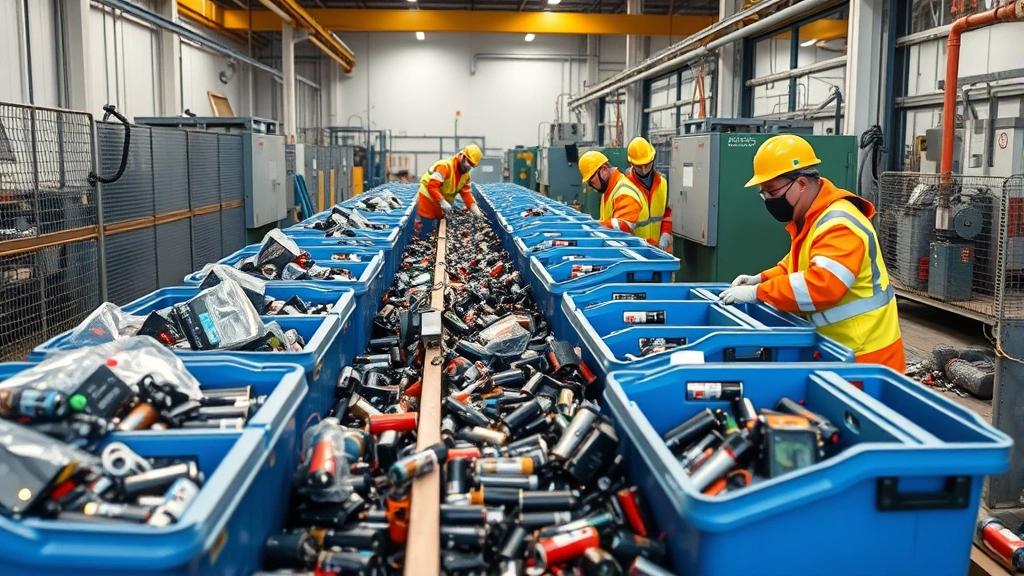
Electric scooter recycling centers on battery disposal, which presents both challenges and opportunities. Lithium-ion batteries require specialized recycling to recover valuable materials and prevent environmental contamination. Modern battery recycling processes recover 90%+ of lithium, cobalt, nickel, and manganese, redirecting these materials back into new battery production or other applications.
The emerging battery recycling industry represents a positive sustainability trend. Companies like Redwood Materials are establishing large-scale recycling operations that make battery material recovery economically viable. As recycling infrastructure matures, the environmental advantage of electric scooters increases further because materials can be continuously cycled rather than extracted from new mines.
Aluminum frames in both scooter types are highly recyclable, with aluminum recycling requiring only 5% of the energy needed for primary production. This represents a significant environmental advantage that applies equally to both technologies but reinforces the importance of proper end-of-life management.
Real-World Environmental Impact
Academic studies comparing the full lifecycle environmental impact of gas versus electric scooters consistently demonstrate electric superiority. Research from the European Federation for Transport and Environment shows that electric scooters produce 50-75% lower lifecycle emissions than gas alternatives across European nations, even accounting for battery manufacturing and electricity generation.
Urban air quality improvements provide additional benefits beyond carbon reduction. Gas-powered scooters contribute to nitrogen oxide and particulate matter pollution, which directly harms public health. Cities like Paris and Barcelona that have prioritized electric scooter sharing programs report measurable air quality improvements in high-traffic areas. Electric scooters eliminate these harmful local pollutants entirely.
The cumulative impact of widespread scooter adoption matters significantly. If a city of one million people replaced just 5% of short car trips with electric scooters, annual CO2 emissions would decrease by approximately 50,000 metric tons—equivalent to taking 10,000 cars off the road. This scenario becomes even more compelling when considering that scooters typically replace car journeys rather than walking or cycling, making them an effective emissions reduction strategy for urban mobility.
For comparison, understand how gas-powered dirt bikes present similar environmental challenges in recreational contexts, reinforcing the broader pattern of electric alternatives providing cleaner solutions across personal mobility categories.
FAQ
Are electric scooters truly zero-emission vehicles?
Electric scooters produce zero direct emissions during operation, but their overall environmental impact depends on the electricity grid’s composition. In regions powered primarily by renewables, they approach true zero-emission status. In coal-dependent regions, they still produce significantly fewer emissions than gas scooters when accounting for electricity generation. Even in worst-case scenarios with coal-heavy grids, electric scooters typically produce 30-40% lower lifecycle emissions than gas alternatives.
How long do electric scooter batteries last, and what happens when they fail?
Modern lithium-ion batteries in quality electric scooters typically last 500-1000 charge cycles, translating to 3-5 years of typical use. Battery degradation is gradual rather than sudden; capacity decreases slowly over time. When replacement becomes necessary, worn batteries should be sent to specialized recycling facilities that recover valuable materials. Many manufacturers now offer battery recycling programs or trade-in options that ensure proper handling.
Is gas scooter maintenance truly more expensive than electric alternatives?
Yes, gas scooters typically cost 40-60% more to maintain annually. Required maintenance includes oil changes ($30-50 each, typically 2-4 times yearly), spark plug replacements, air filter changes, and periodic tune-ups. Electric scooters primarily need tire maintenance and occasional brake service, costing significantly less. Over a scooter’s 5-10 year lifespan, maintenance cost differences can exceed $1,000-2,000.
Which scooter type is better for off-road or recreational use?
Gas scooters currently maintain advantages for off-road applications due to their higher power outputs and range capabilities. However, electric off-road scooters are rapidly improving, with newer models offering impressive terrain capability and battery range. For urban commuting and recreational use in developed areas with charging infrastructure, electric scooters are environmentally superior and increasingly practical.
Can I charge an electric scooter using renewable energy at home?
Absolutely. Installing rooftop solar panels or subscribing to renewable energy programs from your utility provider allows you to charge electric scooters using clean energy. This maximizes the environmental benefits and achieves near-zero lifecycle emissions. Even partial renewable energy usage (50-75%) significantly improves the environmental profile compared to standard grid electricity in many regions.
What about noise pollution from gas scooters?
Gas scooters produce significant noise pollution, typically 70-85 decibels during operation—comparable to heavy traffic. Electric scooters are nearly silent, producing only 60-65 decibels from tire noise and mechanical components. This quietness provides quality-of-life benefits in urban areas and reduces noise pollution’s documented health impacts, adding another environmental advantage to electric models.


