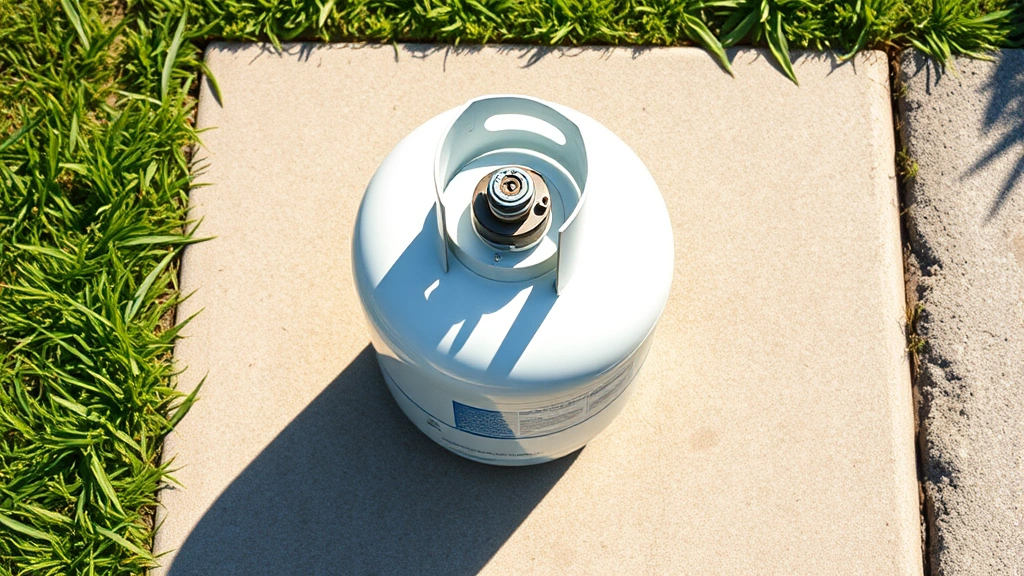
Refill or Exchange 10 lb LP Tank? Expert Tips for Smart Propane Management
When it comes to managing your 10 pound LP gas tank, you’re faced with a common decision: should you refill your existing tank or exchange it for a full one? This choice impacts your wallet, your time, and your environmental footprint. Understanding the differences between refilling and exchanging propane tanks can help you make the most cost-effective and sustainable decision for your household or business needs.
The 10 lb propane tank is one of the most popular portable propane containers, commonly used for grills, heaters, forklifts, and other small appliances. Whether you’re a seasoned propane user or new to LP gas, knowing when to refill versus exchange ensures you’re never left without fuel while minimizing waste and unnecessary trips. This comprehensive guide explores both options, their costs, environmental considerations, and best practices for tank maintenance.
Understanding Your 10 lb LP Tank
A 10 pound LP (liquefied petroleum) tank is a cylindrical metal container designed to safely store propane gas under pressure. The “10 lb” designation refers to the water capacity of the tank, which translates to approximately 4.7 pounds of actual propane when fully charged. These tanks are lightweight, portable, and designed for residential and commercial applications where mobility and convenience matter.
The standard 10 lb tank measures roughly 18 inches tall and 12 inches in diameter, making it easy to transport and store. You’ll find these tanks powering backyard grills, patio heaters, camping equipment, forklifts, and emergency heating systems. Understanding your tank’s specifications helps you make informed decisions about sustainable energy solutions that work for your lifestyle.
Propane is a clean-burning fossil fuel that produces fewer emissions than some alternatives, though it’s not renewable. When you’re committed to reducing your environmental footprint, choosing efficient propane use and proper tank management becomes part of your sustainability strategy.
Refilling vs. Exchanging: Key Differences
The fundamental difference between refilling and exchanging lies in who handles the process and what happens to your tank. Refilling means taking your existing tank to a propane provider who fills it with propane while you wait. Exchanging involves trading your empty tank for a pre-filled one from the retailer’s inventory.
Refilling advantages:
- You keep the same tank, maintaining familiarity with its condition and history
- Typically more economical over time for frequent users
- You control the exact fill level and can plan accordingly
- Reduces waste by extending your tank’s lifespan
- Often available at dedicated propane companies and some gas stations
Exchanging advantages:
- Faster transaction—just swap and go in minutes
- More convenient at retail locations like grocery stores and hardware stores
- No waiting for the refill process
- Provider handles tank inspection and maintenance
- Ideal for occasional users or emergencies
Choosing between these options depends on your usage patterns, budget, and commitment to minimizing your environmental impact through efficient resource use.
Cost Comparison Analysis
When evaluating costs, you need to consider both the per-pound price of propane and any service fees involved. Refilling costs typically range from $15 to $30 depending on your location, current propane prices, and the provider. You pay only for the propane itself, making this option economical for regular users.
Exchange costs usually run $20 to $35 for a pre-filled tank, regardless of how much propane is actually in it. This flat rate means you might be paying for a full tank even if you only need a partial refill. However, the convenience factor appeals to many consumers.
For budget-conscious households practicing sustainable living habits, refilling often proves more economical annually. If you use your 10 lb tank regularly—weekly or more—refilling saves approximately 30-40% compared to exchanging. Occasional users might find the convenience of exchanges justifies the premium price.
Market prices fluctuate seasonally, with propane typically costing more during winter months. Comparing rates from multiple propane providers in your area can reveal significant savings opportunities. Some companies offer loyalty programs or bulk discounts that further reduce costs.
Environmental Impact Considerations
From an environmental perspective, refilling your existing tank is generally the more sustainable choice. Each time you exchange a tank, the retailer must manage your old tank—cleaning it, inspecting it, and either restocking it or retiring it. This process consumes energy and resources.
When you refill the same tank repeatedly, you minimize the manufacturing and transportation emissions associated with tank production and distribution. Over a tank’s 12-15 year lifespan, consistent refilling can prevent multiple new tanks from entering the waste stream.
Propane itself is a hydrocarbon fuel that produces carbon dioxide and water vapor when burned. While not carbon-neutral, propane is cleaner than coal or oil, producing about 50% fewer greenhouse gas emissions than coal for equivalent energy output. As part of your broader sustainability strategy, consider how propane fits into your overall energy mix. Exploring cleaner energy alternatives for other applications can offset propane use.
Tank recycling programs exist in many regions, ensuring that retired tanks don’t end up in landfills. If you must exchange tanks, choose providers who participate in certified recycling programs. The EPA’s waste reduction guidelines emphasize reusing containers before recycling, supporting the refill-over-exchange philosophy.
How to Refill Your Tank
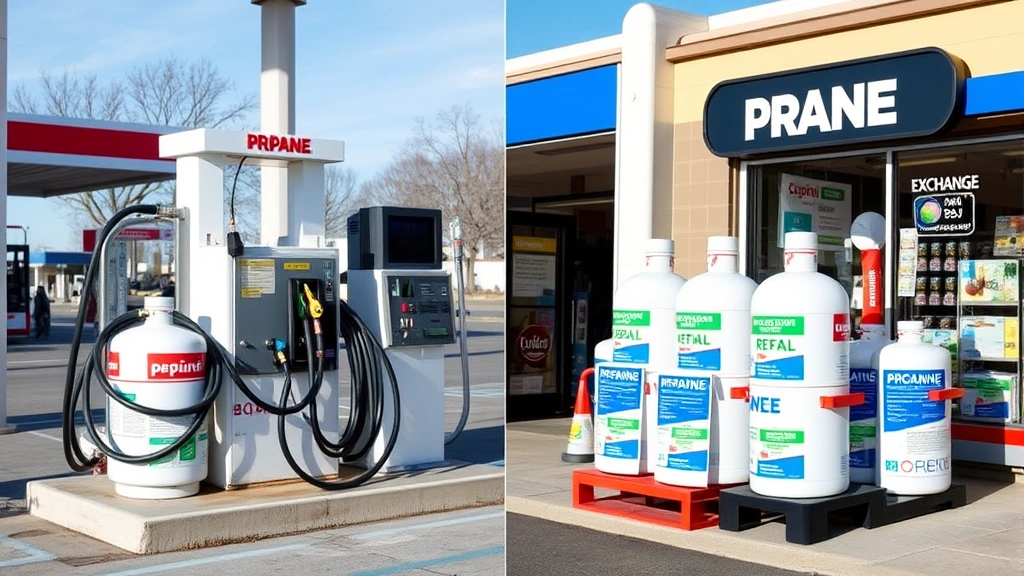
Refilling your 10 lb LP tank is a straightforward process when you know what to expect. Step one: Locate a certified propane refill station. These are typically found at dedicated propane companies, some gas stations, hardware stores, and farm supply retailers. Call ahead to confirm they refill 10 lb tanks and their current pricing.
Step two: Transport your tank safely. Ensure the valve is closed and secure the tank upright during transport. Never transport a tank lying on its side, as this can damage internal components.
Step three: Present your tank for inspection. The attendant will check for damage, corrosion, or defects. Tanks must pass safety inspection before refilling. If your tank fails inspection, you may need to exchange it instead.
Step four: Wait for the refill process. This typically takes 10-30 minutes. The attendant will connect your tank to the refill apparatus and fill it to safe capacity. They’ll verify the fill using weight or pressure measurements.
Step five: Pay and depart. Costs are calculated based on current propane prices per pound and any service fees. Keep your receipt for records.
Safety is paramount throughout this process. Never attempt to refill a tank yourself, and always use licensed, insured propane providers. Proper refilling ensures your tank operates safely and efficiently for years to come, supporting your commitment to sustainable energy management.
Tank Exchange Process Explained
Tank exchanges offer maximum convenience for users who prioritize speed over cost savings. The process is remarkably simple. You walk into a retailer—typically a grocery store, hardware store, or gas station—carrying your empty or nearly-empty tank.
You approach the propane exchange station, usually located outside the store. An attendant verifies your tank’s condition at a glance. If it passes basic safety checks, they’ll swap your tank for a full one from their inventory. The entire transaction takes five to ten minutes.
Payment is straightforward—a flat fee, typically $20-35, regardless of how much propane your old tank contained. This simplicity explains the popularity of exchanges among casual users and those in emergency situations.
However, exchanges have hidden costs beyond the direct price. You’re paying for a full tank even if your tank only needs a partial refill. Over time, this inefficiency adds up. Additionally, the convenience factor often comes with a premium price markup of 20-50% compared to refilling at dedicated propane facilities.
Tank exchanges work best for occasional users, backup tanks, or emergency situations. If you use propane regularly, the economics favor refilling. Many consumers maintain both options—exchanging when convenient and refilling when they have time to visit a dedicated provider.
Safety Inspection and Maintenance
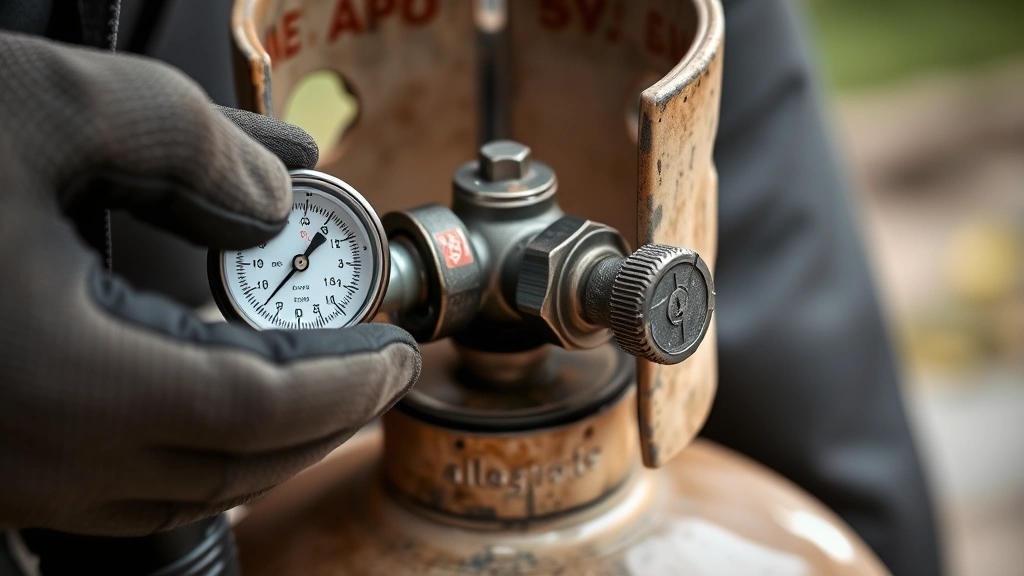
Proper tank maintenance ensures safe operation and extends your tank’s lifespan. All propane tanks must pass visual inspection before refilling. Inspectors look for rust, dents, corrosion, leaks, and damage to the valve assembly. Tanks showing significant damage may be deemed unsafe and require replacement.
Key inspection points:
- Exterior condition: Check for rust, deep dents, or corrosion indicating moisture inside
- Valve assembly: Ensure the valve turns freely and shows no damage or leaks
- Safety relief valve: This should be clean and functional to prevent over-pressurization
- Fill level indicator: Some tanks have gauges; verify accuracy
- Tank age: Tanks older than 12 years may require recertification or replacement
For tanks showing minor rust on the exterior, wire brushing and repainting can extend life. Never attempt repairs on internal components yourself. Always use certified professionals for any maintenance beyond basic cleaning.
Store your tank upright in a well-ventilated area, away from direct sunlight and extreme heat. Proper storage prevents valve damage and internal corrosion. If you won’t use your tank for extended periods, store it with the valve closed in a cool, dry location.
Leaks require immediate attention. If you smell rotten eggs (the odorant added to propane), turn off all ignition sources and contact your propane provider immediately. Never attempt to locate leaks with open flames. Use soapy water to identify leaks—bubbles indicate escaping gas.
Finding Reliable Propane Providers
Selecting a trustworthy propane provider affects both your costs and peace of mind. Start by asking neighbors and friends for recommendations. Local online reviews on Google, Yelp, and the Better Business Bureau provide insight into customer experiences.
Verify credentials:
- Ensure the company is licensed and insured
- Check for PERC (Propane Education & Research Council) certification
- Confirm they follow EPA and DOT regulations
- Look for membership in industry associations like NPGA (National Propane Gas Association)
Compare pricing from multiple providers. Prices vary based on location, current market rates, and company overhead. Some providers offer automatic delivery for home tanks, while others focus on retail refills and exchanges. Choose the service model matching your needs.
Ask about loyalty programs, bulk discounts, or seasonal promotions. Some companies offer lower rates during off-season months. Building relationships with local providers often results in better service and pricing over time.
For those committed to sustainable practices, inquire about a provider’s environmental policies. Do they recycle old tanks? Do they use efficient delivery routes? Such questions reveal companies aligned with your values.
Document your provider’s contact information and emergency procedures. In case of leaks or safety concerns, you need immediate access to qualified assistance. Reliable providers offer 24/7 emergency support.
FAQ
How long does a 10 lb propane tank last?
A 10 lb tank typically lasts 18-20 hours of continuous use in a grill or heater, or several weeks of occasional use. Duration depends on the appliance’s BTU consumption and usage frequency. A backyard grill might use one tank per 2-4 weeks during grilling season, while a patio heater could consume one weekly in cold weather.
Can I refill an exchange tank?
Yes, you can refill exchange tanks. Many people purchase exchange tanks and then refill them at dedicated propane stations, saving money over time. However, confirm the tank’s ownership—some retailers mark tanks as non-refillable property. Generally, unmarked tanks can be refilled at any licensed facility.
What’s the difference between propane and butane?
Propane and butane are both hydrocarbons, but propane vaporizes at much lower temperatures (-42°F vs. 31°F for butane). This makes propane ideal for year-round use in most climates. Butane works better in warmer regions but performs poorly in cold weather, which is why propane dominates the North American market.
Is it safe to store a propane tank indoors?
No. Propane tanks must be stored outdoors in well-ventilated areas. Even small leaks could accumulate in enclosed spaces, creating explosion hazards. Store your tank upright, away from ignition sources, in shade if possible. Never store tanks in basements, garages, or living spaces.