
Are Gas Augers Eco-Friendly? Expert Analysis
Gas augers have become ubiquitous in construction, landscaping, and agricultural industries, offering powerful drilling and boring capabilities for professionals and homeowners alike. However, as environmental consciousness grows globally, a critical question emerges: are these fuel-powered tools genuinely sustainable, or do they represent an outdated technology that contradicts modern ecological principles? This comprehensive analysis examines the environmental impact of gas augers, comparing them with alternative solutions and exploring whether their efficiency gains offset their carbon footprint.
Understanding the environmental implications of gas augers requires examining multiple factors, including emissions output, fuel consumption, operational efficiency, and lifecycle impact. The answer is nuanced—while gas augers offer undeniable performance advantages in certain applications, their reliance on fossil fuels positions them as increasingly problematic from an environmental standpoint, particularly when sustainable energy solutions exist as viable alternatives.
Understanding Gas Augers: Function and Operation
Gas augers are mechanical drilling tools powered by gasoline engines, designed to bore holes into earth, ice, or other materials with minimal manual effort. These devices typically feature a rotating auger bit driven by a small internal combustion engine, making them invaluable for tasks ranging from fence post installation to ice fishing and geothermal exploration. The portability and power output of gas augers have made them industry standards in construction and landscaping sectors.
A typical gas auger operates by converting chemical energy from gasoline combustion into mechanical rotational force. The engine drives a transmission system that rotates the auger bit at speeds optimized for drilling efficiency. This design has remained largely unchanged for decades, reflecting proven engineering principles but also highlighting the technology’s age relative to modern sustainability standards. Understanding how these devices function is essential to comprehending their environmental footprint and identifying improvement opportunities.
The widespread adoption of gas augers stems from their reliability, power delivery, and independence from external power sources. Unlike electric models that require charging infrastructure or corded designs limited by cable length, gas augers provide unlimited runtime and robust performance in demanding conditions. However, this convenience comes at an environmental cost that deserves careful examination.
Carbon Emissions and Air Quality Impact
The most immediately apparent environmental concern with gas augers involves their direct emissions of greenhouse gases and air pollutants. Gasoline engines produce carbon dioxide (CO₂), a primary driver of climate change, along with methane, nitrogen oxides (NOx), and volatile organic compounds (VOCs) that contribute to ground-level ozone formation and respiratory health problems. Research from the EPA’s Small Spark Ignition Engines program indicates that small gas engines, including those in augers, produce disproportionately high emissions relative to their size.
A single gas auger operating for eight hours can emit approximately 93 kilograms of CO₂ equivalent, comparable to a car driving 350 kilometers. When multiplied across construction sites, landscaping businesses, and agricultural operations employing dozens of these devices daily, the cumulative environmental impact becomes staggering. Air quality degradation near construction sites using gas augers creates localized pollution hotspots affecting worker health and nearby communities.
The particulate matter and nitrogen oxides emitted by gas augers contribute to smog formation, acid rain, and respiratory diseases. Construction workers and landscapers using these tools regularly face elevated exposure to harmful emissions, creating occupational health concerns alongside environmental damage. This dual impact—environmental degradation coupled with worker safety risks—strengthens the case for transitioning to cleaner alternatives.
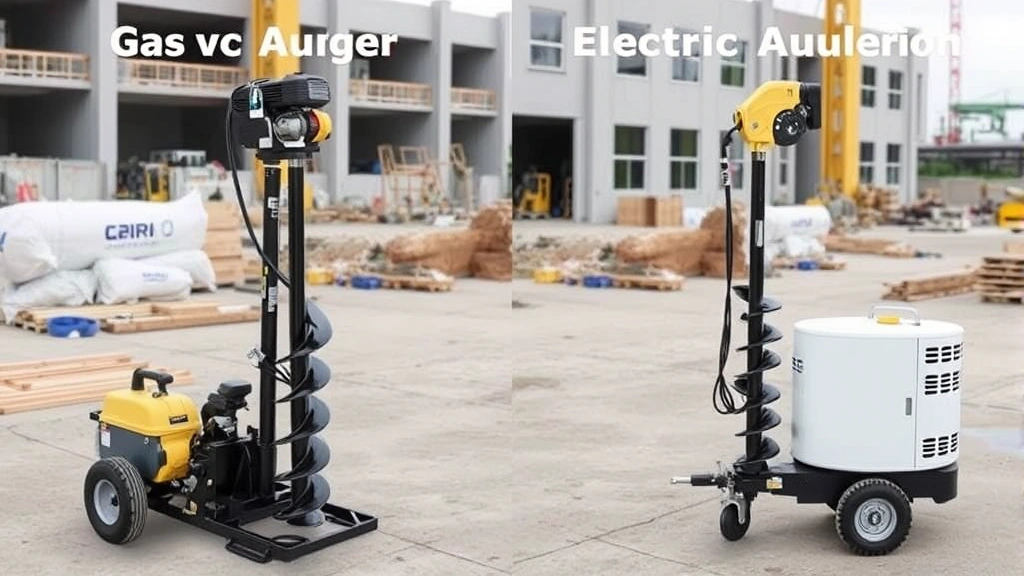
” alt=”Environmental impact visualization” style=”max-width: 100%; height: auto; border-radius: 8px;”>
Fuel Consumption and Resource Depletion
Gas augers consume fossil fuels at rates that vary based on engine size, auger depth, and soil conditions, typically burning one to three liters of gasoline per working day. This consumption pattern represents unsustainable resource depletion, drawing from finite petroleum reserves while contributing to the geopolitical instability and economic volatility associated with fossil fuel dependency. The extraction and refining of gasoline itself generates significant environmental damage through habitat disruption, water contamination, and additional greenhouse gas emissions.
Beyond direct fuel consumption, the broader effort to reduce your environmental footprint requires questioning every tool and process in our operations. Gas augers represent a technology choice that perpetuates reliance on fossil fuel infrastructure, delaying the transition toward renewable energy systems that are essential for climate stability. Each gallon of gasoline burned in an auger represents a decision to maintain extractive industries rather than invest in sustainable alternatives.
The energy efficiency of gas augers is remarkably poor compared to modern electric tools. Internal combustion engines operate at approximately 25-30% thermal efficiency, meaning 70-75% of energy from fuel combustion dissipates as heat rather than productive work. Electric motors, by contrast, achieve 85-95% efficiency, delivering far more usable mechanical energy per unit of energy input. This fundamental efficiency gap makes gas augers inherently wasteful from a thermodynamic perspective.
Supply chain considerations compound these concerns. Gasoline distribution networks require extensive infrastructure—refineries, pipelines, tanker trucks, and gas stations—all consuming energy and generating emissions. Choosing gas augers perpetuates demand for this infrastructure, while electric alternatives enable transition toward cleaner energy systems powered by renewable sources.
Electric Augers: The Sustainable Alternative
Modern electric augers represent a dramatically superior environmental alternative, eliminating direct emissions while reducing operational carbon footprint by 60-80% depending on electrical grid composition. Battery-powered models offer cordless convenience comparable to gas augers, with rapid charging enabling all-day operation through multiple battery swaps. Corded electric augers provide unlimited runtime for stationary applications, making them ideal for fence installation and landscaping projects.
The environmental advantage of electric augers extends throughout their operational lifecycle. Zero operational emissions mean cleaner air quality at job sites, healthier working conditions for operators, and elimination of noise pollution that often accompanies gas engine operation. Furthermore, as electrical grids increasingly incorporate renewable energy sources like wind and solar, the environmental benefit of electric tools improves automatically without any equipment modifications.
Battery technology has advanced sufficiently to provide electric augers with runtime and power delivery matching or exceeding gas models for most applications. Lithium-ion batteries offer 500+ charge cycles, translating to years of reliable service. Charging infrastructure has become ubiquitous, with standard household outlets or site-based chargers providing convenient access to power. The initial cost premium for electric augers has narrowed considerably, making them economically competitive with gas alternatives when considering fuel and maintenance savings.
Adopting electric augers aligns with broader sustainability principles by reducing operational emissions and demonstrating commitment to environmental responsibility. Professional contractors and equipment rental companies increasingly stock electric augers, reflecting market recognition that sustainable tools represent the future of construction and landscaping industries.
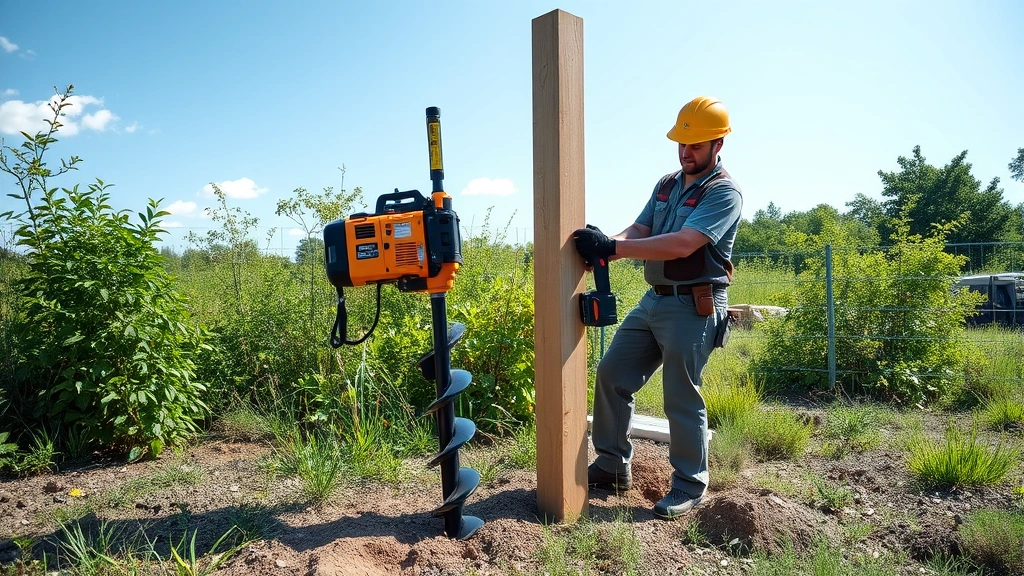
” alt=”Electric auger comparison” style=”max-width: 100%; height: auto; border-radius: 8px;”>
Lifecycle Assessment and Manufacturing Impact
Comprehensive environmental evaluation requires examining the complete lifecycle of gas versus electric augers, from raw material extraction through manufacturing, distribution, use, and end-of-life disposal. While electric augers generate environmental costs during battery production—particularly in lithium and cobalt mining—these impacts are offset within 6-12 months of typical use through reduced operational emissions.
Manufacturing a gas auger engine involves extracting and processing metals, plastics, and petroleum-derived components, generating industrial emissions and waste. However, the ongoing operational emissions of a gas auger dwarf manufacturing impacts. A gas auger used for five years will emit approximately 250 times more CO₂ than was generated during its manufacture, making operational efficiency the dominant environmental factor.
Battery production for electric augers does involve environmental costs, particularly in mining operations for lithium, cobalt, and nickel. However, responsible sourcing and battery recycling programs are advancing rapidly, with EPA battery recycling initiatives recovering 95%+ of battery materials for reuse. Emerging solid-state and sodium-ion battery technologies promise to reduce reliance on problematic minerals while improving performance.
End-of-life disposal presents another consideration in lifecycle analysis. Gas augers contain engines that require careful dismantling and disposal, with residual fuel and oil posing contamination risks. Electric augers, while requiring battery recycling, present fewer hazardous disposal challenges and enable component reuse more readily. The increasing maturity of battery recycling infrastructure makes electric tools increasingly favorable from a lifecycle perspective.
When Gas Augers May Be Necessary
Despite the environmental advantages of electric alternatives, certain specialized applications may still justify gas auger use, at least during transition periods. Remote locations without reliable electricity access, extended continuous operation requirements, or extreme environmental conditions may necessitate gas augers temporarily. However, even in these scenarios, careful evaluation should precede gas auger selection, as portable generators powering electric augers often prove more efficient than direct gas engine operation.
Professional contractors working in locations with no electrical infrastructure might justify gas auger use for specific projects, though investing in portable power solutions represents a more sustainable long-term strategy. Agricultural operations requiring augers for drilling wells or geothermal applications in remote areas might claim legitimate gas auger necessity, though this justification weakens as renewable energy infrastructure expands globally.
The honest assessment is that gas auger necessity is declining rapidly as electric technology matures and charging infrastructure proliferates. Any continued gas auger use should be viewed as temporary accommodation rather than permanent solution, with clear transition timelines toward electric alternatives. Organizations committed to environmental responsibility should establish policies phasing out gas augers, establishing target dates for complete transition to electric equipment.
Best Practices for Minimizing Environmental Impact
For organizations currently operating gas augers and unable to immediately transition to electric alternatives, several practices can minimize environmental harm. Regular maintenance—including air filter cleaning, spark plug replacement, and fuel system optimization—improves engine efficiency and reduces emissions. Using fuel additives that enhance combustion efficiency can decrease emissions by 10-15% while improving performance.
Consolidating auger operations and scheduling projects to maximize equipment utilization reduces total fuel consumption and emissions per completed task. Grouping fence installation projects, landscaping work, or construction tasks allows operators to work continuously rather than making multiple trips to job sites, improving overall efficiency. Planning routes and project sequencing to minimize equipment transportation also reduces associated fuel consumption.
Investing in equipment rental from companies prioritizing electric tools supports market demand for sustainable alternatives while avoiding capital expenditure on outdated gas technology. Many equipment rental companies now offer electric augers at competitive rates, making this transition accessible for small businesses and homeowners. Supporting suppliers and contractors who have already transitioned to electric equipment accelerates industry-wide transformation.
Participating in carbon offset programs or purchasing renewable energy credits can partially mitigate unavoidable gas auger emissions, though these measures should complement rather than replace efforts to eliminate fossil fuel equipment. Some organizations combine gas auger use with renewable energy investments, though direct elimination of gas tools remains the most effective environmental strategy.
Training operators on efficient auger techniques reduces unnecessary fuel consumption and extends equipment lifespan. Proper drilling angle selection, soil preparation, and bit maintenance all contribute to efficient operation. Educating team members about environmental concerns associated with gas equipment and benefits of electric alternatives builds organizational commitment to sustainability transitions.
Documenting fuel consumption and emissions from gas augers creates accountability and establishes baseline data for measuring progress toward sustainability goals. Transparent tracking of equipment emissions often catalyzes organizational commitment to transitions, as concrete data demonstrates environmental impact in ways abstract discussions cannot.
Frequently Asked Questions
Are gas augers more powerful than electric models?
Modern electric augers deliver comparable power to gas models for most applications, with some high-end electric versions exceeding gas performance. Power differences are often negligible for typical fence installation, landscaping, and light construction work. Gas augers maintain advantages only for specialized heavy-duty applications, which represent a small fraction of total auger usage.
How much does transitioning to electric augers cost?
Initial equipment costs for electric augers are competitive with gas models when considering fuel and maintenance savings over equipment lifespans. Rental costs for electric augers typically equal or undercut gas equipment rates. Businesses can transition gradually, replacing gas augers with electric models as equipment reaches end-of-life, distributing costs across multiple budget cycles.
What is the carbon footprint of battery production for electric augers?
Battery manufacturing generates approximately 50-100 kg of CO₂ equivalent per kilowatt-hour of capacity. A typical electric auger battery might generate 5-10 kg of CO₂ during production—an impact recovered through operational emissions reduction within 2-3 months of use. The battery production cost is rapidly declining as manufacturing scales and efficiency improves.
Can electric augers operate in cold weather?
Most lithium-ion batteries experience reduced performance in cold conditions, with capacity declining 20-30% at freezing temperatures. However, many modern electric augers include battery heaters or cold-weather optimization features. For regular winter operation, selecting augers with cold-weather ratings ensures reliable performance across seasons.
How do I know if my operation should transition to electric augers?
Assess your auger usage patterns: if operations occur near electrical infrastructure, if usage is episodic rather than continuous, or if environmental responsibility aligns with organizational values, electric augers represent logical choices. Consulting with equipment suppliers about electric options appropriate for your specific applications facilitates informed decision-making. Understanding advantages of electric equipment generally applies to augers and similar tools.
What certifications indicate environmentally responsible auger equipment?
Look for EPA Tier 4 emissions standards for gas equipment, though electric models eliminate this concern entirely. Energy Star certifications for electric tools and battery equipment indicate efficiency optimization. Manufacturer transparency about supply chains, battery sourcing, and end-of-life recycling programs signals environmental commitment.
Are there government incentives for purchasing electric augers?
Many jurisdictions offer tax credits, rebates, or grants for transitioning to electric equipment as part of emissions reduction initiatives. Check with local environmental agencies, small business development centers, and equipment manufacturers about available incentive programs. Some green construction certification programs require electric tools, creating indirect economic incentives for transition.


