
Which Gas Brand Fuels NASCAR? Industry Insight into Racing’s Energy Partnership
NASCAR racing represents one of the most energy-intensive sporting events in the world, requiring massive quantities of fuel to power high-performance vehicles around the track at speeds exceeding 200 miles per hour. Behind every thrilling race weekend stands a critical partnership between the sport and major energy companies that supply the specialized racing fuel keeping these machines competitive. Understanding which gas brand sponsors NASCAR reveals important insights into how the motorsports industry operates and what sustainability challenges it faces.
The relationship between NASCAR and fuel suppliers extends far beyond simple sponsorship—it involves technical specifications, performance standards, and regulatory compliance that shape how the sport evolves. This article explores the primary fuel partnerships, the competitive dynamics at play, and what these racing fuel relationships tell us about the broader energy landscape.
Shell and Pennzoil: NASCAR’s Primary Fuel Partnership
Shell, through its Pennzoil brand, has maintained one of the most significant and enduring relationships with NASCAR, serving as the official fuel and lubricant supplier for the sport. This partnership represents decades of collaboration, with Pennzoil becoming synonymous with high-octane racing performance. The brand’s involvement extends across multiple NASCAR series, including the NASCAR Cup Series, making it the most recognizable fuel supplier in professional motorsports.
Pennzoil’s commitment to NASCAR involves providing specially formulated racing fuel that meets strict technical requirements while maintaining competitive advantages. The brand invests heavily in research and development to create fuel blends that maximize engine performance, improve fuel efficiency, and provide reliability across the demanding racing season. This technical partnership demonstrates how energy companies integrate innovation into competitive motorsports.
The relationship between Shell/Pennzoil and NASCAR also includes sponsorship of individual teams and drivers, with multiple vehicles carrying Pennzoil branding throughout the racing season. This visibility provides significant marketing exposure for the fuel brand while reinforcing its association with high-performance engineering and technical excellence.
Beyond just fuel supply, Pennzoil provides comprehensive lubricant solutions for NASCAR engines, transmissions, and other critical components. Racing engines operate under extreme conditions—reaching temperatures exceeding 250 degrees Fahrenheit—requiring premium synthetic lubricants that maintain viscosity and protection. Pennzoil’s synthetic racing oils are engineered to handle these demanding environments while reducing friction and improving overall engine efficiency.

Racing Fuel Specifications and Performance Standards
NASCAR racing fuel must meet exceptionally strict specifications established by the sanctioning body to ensure fair competition and vehicle safety. These requirements dictate octane rating, chemical composition, and performance characteristics that distinguish racing fuel from consumer gasoline. Understanding these specifications reveals why fuel selection matters so significantly in professional motorsports.
NASCAR requires fuel with a minimum octane rating of 98, substantially higher than standard premium gasoline available at consumer pumps (typically 91-93 octane). This higher octane rating prevents engine knocking and detonation under extreme compression and heat conditions, allowing engines to produce maximum horsepower without catastrophic failure. The specialized formulation also includes additives that enhance combustion efficiency and reduce harmful emissions.
The fuel specifications also control fuel volatility, which affects how quickly gasoline vaporizes and burns inside the engine. NASCAR fuel is formulated to maintain consistent volatility across varying ambient temperatures and track conditions, ensuring predictable performance regardless of whether races occur in cool northern venues or hot southern tracks. This consistency provides competitive fairness by eliminating fuel-related performance variations.
Lead content represents another critical specification, with NASCAR fuel containing specific levels of tetraethyl lead (TEL) to enhance octane performance and engine protection. This distinguishes racing fuel from street gasoline, which has been unleaded since the 1970s due to environmental and health concerns. The controlled lead content in racing fuel allows for extreme performance while remaining within motorsports regulations.
All NASCAR fuel must be purchased from officially approved suppliers and stored in sealed containers with proper documentation. This chain-of-custody system prevents teams from using non-compliant fuel or attempting performance-enhancing adulterations. Regular fuel testing ensures compliance, with NASCAR officials randomly sampling fuel from competing vehicles throughout the season.
The Environmental Impact of High-Performance Racing Fuel
While NASCAR racing generates tremendous excitement and economic activity, the sport’s fuel consumption and emissions raise legitimate environmental concerns. Professional racing represents an energy-intensive activity that, when multiplied across dozens of races annually across multiple series, creates measurable environmental footprints.
A single NASCAR Cup Series race weekend involves hundreds of vehicles—competition cars, support vehicles, hospitality units, and fan transportation—all consuming fuel. The race itself features vehicles running at maximum engine output for several hours, producing significant quantities of emissions. These factors combine to make NASCAR racing a notable contributor to energy consumption within the sports entertainment industry.
The lead content in racing fuel raises particular environmental concerns. While racing fuel usage represents a tiny fraction of total gasoline consumption, the lead emissions from racing engines contribute to air pollution at race venues. This has prompted ongoing discussions about the environmental justification for maintaining leaded fuel in professional motorsports when the broader society has moved away from lead-containing fuels.
NASCAR has begun addressing these environmental challenges through various initiatives. Learning about whether natural gas offers renewable alternatives provides context for how energy-intensive industries might transition toward cleaner fuels. The racing industry increasingly recognizes its environmental responsibilities and the need to evolve toward more sustainable practices.
Some teams and manufacturers have begun exploring more efficient fuel formulations and engine technologies that reduce emissions while maintaining competitive performance. These developments align with broader trends in sustainable energy solutions that seek to balance performance with environmental stewardship.
Alternative Fuel Initiatives in NASCAR
NASCAR has begun exploring alternative fuel options that could reduce environmental impact while maintaining competitive racing. These initiatives represent significant technical challenges, as alternative fuels must deliver performance characteristics comparable to traditional racing fuel while meeting strict safety and fairness requirements.
Sustainable racing fuel represents one promising avenue, with researchers developing biofuels and synthetic fuels derived from renewable sources. These alternative fuels can potentially match the octane ratings and combustion characteristics of traditional racing fuel while reducing carbon emissions and environmental impact. However, scaling production and ensuring consistent quality across multiple suppliers remains challenging.
Ethanol blending represents another area of experimentation, with NASCAR testing increased ethanol content in racing fuel. Ethanol provides octane-boosting properties similar to lead, potentially allowing for lead reduction while maintaining performance. However, ethanol’s hygroscopic properties—its tendency to absorb water—create storage and reliability challenges in racing applications.
Electric vehicle technology presents the most radical alternative to traditional racing fuel. While current NASCAR regulations still require internal combustion engines, the racing industry recognizes that advantages of electric vehicles include dramatically reduced emissions and improved efficiency. Some racing series have already embraced all-electric or hybrid racing formats, demonstrating that high-performance motorsports can function with zero-emission powertrains.
NASCAR’s cautious approach to alternative fuels reflects the sport’s commitment to maintaining competitive integrity while gradually addressing environmental concerns. Any fuel change must occur across all teams simultaneously to prevent competitive advantages, requiring industry-wide coordination and testing before implementation.
How Fuel Sponsorships Drive Team Performance
Fuel sponsorships in NASCAR extend beyond simple branding—they provide technical advantages and financial resources that directly impact team competitiveness. Understanding these dynamics reveals how energy company partnerships influence racing outcomes and team strategy.
Fuel suppliers work closely with teams on engine development and optimization, providing technical expertise that helps teams extract maximum performance from their power plants. This collaborative relationship gives sponsored teams access to fuel scientists and engineers who understand how specific fuel formulations interact with particular engine designs. Teams can work with fuel suppliers to develop custom fuel blends optimized for specific racetracks or weather conditions, within regulatory limits.
Financial sponsorship from major fuel brands provides substantial resources that teams invest in vehicle development, personnel, and infrastructure. A top-tier NASCAR team operates with annual budgets exceeding $20 million, with significant portions dedicated to engine development and performance optimization. Fuel sponsorship helps fund these operations, enabling teams to remain competitive.
The relationship between fuel sponsors and teams often extends to lubricant partnerships as well. Premium synthetic lubricants can measurably improve engine performance by reducing friction, improving heat transfer, and protecting critical components. Teams sponsored by major lubricant manufacturers gain access to cutting-edge formulations specifically engineered for racing applications.
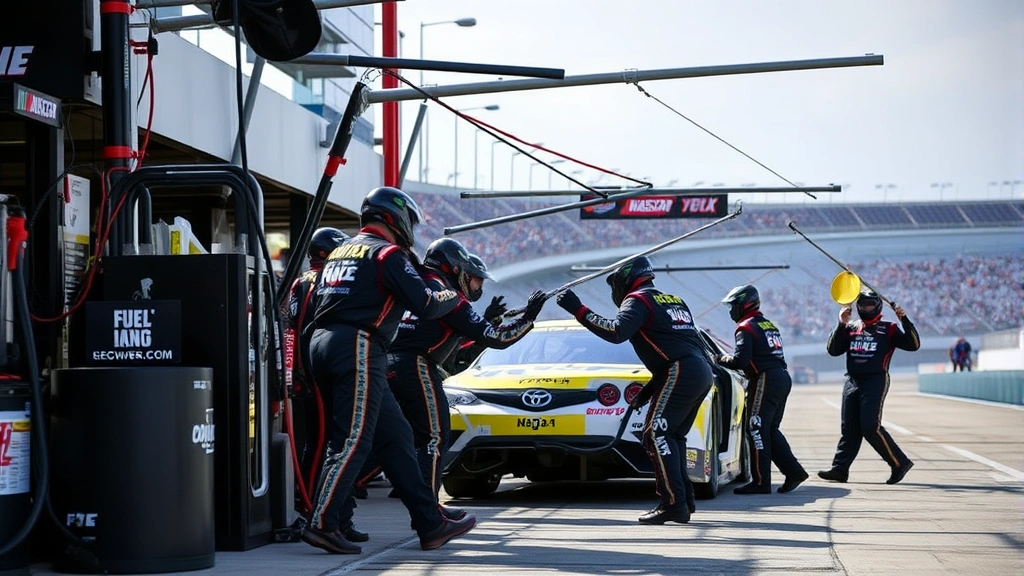
Fuel sponsorship also influences team strategy during races. Teams work with fuel suppliers’ technical representatives to optimize fuel consumption and performance throughout the event. This might involve adjusting driving techniques, modifying engine settings, or timing pit stops to maximize fuel efficiency—all factors that fuel sponsor experts help teams manage.
The Future of NASCAR Fuel Partnerships
NASCAR’s fuel partnerships continue evolving as the sport confronts environmental pressures, regulatory changes, and technological advancement. The future of racing fuel will likely involve significant transitions away from traditional leaded racing gasoline toward more sustainable alternatives.
Industry observers anticipate that NASCAR will eventually transition toward renewable or synthetic racing fuels that maintain performance characteristics while reducing environmental impact. This evolution aligns with broader trends in green technology innovations that emphasize sustainability without sacrificing performance or excitement.
The role of major oil companies in racing may also transform significantly. As the transportation sector increasingly shifts toward electrification, traditional fuel suppliers must diversify their business models. Some energy companies are repositioning themselves as comprehensive energy providers rather than solely gasoline suppliers, potentially investing in racing technologies powered by alternative energy sources.
NASCAR’s commitment to environmental responsibility will likely accelerate fuel partnership evolution. The sport recognizes that long-term sustainability requires addressing emissions, fuel consumption, and environmental impact. Fuel suppliers who develop innovative solutions to these challenges will likely maintain prominent roles in professional motorsports.
Staying informed about natural gas news and industry developments helps understand how energy transitions might affect motorsports. While NASCAR may not immediately shift to natural gas-powered racing, understanding energy industry trends provides insight into potential future directions for the sport.
Technology partnerships between fuel suppliers and racing teams will continue driving innovation. The expertise developed in high-performance racing applications often translates to consumer fuel formulations and engine technologies, creating spillover benefits for everyday drivers. This innovation cycle ensures that NASCAR fuel partnerships contribute to broader automotive and energy industry advancement.
FAQ
What is the official fuel brand for NASCAR?
Shell’s Pennzoil brand serves as the official fuel and lubricant supplier for NASCAR, maintaining one of the sport’s most significant fuel partnerships across multiple racing series.
Why does NASCAR use leaded fuel?
Leaded racing fuel provides higher octane ratings that prevent engine detonation under extreme compression and heat conditions, allowing engines to produce maximum horsepower safely. This distinguishes racing fuel from consumer gasoline, which has been unleaded since the 1970s.
How does racing fuel differ from regular gasoline?
Racing fuel contains much higher octane ratings (minimum 98 versus consumer premium at 91-93), includes lead additives, maintains specific volatility characteristics, and includes performance-enhancing additives formulated specifically for racing applications under extreme conditions.
Are alternative fuels being tested in NASCAR?
Yes, NASCAR is exploring sustainable racing fuels, ethanol blending, and electric vehicle technology as potential alternatives to traditional racing fuel, though current regulations still require internal combustion engines with traditional fuel.
How do fuel sponsorships affect team performance?
Fuel sponsors provide technical expertise, financial resources, and access to optimized fuel formulations that help teams extract maximum engine performance. Sponsors also contribute substantial funding that teams invest in vehicle development and competitive operations.
Why is fuel consistency important in NASCAR?
Fuel specifications ensure fair competition by eliminating fuel-related performance variations, preventing teams from gaining competitive advantages through non-compliant fuel, and maintaining safety standards across all competing vehicles.
What environmental concerns surround NASCAR racing fuel?
Primary concerns include lead emissions from racing fuel, high fuel consumption across race weekends, and overall carbon emissions from competition vehicles operating at maximum output. These factors prompt ongoing discussions about environmental sustainability in professional motorsports.
Understanding which gas brand fuels NASCAR reveals much about how professional motorsports operates and evolves. Shell’s Pennzoil partnership represents decades of technical collaboration, innovation, and competitive engagement that shapes racing performance. As the sport confronts environmental pressures and technological change, fuel partnerships will likely transform significantly, potentially embracing alternative energy sources and more sustainable practices. The future of NASCAR fuel likely involves continued innovation balancing performance excellence with environmental responsibility, ensuring the sport remains competitive while addressing sustainability challenges that increasingly concern both industry participants and fans.


