
Are Gas Golf Carts Eco-Friendly? Expert Insight on Environmental Impact
Golf carts have become ubiquitous across golf courses, residential communities, and commercial properties worldwide. However, as environmental consciousness grows, many owners and facilities managers are questioning whether gas-powered golf carts align with sustainability goals. The answer is more nuanced than a simple yes or no—it requires examining emissions, fuel consumption, operational practices, and viable alternatives.
Gas golf carts represent a significant source of localized air pollution and greenhouse gas emissions, particularly in areas with high concentrations of these vehicles. Unlike passenger vehicles subject to strict EPA emissions standards, golf carts operate with minimal regulatory oversight in most jurisdictions. This article explores the environmental reality of gas golf carts, their true ecological footprint, and what experts recommend for environmentally conscious facilities and individuals.
Understanding whether a gas golf cart is eco-friendly demands looking beyond simple marketing claims. We’ll examine the science, compare alternatives, and provide actionable insights for reducing your environmental impact in this sector.
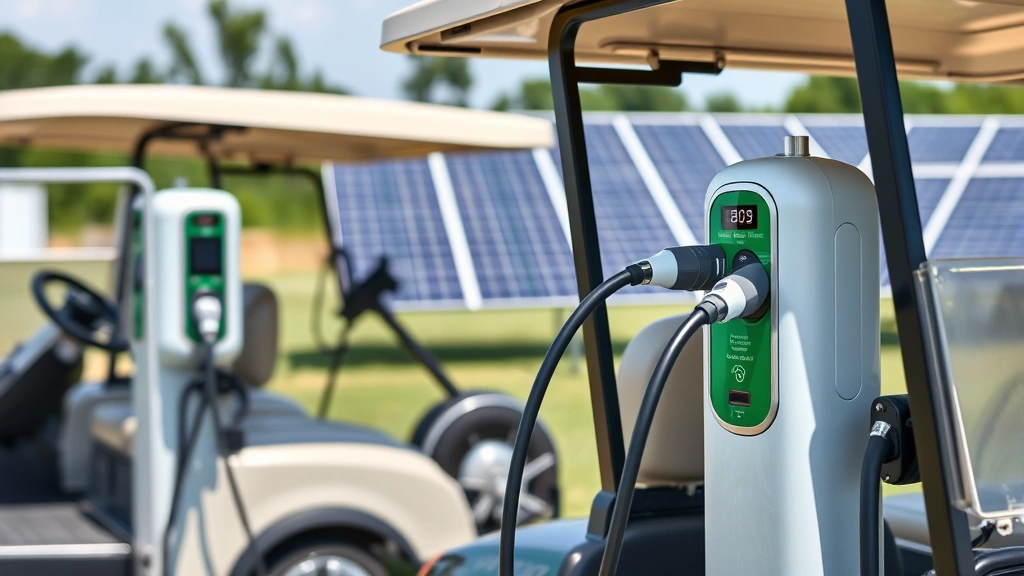
Environmental Impact of Gas Golf Carts
Gas golf carts, typically powered by four-stroke or two-stroke small engines (ranging from 10-20 horsepower), produce measurable environmental harm despite their modest size. These vehicles burn gasoline inefficiently due to their lightweight design and unoptimized engine configurations. The environmental impact extends across multiple dimensions: atmospheric emissions, groundwater contamination through fuel leaks, noise pollution, and habitat disruption in sensitive ecosystems.
According to the U.S. Environmental Protection Agency, small gasoline engines like those in golf carts are disproportionately polluting. A single gas golf cart operating for one hour produces emissions equivalent to driving a modern car for approximately 40 miles. When multiplied across thousands of facilities globally, this creates substantial cumulative environmental damage.
The problem intensifies in enclosed or poorly ventilated spaces, such as indoor golf facilities or covered parking areas, where exhaust concentrates and poses health risks to nearby individuals. Golf courses with 50 or more gas carts operating simultaneously create localized air quality issues that can affect workers, golfers, and surrounding communities.
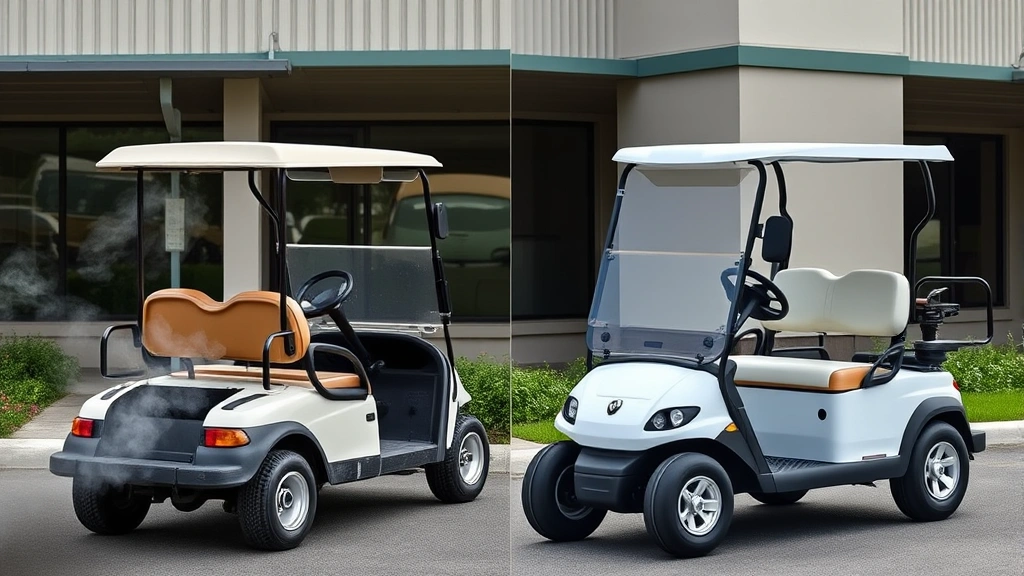
Emissions and Air Quality Concerns
Gas golf carts emit multiple harmful pollutants: nitrogen oxides (NOx), particulate matter (PM), volatile organic compounds (VOCs), and carbon monoxide (CO). These pollutants contribute to ground-level ozone formation, respiratory diseases, and climate change. Two-stroke engines are particularly problematic, as they can release 25-30% of their fuel unburned into the atmosphere.
The EPA’s Air Quality Division has documented that recreational and commercial small engines collectively emit more pollution than all automobiles combined in the United States. Golf carts represent a significant portion of this problem, especially in areas with high golf course density.
Particulate matter from gas golf carts is particularly concerning. These microscopic particles penetrate deep into lung tissue, causing inflammation and exacerbating asthma, bronchitis, and cardiovascular disease. Workers at golf facilities who spend extended hours near operating gas carts face cumulative health risks from chronic exposure to these emissions.
Key emissions data:
- One gas golf cart produces approximately 5-7 grams of NOx per hour
- Average PM emissions reach 0.5-1.0 grams per hour
- Two-stroke models can emit 25-30% unburned fuel
- Annual emissions from a single golf cart equal driving a car 400+ miles
- Facilities with 100+ carts produce air pollution equivalent to 40-50 automobiles
Communities near golf courses report higher incidence of air quality complaints during peak operating seasons. Children and elderly residents are particularly vulnerable to these localized pollution effects. The environmental justice dimension is significant: many golf courses operate in or near residential areas where cumulative pollution exposure already exceeds healthy levels.
Fuel Consumption and Carbon Footprint
While gas golf carts consume less fuel per hour than automobiles, their operational inefficiency creates a surprisingly high carbon footprint relative to distance traveled. Most gas golf carts operate at speeds between 12-14 mph, burning approximately 0.5-0.7 gallons per eight-hour day of moderate use.
This translates to significant annual fuel consumption and emissions. A golf facility operating 100 gas carts for 250 days annually consumes approximately 12,500-17,500 gallons of gasoline. This fuel consumption generates roughly 275,000-385,000 pounds of CO2 annually—equivalent to the carbon footprint of 30-40 passenger vehicles.
The carbon intensity becomes even more problematic when considering lifecycle emissions. Gasoline extraction, refining, transportation, and combustion create a comprehensive environmental burden. Additionally, fuel spills during refueling and storage leaks contaminate soil and groundwater, creating long-term environmental liabilities.
Annual carbon footprint comparison (100-cart facility, 250 operating days):
- Gas carts: 275,000-385,000 lbs CO2 equivalent
- Electric carts (grid electricity): 85,000-120,000 lbs CO2 equivalent
- Solar-charged electric carts: 15,000-25,000 lbs CO2 equivalent
- Offset through tree planting: 4,000-5,000 trees required annually
Understanding your facility’s true environmental footprint from golf cart operations is essential for making informed sustainability decisions. Many facilities dramatically underestimate their emissions impact.
Comparing Gas vs. Electric Golf Carts
The comparison between gas and electric golf carts clearly favors electric alternatives from an environmental perspective. Modern electric golf carts produce zero direct emissions, eliminate fuel combustion pollution, and operate with significantly lower overall lifecycle environmental costs.
Environmental comparison matrix:
| Factor | Gas Carts | Electric Carts |
|---|---|---|
| Direct emissions | 5-7 grams NOx/hour | Zero direct |
| Operational cost | $3,000-4,000/year | $800-1,200/year |
| Maintenance | High (oil changes, spark plugs) | Low (brake fluid, tires) |
| Noise level | 75-85 decibels | 50-60 decibels |
| Range per charge | 50-80 miles | 40-60 miles |
| Lifespan | 8-10 years | 10-15 years |
The advantages of electric vehicles extend beyond golf carts to all transportation sectors. Electric carts represent the most practical conversion opportunity for facilities seeking immediate environmental improvements with proven technology and established supply chains.
However, the environmental benefit of electric carts depends significantly on grid electricity sources. In regions powered predominantly by renewable energy, electric carts achieve 80-90% emissions reductions compared to gas models. Even in fossil fuel-heavy grids, they typically produce 60-70% fewer emissions due to superior energy conversion efficiency.
Maintenance and Lifecycle Environmental Costs
Gas golf carts generate environmental costs throughout their operational lifecycle, not just during fuel combustion. Regular maintenance requires frequent oil changes (every 50-100 hours), spark plug replacements, air filter changes, and fuel system cleaning. Each maintenance cycle produces hazardous waste requiring proper disposal.
Gas cart maintenance environmental impacts:
- Oil changes generate 5-10 quarts of used oil per cart annually (hazardous waste)
- Fuel system cleaning produces chemical-contaminated water
- Carburetor maintenance involves volatile organic compounds
- Air filters create non-biodegradable waste
- Fuel spills and leaks contaminate soil and groundwater
Electric carts eliminate most of these environmental hazards. They require no oil changes, produce no fuel waste, and generate minimal hazardous maintenance byproducts. Battery recycling, while important, represents a manageable environmental issue compared to continuous fuel and lubricant waste from gas carts.
The manufacturing phase presents another consideration. Electric cart batteries require mining and processing of lithium, cobalt, and other minerals. However, modern battery recycling programs recover 90-95% of these materials, creating circular economy benefits. Over a cart’s 10-15 year lifespan, the environmental benefit of zero emissions far exceeds the manufacturing impact.
Expert Recommendations for Sustainability
Environmental scientists and sustainability experts overwhelmingly recommend transitioning from gas to electric golf carts. This consensus reflects comprehensive lifecycle analysis demonstrating electric carts’ environmental superiority across all measurable metrics.
Expert recommendations include:
- Immediate conversion priority: Replace gas carts with electric models during normal replacement cycles, prioritizing high-use vehicles first
- Renewable energy integration: Pair electric cart charging with sustainable energy solutions such as solar arrays or wind power to maximize environmental benefits
- Fleet management optimization: Implement GPS tracking and route optimization to reduce unnecessary cart usage and energy consumption
- Charging infrastructure: Install Level 2 chargers powered by renewable energy for overnight charging during off-peak hours
- Employee education: Train operators on efficient driving practices to extend battery life and reduce energy consumption
- Monitoring and reporting: Track emissions reductions and share sustainability metrics with stakeholders to demonstrate commitment
The EPA’s Climate Division provides technical guidance and potential incentive programs for facilities transitioning to cleaner equipment. Many states offer tax credits and rebates for golf cart electrification projects.
Facilities should also consider that electric carts often provide operational benefits beyond environmental advantages: reduced noise pollution improves worker and golfer experience, lower maintenance costs improve profitability, and enhanced air quality creates healthier environments for all facility users.
Transitioning to Greener Alternatives
The transition from gas to electric golf carts requires strategic planning but remains economically viable for most facilities. Several pathways exist for implementation, depending on budget constraints and operational requirements.
Transition strategies:
- Phased replacement: Replace 10-20% of gas fleet annually as budget allows, beginning with highest-use vehicles
- Hybrid approach: Maintain limited gas cart inventory for specialized applications while electrifying primary fleet
- Leasing programs: Utilize electric cart leasing to avoid large capital expenditures and ensure access to latest technology
- Used electric carts: Purchase refurbished electric carts from other facilities to reduce initial investment costs
- Grant funding: Apply for environmental grants and sustainability incentives offered by state and local governments
Beyond cart replacement, facilities should explore broader green technology innovations that complement electrification efforts. Solar charging stations, battery storage systems, and smart charging management create comprehensive sustainability ecosystems.
The financial case for conversion strengthens when considering total cost of ownership. While electric carts typically cost 20-30% more upfront, their lower operational and maintenance costs create payback periods of 5-7 years. Over a 10-15 year lifespan, electric carts generate 40-50% cost savings compared to gas models.
Understanding the broader definition of sustainability helps facilities recognize that environmental responsibility and economic efficiency align in golf cart transitions. This convergence makes electrification an increasingly obvious choice for forward-thinking facility managers.
For comprehensive information about the broader sustainability landscape, explore our SustainWise Hub Blog for additional insights on environmental decision-making across multiple sectors and applications.
Frequently Asked Questions
Are gas golf carts truly bad for the environment?
Yes, gas golf carts produce disproportionate emissions relative to their size and use. A single gas cart emits as much pollution in one hour as driving a modern car for 40 miles. When multiplied across golf courses and facilities, they create significant cumulative environmental damage through air pollution, greenhouse gas emissions, and fuel waste.
How do gas golf carts compare to regular automobiles in terms of emissions?
While individual gas carts consume less fuel than cars, they operate with much lower emissions standards and efficiency. Per mile traveled, gas carts produce significantly higher emissions than EPA-regulated automobiles. However, carts’ limited range means total annual emissions depend heavily on usage patterns and facility size.
What are the main pollutants emitted by gas golf carts?
Gas carts emit nitrogen oxides (NOx), particulate matter (PM), volatile organic compounds (VOCs), and carbon monoxide (CO). Two-stroke engines are particularly problematic, releasing 25-30% of fuel unburned into the atmosphere. These pollutants contribute to ground-level ozone, respiratory disease, and climate change.
Can I make my gas golf cart more environmentally friendly?
While maintenance optimization and efficient operation help slightly, gas carts remain inherently polluting. Conversion to electric is the most effective environmental improvement. Some facilities use cleaner-burning fuel additives or synthetic oils, but these provide minimal environmental benefit compared to electrification.
How much does it cost to transition a fleet from gas to electric carts?
Initial costs vary based on fleet size and technology choices. Electric carts cost 20-30% more upfront ($8,000-12,000 per cart versus $6,000-9,000 for gas models). However, lower operational and maintenance costs create payback periods of 5-7 years, with total cost savings of 40-50% over the vehicle’s lifespan.
What environmental certifications exist for golf cart sustainability?
The Golf Course Superintendents Association of America (GCSAA) recognizes environmental stewardship through certification programs. Additionally, facilities pursuing LEED or similar green building certifications often include golf cart electrification as part of comprehensive sustainability strategies. The EPA’s Green Business Bureau provides guidance on sustainable operations.
Are electric golf carts reliable for all weather conditions?
Modern electric golf carts perform reliably in most weather conditions. Battery performance decreases slightly in extreme cold, reducing range by 10-20%, but carts remain fully operational. Lithium batteries (increasingly standard) provide better cold-weather performance than older lead-acid batteries. Rain and wet conditions pose no reliability issues for properly maintained electric carts.
What happens to electric golf cart batteries at end of life?
Modern battery recycling programs recover 90-95% of lithium, cobalt, and other valuable materials. Second-life applications exist for degraded batteries in stationary energy storage systems. Responsible recycling through certified programs ensures minimal environmental impact from battery disposal.


