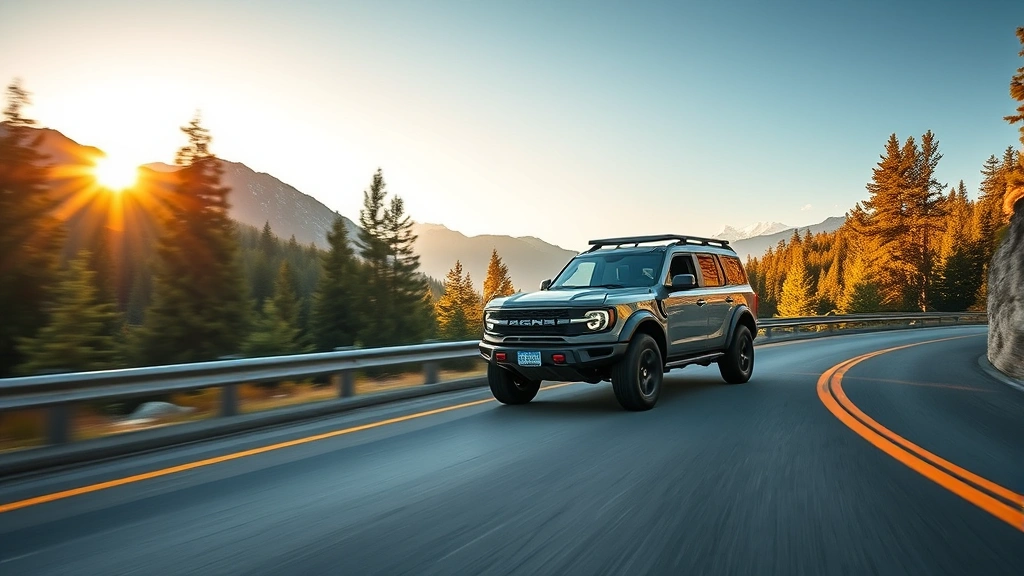
Ford Bronco Gas Mileage: Real Owner Insights and Sustainability Considerations
The Ford Bronco has made a triumphant return to the automotive market, capturing the hearts of off-road enthusiasts and adventure seekers alike. However, one question that consistently arises among potential buyers is about its fuel efficiency. Understanding Ford Bronco gas mileage requires diving into real owner experiences, comparing different model configurations, and considering how this vehicle fits into broader conversations about sustainable energy solutions in personal transportation. This comprehensive guide pulls together genuine owner insights, EPA ratings, and practical advice for maximizing efficiency in this capable SUV.
Whether you’re contemplating a purchase or already own a Bronco, understanding actual fuel consumption versus advertised figures can help you make informed decisions about your transportation choices and budget accordingly. Real-world driving conditions, maintenance practices, and driving habits significantly impact the fuel economy you’ll experience, and we’ll explore all these factors in detail.
Ford Bronco Gas Mileage: EPA Ratings vs. Real-World Performance
The Ford Bronco’s official EPA fuel economy ratings provide a baseline for what you might expect, but real-world results often tell a different story. The 2024 Ford Bronco with the 2.7L EcoBoost engine and four-wheel drive achieves an EPA-estimated 21 miles per gallon combined (18 city, 24 highway), while the 3.0L EcoBoost variant delivers slightly lower figures at 20 mpg combined (17 city, 23 highway). These numbers represent a reasonable middle ground for a vehicle in this category, but actual owner experiences frequently diverge from these estimates.
Many Bronco owners report achieving fuel economy figures that fall slightly below EPA estimates, typically ranging from 18 to 22 mpg depending on driving conditions and configuration. Some owners with two-door models and optimal driving habits have reported figures approaching the upper range, while those frequently tackling off-road terrain or driving in urban environments consistently see lower numbers. The variation underscores the importance of understanding how various factors influence your actual fuel consumption.
It’s worth noting that the EPA’s fuel economy testing methodology uses standardized conditions that don’t always reflect real-world driving patterns. Highway driving at consistent speeds tends to yield better results than the combined estimate, while aggressive acceleration, frequent stop-and-go traffic, and idling significantly reduce efficiency. Understanding this distinction helps set realistic expectations for your Bronco’s performance.
Owner Experiences: What Bronco Drivers Actually Report
Real owner insights provide invaluable perspectives that manufacturer specifications cannot capture. Across numerous owner forums and review platforms, Ford Bronco drivers share remarkably consistent feedback about fuel economy. Most owners with the 2.7L EcoBoost engine report achieving between 19-22 mpg under typical mixed driving conditions, with highway-heavy driving pushing toward the upper range and city driving settling closer to 19 mpg.
A notable pattern emerges when examining owner data: those who maintain their vehicles meticulously, use high-quality fuel, and employ fuel-efficient driving techniques consistently report better results. One owner documented a detailed log showing that after switching to premium fuel and adjusting driving habits, their combined fuel economy improved by nearly 2 mpg. Another owner reported that keeping tire pressure at optimal levels and reducing unnecessary weight in the vehicle contributed to measurable efficiency gains.
Seasonal variations also affect reported figures. During winter months, owners frequently note a 1-2 mpg decrease due to colder engine operation, denser air, and increased friction from winter tires. Conversely, warmer months typically yield the best fuel economy numbers. This seasonal pattern aligns with broader automotive trends and reflects the practical efficiency principles applicable across various contexts.
Off-road driving dramatically impacts fuel economy, with owners reporting 15-17 mpg when regularly navigating challenging terrain. This reduction reflects the increased rolling resistance, lower gear selections, and aggressive driving required for off-road conditions. Owners who primarily use their Broncos for weekend off-road adventures and maintain highway driving for regular commutes report the best overall efficiency numbers.
Engine Options and Their Fuel Efficiency Impact
Ford offers two primary engine options for the modern Bronco, each with distinct fuel economy characteristics. The 2.7L EcoBoost engine represents the efficiency-focused choice, delivering better fuel economy while maintaining respectable power output. This twin-turbocharged engine produces 310 horsepower and 400 pound-feet of torque, providing adequate performance for both on-road and light off-road driving while consuming less fuel than the alternative.
The 3.0L EcoBoost engine offers increased power and capability, producing 400 horsepower and 500 pound-feet of torque—a significant jump that appeals to owners prioritizing performance and towing capacity. However, this additional power comes with a fuel economy penalty, typically resulting in 1-2 mpg lower consumption across all driving conditions. For owners who regularly tow heavy loads or frequently engage in aggressive off-road driving, the power advantage may justify the efficiency trade-off.
Transmission selection also influences fuel economy. The ten-speed automatic transmission standard on all Bronco models provides multiple gear ratios that optimize engine efficiency across various speeds. This transmission automatically selects appropriate gears for fuel efficiency during highway cruising while enabling quick gear changes when acceleration is needed. The transmission’s efficiency directly contributes to achieving EPA-estimated fuel economy figures.
Comparing engine options within the context of alternative fuel considerations highlights why traditional gasoline engines remain prevalent despite efficiency concerns. Neither Bronco engine option offers hybrid or alternative fuel capabilities, positioning it as a conventional gasoline vehicle in an increasingly diverse automotive landscape. This reality shapes the environmental and economic calculations for potential Bronco buyers.
Factors Affecting Your Bronco’s Fuel Economy
Numerous variables significantly impact the fuel economy your Bronco actually delivers, often more substantially than engine choice or EPA ratings alone. Understanding these factors empowers owners to make informed decisions about vehicle operation and maintenance.
Tire Pressure and Condition: Under-inflated tires create increased rolling resistance, forcing the engine to work harder and consume more fuel. Maintaining tire pressure at manufacturer-recommended levels (typically found on a placard inside the driver’s door) can improve fuel economy by up to 3 percent. Additionally, tire tread condition and overall quality affect rolling resistance; high-performance all-terrain tires may reduce fuel economy by 2-4 percent compared to highway-focused alternatives.
Vehicle Load and Cargo: The Bronco’s payload capacity allows carrying substantial weight, but each additional 100 pounds reduces fuel economy by approximately 1-2 percent. Removing unnecessary items from the vehicle and avoiding roof racks when not needed can provide measurable efficiency improvements. This principle extends to aftermarket modifications; bumpers, winches, and lift kits all increase weight and negatively impact fuel consumption.
Driving Habits and Conditions: Aggressive acceleration, rapid braking, and excessive idling dramatically reduce fuel economy. Smooth, gradual acceleration and maintaining steady speeds optimize efficiency. Highway driving at 55-65 mph produces better fuel economy than highway driving at 75+ mph, as aerodynamic drag increases exponentially at higher speeds. Urban driving with frequent stops and starts inherently produces lower fuel economy than highway driving regardless of driver skill.
Vehicle Maintenance: A well-maintained Bronco operates more efficiently than one with deferred maintenance. Regular oil changes using the manufacturer-recommended oil grade, clean air filters, and properly functioning fuel injectors all contribute to optimal fuel economy. A dirty air filter can reduce fuel economy by 10 percent or more, making this simple maintenance task surprisingly impactful.
Climate and Weather: Cold weather reduces fuel economy through multiple mechanisms: thicker oil flows more slowly, reducing engine efficiency; cold tires have higher rolling resistance; and engines require longer warm-up periods. Air conditioning operation also impacts fuel economy, reducing efficiency by 10-25 percent depending on ambient temperature and cooling demand. Extreme heat similarly affects engine efficiency, though typically less dramatically than cold weather.
Four-Wheel Drive Engagement: Operating in four-wheel drive mode, particularly with locking differentials engaged, increases mechanical resistance and reduces fuel economy by 5-10 percent. Using four-wheel drive only when necessary and returning to two-wheel drive on roads where adequate traction exists helps maintain better fuel economy for daily driving.
Practical Tips to Improve Fuel Efficiency
Bronco owners can implement numerous strategies to maximize fuel economy and reduce overall fuel costs. These actionable techniques range from simple driving behavior adjustments to more involved maintenance practices.
Optimize Your Driving Style: Accelerate smoothly and gradually, avoiding rapid throttle application. Anticipate traffic patterns and brake situations to allow for gentle deceleration rather than sudden stops. Maintain steady speeds whenever possible, particularly on highways where maintaining 60 mph rather than 70 mph can improve fuel economy by 10-15 percent. Remove your foot from the accelerator well before braking points, allowing the vehicle’s momentum to carry it forward.
Plan Routes Efficiently: Consolidating trips reduces total driving distance and the time spent idling or in inefficient driving patterns. Using navigation systems to find routes that minimize traffic congestion and frequent stops helps maintain better fuel economy. Avoiding peak traffic hours when possible enables more consistent highway speeds and reduced stop-and-go driving.
Maintain Proper Tire Pressure: Check tire pressure monthly and before long trips. Slightly elevated tire pressure (within safe limits specified by the manufacturer) can marginally improve fuel economy, though safety remains paramount. Quality tires designed for fuel efficiency may provide measurable improvements compared to budget alternatives.
Regular Maintenance Schedule: Follow Ford’s recommended maintenance intervals for oil changes, filter replacements, and fluid checks. Clean fuel injectors and properly functioning oxygen sensors optimize combustion efficiency. A tuning-focused mechanic can identify and correct issues that negatively impact fuel economy, often recovering efficiency losses that develop over time.
Reduce Vehicle Weight: Remove roof racks, aftermarket bumpers, and unnecessary equipment when not actively needed. This simple practice can improve fuel economy by 1-3 percent, particularly for highway driving. Consider the trade-off between capability and efficiency when deciding which aftermarket modifications to install.
Monitor Fuel Economy Regularly: Track your fuel economy by recording fill-up details and mileage. This practice helps identify when your vehicle’s efficiency decreases unexpectedly, signaling potential maintenance issues. Many modern vehicles provide real-time fuel economy feedback through dashboard displays, enabling immediate awareness of how driving behaviors affect consumption.
Consider Fuel Grade: While most Bronco models function adequately on regular unleaded gasoline, some owners report improved fuel economy with premium fuel, particularly in vehicles with the 3.0L engine. The improvement typically ranges from 0.5-1 mpg, which may or may not justify the premium fuel cost depending on local pricing. Experiment carefully and track results before committing to premium fuel exclusively.
Comparing Bronco Efficiency to Competitors
Understanding how the Ford Bronco’s fuel economy compares to competing vehicles provides important context for evaluating its efficiency. The Bronco’s primary competitors include the Jeep Wrangler, Jeep Grand Cherokee, Chevrolet Blazer, and GMC Jimmy, each with distinct fuel economy profiles.
The Jeep Wrangler, a direct competitor in the off-road-focused segment, achieves EPA-estimated fuel economy of 18-22 mpg depending on engine and drivetrain configuration. Four-door models typically achieve lower figures than two-door variants, similar to Bronco patterns. The Wrangler’s fuel economy generally aligns closely with comparable Bronco configurations.
The Jeep Grand Cherokee, positioned in the three-row SUV segment, achieves 20-24 mpg with smaller turbocharged engines, though larger engine options deliver lower efficiency. The Grand Cherokee’s additional size and weight result in somewhat different efficiency characteristics than the Bronco, making direct comparison challenging.
The Chevrolet Blazer and GMC Jimmy represent more efficiency-focused competitors in the mid-size SUV category, achieving 21-26 mpg depending on engine selection and driving conditions. These vehicles prioritize on-road comfort and efficiency somewhat more than the Bronco’s off-road capability, reflected in their fuel economy advantage.
Comparing these vehicles highlights that the Bronco’s fuel economy sits squarely in the middle of its competitive set. The vehicle trades some efficiency for enhanced off-road capability and ruggedness compared to more road-focused competitors. This trade-off aligns with the Bronco’s intended purpose as a capable adventure vehicle rather than an efficiency-optimized commuter.
Environmental Impact and Sustainable Alternatives
The Ford Bronco’s fuel consumption carries environmental implications worth considering within broader sustainability discussions. With typical owners consuming 3,000-4,000 gallons annually (based on 15,000-20,000 miles at 18-22 mpg), each Bronco produces approximately 6.5-9 tons of carbon dioxide annually. Understanding this environmental footprint helps contextualize the vehicle’s sustainability impact.
From an environmental perspective, the advantages of electric vehicles in reducing transportation emissions become apparent. Electric vehicles produce zero direct emissions and, when charged with renewable electricity, dramatically reduce overall carbon footprint compared to gasoline-powered vehicles. However, electric vehicle technology hasn’t yet produced a direct Bronco equivalent with comparable off-road capability and adventure-focused design.
The concept of sustainability in transportation extends beyond simple fuel economy metrics. Factors including vehicle longevity, manufacturing impact, and end-of-life recycling all influence overall environmental footprint. The Bronco’s reputation for durability and capability to remain in service for extended periods potentially reduces the environmental cost per year of ownership compared to vehicles requiring replacement more frequently.
For environmentally conscious Bronco owners seeking to minimize impact, several strategies prove effective. Maximizing fuel economy through the techniques discussed earlier directly reduces carbon emissions. Selecting the 2.7L EcoBoost engine over the 3.0L variant reduces annual emissions by approximately 500-750 pounds of CO2. Considering whether the vehicle’s capabilities justify its environmental cost, and potentially offsetting emissions through verified carbon credit programs, provides additional options for environmentally aware owners.
The transportation sector represents a significant portion of global greenhouse gas emissions, and individual vehicle choices collectively shape environmental outcomes. While the Bronco’s fuel economy improvement over older generation vehicles demonstrates automotive efficiency progress, the broader transition toward sustainable energy solutions in transportation continues advancing. Hybrid and fully electric options will increasingly dominate the market, eventually offering off-road capable alternatives that align more closely with climate goals.
Understanding your Bronco’s fuel consumption and environmental impact encourages informed decision-making about usage. Choosing this capable vehicle for purposes where its specific capabilities provide genuine value—rather than as a primary daily commuter where efficiency-focused vehicles would suffice—represents a more sustainable approach to vehicle ownership.
FAQ
What is the average fuel economy for a Ford Bronco?
The EPA-estimated average fuel economy for a 2024 Ford Bronco with the 2.7L EcoBoost engine is 21 mpg combined (18 city, 24 highway). Real-world owner experiences typically range from 19-22 mpg depending on driving conditions, maintenance, and driving habits. The 3.0L EcoBoost variant achieves approximately 20 mpg combined, or 1-2 mpg lower across all conditions.
Does the Bronco’s four-wheel drive system affect fuel economy?
Yes, operating in four-wheel drive mode reduces fuel economy by approximately 5-10 percent compared to two-wheel drive operation. Engaging locking differentials for serious off-road driving further reduces efficiency. Using four-wheel drive only when necessary and returning to two-wheel drive for on-road driving helps maintain better overall fuel economy.
Can I improve my Bronco’s fuel economy through modifications?
Modifications that reduce vehicle weight, such as removing aftermarket bumpers or roof racks when not needed, provide the most practical efficiency improvements. Performance tuning may optimize fuel injection and engine parameters, though results vary. Conversely, modifications that increase weight or aerodynamic drag, such as large lift kits or bumpers, typically reduce fuel economy.
Is the 2.7L or 3.0L EcoBoost engine more fuel-efficient?
The 2.7L EcoBoost engine delivers better fuel economy, typically achieving 1-2 mpg higher efficiency than the 3.0L variant. The 2.7L represents the better choice for owners prioritizing fuel economy, while the 3.0L suits those requiring maximum power and towing capacity despite the efficiency penalty.
How does Bronco fuel economy compare to competing vehicles?
The Ford Bronco’s fuel economy aligns closely with direct competitors like the Jeep Wrangler. More road-focused competitors like the Chevrolet Blazer achieve slightly better fuel economy, typically 21-26 mpg. The Bronco’s fuel economy reflects its design priorities emphasizing off-road capability alongside on-road efficiency.
What driving habits most significantly impact fuel economy?
Smooth acceleration, maintaining steady speeds (particularly 55-65 mph on highways), minimizing idle time, and avoiding rapid braking produce the most substantial fuel economy improvements. Aggressive driving can reduce fuel economy by 20-30 percent compared to conservative driving techniques.
Does cold weather significantly affect Bronco fuel economy?
Yes, cold weather typically reduces fuel economy by 1-2 mpg due to increased engine friction, higher rolling resistance from cold tires, and longer engine warm-up periods. Winter tires and extended idling further reduce efficiency during cold months.


