GE Gas Stove: Is It Energy Efficient? Expert Review
When it comes to kitchen appliances, the choice between gas and electric cooking has long been a debate among homeowners concerned about energy consumption and environmental impact. GE, a trusted name in home appliances for over a century, offers a range of gas stove models that promise efficiency and performance. But does a GE gas stove truly deliver on energy efficiency, or is it simply a conventional choice that contributes unnecessarily to your household’s carbon footprint?
This comprehensive review examines whether GE gas stoves are genuinely energy efficient, how they compare to alternative cooking methods, and what factors you should consider before making your purchase decision. We’ll explore the technical specifications, real-world performance data, and sustainability implications to help you make an informed choice that aligns with both your cooking needs and environmental values.
Understanding Gas Stove Efficiency Ratings
Energy efficiency for gas stoves is measured differently than many other household appliances because cooking appliances don’t have standardized ENERGY STAR certification ratings like refrigerators or dishwashers. Instead, gas stove efficiency is primarily evaluated through thermal efficiency—the percentage of heat energy actually transferred to cookware versus heat lost to the surrounding environment.
Most conventional gas stoves, including many GE gas stove models, operate at approximately 70-75% thermal efficiency under ideal conditions. This means that roughly 25-30% of the energy produced by the burners dissipates into the air rather than cooking your food. This is a fundamental limitation of gas cooking technology and applies across most manufacturers, not just GE.
The efficiency rating depends on several factors including burner design, grate configuration, and how well heat is contained during cooking. The EPA provides guidelines on combustion efficiency for various appliances, though gas stoves fall into a category with less stringent regulations than heating systems.
To understand whether a GE gas stove is right for your sustainability goals, you must first recognize that no gas stove is inherently “energy efficient” in the way modern induction cooktops are. The real question becomes: what trade-offs are you willing to make between cooking performance, fuel source, and environmental impact?
GE Gas Stove Models and Their Specifications
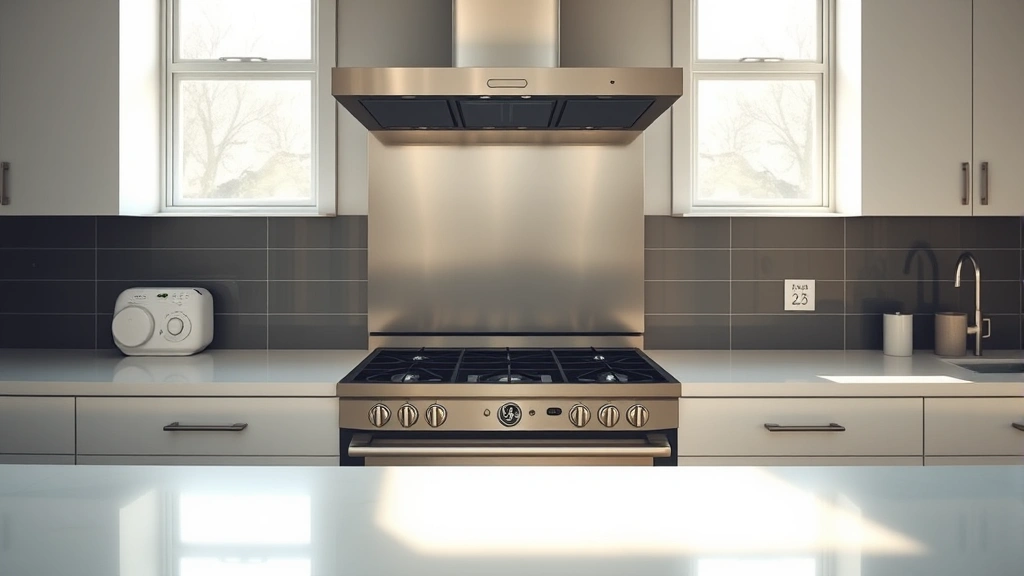
GE manufactures several gas stove lines across different price points and feature sets. Their portfolio includes slide-in models, freestanding units, and professional-style ranges. Common GE gas stove configurations feature:
- Sealed burners (which reduce heat loss and are easier to clean)
- Cast iron grates for durability and heat distribution
- Multiple burner sizes for versatile cooking
- Electronic ignition systems (more efficient than pilot lights)
- Convection ovens in premium models
Popular GE models like the JGB645 and JGB735 series include electronic ignition, which is a positive efficiency feature. Electronic ignition eliminates the need for continuously burning pilot lights, reducing gas consumption by approximately 5-10% compared to older models with standing pilots. This represents one of the few genuine efficiency improvements GE has incorporated into their gas stove designs.
However, even with these improvements, a GE gas stove remains fundamentally limited by the thermodynamic properties of open-flame cooking. The heat produced by gas burners disperses readily into your kitchen, which can increase air conditioning costs during warm months—an often-overlooked efficiency penalty.
Energy Efficiency vs. Cooking Performance
Here’s where the GE gas stove discussion becomes nuanced: energy efficiency doesn’t always align with cooking performance. Many professional chefs and serious home cooks prefer gas because of its responsiveness, precision, and the ability to achieve high temperatures quickly. From a pure cooking perspective, gas excels.
The instant heat adjustment, visual flame indication, and superior heat distribution of gas burners make it an excellent choice for specific cooking techniques like searing, wok cooking, and high-heat applications. If you’re someone who regularly uses these cooking methods, the performance advantages might justify accepting lower efficiency ratings.
GE gas stoves typically deliver this cooking performance reliably. Their burners heat up quickly, maintain steady temperatures, and allow fine-tuned flame control. But this performance advantage comes at an efficiency cost—you’re trading energy conservation for culinary capability.
When evaluating whether a GE gas stove meets your needs, honestly assess your cooking habits. Do you actually use high-heat techniques regularly, or would a more efficient cooking method serve you equally well? This personal assessment matters more than any specification sheet.
Environmental Impact of Natural Gas Cooking
Beyond thermal efficiency, the environmental story of a GE gas stove includes the source and nature of the fuel itself. Natural gas, while cleaner than coal or oil, is not a renewable energy source. It’s a fossil fuel extracted from underground reserves, and its extraction, processing, and transportation all carry environmental costs.
When natural gas burns in your GE gas stove, it produces carbon dioxide (CO2) and other combustion byproducts. A typical household using a gas stove generates approximately 0.5-1 ton of CO2 annually from cooking alone. Over a 15-year stove lifespan, that accumulates to 7.5-15 tons of carbon emissions attributable solely to cooking.
Additionally, gas stoves produce indoor air quality concerns that shouldn’t be ignored. Combustion byproducts including nitrogen dioxide (NO2), formaldehyde, and carbon monoxide are released directly into your home’s air. Studies from organizations like the American Lung Association indicate that gas cooking contributes meaningfully to indoor air pollution, particularly in homes without adequate ventilation.
If your kitchen lacks a properly functioning range hood, or if you rarely use it while cooking, a GE gas stove contributes more significantly to indoor pollution than many homeowners realize. This is an often-overlooked efficiency and health consideration that extends beyond simple energy consumption metrics.
For households committed to reducing their environmental footprint, the cumulative impact of gas stove emissions—both outdoor carbon and indoor air quality—represents a meaningful opportunity for improvement through appliance selection.

Comparing Gas to Electric and Induction Alternatives
To properly evaluate GE gas stove efficiency, direct comparison with alternative cooking technologies provides essential context:
Electric Coil Stoves: These are roughly equivalent to gas stoves in thermal efficiency (70-75%), but they respond more slowly to temperature adjustments. If powered by renewable electricity, they represent a lower-carbon option despite similar efficiency ratings.
Electric Smooth-Top Stoves: These offer slightly better efficiency (75-80%) and easier cleaning, but still lag significantly behind induction technology.
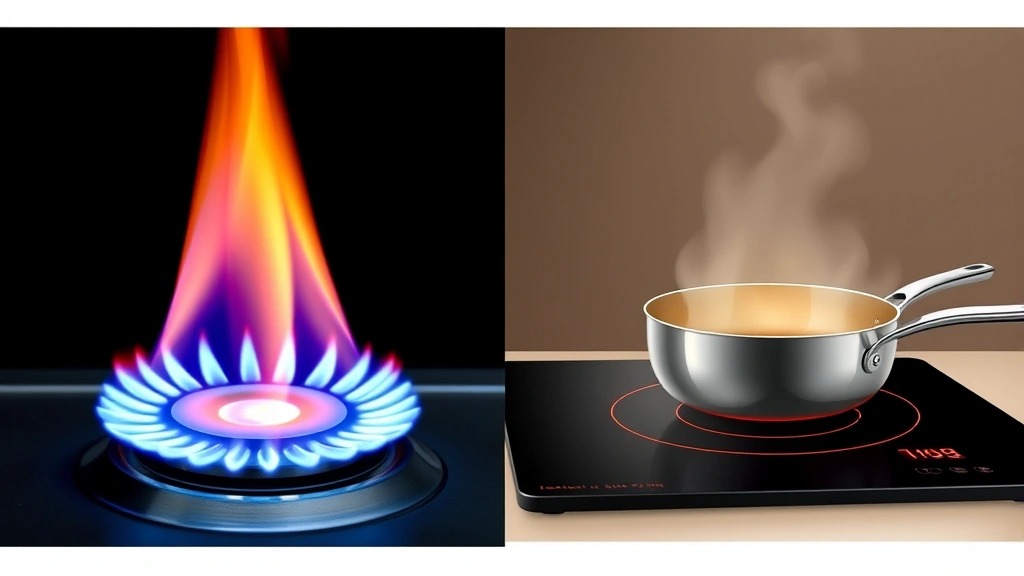
Induction Cooktops: These represent a genuine efficiency breakthrough, operating at 85-90% thermal efficiency. Induction transfers energy directly to ferrous cookware through electromagnetic fields, minimizing heat loss. The energy savings are substantial—induction uses approximately 25-30% less energy than gas for equivalent cooking tasks. Additionally, induction produces zero direct emissions and no indoor air quality concerns.
The efficiency gap between a GE gas stove (70-75%) and an induction cooktop (85-90%) might seem modest percentage-wise, but across years of use, it translates to meaningful energy consumption and cost differences. For a household using their stove daily, switching from gas to induction could reduce cooking-related energy consumption by 20-25%.
When evaluating sustainable energy solutions for your home, induction cooking represents a more efficient alternative, though GE gas stoves offer superior cooking performance if that’s your priority.
Cost Analysis: Operating Expenses Over Time
While a GE gas stove might have a lower purchase price than premium induction cooktops, the total cost of ownership extends far beyond the initial investment. Consider these financial factors:
Fuel Costs: Natural gas prices fluctuate, but average American households spend $30-50 monthly on gas cooking. Over a 15-year stove lifespan, that’s $5,400-9,000 in fuel costs. Induction cooking powered by renewable electricity costs roughly $10-20 monthly, totaling $1,800-3,600 over the same period—a savings of $3,600-5,400.
Maintenance and Repairs: Gas stoves require periodic maintenance including burner cleaning, igniter replacement, and potential gas line servicing. These costs average $100-300 annually. Induction cooktops have virtually no moving parts and require only surface cleaning, reducing maintenance to nearly zero.
Home Value Considerations: As environmental consciousness increases among home buyers, properties with modern induction cooking and green technology innovations increasingly command premium prices. While a GE gas stove won’t negatively impact home value, it represents dated technology that forward-thinking buyers increasingly avoid.
Energy Rebates: Many utility companies and government programs offer rebates for upgrading to induction cooking or other efficient appliances. These incentives can offset 20-30% of induction cooktop costs, further improving the financial equation compared to gas stoves.
From a purely financial perspective over the long term, while gas stoves have lower upfront costs, more efficient alternatives often deliver superior value when total operating costs are calculated.
Maintenance and Longevity Considerations
GE gas stoves are generally well-manufactured and reliable, with typical lifespans of 15-20 years. However, several maintenance considerations affect their long-term efficiency:
Burner Degradation: Over time, gas burner ports can become clogged with food residue and mineral deposits, reducing flame quality and heat distribution. This degradation means your GE gas stove becomes progressively less efficient as it ages, even if it continues functioning.
Seal Deterioration: Sealed burner designs (which GE uses in most models) eventually develop leaks around the seals, reducing efficiency and requiring professional repair or replacement.
Ignition System Reliability: Electronic ignition systems eventually fail, and replacement costs typically range from $150-400 per burner. This represents a significant expense in the appliance’s later years.
Grate and Grill Maintenance: Cast iron grates require regular cleaning and occasional seasoning to prevent rust and maintain optimal heat conductivity. Neglected grates reduce cooking efficiency noticeably.
Induction cooktops, by contrast, have virtually no maintenance requirements beyond occasional surface cleaning. Their solid-state construction means no moving parts to degrade, no seals to leak, and no ignition systems to fail. This durability translates to more consistent long-term efficiency and lower lifetime costs.
When planning a kitchen renovation or appliance replacement, considering maintenance requirements alongside initial efficiency ratings provides a more complete picture of long-term value and environmental impact.
FAQ
Is a GE gas stove truly energy efficient?
A GE gas stove operates at approximately 70-75% thermal efficiency, which is average for gas cooking but significantly lower than modern induction cooktops (85-90% efficiency). While GE’s electronic ignition and sealed burners represent efficiency improvements over older models, gas cooking technology itself has inherent limitations that prevent high efficiency ratings. Whether a GE gas stove is “efficient enough” depends on your priorities—if cooking performance matters more than energy consumption, gas excels; if sustainability and efficiency are paramount, induction is superior.
How much can I save by switching from a GE gas stove to induction?
Annual savings depend on your cooking frequency and local energy prices. A typical household switching from gas to induction can save $200-400 annually on fuel costs. Over a 15-year period, combined with reduced maintenance expenses, total savings often reach $3,600-5,400. Additionally, you’ll benefit from improved indoor air quality and reduced carbon emissions, which carry environmental value beyond direct financial savings.
Do GE gas stoves produce harmful indoor air quality issues?
Yes, gas stoves including GE models produce combustion byproducts including nitrogen dioxide, formaldehyde, and carbon monoxide. In homes without proper ventilation or those where range hoods aren’t regularly used, gas cooking contributes meaningfully to indoor air pollution. This represents a health consideration independent of energy efficiency metrics. Induction cooking produces zero emissions and eliminates this concern entirely.
What’s the environmental impact of cooking with a GE gas stove?
A typical household using a GE gas stove generates approximately 0.5-1 ton of annual CO2 emissions from cooking alone. Over a 15-year stove lifespan, this accumulates to 7.5-15 tons of carbon emissions. Additionally, natural gas extraction and distribution carry environmental costs. Switching to induction powered by renewable electricity can reduce cooking-related emissions by 80-90%, making it a substantially more environmentally responsible choice.
Are there any advantages of a GE gas stove over induction cooktops?
Yes, GE gas stoves offer distinct advantages for certain cooking applications. Gas provides instant heat adjustment, visible flame control, and superior performance for high-heat techniques like searing and wok cooking. Many professional chefs prefer gas for these reasons. If you regularly employ these cooking methods, the performance advantages might justify accepting lower efficiency ratings. However, for most home cooks, induction provides adequate performance with dramatically better efficiency and environmental benefits.
How does GE compare to other gas stove manufacturers regarding efficiency?
GE’s efficiency performance is comparable to other major manufacturers like Whirlpool, LG, and Samsung. All conventional gas stoves operate within the 70-75% thermal efficiency range due to the fundamental limitations of gas cooking technology. The differences between manufacturers are primarily in build quality, reliability, and cooking features rather than efficiency. If gas cooking is your choice, GE represents a solid option among similarly efficient alternatives.
Should I upgrade my GE gas stove to induction?
This decision depends on several factors: your cooking habits (induction excels for most applications but some specialized techniques remain easier with gas), your environmental values, your budget for replacement, and your kitchen’s electrical capacity (induction requires adequate electrical infrastructure). If your gas stove functions adequately and you’re not planning a kitchen renovation, replacement might not be economically justified immediately. However, when natural replacement becomes necessary, induction represents the more efficient, sustainable, and ultimately more cost-effective long-term choice. Visit the SustainWise Hub Blog for additional resources on sustainable kitchen choices.