Induction vs Gas: Chef’s Energy Efficiency Guide
The kitchen is one of the most energy-intensive spaces in any home or restaurant. Choosing between induction and gas cooking represents one of the most impactful decisions for both your culinary performance and environmental footprint. While gas cooktops have dominated professional kitchens for decades, induction technology has revolutionized how we think about cooking efficiency, safety, and sustainability.
This comprehensive guide explores the critical differences between these two cooking methods, examining energy consumption, cooking performance, environmental impact, and long-term cost considerations. Whether you’re a home cook seeking to reduce your carbon footprint or a professional chef optimizing kitchen operations, understanding the induction versus gas debate is essential for making an informed decision that aligns with both your culinary needs and sustainability goals.
How Induction and Gas Cooktops Work
Understanding the fundamental mechanics of each cooking technology provides crucial insight into why they perform so differently. Gas cooktops operate through combustion—natural gas or propane burns in burners, creating an open flame that heats cookware directly. This method has remained largely unchanged for over a century, though modern versions include improved ignition systems and burner designs.
Induction cooktops, by contrast, use electromagnetic fields to generate heat directly within compatible cookware. When you place a ferromagnetic pan on an induction surface, electrical current flowing through copper coils beneath the cooktop creates a magnetic field. This field induces electrical currents in the pan’s base, causing the cookware itself to become the heat source. The cooktop surface remains relatively cool, with heat generated only where the pan makes contact.
This fundamental difference explains why induction technology offers superior efficiency. With gas cooking, significant heat energy escapes into the surrounding air and kitchen environment. Studies from the U.S. Department of Energy indicate that approximately 65-75% of the energy from a gas flame dissipates away from the cookware. Induction cooking, conversely, directs 80-90% of electrical energy directly into the cooking vessel.
Energy Efficiency Comparison
Energy efficiency represents perhaps the most compelling argument favoring induction technology. The numbers are striking and consistent across independent testing. An induction cooktop converts approximately 85-90% of electrical energy into usable heat for cooking. Gas cooktops, even high-end commercial models, achieve only 65-75% efficiency under optimal conditions.
This efficiency gap translates directly to measurable energy consumption differences. Boiling water on an induction cooktop typically requires 25-30% less energy than gas cooking. For a family preparing meals daily, this compounds into significant annual energy savings. A household cooking three meals per day could save 500-1,000 kilowatt-hours annually by switching from gas to induction, depending on usage patterns and local electricity rates.
The speed advantage further amplifies efficiency benefits. Induction cooktops heat cookware nearly instantaneously—water boils in 3-4 minutes compared to 8-12 minutes on gas. Faster cooking times mean less total energy consumption and reduced kitchen heat buildup, which decreases air conditioning demands during warm months. Professional kitchens benefit enormously from this speed advantage, as rapid heat response enables faster service and higher table turnover.
When considering sustainable energy solutions, induction cooktops become particularly attractive when paired with renewable electricity sources. A home powered by solar panels or connected to a grid with substantial wind and hydroelectric capacity realizes genuine emissions reductions with induction cooking. Even on a standard electrical grid, the superior efficiency of induction means lower total energy demand.
Gas cooktops present a different efficiency calculation. Natural gas combustion produces carbon dioxide and methane, with the latter being a potent greenhouse gas. Recent research indicates that gas cooking accounts for more kitchen-related emissions than previously understood, particularly when accounting for methane leakage throughout the supply chain.
Cooking Performance and Heat Control
Professional chefs have traditionally preferred gas cooktops for one compelling reason: precise, immediate heat control. The ability to adjust flame intensity instantly and see the flame response provides tactile feedback that many experienced cooks consider irreplaceable. Gas allows dramatic heat variations—from gentle simmering to intense searing—with a simple knob adjustment.
Modern induction cooktops have closed this gap considerably. High-quality induction units now offer precise temperature control and rapid response to setting changes. Power levels typically range from 1-10 or 1-100, with increments allowing fine-tuning equivalent to gas flame adjustment. The difference is that induction heat responds electronically rather than through flame adjustment, yet the practical cooking results are nearly identical for most applications.
One genuine advantage gas retains is versatility with cookware. Any pot or pan works on gas, including copper-bottomed, aluminum, and specialty vessels. Induction requires ferromagnetic cookware—typically stainless steel or cast iron. While this represents a limitation, most modern cookware is induction-compatible, and the cost of replacing non-compatible pans is often recouped through energy savings within 2-3 years.
Heat distribution differs between methods as well. Gas flames concentrate heat at the point of contact, potentially creating hot spots on flat-bottomed cookware. Induction heats the entire pan base more uniformly, which some cooks find superior for delicate applications like sauce-making or chocolate tempering. Cast iron, which works excellently on induction, distributes heat remarkably evenly due to its thermal mass properties.
For simmering and low-heat cooking, induction excels. Maintaining consistent, gentle heat is simpler on induction than managing a minimal gas flame. This advantage proves particularly valuable for applications like keeping stocks warm, melting chocolate, or preparing delicate custards where precise temperature control prevents overcooking.
Environmental Impact Analysis
The environmental case for induction cooking extends beyond direct energy consumption. A comprehensive lifecycle analysis reveals multiple environmental advantages. Natural gas extraction, processing, and transportation create substantial emissions before the fuel even reaches your home. Methane leakage throughout the supply chain—estimated at 1-5% of total gas delivered—represents wasted energy and potent greenhouse gas emissions.
Induction cooktops eliminate direct combustion in the kitchen, eliminating indoor air quality degradation from gas cooking. Research published in environmental health journals indicates that gas cooking produces nitrogen dioxide and other pollutants at concentrations that can exceed outdoor air quality standards. This indoor air pollution particularly affects children’s respiratory development and asthma incidence. By choosing induction, you improve household air quality while reducing environmental impact.
When evaluating your broader environmental footprint, kitchen electrification through induction cooking represents a meaningful step. Electrifying cooking, heating, and transportation—moving away from direct fossil fuel combustion—enables integration with renewable energy sources. This transition is fundamental to decarbonization strategies endorsed by climate scientists and environmental organizations.
The electricity grid itself continues becoming cleaner in most developed nations. Coal’s share of electricity generation has declined significantly, while renewable sources have expanded rapidly. This means that even an induction cooktop powered by today’s grid is cleaner than gas, and becomes progressively cleaner as renewable energy penetration increases. Gas cooktops, conversely, remain locked into fossil fuel combustion regardless of grid improvements.
Manufacturing impacts differ between technologies. Gas cooktops require fewer raw materials and simpler manufacturing processes. Induction cooktops contain more sophisticated electronics and require rare earth elements in some components. However, the operational efficiency advantage over a cooktop’s 15-20 year lifespan far outweighs these manufacturing impacts. An induction cooktop manufactured with more materials still produces lower lifetime environmental impact than a gas alternative.
Safety Considerations
Safety advantages strongly favor induction technology. Gas cooktops present combustion hazards—open flames can ignite nearby materials, and gas leaks pose explosion and carbon monoxide risks. Induction cooktops eliminate these hazards entirely. The cooktop surface doesn’t produce heat independently; heat only develops when ferromagnetic cookware contacts the surface, then dissipates immediately when cookware is removed.
The cooktop surface remains cool to the touch (though it warms from contact with hot cookware), dramatically reducing burn injury risk. This safety advantage proves particularly valuable in households with children or elderly residents. Accidental contact with an induction cooktop rarely causes serious injury, while gas flame burns can be severe.
Induction cooktops also prevent gas-related accidents like unattended flame ignition or pilot light failures. The electromagnetic field only activates with compatible cookware present, preventing the cooktop from operating accidentally. Many induction units include automatic shutoff features if cookware is removed or if the cooktop is left unattended for extended periods.
From an air quality and health perspective, eliminating gas combustion in the kitchen reduces exposure to nitrogen dioxide, carbon monoxide, and particulate matter. Studies indicate that homes with gas cooking have measurably higher indoor air pollution levels than all-electric homes. For individuals with asthma, allergies, or respiratory sensitivity, switching to induction can provide noticeable health improvements.
Cost Analysis: Installation and Operation
Initial installation costs represent the primary barrier to induction adoption. A quality induction cooktop costs $1,000-$3,000, comparable to mid-to-high-end gas cooktops. However, installation requires sufficient electrical service. Many older homes need electrical panel upgrades costing $1,500-$3,000 to support induction cooktops’ power demands. This upfront investment deters some consumers despite long-term savings.
Gas cooktop installation is simpler and cheaper if gas lines already exist. For homes without gas infrastructure, running new lines proves expensive, potentially exceeding induction installation costs. In new construction, induction eliminates the need for gas line installation entirely, reducing overall infrastructure costs.
Operational costs heavily favor induction. Electricity rates vary by region, but in most areas, induction cooking costs 30-40% less per meal than gas. A household spending $1,500 annually on gas cooking might spend $900-$1,050 with induction. Over a cooktop’s 15-20 year lifespan, this represents $6,750-$9,000 in savings, easily recovering installation costs.
When considering gas prices in your area, factor in the long-term trajectory. Natural gas prices fluctuate, but the long-term trend favors electricity as renewable energy sources increasingly dominate generation. Induction cooking insulates you from future fossil fuel price increases, providing economic stability alongside environmental benefits.
Maintenance costs slightly favor induction. Gas cooktops require periodic burner cleaning and occasional replacement of igniters or valves. Induction cooktops have no moving parts and rarely require service beyond occasional glass surface cleaning. This simplicity reduces lifetime maintenance expenses.
Professional kitchens face different cost calculations. High-volume cooking demands justify induction’s premium pricing through dramatically increased efficiency and speed. Restaurants can reduce cooking energy consumption by 25-35% through induction adoption, translating to substantial annual savings in high-volume operations. Several progressive restaurants and culinary schools have transitioned completely to induction, reporting improved efficiency and performance.
Making the Switch: Practical Considerations
Transitioning from gas to induction requires planning but isn’t prohibitively complex. The primary consideration involves cookware compatibility. Induction requires ferromagnetic cookware—typically stainless steel with magnetic properties or cast iron. Test existing cookware by placing a magnet on the bottom; if it adheres, the pan works on induction. Most modern cookware manufactured in the last 10-15 years is induction-compatible.
For cookware that isn’t compatible, replacement costs are reasonable. A quality stainless steel induction-compatible cookware set costs $300-$800, less than the electricity savings accumulated over a few years. Cast iron cookware, which works excellently on induction, is affordable and lasts indefinitely. Some cooks appreciate induction as an opportunity to upgrade to premium cookware with improved performance characteristics.
Learning curve adjustment is minimal for most cooks. Induction responds similarly to gas regarding heat intensity changes; the primary difference is the absence of visible flame. After 2-3 weeks of adaptation, most cooks report that induction feels natural and intuitive. Professional chefs often report that induction’s precise temperature control and rapid response actually enhance their cooking capabilities once the transition period concludes.
For those not ready for full commitment, portable induction cooktops offer low-risk exploration. A single-burner portable unit costs $50-$200 and operates on standard outlets, allowing you to experience induction cooking without installation investment. Many people use portable induction units alongside existing cooktops during the transition period.
Electrical infrastructure assessment is crucial before committing to induction. Consult a licensed electrician to evaluate whether your home’s electrical panel can support induction cooktop power demands (typically 3,500-7,500 watts for dual burners). Older homes with 100-amp service may need panel upgrades, while 200-amp service usually accommodates induction without modification.
Geographic and regional factors influence the decision calculus. In areas with abundant renewable electricity generation or low electricity rates, induction economics are particularly favorable. Conversely, regions where electricity comes primarily from natural gas plants may show less dramatic operational cost advantages, though environmental and health benefits remain substantial.
Consider your timeline and cooking patterns when planning the switch. If your gas cooktop is failing or you’re renovating your kitchen anyway, induction becomes a natural choice with minimal additional disruption. If your current cooktop functions well, you might time the transition for when replacement becomes necessary, maximizing your return on investment through extended usage of the new equipment.

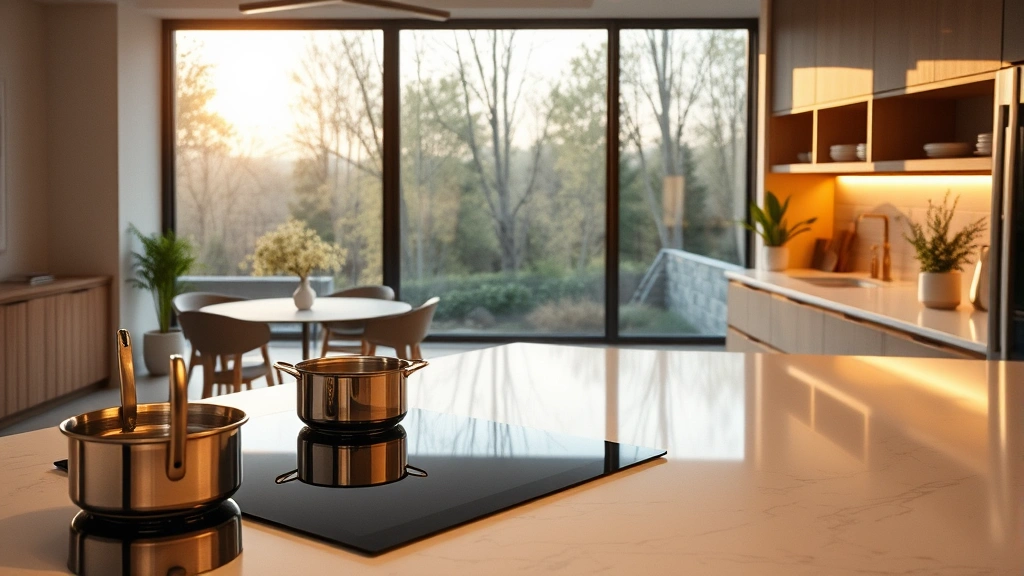
” alt=”Modern induction cooktop with stainless steel cookware in contemporary kitchen”>
For renters or those in temporary housing, portable induction cooktops provide a practical solution. These compact units deliver most induction benefits without permanent installation, making them ideal for apartments, temporary homes, or anyone hesitant about committing to permanent cooktop replacement.
Professional kitchen transitions require more comprehensive planning. Equipment suppliers specializing in commercial induction cooktops can design systems optimized for your operation. Training staff on induction-specific techniques ensures smooth adoption. Many commercial kitchens report that the transition period is brief—typically 2-4 weeks—before staff fully adapts to induction cooking.

” alt=”Chef preparing vegetables on professional induction cooktop with multiple burners”>
FAQ
Is induction cooking really more efficient than gas?
Yes, definitively. Induction cooktops convert 85-90% of electrical energy into usable heat, compared to 65-75% for gas cooktops. This translates to 25-40% lower energy consumption for comparable cooking tasks. The efficiency difference is one of the most scientifically established advantages of induction technology.
Will my cookware work on an induction cooktop?
Only ferromagnetic cookware works on induction—primarily stainless steel (with magnetic properties) and cast iron. Test your cookware with a magnet; if it sticks to the bottom, it’s induction-compatible. Most modern cookware manufactured in recent years is induction-compatible. Copper and aluminum cookware require special induction-compatible bottoms.
Is induction cooking safe?
Induction is significantly safer than gas. The cooktop surface doesn’t produce independent heat, so accidental contact rarely causes serious burns. Induction eliminates combustion hazards, gas leak risks, and indoor air pollution from gas burning. It’s particularly safe for households with children or elderly residents.
How much will induction cooktop installation cost?
Induction cooktop units cost $1,000-$3,000. Installation costs vary significantly based on existing electrical infrastructure. Homes with sufficient electrical service might need only standard installation ($200-$500), while older homes requiring panel upgrades could face $1,500-$3,000 in additional electrical work. Consult a licensed electrician for accurate assessment of your home’s needs.
Will I save money switching to induction?
Yes, over the medium to long term. Operational cost savings (typically 30-40% lower cooking energy costs) recover installation expenses within 5-10 years for most households. Over a cooktop’s 15-20 year lifespan, total savings typically reach $6,000-$10,000, making induction a financially sound investment despite higher upfront costs.
How does induction compare environmentally?
Induction is substantially more environmentally friendly. It eliminates direct fossil fuel combustion, improves indoor air quality, and operates more efficiently. When paired with renewable electricity sources, induction cooking produces minimal environmental impact. Even on conventional grids, induction’s superior efficiency and ability to leverage increasing renewable generation make it the more sustainable choice.
Can I use induction in a commercial kitchen?
Absolutely. Professional induction cooktops are increasingly common in upscale restaurants and culinary schools. They offer speed, efficiency, and precise control valued by professional chefs. Commercial induction systems handle high-volume cooking demands effectively and often reduce overall kitchen energy consumption by 25-35%.
What’s the learning curve for switching to induction?
Minimal. Most cooks adapt within 2-3 weeks of regular use. Induction responds to heat adjustments similarly to gas, with the primary difference being the absence of visible flame. Professional chefs often report that induction’s precise control actually enhances their cooking capabilities once the brief transition period concludes.


