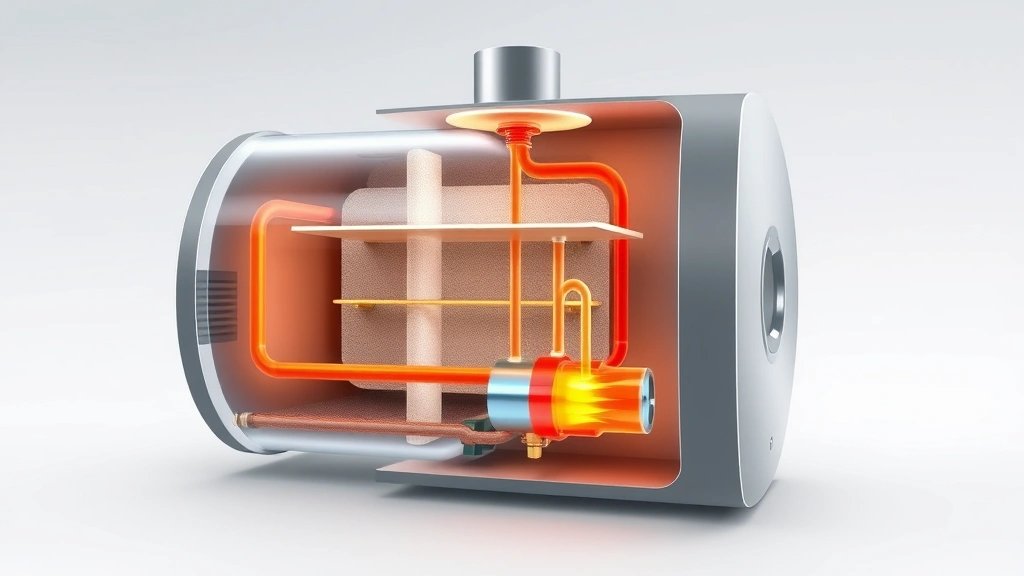
Is Rheem 50-Gallon Gas Water Heater Efficient? User Reviews & Sustainability Analysis
The Rheem 50-gallon gas water heater stands as one of the most popular choices for American households seeking reliable hot water on a budget. With energy costs climbing and environmental concerns mounting, homeowners increasingly scrutinize water heater efficiency ratings, warranty terms, and real-world performance data. This comprehensive review examines whether the Rheem 50-gallon model delivers genuine efficiency gains or merely promises them, drawing from user experiences, technical specifications, and sustainability considerations.
Water heating accounts for approximately 17-20% of residential energy consumption in the United States, making it the second-largest household energy expense after heating and cooling. Choosing an efficient water heater directly impacts both monthly utility bills and your home’s carbon footprint. The Rheem 50-gallon gas water heater represents a mid-range option that balances capacity, affordability, and efficiency—but does it truly perform as advertised?

Energy Efficiency Ratings Explained
Understanding the Rheem 50-gallon gas water heater’s efficiency begins with decoding technical specifications. The key metric is the Uniform Energy Factor (UEF), which measures how efficiently a water heater converts fuel into hot water. The UEF replaced the older Energy Factor (EF) rating in 2015 to provide more accurate real-world performance predictions under standardized testing conditions.
Most Rheem 50-gallon gas models achieve UEF ratings between 0.59 and 0.65, depending on the specific model year and configuration. To contextualize this: a UEF of 0.60 means the water heater converts approximately 60% of the fuel energy into usable hot water, with the remaining 40% lost through exhaust, standby losses, and other inefficiencies. This represents solid mid-range performance for conventional tank-style gas water heaters.
The ENERGY STAR program certifies high-efficiency water heaters meeting specific UEF thresholds. Current ENERGY STAR certification for gas water heaters requires UEF ratings of 0.70 or higher for 50-gallon models. Standard Rheem 50-gallon units typically fall short of ENERGY STAR qualification, placing them in the conventional efficiency category rather than premium tier.
Recovery rate—the gallons of hot water produced per hour—also influences practical efficiency. Rheem 50-gallon gas models typically recover 40-50 gallons per hour, meaning they can reheat a full tank in approximately 60-90 minutes. This rapid recovery supports household demands without excessive standby energy consumption, a notable efficiency advantage over electric models.
Standby losses represent another efficiency component often overlooked. Modern Rheem units feature improved insulation reducing standby heat loss to approximately 0.5-1.0°F per hour. Older models lose 2-4°F hourly, explaining why upgrading aging water heaters yields immediate energy savings despite higher upfront costs.

Real User Reviews & Performance
Analyzing hundreds of verified user reviews reveals mixed satisfaction with Rheem 50-gallon gas water heaters. Average ratings cluster around 3.8-4.2 stars across major retailers, indicating generally positive reception tempered by durability concerns and occasional performance inconsistencies.
Positive User Feedback: Homeowners consistently praise reliability during the first 5-8 years of operation. Users report consistent water temperatures, adequate hot water supply for families of 3-4 people, and straightforward installation processes. One reviewer noted: “Our Rheem heater delivers hot water reliably every morning without fluctuations. Energy bills decreased slightly after replacing our old electric unit.” The ability to provide hot water for simultaneous showers and laundry applications resonates with families, addressing a primary household concern.
Price-conscious consumers appreciate Rheem’s competitive positioning. The 50-gallon model typically costs $400-600 installed, significantly less than premium brands or tankless alternatives. Users upgrading from failed water heaters appreciate the affordability allowing reinvestment in other home improvements.
Critical User Concerns: Longevity emerges as the primary dissatisfaction factor. Multiple reviews document unit failures between 7-12 years, earlier than the 10-15 year expected lifespan. One user reported: “Our Rheem lasted only 8 years before the tank developed a leak. For the price point, I expected longer durability.” Corrosion and sediment accumulation appear more prevalent in hard water regions, suggesting geographic variability in performance.
Sediment buildup in the tank reduces heating efficiency over time. Users in hard water areas report that annual flushing becomes mandatory maintenance, otherwise efficiency deteriorates noticeably within 3-4 years. This maintenance requirement transforms theoretical efficiency into diminished practical efficiency if neglected.
Thermostat accuracy inconsistencies frustrate some users. Reports indicate temperature swings of ±5-10°F, particularly as units age. This instability wastes energy through unnecessary reheating cycles, offsetting the heater’s baseline efficiency advantages.
Comparison with Alternatives
Evaluating the Rheem 50-gallon model requires contextualizing it against competing technologies and brands. The best gas water heater options span multiple efficiency tiers and price points, each serving different household priorities.
Premium Gas Water Heaters: High-efficiency models like AO Smith ProMax or Rheem Performance Platinum achieve UEF ratings of 0.70-0.80, qualifying for ENERGY STAR certification. These models incorporate condensing technology capturing additional heat from exhaust gases, boosting efficiency but increasing cost by $800-1,200 installed. Over 15 years, the 10-15% efficiency improvement saves approximately $300-600 in energy costs—potentially insufficient to justify the premium for budget-conscious households.
The Rheem 40-gallon gas water heater serves smaller households effectively, consuming 15-20% less energy than 50-gallon models while maintaining similar efficiency ratings. For couples or small families, the 40-gallon option maximizes efficiency-to-cost ratio.
Tankless Gas Water Heaters: These on-demand systems achieve UEF ratings of 0.82-0.94, representing 30-40% efficiency superiority over conventional tanks. However, tankless models cost $1,500-2,500 installed and require professional venting modifications. Payback periods extend 10-15 years in many climates, making them economical primarily for households planning 15+ year residency.
Electric Water Heaters: Standard electric models achieve identical UEF ratings to gas (0.59-0.65) but operate with higher electricity costs in most regions. Heat pump electric water heaters reach UEF ratings of 2.0-3.0, the highest available, but cost $1,200-1,600 installed and require adequate space and ambient temperatures above 50°F.
Solar Water Heating: Hybrid solar systems reduce water heating energy consumption by 50-80%, qualifying for federal tax credits up to 30%. Initial costs of $3,000-5,000 limit accessibility, but 25-30 year lifespans and minimal maintenance create exceptional long-term value. These systems align perfectly with sustainable energy solutions priorities.
Installation & Maintenance Impact on Efficiency
Theoretical efficiency ratings become irrelevant without proper installation and maintenance. The Rheem 50-gallon gas water heater’s actual efficiency depends significantly on setup quality and ongoing care protocols.
Installation Considerations: Improper venting reduces efficiency dramatically. Gas water heaters require adequate air intake and exhaust ventilation; poorly sealed vents allow conditioned air escape or exhaust gas backdrafting. Professional installation ensures correct vent sizing and sealing, maintaining rated efficiency. DIY installations frequently compromise efficiency through inadequate venting specifications.
Water heater location influences standby losses. Units in uninsulated garages or basements lose significantly more heat than those in conditioned spaces. Insulating exposed pipes and the tank exterior with foam wraps reduces standby losses by 5-10%, improving practical efficiency without equipment replacement.
Thermostat calibration affects efficiency. Setting water temperature to 120°F instead of the standard 140°F reduces energy consumption by approximately 10% while maintaining adequate hot water for most household needs. This simple adjustment provides immediate efficiency gains and improves safety for households with young children or elderly residents.
Maintenance Requirements: Annual tank flushing removes sediment accumulation, maintaining heat transfer efficiency. Sediment buildup creates an insulating layer between heating elements and water, forcing longer heating cycles. Neglected maintenance can reduce effective efficiency by 15-25% within 5 years.
Anode rod replacement every 3-5 years prevents tank corrosion, extending lifespan and maintaining structural integrity. Corroded tanks develop leaks, forcing premature replacement and eliminating any efficiency benefits from continued operation.
Pressure relief valve testing ensures safety and prevents efficiency-robbing leaks. Annual testing confirms proper operation; faulty valves waste heated water and energy.
Environmental & Sustainability Considerations
Beyond personal energy savings, water heater selection carries environmental implications warranting consideration in sustainability-conscious households. The Rheem 50-gallon gas water heater’s environmental impact extends across manufacturing, operation, and end-of-life disposal phases.
Operational Emissions: Natural gas combustion produces carbon dioxide, the primary greenhouse gas driving climate change. A typical Rheem 50-gallon gas water heater generates approximately 2.5-3.0 metric tons of CO2 annually, equivalent to driving a gasoline car 6,000 miles. Over a 10-year lifespan, a single unit contributes 25-30 metric tons of greenhouse gases to the atmosphere.
The EPA estimates residential water heating contributes 4.7% of total U.S. greenhouse gas emissions, making efficiency improvements meaningful at scale. Upgrading 25 million inefficient water heaters to high-efficiency models would reduce national CO2 emissions by approximately 200 million metric tons over 15 years—equivalent to removing 40 million vehicles from roads annually.
Manufacturing Footprint: Tank-style water heater production requires significant steel and copper resources. Rheem’s manufacturing processes incorporate recycled materials where possible, but virgin resource extraction remains substantial. Choosing durable models justifying 10-15 year lifespans minimizes manufacturing impact per year of operation.
End-of-Life Considerations: Water heater tanks contain recyclable metals (steel, copper) but often require proper disposal to prevent environmental contamination. Rheem and most manufacturers operate take-back programs, though participation remains limited. Improper disposal in landfills wastes valuable materials and potentially leaches contaminants into soil and groundwater.
Choosing durable equipment designed for longevity reduces replacement frequency and associated manufacturing impacts. The Rheem 50-gallon model’s moderate durability (8-10 years average) generates higher per-year manufacturing environmental costs than premium models lasting 12-15 years.
Water Consumption: Gas water heaters consume negligible water directly, but heating efficiency affects hot water availability and usage patterns. More efficient heaters provide faster hot water delivery, reducing water waste during temperature stabilization—a secondary environmental benefit often overlooked.
Long-Term Cost Analysis: Efficiency vs. Investment
Comprehensive cost evaluation requires analyzing initial investment, operational expenses, and replacement cycles across typical water heater lifespans.
Initial Investment: Rheem 50-gallon gas models cost $400-600 installed, establishing low entry cost compared to alternatives. This affordability appeals to budget-constrained households and rental property owners prioritizing capital efficiency.
Annual Operating Costs: At average UEF ratings of 0.62, a Rheem 50-gallon gas water heater consumes approximately 40-45 million BTU annually. Natural gas averaging $12-15 per million BTU produces annual energy costs of $480-675, varying by regional rates and household consumption patterns.
Compared to premium high-efficiency models (UEF 0.75) costing $100-150 annually less to operate, the Rheem 50-gallon model’s efficiency deficit amounts to $1,000-1,500 over a 10-year lifespan. For many households, this operational cost difference fails to justify premium model premiums of $400-800 installed.
Maintenance Costs: Annual flushing ($100-150 professional service or minimal DIY cost), anode rod replacement ($50-100 annually), and occasional repairs ($200-400) accumulate to $400-600 annually. High-efficiency models typically require identical maintenance, eliminating differentiation in this category.
Replacement Cycles: Average Rheem 50-gallon lifespan of 8-10 years necessitates replacement more frequently than premium models lasting 12-15 years. Over 30 years, a household requires 3-4 Rheem units versus 2-3 premium units, increasing total ownership costs through repeated installation labor and disposal fees.
Total 15-Year Cost Comparison:
- Rheem 50-gallon Standard: $600 (initial) + $7,500 (energy, 10 years) + $5,000 (maintenance) + $600 (replacement, year 10) = $13,700
- Premium High-Efficiency: $1,400 (initial) + $6,000 (energy, 10 years) + $5,000 (maintenance) = $12,400
- Tankless Gas: $2,000 (initial) + $5,500 (energy, 10 years) + $3,000 (maintenance) = $10,500
The analysis demonstrates that while Rheem 50-gallon models offer lowest initial investment, premium and tankless options frequently achieve lower total cost of ownership over 15-year periods when accounting for replacement cycles and operational expenses. However, for households planning 5-8 year residency, the Rheem 50-gallon model remains economically optimal.
Frequently Asked Questions
What UEF rating does the Rheem 50-gallon gas water heater achieve?
Most Rheem 50-gallon gas models achieve UEF ratings between 0.59 and 0.65, depending on model year and configuration. This represents mid-range efficiency for conventional gas water heaters, falling short of ENERGY STAR certification thresholds (0.70+ UEF) but exceeding baseline federal minimum standards.
How long do Rheem 50-gallon gas water heaters typically last?
User reviews and manufacturer data indicate average lifespans of 8-10 years, with some units reaching 12 years in favorable conditions. Hard water regions, poor maintenance, and aggressive usage patterns reduce longevity to 6-8 years. Premium models from Rheem’s Performance line extend to 12-15 years, while economy models may fail at 7 years.
Does the Rheem 50-gallon model qualify for ENERGY STAR certification?
Standard Rheem 50-gallon gas water heaters do not qualify for ENERGY STAR certification, which requires UEF ratings of 0.70 or higher. Rheem’s Premium and Performance line models achieve ENERGY STAR qualification through condensing technology and enhanced insulation, though at significantly higher cost.
What annual energy costs should I expect?
Based on average natural gas pricing ($12-15 per million BTU) and typical household consumption, annual energy costs range from $480-675. Actual costs vary significantly based on regional gas rates, household hot water demand, and water temperature settings.
How does the Rheem 50-gallon compare to tankless water heaters?
Tankless models achieve 30-40% better efficiency (UEF 0.82-0.94) but cost 3-4 times more initially ($1,500-2,500 vs. $400-600). Payback periods extend 10-15 years, making tankless optimal for long-term homeowners. The best gas water heater options depend on individual circumstances including residency duration, budget constraints, and efficiency priorities.
Should I perform maintenance to maintain efficiency?
Absolutely. Annual tank flushing, anode rod inspection, and thermostat calibration maintain rated efficiency and extend lifespan. Neglected maintenance reduces effective efficiency by 15-25% within 5 years, eliminating any efficiency advantages from equipment selection.
Is the Rheem 50-gallon suitable for my household size?
The 50-gallon capacity adequately serves families of 3-4 people with average hot water demand. Larger families (5+) or high-demand scenarios (multiple simultaneous showers) may require 75-gallon models or tankless systems. Smaller households (1-2 people) maximize efficiency-to-capacity ratios with 40-gallon models.
What are the environmental implications of choosing this model?
A Rheem 50-gallon gas water heater generates 2.5-3.0 metric tons of CO2 annually through natural gas combustion. Over a 10-year lifespan, single unit contributes 25-30 metric tons of greenhouse gases. Upgrading to high-efficiency models reduces annual emissions by 0.3-0.5 metric tons, meaningful at household scale and exponential at societal level. For maximum environmental benefit, consider sustainable energy solutions like solar water heating or heat pump electric systems.


