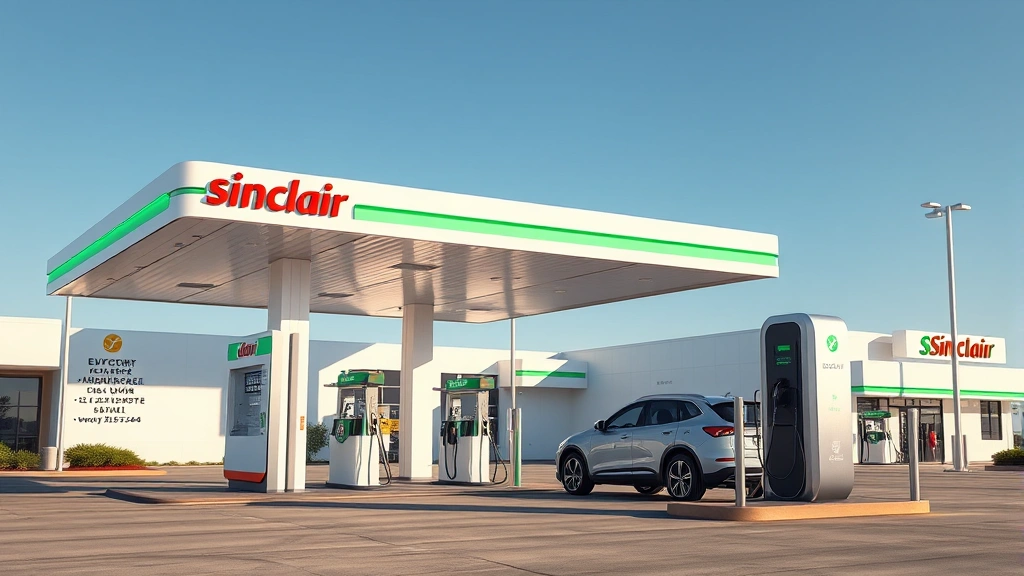
Switch to Electric? Sinclair’s Sustainable Steps
The transportation sector accounts for nearly 27% of greenhouse gas emissions in the United States, with gasoline-powered vehicles remaining the primary culprit. As consumers increasingly seek ways to reduce their environmental impact, the question of whether to switch to electric vehicles becomes more pressing than ever. Sinclair, a historic fuel brand with over a century of market presence, is now taking significant steps toward sustainability, recognizing that the future of energy lies beyond traditional petroleum products.
For drivers searching for a Sinclair gas station near me, the narrative is shifting. Rather than simply refueling with conventional gasoline, forward-thinking consumers can now explore how Sinclair’s evolving business model incorporates renewable energy initiatives and supports the broader transition to electric vehicles. This comprehensive guide explores Sinclair’s sustainable transformation, the benefits of switching to electric, and actionable steps you can take to align your driving habits with environmental responsibility.
Sinclair’s Evolution: From Traditional Fuel to Sustainable Energy
Sinclair Oil Corporation has maintained its position in the energy market since 1916, originally built on petroleum extraction and refining. However, like many legacy energy companies, Sinclair recognizes the existential importance of adapting to climate realities and consumer demand for sustainability. The company’s strategic pivot toward renewable energy and electric vehicle support represents a critical acknowledgment that business-as-usual is no longer viable in the 21st century.
Sinclair’s sustainable initiatives include investments in sustainable energy solutions that complement traditional fuel offerings. These efforts demonstrate that even established fuel retailers can contribute meaningfully to decarbonization efforts. By supporting EV charging infrastructure partnerships and exploring renewable fuel alternatives, Sinclair is positioning itself for long-term relevance in an energy landscape transformed by electrification.
When consumers ask about a Sinclair location nearby, they should understand that modern Sinclair stations increasingly serve dual purposes: providing conventional fuels for the existing vehicle fleet while simultaneously supporting the infrastructure needed for electric vehicle adoption. This balanced approach acknowledges market realities while advancing sustainability goals.
Key sustainable initiatives by Sinclair include:
- Partnership development with EV charging networks to expand publicly accessible charging stations
- Investment in renewable fuel research and development programs
- Implementation of energy-efficient practices across retail operations
- Support for carbon offset programs and environmental conservation projects
- Commitment to transparent sustainability reporting aligned with industry standards
Understanding the Electric Vehicle Revolution
Electric vehicles represent far more than a technological novelty—they constitute a fundamental reimagining of personal transportation. Unlike traditional internal combustion engines that rely on controlled explosions of gasoline to generate motion, electric vehicles use rechargeable battery systems to power electric motors with near-instantaneous torque delivery and exceptional efficiency.
The EV market has experienced exponential growth over the past decade, with global sales increasing from approximately 120,000 units in 2015 to over 10 million in 2023. This acceleration reflects improved battery technology, expanding model variety, and growing consumer awareness of environmental imperatives. Understanding the advantages of electric vehicles helps contextualize why this transition matters for individual consumers and society broadly.
Modern electric vehicles offer performance characteristics that rival or exceed their gasoline counterparts. Tesla’s Model S Plaid, for instance, accelerates from zero to 60 miles per hour in under three seconds—comparable to premium sports cars costing substantially more. Beyond raw performance, electric vehicles deliver superior driving experiences through silent operation, smooth acceleration, and advanced digital integration.
Primary advantages of electric vehicles include:
- Zero tailpipe emissions: EVs produce no direct emissions during operation, dramatically improving air quality in urban environments
- Lower operating costs: Electricity typically costs 60-70% less than gasoline per mile traveled
- Reduced maintenance requirements: Electric motors contain far fewer moving parts than internal combustion engines, eliminating oil changes and reducing brake wear through regenerative braking
- Enhanced performance: Instant torque delivery provides responsive acceleration and improved handling dynamics
- Quieter operation: Silent electric motors reduce noise pollution and create more pleasant driving environments
Environmental Benefits of Switching to Electric
The environmental case for electric vehicles rests on comprehensive lifecycle analysis rather than simplistic assumptions about zero emissions. While EVs produce no direct emissions, their true environmental impact depends on the electricity grid’s composition and manufacturing processes. However, even accounting for these factors, electric vehicles demonstrate substantial environmental advantages over gasoline-powered alternatives.
According to research from the Environmental Protection Agency, electric vehicles produce approximately 50-70% fewer greenhouse gas emissions than comparable gasoline vehicles when charged using average U.S. electricity grids. In regions with cleaner electricity sources—such as states with substantial renewable energy penetration—these advantages expand dramatically, with some EVs producing 80-90% fewer emissions.
The manufacturing phase presents the most significant environmental burden for electric vehicles, particularly regarding battery production. Lithium extraction, cobalt mining, and energy-intensive cell manufacturing create temporary environmental deficits that EVs overcome within 1-3 years of typical driving. Thereafter, every mile driven represents net environmental benefit compared to gasoline alternatives. Over a vehicle’s 200,000-mile lifespan, this cumulative advantage becomes substantial.
Switching to electric directly supports broader climate goals outlined in IPCC climate assessments. Transportation electrification is essential for achieving net-zero emissions by mid-century, with the transportation sector requiring rapid decarbonization to meet climate targets. Individual decisions to adopt electric vehicles contribute meaningfully to this systemic transformation.
Specific environmental benefits include:
- Reduced carbon dioxide: Average EV produces 4.5 metric tons less CO2 annually than gasoline vehicles
- Improved air quality: Elimination of nitrogen oxides and particulate matter reduces respiratory disease and premature mortality
- Water conservation: Electric charging requires substantially less water than gasoline refining processes
- Habitat preservation: Reduced fossil fuel extraction protects ecosystems from drilling and mining impacts
- Climate resilience: Transportation electrification reduces climate forcing that drives extreme weather and ecosystem disruption
Charging Infrastructure and Accessibility
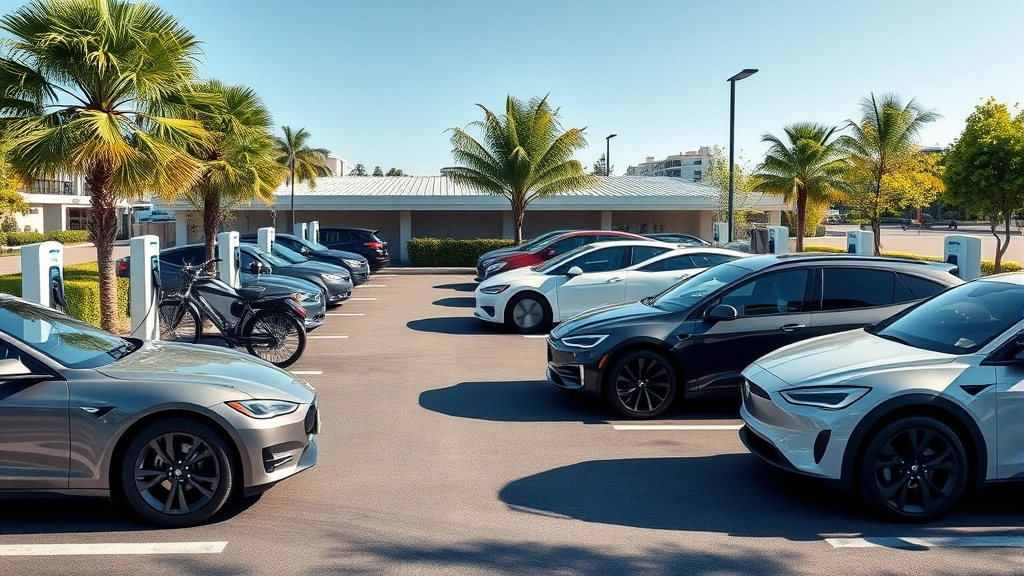
Charging infrastructure represents the critical enabler of widespread EV adoption. Unlike gasoline vehicles that benefit from over a century of refueling infrastructure development, electric vehicles require substantial public investment in charging networks. Fortunately, this infrastructure is expanding rapidly, with the number of publicly accessible charging stations in the United States exceeding 50,000 as of 2024.
Charging options exist across a spectrum of power levels and convenience factors. Home charging using standard 120-volt outlets requires 24-48 hours for full battery replenishment but suits drivers with predictable daily patterns and access to residential charging. Level 2 chargers (240 volts) reduce charging time to 4-10 hours and are increasingly common at workplaces, retail locations, and public charging stations. DC fast chargers can replenish 80% battery capacity in 20-40 minutes, enabling long-distance travel.
For drivers searching for Sinclair stations near me, understanding that modern fuel retailers increasingly incorporate EV charging options becomes essential. Sinclair’s partnerships with charging networks expand accessibility for drivers transitioning to electric vehicles. These partnerships represent practical recognition that the future energy landscape accommodates multiple vehicle technologies simultaneously.
Strategic placement of charging infrastructure addresses range anxiety—the primary psychological barrier to EV adoption. Route planning applications now integrate charging station availability, enabling drivers to plan long trips confidently. As charging networks densify and battery technology improves, range anxiety becomes increasingly irrelevant for typical driving patterns.
Charging infrastructure considerations:
- Home charging availability: Residential charging capability dramatically improves EV convenience and ownership experience
- Workplace charging: Employer-provided charging accelerates adoption by enabling daytime replenishment
- Public charging networks: Expanding networks like Tesla Supercharger, Electrify America, and ChargePoint increase accessibility
- Rural charging: Rural infrastructure development requires strategic investment to ensure equitable EV access
- Charging speed requirements: Understanding optimal charging speeds for your driving patterns improves ownership satisfaction

Cost Considerations for EV Adoption
Purchase price remains the primary barrier to EV adoption, with electric vehicles typically commanding 15-25% price premiums compared to equivalent gasoline vehicles. However, comprehensive cost-of-ownership analysis reveals that electric vehicles deliver superior economic value over their operational lifespans. Declining battery costs are narrowing purchase price differentials, with price parity expected across most vehicle segments by 2026-2027.
Federal tax incentives substantially reduce effective EV purchase costs. The U.S. federal tax credit, recently expanded to $7,500, directly reduces tax liability for eligible purchasers. Many states offer additional incentives, with some providing rebates up to $10,000. These incentives transform EV economics, effectively reducing net purchase costs below comparable gasoline vehicles when combined with lower operational expenses.
Operating cost advantages prove particularly compelling for high-mileage drivers. Electricity costs approximately $0.03-0.05 per mile compared to $0.10-0.15 per mile for gasoline vehicles, depending on local electricity rates and vehicle efficiency. Over 200,000 miles—a typical vehicle lifespan—these differences accumulate to $12,000-24,000 in fuel savings alone. Reduced maintenance requirements eliminate oil changes, transmission servicing, and spark plug replacement, generating additional savings of $4,000-10,000 over vehicle lifespans.
Exploring how to reduce your environmental footprint through vehicle choices demonstrates that sustainability and economic rationality align perfectly. Electric vehicles represent investments in both personal finances and planetary health, creating win-win outcomes rarely available in consumer decision-making.
Total cost of ownership comparison (200,000 miles):
- Purchase price (net of incentives): EV $28,000 vs. Gasoline $32,000
- Fuel costs: EV $6,000 vs. Gasoline $20,000
- Maintenance: EV $2,000 vs. Gasoline $8,000
- Insurance: EV $8,500 vs. Gasoline $9,000 (minimal difference)
- Total cost: EV $44,500 vs. Gasoline $69,000
Sinclair’s Role in Supporting the Transition
Sinclair’s strategic positioning in the energy transition reflects recognition that companies serving the transportation sector must evolve or face obsolescence. By integrating EV charging infrastructure, supporting renewable fuel development, and investing in clean energy technologies, Sinclair demonstrates commitment to sustainable business practices aligned with long-term market realities.
The company’s approach acknowledges that the transition to electrification extends across decades, with conventional vehicles dominating roads through 2050. Rather than viewing this timeline as an obstacle, Sinclair leverages existing retail locations and customer relationships to facilitate the transition. Stations incorporating EV charging alongside traditional fuel offerings serve as physical embodiments of the energy transition, providing practical infrastructure while maintaining revenue streams during the extended transition period.
Sinclair’s investments in green technology innovations transforming our future extend beyond simple infrastructure provision. The company explores renewable fuel alternatives, including biofuels and synthetic hydrocarbons that reduce emissions from conventional vehicles. These parallel approaches acknowledge that electrification, while essential, cannot instantaneously replace billions of existing internal combustion vehicles.
Consumer choices to patronize retailers supporting the energy transition create market incentives for continued investment. When drivers seek out stations offering EV charging alongside traditional fuels, they signal demand that influences corporate strategy. This consumer agency, multiplied across millions of individual decisions, drives systemic change more effectively than regulatory mandates alone.
Sinclair’s sustainability commitments include:
- Expansion of EV charging network partnerships across retail locations
- Research and development of renewable fuel alternatives reducing emissions from existing vehicles
- Implementation of energy efficiency measures across corporate operations
- Transparent reporting of environmental metrics and sustainability progress
- Community engagement supporting local environmental conservation initiatives
Making the Switch: A Practical Roadmap
Transitioning from gasoline to electric vehicles requires careful consideration of personal driving patterns, financial circumstances, and infrastructure availability. Rather than treating this as an all-or-nothing decision, many consumers benefit from phased approaches that align EV adoption with vehicle replacement cycles and improving technology.
Step 1: Assess Your Driving Patterns
Evaluate annual mileage, daily driving distance, and frequency of long trips. Drivers with predictable daily patterns under 200 miles and access to home charging represent ideal EV candidates. Those with frequent long-distance travel may benefit from plug-in hybrid vehicles offering electric efficiency for daily driving with gasoline backup for extended trips. Understanding your specific transportation needs ensures EV selection matches your actual requirements.
Step 2: Investigate Available Incentives
Research federal, state, and local EV incentives applicable to your jurisdiction. Federal tax credits, state rebates, utility company incentives, and employer programs collectively can reduce effective purchase costs by $10,000-15,000. Some programs include additional benefits like HOV lane access, reduced registration fees, or free charging programs. Maximizing available incentives transforms EV economics substantially.
Step 3: Evaluate Charging Infrastructure
Assess home charging feasibility, workplace charging availability, and public charging network proximity. Homeowners with dedicated parking benefit from home charging installation, typically costing $500-2,500 for Level 2 chargers. Apartment dwellers may leverage workplace charging or public networks. Identifying charging options before purchase ensures ownership experience meets expectations.
Step 4: Compare Vehicle Options
Modern EV offerings span diverse price points, styles, and capabilities. Compact vehicles like the Nissan Leaf provide affordable entry points with 150-226 mile ranges. Mid-size vehicles like the Tesla Model 3 or Chevy Bolt offer broader appeal with 250-400 mile ranges. Premium vehicles like Porsche Taycan deliver luxury with exceptional performance. Matching vehicle selection to your needs and budget ensures satisfaction.
Step 5: Plan the Transition
Time EV purchase to coincide with vehicle replacement cycles, maximizing return on your existing vehicle. Consider leasing options if you’re uncertain about long-term EV commitment—lease programs provide access to latest technology with minimal risk. Starting with a used EV or entry-level model can reduce financial commitment while building confidence in electric ownership.
For those searching for Sinclair gas stations near me, understanding that modern retailers increasingly support the transition to electric provides reassurance that infrastructure for your next vehicle will be available. This infrastructure development reflects broader recognition that sustainable energy represents both environmental imperative and business opportunity.
Implementation timeline:
- Months 1-2: Research vehicles, incentives, and charging options
- Months 2-3: Install home charging (if applicable) and plan charging infrastructure utilization
- Months 3-4: Test drive multiple vehicles and finalize selection
- Month 4+: Complete purchase and transition to electric ownership
FAQ
How long does it take to fully charge an electric vehicle?
Charging time depends on charger power level. Standard 120-volt outlets require 24-48 hours for full charge. Level 2 (240-volt) chargers need 4-10 hours. DC fast chargers replenish 80% in 20-40 minutes. Most owners charge overnight at home, eliminating the need for rapid charging during daily driving.
What is the actual driving range of modern electric vehicles?
Modern EVs typically offer 200-400 mile ranges per charge, with premium models exceeding 500 miles. Daily driving averages 30-40 miles for most Americans, making range anxiety largely theoretical for typical usage patterns. Even accounting for battery degradation over time, most EVs maintain 85-90% capacity after 200,000 miles.
Are electric vehicles suitable for cold climates?
Cold weather reduces EV range by 20-40% due to battery chemistry effects and increased cabin heating demands. However, modern EVs include thermal management systems that minimize these impacts. Even with range reduction, cold-climate capability remains adequate for most driving patterns, particularly with home charging availability.
How does battery replacement cost affect long-term ownership expenses?
Modern EV batteries typically warrant 8-10 years or 100,000-150,000 miles, with degradation to approximately 85-90% capacity. Out-of-warranty replacement costs $5,000-15,000 depending on vehicle and battery size. However, battery costs decline approximately 5-7% annually, making future replacement substantially cheaper than current costs. Most owners never require battery replacement during ownership.
Can I charge an electric vehicle at Sinclair stations?
Sinclair’s EV charging availability varies by location based on partnership agreements with charging networks. Searching for Sinclair near me on charging network apps reveals which locations offer charging capability. As Sinclair expands its charging partnerships, availability will increase substantially across its retail network, supporting the energy transition while serving customer needs.
What incentives are available for electric vehicle purchases?
The federal government offers up to $7,500 in tax credits for eligible EV purchases. Many states provide additional rebates ($2,500-10,000), and some utilities offer charging installation rebates or reduced electricity rates for EV owners. Local governments may provide HOV lane access, parking benefits, or registration fee reductions. Aggregating these incentives substantially improves EV economics.
How does electric vehicle performance compare to gasoline vehicles?
Electric vehicles deliver superior acceleration and handling due to instant torque delivery and low center of gravity from floor-mounted batteries. Many EVs outperform equivalent gasoline vehicles in acceleration metrics. Regenerative braking reduces brake wear and extends stopping distance efficiency. Overall driving dynamics favor electric powertrains in most performance categories.
What environmental impact do EV battery manufacturing and recycling have?
Battery manufacturing represents the primary environmental burden of EV production, with lithium mining and cell manufacturing consuming substantial energy. However, lifecycle analysis demonstrates that EVs overcome this manufacturing deficit within 1-3 years of typical driving. Battery recycling programs recover 95%+ of materials, reducing future mining requirements and supporting circular economy principles.


