
Toyota Tacoma Gas Mileage: Real-World Insights for Sustainable Truck Ownership
The Toyota Tacoma has earned its reputation as one of the most reliable mid-size pickup trucks on the market, but understanding its fuel efficiency is crucial for environmentally conscious drivers and budget-minded owners alike. Real-world Toyota Tacoma gas mileage varies significantly based on driving conditions, truck configuration, and maintenance practices. Whether you’re considering purchasing a Tacoma or optimizing your current vehicle’s performance, this comprehensive guide explores actual fuel consumption data, factors affecting efficiency, and practical strategies to maximize your truck’s environmental and economic benefits.
Fuel efficiency in trucks represents a meaningful opportunity to reduce your carbon footprint while managing transportation costs. The Tacoma, despite being a capable work vehicle, offers respectable fuel economy for its class when properly maintained and operated strategically. By understanding real-world performance metrics and implementing efficiency-boosting techniques, you can align your truck ownership with sustainability goals while enjoying the versatility and durability that makes this vehicle a popular choice across North America.
Real-World Toyota Tacoma Gas Mileage Data
Current-generation Toyota Tacoma models (2024-2025) deliver real-world fuel economy that ranges between 18-24 miles per gallon depending on transmission type and driving conditions. The EPA estimates highway fuel economy at approximately 24 MPG for two-wheel-drive models with automatic transmission, while four-wheel-drive variants typically achieve 20-22 MPG on highways. City driving generally produces lower efficiency ratings, with owners reporting 16-19 MPG in urban environments.
Owner-reported data from automotive forums and fuel tracking applications reveals that many Tacoma drivers achieve fuel economy within EPA estimates, though some experience variations based on their specific driving patterns. Trucks equipped with the newer turbo engine option have shown promising efficiency improvements compared to previous naturally aspirated models. Highway driving consistently outperforms city driving by 4-6 MPG, making the Tacoma relatively efficient for highway-focused transportation needs.
Real-world testing by automotive journalists consistently confirms that Tacoma fuel economy aligns reasonably well with manufacturer estimates, particularly when vehicles are properly maintained and driven under normal conditions. Loaded trucks with cargo or towing experience predictable reductions in efficiency, typically declining 2-4 MPG depending on load weight and aerodynamic impact.
Factors Affecting Fuel Efficiency
Multiple variables significantly influence Toyota Tacoma gas mileage performance, with driving behavior representing the most controllable factor. Aggressive acceleration, excessive idling, and sustained high-speed driving dramatically reduce fuel economy. Conversely, smooth acceleration, consistent cruising speeds, and anticipatory driving patterns enhance efficiency. Driver behavior can create a 15-25% variance in fuel consumption compared to baseline EPA estimates.
Vehicle configuration substantially impacts efficiency metrics. The addition of roof racks, tonneau covers, or bed accessories increases aerodynamic drag, reducing highway fuel economy by 2-5%. Tire pressure significantly affects rolling resistance—underinflated tires can decrease efficiency by up to 3% per PSI below recommended specifications. Wheel size and tire type also play roles, with larger wheels and aggressive tread patterns reducing efficiency compared to standard equipment.
Environmental conditions create substantial efficiency variations. Cold weather reduces fuel economy by 10-15% due to increased engine friction, denser air, and battery power drain for climate control. High altitude driving impacts oxygen availability, affecting combustion efficiency. Mountainous terrain with frequent elevation changes requires more energy than flat highway driving, reducing overall fuel economy by 10-20% depending on grade severity.
Cargo weight directly correlates with fuel consumption. Every 100 pounds of additional weight reduces efficiency by approximately 1-2%. Towing capacity utilization creates even more significant impacts, with aerodynamic drag from trailers reducing efficiency by 20-40% depending on trailer design and speed. Transmission type matters considerably—automatic transmissions in recent Tacoma models offer better efficiency than older manual options.
Maintenance condition profoundly affects fuel economy. Engine oil viscosity, air filter cleanliness, spark plug condition, and fuel injector performance all influence efficiency. A well-maintained Tacoma operates at peak efficiency, while neglected maintenance can reduce fuel economy by 10-15% or more.
” alt=”Sustainable truck maintenance with clean engine components and eco-friendly practices”/>
Generation-by-Generation Mileage Comparison
The third-generation Tacoma (2016-2023) marked significant efficiency improvements over previous models. Second-generation trucks (2005-2015) typically achieved 18-21 MPG highway and 15-18 MPG city, while third-generation models improved to 22-24 MPG highway and 17-19 MPG city. These improvements resulted from enhanced engine technology, improved transmissions, and refined aerodynamics.
First-generation Tacomas (1995-2004) delivered notably lower fuel economy, typically ranging 16-19 MPG combined, reflecting older engine and transmission technologies. The progression demonstrates how automotive engineering advances directly translate to environmental and economic benefits for truck owners.
The newest fourth-generation Tacoma (2024+) introduced turbo engine options that promise efficiency competitive with or exceeding previous generations while delivering improved power and performance. Early data suggests these turbocharged engines maintain efficiency while reducing overall emissions impact through better combustion efficiency and lower displacement requirements.
Comparing generations reveals that upgrading from older Tacoma models to current production vehicles can reduce fuel consumption by 15-25%, creating meaningful environmental and cost benefits over the vehicle’s lifetime. A driver replacing a 2010 Tacoma averaging 18 MPG with a 2024 model achieving 22 MPG reduces annual fuel consumption by approximately 15% on typical driving patterns.
Optimization Strategies for Better MPG
Implementing practical strategies can meaningfully improve Toyota Tacoma gas mileage without sacrificing capability or comfort. Regular tire pressure maintenance represents the simplest, most effective optimization—checking pressure monthly and maintaining manufacturer-recommended PSI ensures optimal rolling resistance. Proper inflation alone can improve efficiency by 2-3%.
Aerodynamic modifications provide substantial benefits for highway-focused drivers. Installing a tonneau cover reduces drag and can improve highway fuel economy by 3-5%. Removing roof racks when not in use eliminates unnecessary aerodynamic penalties. Bed extenders and tailgate configurations impact efficiency—closed tailgates and flush bed accessories produce better results than open configurations.
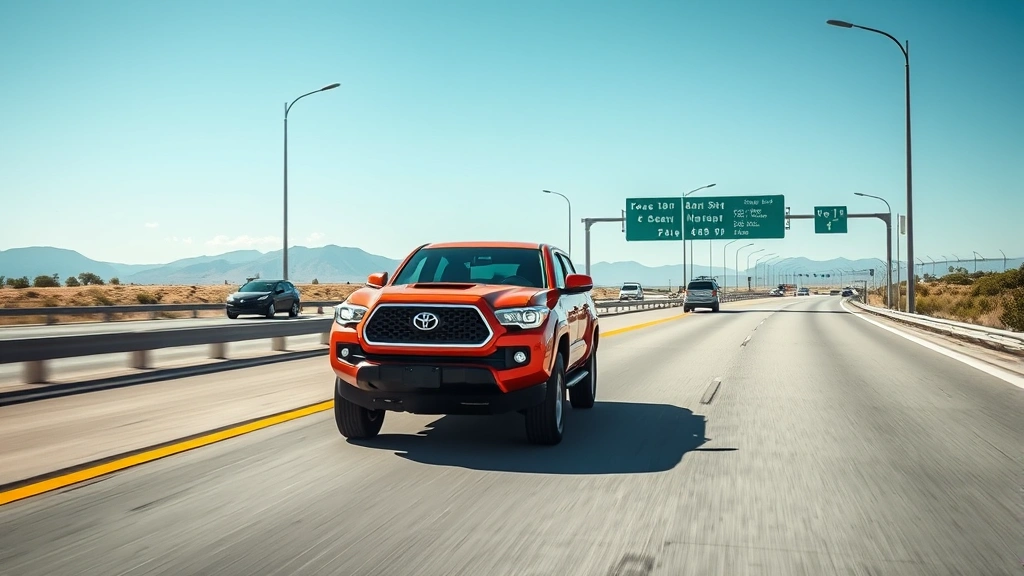
Driving technique optimization creates immediate, measurable improvements. Avoiding rapid acceleration, maintaining steady speeds, and reducing idling time directly reduces fuel consumption. Cruise control on highways maintains consistent speeds that optimize engine efficiency. Anticipating traffic conditions and coasting when appropriate reduces unnecessary acceleration.
Route planning minimizes unnecessary miles and optimizes driving conditions. Combining errands into single trips reduces total fuel consumption compared to multiple separate journeys. Choosing routes that minimize stop-and-go driving improves efficiency by 10-15% compared to congested alternatives.
Weight reduction strategies enhance efficiency without compromising functionality. Removing unnecessary items from the truck bed and cab reduces load, improving fuel economy. Storing heavy tools and equipment only when needed rather than carrying them permanently can reduce average weight by 100-200 pounds, improving efficiency by 1-2%.
Engine modifications should be approached cautiously. Cold air intake systems and exhaust modifications offer minimal efficiency gains and may negatively impact emissions. ECU tuning should only be performed by reputable professionals and may void warranty coverage. Synthetic oil meets manufacturer specifications and can provide modest efficiency improvements while extending engine life.

” alt=”Efficient truck driving on sustainable highway with minimal traffic and clear weather conditions”/>
Maintenance Impact on Fuel Economy
Comprehensive maintenance directly preserves and enhances Toyota Tacoma gas mileage performance. Engine oil changes using manufacturer-recommended viscosity grades ensure optimal lubrication and reduce internal friction. Using the correct oil grade—typically 0W-20 for modern Tacomas—improves efficiency compared to heavier grades.
Air filter replacement maintains proper air-fuel mixture ratios essential for efficient combustion. A clogged air filter restricts oxygen flow, forcing the engine to run rich (excess fuel), reducing efficiency by 5-10%. Cabin air filters, while not directly affecting fuel economy, indicate when to inspect intake systems.
Spark plug maintenance ensures optimal combustion efficiency. Worn spark plugs increase fuel consumption and emissions. Replacing plugs at manufacturer intervals (typically 30,000-50,000 miles depending on plug type) maintains peak efficiency. Fuel injector cleaning removes carbon deposits that interfere with precise fuel delivery, restoring efficiency to original specifications.
Transmission fluid maintenance preserves automatic transmission efficiency. Clean, properly-filled transmission fluid ensures smooth gear engagement and optimal power delivery. Transmission servicing according to manufacturer recommendations prevents efficiency-robbing slippage and overheating.
Wheel alignment affects rolling resistance and fuel economy. Misaligned wheels create additional friction and drag, reducing efficiency by 2-3%. Regular alignment checks every 10,000-15,000 miles prevent efficiency loss and extend tire life simultaneously.
Battery health impacts electrical system efficiency. A weak battery forces the alternator to work harder, consuming additional engine power. Maintaining proper battery charge and replacing aged batteries ensures the electrical system operates optimally.
Brake system condition influences efficiency indirectly. Sticking calipers or dragging brakes create rolling resistance, reducing fuel economy. Regular brake inspections and maintenance ensure wheels spin freely, minimizing unnecessary resistance.
Environmental Considerations and Alternatives
Understanding Toyota Tacoma gas mileage within broader environmental context helps drivers make informed sustainability decisions. While the Tacoma offers reasonable efficiency for its truck class, exploring advantages of electric vehicles may reveal alternative options for environmentally conscious owners. Electric trucks continue advancing in capability and range, potentially offering superior lifecycle environmental benefits for certain applications.
Comparing the Tacoma’s efficiency to sustainable energy solutions in transportation reveals that hybrid truck options from competitors achieve 20-25% better fuel economy. Hybrid Tacoma models, when available, represent meaningful efficiency improvements. However, current Tacoma lineup focuses on conventional gasoline and turbocharged options.
The environmental impact of truck ownership extends beyond fuel consumption. Manufacturing a new truck requires substantial energy and resources. Maximizing the lifespan of existing vehicles through proper maintenance often produces better environmental results than premature replacement. However, upgrading from significantly older, less efficient trucks to modern models can reduce lifetime emissions through improved fuel economy.
Considering is natural gas renewable and alternative fuel options reveals that gasoline remains the standard for Tacoma models. Compressed natural gas and propane conversions exist but require aftermarket modifications and reduce fuel economy compared to gasoline operation.
Carbon offset calculations help quantify environmental impact. A Tacoma averaging 20 MPG driven 12,000 miles annually consumes approximately 600 gallons of gasoline, producing roughly 5.9 metric tons of CO2 emissions annually. Improving efficiency to 22 MPG reduces annual emissions to 5.4 metric tons—a meaningful 8% reduction. Over a vehicle’s 200,000-mile lifespan, efficiency improvements compound to substantial cumulative environmental benefits.
Exploring green technology innovations transforming our future shows that automotive efficiency continues advancing. Future Tacoma generations will likely incorporate hybrid technology, improved aerodynamics, and lighter materials to enhance fuel economy while maintaining truck capabilities.
For drivers concerned about environmental impact, combining Toyota Tacoma ownership with sustainable practices amplifies benefits. Using sustainable energy solutions at home and considering vehicle electrification for personal transportation while maintaining a fuel-efficient truck for work purposes represents a balanced approach.
Consulting EPA Green Vehicle Guide provides comprehensive fuel economy data, environmental impact ratings, and alternative vehicle comparisons. The FuelEconomy.gov website offers detailed MPG estimates, real-world data from users, and fuel cost calculators for informed purchasing decisions. Transportation and Climate Initiative research documents how vehicle efficiency improvements contribute to climate goals.
FAQ
What is the average Toyota Tacoma gas mileage for current models?
Current-generation Tacoma models (2024-2025) achieve approximately 18-24 MPG depending on transmission type, drivetrain (2WD vs 4WD), and driving conditions. EPA estimates typically show 24 MPG highway and 20 MPG combined for 2WD automatic models, while 4WD variants average 20-22 MPG highway. Real-world performance aligns reasonably with EPA estimates when vehicles are properly maintained and operated under normal driving conditions.
How much does a tonneau cover improve Tacoma fuel economy?
A tonneau cover typically improves highway fuel economy by 3-5% by reducing aerodynamic drag from the truck bed. Benefits vary based on cover type (soft roll-up vs hard tonneau), speed, and driving conditions. Highway driving shows more significant improvements than city driving. For a truck averaging 22 MPG highway, a tonneau cover could improve efficiency to 23-23.5 MPG, resulting in meaningful fuel savings over extended periods.
Does towing significantly reduce Tacoma fuel economy?
Towing substantially reduces fuel economy due to increased weight and aerodynamic drag. Typical reductions range 20-40% depending on trailer weight, aerodynamic design, and speed. Towing a 3,000-pound trailer at highway speeds might reduce efficiency from 22 MPG to 14-16 MPG. Minimizing towing speed to 55 MPH and using aerodynamic trailer designs mitigates efficiency losses.
Can I improve my Tacoma’s fuel economy through modifications?
Several modifications provide modest efficiency improvements. Tonneau covers (3-5% improvement), proper tire pressure maintenance (2-3%), and removing unnecessary weight help. Cold air intake systems and exhaust modifications offer minimal gains and may negatively impact emissions. ECU tuning requires professional implementation and may void warranty. Most significant improvements come from driving technique optimization and maintenance rather than modifications.
How does 4WD vs 2WD affect Tacoma fuel economy?
Four-wheel-drive Tacoma models consume 2-4% more fuel than comparable 2WD variants due to increased weight, drivetrain complexity, and rolling resistance. A 2WD Tacoma might achieve 22 MPG highway while a 4WD model achieves 20-21 MPG. Real-world differences vary based on driving conditions, terrain, and individual driving habits. For primarily highway driving, 2WD offers efficiency advantages, while 4WD provides capability for varied terrain.
What maintenance practices most directly improve fuel economy?
Regular tire pressure maintenance, engine oil changes with correct viscosity, air filter replacement, and spark plug servicing provide the most direct efficiency benefits. Wheel alignment prevents rolling resistance from misalignment. Transmission fluid maintenance preserves smooth gear engagement. These maintenance practices collectively prevent efficiency degradation and maintain vehicles at peak performance levels.
How does the new turbocharged Tacoma compare for fuel economy?
The turbocharged Tacoma option promises competitive fuel economy with naturally aspirated predecessors while delivering increased power and performance. Early reports suggest turbocharged engines maintain efficiency around 20-22 MPG combined while providing better low-end torque and reduced displacement. Actual real-world performance will clarify efficiency benefits as more owner data accumulates.


