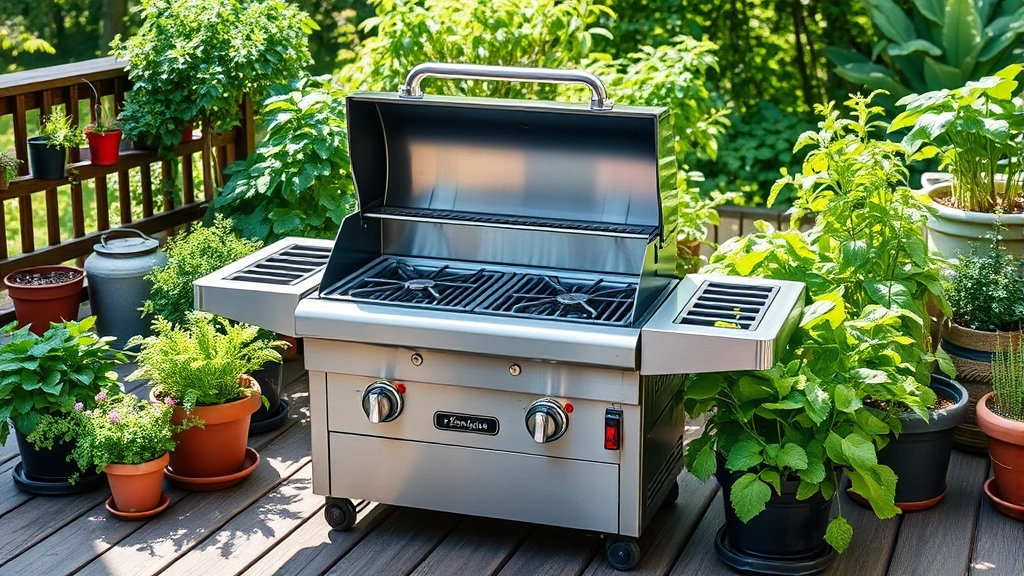
Is a 2 Gas Burner Grill Eco-Friendly? Expert Review
When it comes to outdoor cooking, the 2 gas burner grill sits at an interesting intersection of convenience and environmental responsibility. Many homeowners choose this compact grilling option for its efficiency and ease of use, but the question of whether it truly qualifies as eco-friendly deserves careful examination. Understanding the environmental impact of gas grills requires looking beyond surface-level assumptions and diving into the complete lifecycle of these appliances, from manufacturing through disposal.
The environmental footprint of a 2 gas burner grill depends on multiple factors: the source of natural gas, manufacturing practices, energy efficiency, longevity, and how it compares to alternative cooking methods. This comprehensive review examines whether this popular grilling option aligns with genuine sustainability principles and offers practical insights for environmentally conscious consumers.
Environmental Impact of Natural Gas Grills
Natural gas, the primary fuel for 2 gas burner grills, is a fossil fuel that produces carbon dioxide and other greenhouse gases when burned. According to research from the EPA’s Natural Gas Information, methane leakage during extraction, processing, and distribution represents a significant environmental concern. When you understand whether natural gas is renewable or nonrenewable, you recognize that gas grills rely on finite resources extracted from the earth.
A typical 2 gas burner grill emits approximately 5-10 kilograms of CO2 per year for average summer grilling (roughly 40-50 hours of use). While this might seem modest compared to vehicle emissions, the cumulative effect matters when considering household carbon footprints. The International Energy Agency emphasizes that methane—the primary component of natural gas—has a global warming potential 28-36 times higher than CO2 over a century-long period.
However, natural gas combustion produces significantly fewer emissions than charcoal grilling. The complete lifecycle assessment reveals that gas grills occupy a middle ground in the grilling spectrum. Understanding sustainable energy solutions helps contextualize where gas grilling fits within broader energy choices.

Efficiency and Energy Consumption
One of the strongest arguments supporting 2 gas burner grills as relatively eco-friendly relates to their impressive energy efficiency. Gas grills convert approximately 80-90% of fuel energy into heat, compared to charcoal’s 15-25% efficiency rate. This means using less fuel to achieve the same cooking results.
The two-burner configuration offers particular advantages for smaller households and casual grilling. Rather than heating a large surface unnecessarily, users can operate a single burner for modest cooking needs, further reducing fuel consumption. Modern designs feature improved insulation and heat distribution, minimizing wasted energy.
Temperature control represents another efficiency advantage. Gas burners allow precise adjustment, preventing the fuel waste common with charcoal grilling, where excess briquettes burn unnecessarily. This precision aligns with principles of sustainability by optimizing resource use.
Startup time matters too—gas grills reach cooking temperature within 10-15 minutes, whereas charcoal requires 20-30 minutes. This faster ignition means less fuel burned during preheating phases. Over a season of regular grilling, the efficiency gains become measurable and meaningful.
Comparing Gas to Alternative Grilling Methods
To properly assess whether a 2 gas burner grill qualifies as eco-friendly, comparing it to alternative cooking methods provides essential context. Three primary alternatives exist: charcoal grilling, electric grilling, and traditional propane tanks.
Charcoal Grilling produces significantly more emissions per unit of food cooked. Beyond the low thermal efficiency mentioned earlier, charcoal manufacturing involves deforestation concerns and transportation impacts. A single charcoal grilling session can emit 3-4 times more CO2 than gas grilling the same meal.
Electric Grilling appears environmentally superior if powered by renewable electricity sources. However, most grid electricity still derives from fossil fuels, making the environmental advantage dependent on your region’s energy mix. In areas with clean energy grids, electric grills substantially outperform gas alternatives. Conversely, in regions relying on coal power, gas grills may prove more efficient.
Propane Grills operate similarly to natural gas models regarding efficiency and emissions. The primary difference lies in propane’s slightly higher energy density and the environmental cost of bottled fuel distribution. Natural gas delivered through pipelines requires less transportation-related emissions than propane bottles.
Traditional Outdoor Cooking like wood-fired ovens produces the highest emissions and requires significant fuel quantities. However, if fueled with sustainably harvested wood, the carbon profile improves considerably.
From this comparative analysis, 2 gas burner grills emerge as a reasonably eco-conscious choice among conventional grilling options, particularly when compared to charcoal alternatives.
Manufacturing and Material Considerations
The environmental impact extends beyond fuel consumption to encompass manufacturing processes. Most 2 gas burner grills use stainless steel, aluminum, and cast iron—materials requiring significant energy for extraction and processing.
Stainless steel production generates approximately 6-8 kilograms of CO2 per kilogram of material. A typical compact grill weighs 30-50 kilograms, meaning manufacturing alone accounts for roughly 180-400 kilograms of CO2. This embedded carbon represents a substantial upfront environmental cost that grills must offset through years of efficient use.
Quality construction matters tremendously for sustainability. Premium grills with better materials and craftsmanship last 15-20 years, while budget models might deteriorate within 5-7 years. A grill lasting three times longer effectively reduces the per-year environmental cost of manufacturing by two-thirds. This principle aligns with strategies to reduce your environmental footprint.
Responsible manufacturers increasingly source materials sustainably and employ efficient production methods. Checking certifications and company sustainability reports helps identify grills with lower manufacturing impacts. Some brands now offer recycled material components, reducing virgin resource extraction.
Paint and protective coatings also carry environmental considerations. Water-based finishes prove superior to solvent-based alternatives, reducing volatile organic compound emissions. Examining product specifications reveals whether manufacturers prioritize environmental responsibility in finishing processes.
Lifespan and Durability Factors
Perhaps the most crucial sustainability metric involves how long a grill remains functional. A grill lasting 20 years spreads manufacturing impact across two decades, whereas a 5-year lifespan concentrates that impact into a shorter period. This concept—durability as sustainability—deserves serious consideration when evaluating eco-friendliness.
Several factors influence grill lifespan: material quality, construction techniques, protective coatings, and maintenance practices. Stainless steel resists corrosion better than painted steel, explaining why premium grills command higher prices but deliver superior longevity. Investing in quality represents an environmentally responsible choice, despite higher initial cost.
Regular maintenance significantly extends grill life. Cleaning grates, protecting the exterior from weather, and addressing rust spots promptly can add years of service. This reality means that choosing a durable grill and maintaining it properly represents genuine environmental stewardship.
When grills eventually require replacement, responsible disposal matters. Metals are highly recyclable—stainless steel, aluminum, and cast iron all have established recycling streams. Seeking recycling options rather than landfilling old grills prevents material waste and reduces mining pressure for virgin resources.
Practical Tips for Greener Grilling
If you own or plan to purchase a 2 gas burner grill, several strategies enhance its environmental performance:
- Choose Quality Construction: Invest in well-built models using premium materials. The higher upfront cost distributes across a longer service life, reducing annual environmental impact.
- Maintain Regularly: Clean grates, inspect for rust, replace worn seals, and protect the exterior. Preventive maintenance extends lifespan significantly.
- Optimize Fuel Use: Preheat only when necessary, use single burners for small cooking tasks, and keep the lid closed during cooking to maintain heat efficiency.
- Source Natural Gas Responsibly: Some utility providers offer renewable natural gas (biogas) options. Inquire whether your provider supplies this alternative fuel source.
- Minimize Grilling Frequency: While grills are efficient, reducing overall cooking frequency provides the most direct environmental benefit. Reserve grilling for occasions rather than routine cooking.
- Combine with Sustainable Practices: Grill locally-sourced, plant-based foods when possible. The fuel source of your meal often exceeds grilling fuel impacts in environmental significance.
- Plan for End-of-Life Recycling: When replacement becomes necessary, research recycling programs in your area. Many metal recycling facilities accept grill components.
These practical measures demonstrate that environmental responsibility extends beyond equipment selection to encompass usage patterns and end-of-life planning.
FAQ
Are 2 gas burner grills more eco-friendly than charcoal grills?
Yes, significantly. Gas grills achieve 80-90% thermal efficiency compared to charcoal’s 15-25%. This means gas grills produce fewer emissions per meal cooked, require less fuel, and heat faster. Charcoal manufacturing also involves deforestation concerns absent from natural gas extraction, though both remain fossil fuel sources.
How does a 2 gas burner grill compare to electric grilling?
Electric grills prove more eco-friendly if powered by renewable electricity sources. In regions with clean energy grids, electric options significantly outperform gas. However, in areas relying on fossil fuel power plants, the advantage diminishes or reverses. Research your local electricity generation mix to determine which option better suits your circumstances.
What manufacturing emissions should I consider?
Stainless steel and aluminum production generate substantial embedded carbon—roughly 180-400 kilograms of CO2 for a typical 2 burner grill. This upfront environmental cost requires 5-10 years of efficient use to offset through operational savings. Choosing durable models that last 15-20 years distributes this cost favorably across time.
Can I reduce my gas grill’s environmental impact?
Absolutely. Regular maintenance extends lifespan, which spreads manufacturing impact across more years. Optimize fuel use through efficient preheating, single-burner operation for small tasks, and lid-closed cooking. Some utility providers offer renewable natural gas (biogas) options worth exploring. Ultimately, reducing grilling frequency provides the most direct environmental benefit.
Is natural gas from renewable sources available?
Yes, increasingly. Renewable natural gas (RNG), also called biogas, derives from organic waste decomposition. Some utility providers now blend RNG into their natural gas supplies. Contact your local natural gas provider to determine whether renewable options exist in your area. Using RNG substantially improves your grill’s environmental profile.
Should I choose propane or natural gas for my 2 burner grill?
Natural gas generally proves more eco-friendly than propane. Piped natural gas eliminates transportation emissions associated with bottled propane delivery. However, propane offers advantages in areas lacking natural gas infrastructure. If natural gas is available, it represents the greener choice; if not, propane becomes the practical alternative.
How long should a quality 2 gas burner grill last?
Well-constructed stainless steel grills typically last 15-20 years with proper maintenance. Budget models might function 5-10 years before significant deterioration. This longevity difference makes premium construction environmentally advantageous, as longer-lasting grills distribute manufacturing impact across more years of use, improving overall sustainability metrics.


