Can Composting Save Money? A Case Study on Waste Reduction and Financial Benefits
Every household generates waste, and the average American produces approximately 4.5 pounds of trash daily. Yet what if that waste could be transformed into a valuable resource while simultaneously reducing expenses? Composting represents one of the most underutilized opportunities for homeowners to decrease their environmental footprint while improving their financial bottom line. This comprehensive case study explores whether composting truly saves money, examining real-world scenarios, cost-benefit analyses, and practical implementation strategies that demonstrate the economic viability of this sustainable practice.
The intersection of environmental responsibility and financial prudence often feels like a luxury only the wealthy can afford. However, composting defies this assumption by offering measurable cost savings within the first year of implementation. From reduced waste disposal fees to decreased expenses on commercial fertilizers and soil amendments, the financial case for composting is surprisingly robust. This article investigates the genuine economic benefits while providing actionable insights for households and small businesses seeking to maximize their return on this environmental investment.
Understanding Composting Economics
Composting operates on a simple economic principle: converting waste that costs money to dispose of into a resource that eliminates the need to purchase replacements. The financial benefit emerges from two distinct revenue streams. First, households reduce the volume of trash requiring collection and landfill disposal, directly lowering waste management expenses. Second, the finished compost eliminates or substantially reduces purchases of commercial potting soil, mulch, and synthetic fertilizers. Understanding these dual benefit streams is essential for accurately calculating composting’s financial impact on household budgets.
The EPA estimates that organic materials constitute approximately 30-40% of the waste stream entering landfills. For the average household, this translates to significant disposal costs that could be eliminated through composting. Additionally, when we consider the broader environmental sustainability examples and practical ways to protect our planet, composting emerges as one of the most accessible and cost-effective interventions available to individuals seeking to reduce their environmental impact.
The economic model becomes even more compelling when examining lifecycle costs. A single pound of commercial potting soil costs between $0.50 and $2.00, depending on quality and location. Over a gardening season, a household garden requiring soil amendments might purchase 50-200 pounds of commercial amendments. Home-produced compost eliminates these recurring expenses indefinitely, creating a perpetual financial advantage that compounds over years.
Initial Investment and Setup Costs
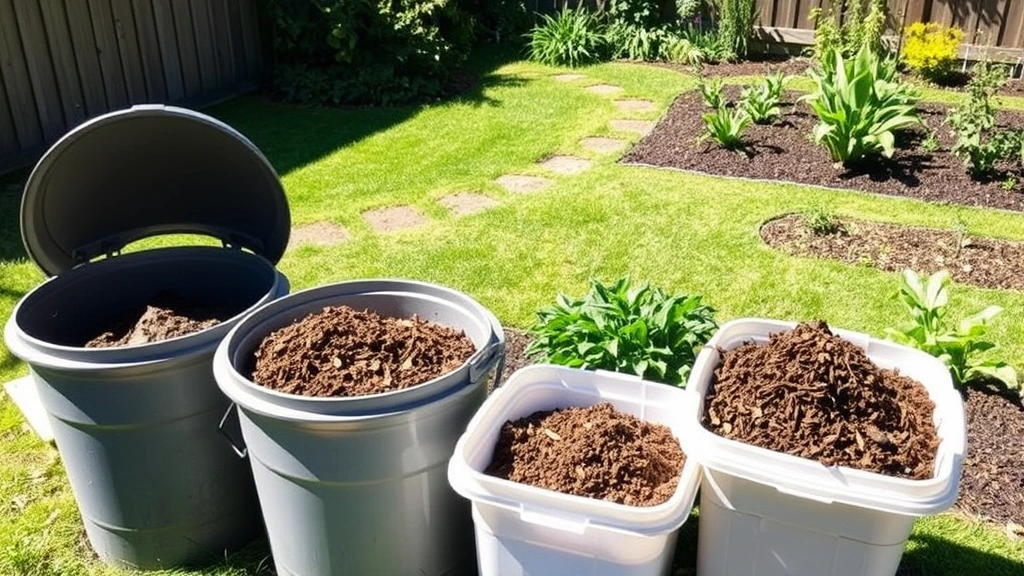
Before composting can generate savings, households must invest in infrastructure. The initial investment varies dramatically based on chosen composting method. A basic open-pile system requires minimal investment, potentially costing nothing beyond labor and site preparation. Conversely, a tumbling bin system might cost $150-$400, while more sophisticated systems like vermicomposting setups could reach $300-$600. Understanding these upfront costs is critical for calculating the payback period and return on investment.
For most households, a mid-range investment of $100-$250 in a quality compost bin represents the optimal balance between functionality, durability, and cost-effectiveness. This investment typically pays for itself within 12-18 months through waste disposal fee reductions and eliminated fertilizer purchases. Homeowners should also consider whether their municipality offers rebates or incentives for composting infrastructure, as many jurisdictions provide subsidies to encourage waste reduction.
Beyond the bin itself, minimal additional equipment is necessary. A simple shovel, fork, or aerating tool (often costing $20-$40) facilitates turning and maintenance. Some households invest in compost thermometers ($15-$30) to optimize decomposition rates, though these are optional. The total initial investment for a functional home composting system typically ranges from $50 to $400, depending on sophistication and chosen method.
Long-Term Savings on Waste Disposal
The most straightforward financial benefit of composting emerges from reduced waste disposal costs. In the United States, residential waste disposal fees average $15-$25 per month, though rates in California and other high-cost regions can exceed $40 monthly. By composting food scraps and yard waste, households can reduce their trash volume by 30-40%, directly decreasing their monthly waste management bills.
For a household paying $20 monthly for waste collection, reducing trash by 35% generates $84 in annual savings. Over a five-year period, this single benefit totals $420 in direct cost reductions. Notably, these figures represent conservative estimates; households with larger gardens or substantial yard waste generation can achieve even greater reductions. Some municipalities implement weight-based or volume-based pricing, where compost-generating households see proportionally larger savings.
Additionally, many waste management companies offer reduced rates for customers who participate in composting programs. Some regions provide free or subsidized compost bins to encourage participation, effectively eliminating upfront investment barriers. These municipal programs recognize that composting reduces the operational burden on landfills and waste processing facilities, creating financial incentives to encourage residential participation. Homeowners should investigate whether their local waste management authority offers such programs.
Reducing Fertilizer and Soil Amendment Expenses
The second major financial benefit of composting stems from the elimination of commercial fertilizer and soil amendment purchases. Home gardeners typically spend $30-$100 annually on potting soil, mulch, fertilizers, and soil conditioners. High-quality compost serves all these functions simultaneously, making it a comprehensive soil amendment that replaces multiple commercial products.
The nutrient content of mature compost varies based on input materials, but typically includes nitrogen, phosphorus, and potassium in balanced proportions. While compost’s nutrient density doesn’t match concentrated synthetic fertilizers, its complete nutrient profile and soil-conditioning benefits often eliminate the need for supplementary commercial products. For vegetable gardeners and ornamental plant enthusiasts, this represents substantial annual savings.
Consider a household maintaining a 200-square-foot garden bed. This space typically requires 2-4 cubic yards of soil amendments annually to maintain optimal growing conditions. Purchasing this volume of commercial compost or potting soil costs $100-$300 annually. A well-maintained home compost system producing 1-2 cubic yards of finished compost yearly reduces this expense significantly. Many households with established compost systems reduce annual soil amendment purchases by 50-75%, translating to $50-$225 in annual savings.
Furthermore, compost improves soil structure and water retention, reducing irrigation requirements and extending plant health. This secondary benefit decreases water usage and associated utility costs, creating additional financial advantages beyond direct fertilizer expense reduction. The compound effect of reduced water usage, decreased fertilizer purchases, and improved plant productivity creates a multifaceted financial advantage that extends beyond simple cost accounting.
Case Study Analysis: Sacramento Household
To ground this analysis in real-world data, consider a detailed case study of a typical Sacramento, California household. This case study examines a family of four maintaining a home composting system in a suburban setting with a modest garden and regular yard waste generation. The household baseline includes $25 monthly waste disposal fees and approximately $120 annual spending on soil amendments and fertilizers.
In Month 1, the household invested $180 in a quality tumbling compost bin and $30 in basic tools, totaling an initial investment of $210. They began composting food scraps (vegetable trimmings, fruit waste, coffee grounds) and yard waste (grass clippings, fallen leaves, small branches). The municipality offered a $50 rebate for compost bin purchase, reducing net investment to $160.
By Month 6, the household had generated approximately 0.5 cubic yards of finished compost suitable for garden use. They had also reduced their trash volume by an estimated 35%, prompting their waste management company to reduce their service tier, decreasing monthly fees from $25 to $18. The household realized $42 in waste disposal savings during this six-month period and eliminated approximately $60 in soil amendment purchases (half their annual budget) by utilizing their compost.
The first-year financial summary revealed total savings of $119 in waste disposal fees ($25 × 12 months baseline minus $18 × 12 months reduced rate) and approximately $90 in soil amendment purchases eliminated through compost utilization. Total first-year savings: $209, essentially recovering the initial investment. By Year 2, with no additional capital investment required, the household realized $119 annual savings from reduced waste fees and $120 from eliminated fertilizer purchases, totaling $239 in annual recurring savings.
This case study demonstrates that composting achieves financial breakeven within 12 months for typical households, with substantial positive returns in subsequent years. The five-year financial projection for this Sacramento household totals $1,047 in cumulative savings ($160 initial investment plus $887 in savings across years 2-5). This analysis excludes environmental benefits, improved garden productivity, and water usage reductions, all of which represent additional value.
Environmental and Health Co-Benefits
Beyond direct financial savings, composting generates substantial environmental and health benefits that create additional economic value when quantified. Reducing landfill disposal decreases methane emissions from decomposing organic matter, contributing to climate change mitigation. Improved soil health from compost application increases carbon sequestration in garden soils, further supporting climate objectives. These environmental benefits align with broader sustainable energy solutions and planetary protection strategies.
Health benefits emerge from improved soil quality and reduced chemical pesticide and fertilizer exposure. Compost-amended soils support robust plant growth with enhanced disease resistance, reducing the need for chemical interventions. Homegrown vegetables from compost-enriched soil often demonstrate superior nutritional profiles compared to commercially produced alternatives. For families growing food at home, these health improvements translate to reduced healthcare costs and improved family wellness.
The EPA recognizes composting as a critical component of waste reduction and climate action strategies. By diverting organic materials from landfills, composting reduces methane emissions equivalent to removing automobiles from roads. For individual households, this contribution to environmental goals creates intangible but significant value that extends beyond personal financial benefit to broader societal impact.
Additionally, compost-enriched soils demonstrate superior water retention properties, reducing irrigation requirements and supporting resilience during drought periods. In water-stressed regions like California, this benefit carries particular economic significance. Reduced water usage directly decreases utility bills while supporting community water security and sustainability objectives.
Implementation Strategies for Maximum Savings
Maximizing composting’s financial returns requires strategic implementation and consistent maintenance. The first critical decision involves selecting the appropriate composting method for your household situation. Advantages of natural gas and other sustainable energy choices should inform broader household sustainability decisions, including composting system selection. Cold composting (passive pile systems) requires minimal effort but produces results over 1-2 years, while hot composting (active turning and management) accelerates decomposition to 2-3 months.
For households seeking rapid compost generation and maximum annual savings, hot composting systems justify the additional labor investment. Tumbling bins and three-bin systems facilitate proper turning and aeration, accelerating decomposition significantly. The faster compost production increases annual savings through earlier and greater soil amendment replacement. For homeowners with limited time, vermicomposting (worm-based systems) offers a passive approach that generates finished compost efficiently with minimal physical effort.
Strategic feedstock selection dramatically impacts compost quality and decomposition speed. Balancing nitrogen-rich green materials (food scraps, grass clippings, fresh leaves) with carbon-rich brown materials (dry leaves, wood chips, shredded paper) optimizes the carbon-to-nitrogen ratio, accelerating decomposition and improving finished compost quality. Households achieving optimal carbon-to-nitrogen ratios (approximately 30:1) generate superior compost in shorter timeframes, maximizing economic returns.
Participating in municipal composting programs where available provides additional financial benefits. Many communities offer free or subsidized composting services, allowing households to eliminate compost bin investment while still reducing waste disposal volume. Research whether your local waste management authority provides such programs, as participation often requires minimal effort while providing substantial savings.
Documentation and tracking of savings enhances financial awareness and motivation. Households should record monthly waste disposal fees, soil amendment purchases, and compost production volumes. This data quantifies financial benefits, demonstrating composting’s economic impact while identifying optimization opportunities. Tracking also supports goal-setting and provides tangible evidence of environmental contribution.
Common Mistakes That Reduce Financial Returns
Despite composting’s financial potential, certain common mistakes substantially reduce economic returns. The first critical error involves overinvestment in sophisticated systems that exceed household needs. Purchasing expensive commercial-grade composters or elaborate multi-bin systems often represents poor financial decisions for typical households. Simple tumbling bins or open-pile systems generate equivalent financial returns with substantially lower initial investment. Assess your actual composting capacity and financial goals before selecting equipment.
A second significant mistake involves inconsistent feedstock management that slows decomposition and delays compost production. Neglecting to maintain proper carbon-to-nitrogen balance, failing to turn compost regularly, or allowing systems to become waterlogged substantially extends decomposition timelines. This delay postpones financial benefits and reduces annual compost production. Consistent maintenance requires minimal effort but dramatically improves results.
Many households fail to fully utilize generated compost, reducing financial returns. Compost sitting unused in storage bins generates no economic benefit. Successful composters actively apply finished compost to gardens, landscape beds, and container plants, replacing commercial soil amendments. Develop concrete plans for compost application before establishing composting systems, ensuring full utilization of production.
Additionally, households sometimes fail to adjust waste management service levels after beginning composting. Communicating with waste management providers about reduced waste volume allows service downgrades that lower monthly fees. Many providers offer smaller collection containers or less frequent pickup schedules at proportionally reduced costs. Proactively requesting these adjustments directly translates to financial savings.
Finally, some households underestimate the value of water and energy savings generated through improved soil quality. Compost-amended soils require less irrigation and fewer chemical inputs, creating utility bill reductions that should be included in comprehensive financial analysis. Tracking these secondary benefits reveals composting’s full economic impact beyond direct waste and fertilizer expense reduction.
FAQ
How quickly does composting pay for itself?
Most households achieve financial breakeven within 12-18 months through combined waste disposal fee reductions and eliminated fertilizer purchases. The timeline depends on initial investment amount, waste disposal costs in your region, and annual soil amendment spending. Households in high-cost waste disposal areas achieve faster payback periods.
What’s the best composting method for financial returns?
Tumbling bins and three-bin systems offer optimal balance between initial investment ($150-$300) and rapid compost production. These systems accelerate decomposition through efficient aeration and turning, generating finished compost within 2-4 months. This rapid production cycle maximizes annual financial returns.
Can apartment dwellers compost profitably?
Yes, vermicomposting systems operate effectively in apartments and small spaces. These compact systems cost $100-$300 initially and produce finished compost continuously. Urban dwellers benefit from reduced waste fees and can apply compost to container plants and community gardens, achieving meaningful financial returns despite limited space.
How much compost can a typical household produce annually?
Well-managed home composting systems typically produce 1-3 cubic yards of finished compost annually, depending on feedstock volume and decomposition method. This production volume eliminates 50-75% of typical household soil amendment purchases, generating $50-$225 in annual savings.
Does composting reduce water bills?
Yes, compost-amended soils retain moisture more effectively, reducing irrigation requirements by 20-30% for gardens and landscape beds. In regions with metered water pricing, this translates to measurable utility bill reductions. The water conservation benefit compounds over years, creating substantial cumulative savings.
What materials shouldn’t go into home compost systems?
Avoid composting meat, dairy, oils, diseased plants, and treated wood. These materials either decompose slowly, attract pests, or introduce contaminants. Stick to plant-based food scraps, yard waste, and paper products for optimal results and food safety.
Is commercial compost cheaper than home composting?
After initial investment recovery, home composting proves substantially cheaper than purchasing commercial compost. Home systems generate free compost indefinitely, while commercial compost costs $0.50-$2.00 per pound. The cumulative savings over 5-10 years heavily favor home production.


