
Gas Edger vs Electric: Eco Impact Explained
When maintaining your lawn, the choice between a gas powered edger and an electric alternative represents more than just convenience—it’s a decision with measurable environmental consequences. As homeowners increasingly prioritize sustainability, understanding the ecological footprint of yard maintenance equipment has become essential. This comprehensive guide examines the environmental impact, operational efficiency, and long-term sustainability of both power sources.
The lawn care industry contributes significantly to carbon emissions and air pollution. According to research, gas-powered equipment accounts for a substantial portion of residential outdoor emissions. By comparing these two technologies thoroughly, you can make an informed choice that aligns with your environmental values while maintaining your landscape effectively.
Environmental Impact Overview
The environmental debate between gas and electric lawn equipment extends beyond simple emissions comparisons. A gas powered edger operates through combustion of fossil fuels, while electric models draw power from the grid or rechargeable batteries. The true environmental impact depends on multiple factors: electricity grid composition, fuel consumption rates, manufacturing processes, and equipment lifespan.
Residential lawn care equipment produces surprising pollution levels. The EPA reports that operating a gas-powered lawn mower for one hour generates emissions equivalent to driving a car for approximately 100 miles. When you factor in edgers, trimmers, and other yard tools, the cumulative effect becomes substantial. A single household’s yard maintenance can contribute meaningfully to local air quality degradation and climate change.
Electric alternatives offer a cleaner operation profile, though their true sustainability depends on your regional electricity grid composition. In areas powered primarily by renewable energy, electric edgers represent a dramatically lower environmental choice. Even in regions relying on fossil fuel power plants, electric tools typically produce fewer emissions than direct combustion equipment.
The manufacturing phase also deserves consideration. Electric edgers, particularly those with lithium-ion batteries, require energy-intensive production processes. However, this initial environmental cost is typically offset within the first season of use compared to gas alternatives. Understanding this lifecycle perspective helps contextualize the true environmental impact of your equipment choice.
Gas Powered Edger: Emissions and Pollution
Gas powered edgers represent the traditional approach to lawn edging, relying on small internal combustion engines that burn gasoline or gasoline-oil mixtures. These engines, while compact and powerful, generate multiple forms of pollution that extend beyond simple carbon dioxide emissions.
Direct Emissions and Air Pollutants
A gas powered edger produces several harmful pollutants during operation:
- Carbon dioxide (CO₂): Primary greenhouse gas contributing to climate change
- Nitrogen oxides (NOx): Compounds that form ground-level ozone and contribute to respiratory problems
- Particulate matter (PM): Fine particles that penetrate deep into lungs, causing health issues
- Volatile organic compounds (VOCs): Precursors to smog and secondary pollutants
- Carbon monoxide (CO): Toxic gas that impairs oxygen transport in blood
The small engines in gas edgers operate less efficiently than automotive engines, producing disproportionately high emissions relative to their power output. A typical gas edger engine might produce emissions at levels 10-15 times higher per unit of power than modern vehicle engines, according to environmental research organizations.
Fuel Consumption and Carbon Footprint
Most gas edgers consume between 0.5 to 1.5 gallons of fuel per season, depending on lawn size and usage patterns. This translates to approximately 5-15 pounds of CO₂ emissions per season per edger. For a household with multiple gas-powered tools (edger, mower, trimmer, blower), seasonal emissions can exceed 50 pounds of CO₂, equivalent to driving a car 100-150 miles.
The fuel supply chain itself contributes environmental costs. Extraction, refining, and transportation of gasoline generate additional emissions not directly attributable to equipment operation. When considering the full lifecycle, gas equipment’s carbon footprint becomes even more significant.
Long-Term Pollution Accumulation
Over a 10-year equipment lifespan, a single gas edger might contribute 50-150 pounds of CO₂ to the atmosphere, along with substantial quantities of other pollutants. Multiply this across millions of households, and the cumulative impact on air quality and climate becomes enormous. The EPA estimates that residential lawn equipment contributes approximately 5% of total U.S. air pollution.
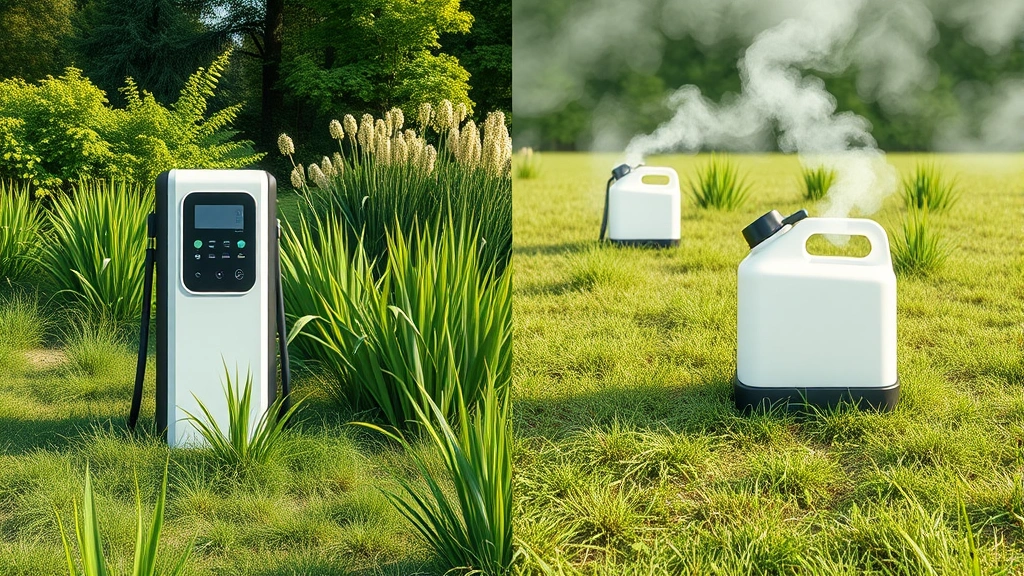
Electric Edger: Sustainability Benefits
Electric edgers represent a fundamentally cleaner approach to lawn maintenance, eliminating direct combustion and producing zero on-site emissions. This shift toward electric yard equipment aligns with broader trends in advantages of electric vehicles and sustainable technology adoption.
Zero Direct Emissions Operation
Electric edgers produce no exhaust, no fuel vapors, and no combustion byproducts. This provides immediate benefits for both personal health and local air quality. Users avoid inhaling fumes, and neighbors experience less noise and air pollution. The operational cleanliness of electric tools makes them ideal for residential areas where air quality and community health matter.
The electricity powering electric edgers comes from the grid, which increasingly incorporates renewable sources. According to the U.S. Energy Information Administration, renewable energy sources now comprise over 20% of U.S. electricity generation, with this percentage growing annually. In states like California and New York, renewable percentages exceed 40%, meaning electric edgers in these regions operate with dramatically lower environmental impact than equivalent gas equipment.
Battery Technology and Energy Efficiency
Modern lithium-ion batteries powering electric edgers demonstrate exceptional efficiency, converting 85-90% of stored energy into useful work. This compares favorably to gas engines, which typically convert only 25-30% of fuel energy into mechanical work, with the remainder lost as heat.
Battery technology continues improving rapidly. Contemporary electric edgers operate for 30-60 minutes per charge, sufficient for most residential applications. Battery longevity has also improved significantly, with quality lithium-ion packs lasting 500-1000 charge cycles (3-5 years typical use) before degradation becomes problematic. Many manufacturers offer battery recycling programs, ensuring proper disposal and material recovery.
Lifecycle Environmental Advantage
Despite the energy-intensive manufacturing of batteries, lifecycle analyses consistently show that electric edgers produce fewer total emissions than gas equivalents. Studies indicate that electric equipment breaks even on manufacturing emissions within 1-2 seasons of typical use. Over a 10-year period, electric edgers produce 60-75% fewer lifecycle emissions than comparable gas models, even in regions where electricity comes primarily from fossil fuel sources.
This advantage grows substantially in regions with cleaner electricity grids. In areas powered largely by hydroelectric, wind, or solar energy, electric edgers produce 85-95% fewer lifecycle emissions than gas alternatives.
Cost Analysis and Long-Term Value
The financial comparison between gas and electric edgers extends beyond initial purchase price, encompassing fuel costs, maintenance expenses, and replacement cycles.
Initial Purchase Price
Gas edgers typically cost $150-400 for quality residential models. Electric edgers range from $200-600, depending on battery capacity and brand. The initial price difference appears modest, but context matters significantly. Many households already own compatible battery systems from other electric tools (drills, saws, etc.), allowing them to purchase battery-less electric edgers at lower costs.
Operating Costs
Gas edgers require regular fuel purchases, averaging $20-40 per season for most homeowners. Over 10 years, fuel costs accumulate to $200-400. Additionally, gas equipment requires regular maintenance: spark plug replacement ($10-20 annually), air filter cleaning, fuel system cleaning, and seasonal tune-ups. Annual maintenance costs typically run $30-60 per year, totaling $300-600 over a decade.
Electric edgers eliminate fuel costs entirely. Battery charging costs approximately $0.50-1.50 per season (minimal electricity usage). Maintenance requirements are virtually nonexistent—occasional blade cleaning and battery terminal inspection suffice. This simplicity translates to 10-year maintenance costs under $50.
Total 10-year operating costs favor electric edgers by $400-900 per unit, depending on local electricity and fuel prices.
Resale Value and Equipment Lifespan
Gas equipment typically remains functional for 10-15 years with proper maintenance, though performance gradually declines. Electric equipment, when cared for properly, often lasts 15-20 years. Battery replacement (typically $100-200) extends electric tool lifespan significantly, whereas gas equipment eventually becomes unreliable despite repair attempts.
Resale markets favor electric equipment, as buyers increasingly prefer the lower maintenance and cleaner operation. A 3-5 year old electric edger might retain 40-50% of purchase value, while comparable gas equipment retains only 25-35%.
Performance Comparison
Beyond environmental and financial considerations, practical performance differences influence equipment choice significantly.
Power and Cutting Capability
Modern electric edgers deliver impressive cutting power, adequate for most residential lawn maintenance. High-quality electric models cut through thick turf, roots, and hardened soil nearly as effectively as gas alternatives. The main limitation appears in professional or heavy-use scenarios requiring extended runtime without recharging.
Gas edgers maintain an advantage in unlimited runtime without refueling, making them preferable for large properties or professional landscaping. However, for typical residential properties (under 1 acre), electric edgers prove entirely adequate.
Noise Levels
Electric edgers operate at 60-75 decibels, roughly equivalent to normal conversation. Gas edgers produce 85-95 decibels, comparable to heavy traffic. This dramatic noise reduction benefits both the operator (reduced hearing damage risk) and neighbors (early morning or evening use becomes more feasible).
The noise advantage of electric equipment often proves underestimated by purchasers but becomes highly valued after experiencing both options.
Maintenance and Reliability
Electric edgers require minimal maintenance, with no fuel mixing, spark plug service, or seasonal tune-ups necessary. This simplicity makes them ideal for homeowners who dislike equipment maintenance or lack mechanical aptitude. Reliability is excellent, with most failures occurring after many years of use.
Gas edgers require regular maintenance to maintain reliability. Fuel stabilization, spark plug service, air filter cleaning, and seasonal preparation are necessary for consistent performance. Neglected gas equipment frequently fails to start after winter storage, requiring professional service.
Making Your Sustainable Choice
Selecting between gas and electric edging equipment involves evaluating your specific circumstances against environmental and practical considerations.
Assessing Your Situation
Consider these factors when making your decision:
- Property size: Electric edgers suit properties under 1-2 acres comfortably. Larger properties might benefit from gas equipment or multiple battery systems.
- Regional electricity grid: Check your local grid’s renewable energy percentage. Cleaner grids make electric equipment dramatically more sustainable. EPA Energy Resources provides grid composition data.
- Existing tool ecosystem: If you already own compatible battery systems from other electric tools, electric edgers become more economical and convenient.
- Budget constraints: While total cost of ownership favors electric, initial purchase price might influence immediate decisions.
- Maintenance willingness: Preference for minimal maintenance strongly favors electric options.
- Noise sensitivity: Residential areas or early morning use favor electric’s quieter operation.
Transitioning to Sustainable Alternatives
If you currently own gas equipment, consider these transition strategies. First, shift to electric equipment as current tools require replacement. Many households benefit from maintaining one gas tool for occasional heavy-duty tasks while using electric equipment for routine maintenance. This hybrid approach balances sustainability with practical needs.
Explore the broader context of sustainable energy solutions for your property. Combining electric yard equipment with renewable electricity sources (rooftop solar, community solar programs) maximizes environmental benefits.
Supporting the Transition
Many municipalities offer rebate programs encouraging transition from gas to electric yard equipment. Check with your local environmental agency or utility company for available incentives. Some programs provide 20-50% rebates on electric equipment purchases, substantially reducing the financial barrier to adoption.
Professional landscapers increasingly adopt electric equipment, demonstrating that commercial viability extends beyond residential use. Supporting these early adopters through your equipment choices helps accelerate the broader industry transition toward sustainability.
Broader Equipment Considerations
A gas powered edger represents just one element of residential yard maintenance. Consider your entire equipment ecosystem. Many households maintain multiple gas-powered tools (edgers, mowers, trimmers, blowers) generating cumulative pollution. Transitioning your entire yard equipment collection to electric produces transformative environmental benefits. Explore how green technology innovations are transforming outdoor maintenance.
The choice to move beyond gas-powered equipment aligns with broader sustainable energy solutions that reduce household carbon footprints. Just as decisions about gas or electric water heater selection influence home sustainability, yard equipment choices accumulate to meaningful environmental impact.
FAQ
Are electric edgers powerful enough for thick turf and roots?
Yes, modern electric edgers deliver adequate power for residential lawn maintenance, cutting through thick turf and roots effectively. Performance approaches gas equipment for typical residential applications. Professional landscapers working on extensive properties might prefer gas options for unlimited runtime, but homeowners rarely encounter situations where electric power proves insufficient.
How long do electric edger batteries last per charge?
Quality lithium-ion batteries typically provide 30-60 minutes of runtime per charge, sufficient for most residential properties. Larger properties might require battery swaps or multiple battery systems. Battery capacity and power draw influence runtime, with premium models offering longer durations than budget alternatives.
What happens to old electric edger batteries?
Most manufacturers operate battery recycling programs, accepting old batteries for proper disposal and material recovery. Lithium-ion batteries contain valuable materials (lithium, cobalt, nickel) that recycling programs recover efficiently. Never discard batteries in regular trash; contact manufacturers or local recycling facilities for proper handling.
Is my regional electricity source clean enough to justify electric equipment?
Even in regions relying partially on fossil fuel electricity, electric edgers typically produce fewer lifecycle emissions than gas alternatives. The efficiency advantage of electric motors over gas engines compensates for less-clean electricity sources. Energy Star provides tools for checking your local grid composition and making informed decisions.
Can I use the same battery for multiple electric yard tools?
Many manufacturers design battery systems compatible across their entire product line. Purchasing edgers, mowers, trimmers, and other equipment from the same manufacturer allows sharing battery packs, improving convenience and reducing overall costs. Check compatibility before purchasing to ensure all tools work with your existing batteries.
How do electric edgers perform in wet conditions?
Quality electric edgers feature water-resistant designs suitable for use in damp conditions. Always follow manufacturer guidelines regarding wet-condition operation. Never submerge equipment or expose electrical connections to standing water. Dry the edger thoroughly after wet-condition use to prevent corrosion.
What maintenance do electric edgers require?
Electric edgers need minimal maintenance: occasional blade cleaning to remove grass buildup, battery terminal inspection to ensure good connections, and storage in dry conditions. Unlike gas equipment, they require no fuel mixing, spark plug service, air filter cleaning, or seasonal tune-ups. This simplicity makes them ideal for maintenance-averse homeowners.
Can I repair electric edgers myself?
Most electric edger repairs involve simple tasks: replacing blades, cleaning air intakes, or checking connections. Complex repairs (motor replacement, battery issues) typically require professional service. The simpler design of electric equipment generally makes repair easier than gas alternatives, reducing professional service costs.
How do I know if transitioning to electric makes sense for my property?
Evaluate your property size, existing equipment, local electricity grid composition, and maintenance preferences. Properties under 1-2 acres and homeowners valuing low maintenance strongly benefit from electric equipment. If you already own compatible battery systems or live in areas with clean electricity grids, the transition case becomes even stronger. Calculate your total cost of ownership to make financially informed decisions.


