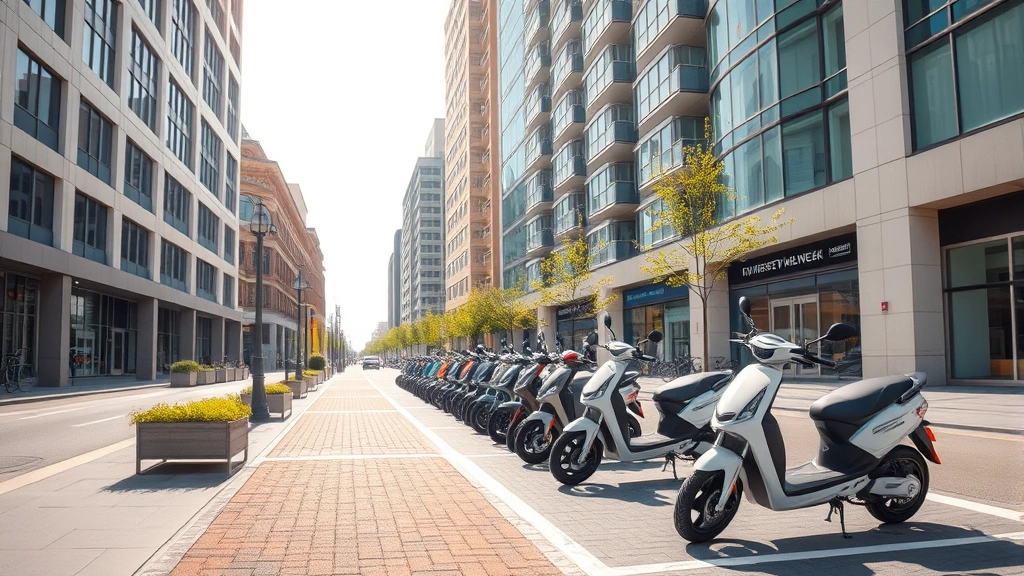
Is a Gas Scooter Eco-Friendly? Research Insights
The popularity of scooters as urban transportation has surged in recent years, offering a convenient alternative to cars and public transit. However, the environmental impact of these vehicles remains a critical question for eco-conscious consumers. While gas scooters for adults present an attractive option due to their affordability and performance, their sustainability credentials deserve careful examination. This article explores the environmental implications of gas-powered scooters, comparing them with alternative transportation methods and evaluating their place in a sustainable future.
Understanding whether a gas scooter is truly eco-friendly requires looking beyond surface-level convenience. We must consider fuel consumption, emissions output, manufacturing processes, and lifecycle impacts. Additionally, we’ll examine how gas scooters stack up against advantages of electric vehicles and other sustainable transportation solutions that are reshaping urban mobility.

Environmental Impact of Gas Scooters
Gas-powered scooters represent a middle ground in the transportation spectrum, sitting between bicycles and automobiles. However, calling them eco-friendly requires nuance. A gas scooter for adults typically operates on two-stroke or four-stroke engines that burn fossil fuels, producing carbon dioxide and other pollutants. The environmental footprint extends beyond just tailpipe emissions to encompass extraction, refining, transportation, and combustion of fuel.
The primary concern with gas scooters is their reliance on non-renewable fossil fuels. Each gallon of gasoline burned releases approximately 19.6 pounds of carbon dioxide into the atmosphere, contributing directly to climate change. While scooters consume fuel more efficiently than cars on a per-mile basis, they still emit greenhouse gases that accelerate environmental degradation. According to research from the Environmental Protection Agency, transportation accounts for 27% of total greenhouse gas emissions in the United States, with fuel combustion being the primary culprit.
Beyond climate impact, gas scooters contribute to local air quality problems. Two-stroke engines, common in smaller scooters, produce significantly higher emissions of nitrogen oxides and particulate matter compared to four-stroke engines. These pollutants contribute to smog formation, respiratory issues, and environmental degradation in urban areas where scooters are most frequently used.

Emissions and Air Quality Concerns
The emissions profile of a gas scooter reveals important sustainability considerations. A typical gas scooter emits between 20-30 grams of CO2 per kilometer traveled, which may seem modest compared to cars. However, when multiplied across millions of users in urban environments, these emissions accumulate significantly. Moreover, the complete emissions picture includes volatile organic compounds (VOCs) and nitrogen oxides that don’t appear in CO2 calculations alone.
Two-stroke engines are particularly problematic because they lack sophisticated emission control systems. These engines often produce 100-200 times more emissions per unit of fuel burned compared to modern four-stroke automobile engines. The World Wildlife Fund has documented how small-engine emissions significantly impact air quality in densely populated urban centers, particularly affecting vulnerable populations living near major transportation corridors.
Fine particulate matter from scooter exhaust penetrates deep into the respiratory system, causing inflammation and reducing lung function. Cities with high concentrations of gas scooters report elevated levels of ground-level ozone and particulate matter, contributing to asthma, bronchitis, and other respiratory diseases. Understanding definition of sustainability requires acknowledging that truly sustainable transportation must minimize harm to both the environment and human health.
Fuel Efficiency Comparison
When evaluating whether a gas scooter for adults is eco-friendly, fuel efficiency provides one measurable metric. Most gas scooters achieve 50-100 miles per gallon, which appears impressive compared to cars averaging 25-35 mpg. However, this comparison masks important context about total transportation efficiency and accessibility.
The fuel efficiency of scooters must be evaluated against advantages of electric vehicles, which convert 77% of electrical energy to power at the wheels, compared to just 12-30% efficiency for gasoline engines. Electric scooters achieve 100-200 miles per kilowatt-hour equivalent, dramatically outperforming their gas-powered counterparts. Additionally, electric vehicles can be powered by renewable energy sources, while gas scooters permanently rely on fossil fuels.
Fuel efficiency also depends heavily on driving habits, maintenance, and engine condition. A poorly maintained gas scooter may see efficiency drop by 20-30%, while electric scooters maintain consistent performance regardless of maintenance status. Over a typical scooter’s 5-10 year lifespan, the cumulative fuel consumption and associated emissions present a significant environmental burden that efficiency ratings alone cannot justify.
Manufacturing and Lifecycle Assessment
A comprehensive environmental evaluation must include manufacturing impacts. The production of a gas scooter involves mining and refining metals, petroleum-based plastic manufacturing, and assembly processes that consume energy and generate waste. However, the manufacturing impact is typically less significant than operational emissions for gas vehicles.
Battery production for electric scooters does involve environmental costs, particularly in mining lithium, cobalt, and other materials. Yet, the superior efficiency of electric scooters means the battery’s environmental cost is offset within 6-12 months of use, after which the electric scooter maintains its advantage throughout its operational life. The lifecycle assessment conducted by the Transport and Environment organization demonstrates that electric scooters generate 50-80% fewer emissions over their complete lifecycle compared to gas-powered alternatives.
End-of-life considerations also differ significantly. Gas scooters require proper disposal of fuel and oil residues, while electric scooters present battery recycling challenges. However, battery recycling infrastructure is rapidly improving, with recovery rates exceeding 90% for lithium-ion batteries. Gas scooters offer no equivalent recycling benefits for their fossil fuel systems.
Gas vs. Electric Scooters
The comparison between gas and electric scooters provides clarity on the eco-friendly question. Electric scooters powered by renewable energy sources represent a genuinely sustainable transportation option, while gas scooters remain fundamentally dependent on fossil fuels. Here’s how they compare across key sustainability metrics:
- Carbon Emissions: Electric scooters produce zero tailpipe emissions, while gas scooters emit 20-30g CO2 per kilometer. Over 10,000 annual kilometers, a gas scooter produces approximately 200-300 kg of CO2 annually.
- Air Quality: Electric scooters eliminate local air pollution, directly benefiting public health in urban areas. Gas scooters contribute to smog, particulate matter, and respiratory disease.
- Energy Source: Electric scooters can be charged using renewable energy, making them increasingly clean as electrical grids transition to solar and wind power. Gas scooters permanently depend on fossil fuels.
- Operating Costs: Electricity costs 1-2 cents per mile, while gasoline costs 5-8 cents per mile, making electric scooters more economical long-term.
- Maintenance: Electric scooters require minimal maintenance beyond tire checks and brake inspection. Gas scooters need regular oil changes, spark plug replacements, and carburetor cleaning.
- Noise Pollution: Electric scooters operate silently, while gas scooters contribute to noise pollution affecting urban livability.
Exploring sustainable energy solutions reveals that electrification represents the clear path forward for personal transportation. While gas scooters offer temporary convenience, they perpetuate dependence on fossil fuels and environmental degradation.
Sustainability Considerations for Urban Transport
From a broader principles of sustainability perspective, evaluating gas scooters requires considering their role within urban transportation systems. Cities worldwide are implementing sustainability goals that require transitioning away from fossil fuel-powered vehicles. Gas scooters, while smaller than cars, still represent movement in the wrong direction.
Sustainable urban transportation emphasizes multi-modal options that reduce total emissions. This includes public transit, cycling infrastructure, walking paths, and electric vehicles. Gas scooters don’t align with this vision because they encourage individual motorized travel rather than collective transportation or human-powered mobility. Cities like Copenhagen and Amsterdam have achieved remarkable sustainability by investing in bicycles and electric transit rather than motorized scooters.
The true environmental cost of gas scooters includes infrastructure impacts. Their small size and fuel requirements still necessitate oil extraction, refining, and distribution networks that generate enormous environmental costs. These systemic impacts exceed what individual fuel efficiency metrics suggest. Additionally, widespread adoption of gas scooters diverts resources and policy support from genuinely sustainable transportation alternatives.
Making an Eco-Conscious Choice
For consumers concerned about environmental impact, several factors should influence scooter selection decisions. First, consider whether motorized scooters are necessary at all. A bicycle or electric skateboard might provide adequate transportation for many urban journeys while eliminating emissions entirely. Second, if motorized transportation is essential, electric scooters represent the only defensible choice from an environmental perspective.
If you currently own a gas scooter, how to reduce your environmental footprint by transitioning to electric alternatives when possible. Proper maintenance of existing gas scooters can minimize emissions, including regular tune-ups, proper tire pressure, and quality fuel. However, these measures merely reduce harm rather than eliminating it.
The broader question of whether gas scooters are eco-friendly ultimately has a clear answer: they are not. While they may produce fewer emissions than cars per mile traveled, they still depend on fossil fuels and contribute to climate change and air pollution. Electric scooters, bicycles, and public transit represent genuinely sustainable alternatives that align with environmental responsibility and long-term climate goals.
Urban planners and policymakers should prioritize infrastructure supporting zero-emission transportation. Some cities have begun restricting gas-powered scooters and motorcycles, recognizing that true sustainability requires eliminating fossil fuel dependence entirely. Individual consumers can accelerate this transition by choosing electric alternatives and supporting policies that promote sustainable transportation.
FAQ
Are gas scooters better for the environment than cars?
Gas scooters produce fewer emissions per mile than cars, but they’re not eco-friendly. A car averaging 30 mpg emits roughly 330g CO2 per mile, while a scooter at 75 mpg emits about 130g per mile. However, the solution isn’t choosing between two fossil fuel options but transitioning to electric alternatives entirely.
How do gas scooter emissions compare to electric scooters?
Gas scooters emit 20-30g CO2 per kilometer with additional air pollutants, while electric scooters produce zero tailpipe emissions. Over a year of regular use, an electric scooter generates 80% fewer emissions than a gas scooter, even accounting for electricity generation.
Can I make my gas scooter more eco-friendly?
You can minimize emissions through regular maintenance, using premium fuel, keeping tires properly inflated, and avoiding aggressive acceleration. However, these measures only reduce harm—they cannot make a gas scooter truly sustainable. Upgrading to an electric scooter eliminates emissions entirely.
What’s the environmental impact of manufacturing scooter batteries?
Battery production involves mining and processing, which generates environmental costs. However, electric scooters recover these manufacturing impacts within 6-12 months of use through superior efficiency. After this payback period, electric scooters maintain their environmental advantage for their entire operational life.
Are there sustainable alternatives to gas scooters?
Yes, multiple options exist: electric scooters, bicycles, e-bikes, public transportation, and walking. Electric scooters offer motorized convenience with zero emissions, while bicycles and e-bikes provide healthy, zero-emission transportation. Public transit provides the most efficient large-scale transportation solution.
Should cities ban gas scooters?
Many environmental experts support transitioning away from gas scooters through incentive programs and regulations. Cities can encourage electric alternatives through subsidies, dedicated charging infrastructure, and parking privileges while gradually phasing out gas-powered options to improve air quality and meet climate goals.


