Is Green Energy Cost-Effective? Analyst Insights
The question of whether green energy is cost-effective has evolved dramatically over the past decade. What was once considered a premium investment for environmentally conscious consumers has transformed into a competitive, and often economically superior, alternative to traditional fossil fuels. Recent data from energy analysts, utility companies, and independent research institutions demonstrates that renewable energy sources—including solar, wind, and hydroelectric power—now offer compelling financial returns alongside environmental benefits.
This comprehensive analysis examines the true cost-effectiveness of green energy through multiple lenses: upfront capital investment, operational expenses, long-term savings, government incentives, and the hidden costs of conventional energy production. By understanding these factors, individuals and businesses can make informed decisions about transitioning to sustainable energy solutions that align with both financial goals and environmental responsibility.

The Real Cost of Traditional Energy
When evaluating whether green energy is cost-effective, we must first understand the complete cost structure of traditional energy sources. Fossil fuels—coal, natural gas, and petroleum—have dominated global energy markets for over a century, creating the illusion of affordability through artificially suppressed pricing that doesn’t account for environmental externalities.
The Environmental Protection Agency (EPA) estimates that the hidden costs of fossil fuel production—including healthcare expenses from air pollution, environmental cleanup, and climate change mitigation—add approximately 10-15% to the actual price of conventional electricity. These costs, known as externalities, are typically borne by society rather than reflected in utility bills.
Coal power plants generate significant air pollution, contributing to respiratory diseases, cardiovascular problems, and premature mortality. Natural gas extraction involves methane leakage, a greenhouse gas 80 times more potent than carbon dioxide over a 20-year period. Oil refining and transportation create spills, habitat destruction, and water contamination. When these societal costs are factored into true price comparisons, green energy becomes substantially more cost-effective than conventional alternatives.
Initial Investment vs. Long-Term Savings
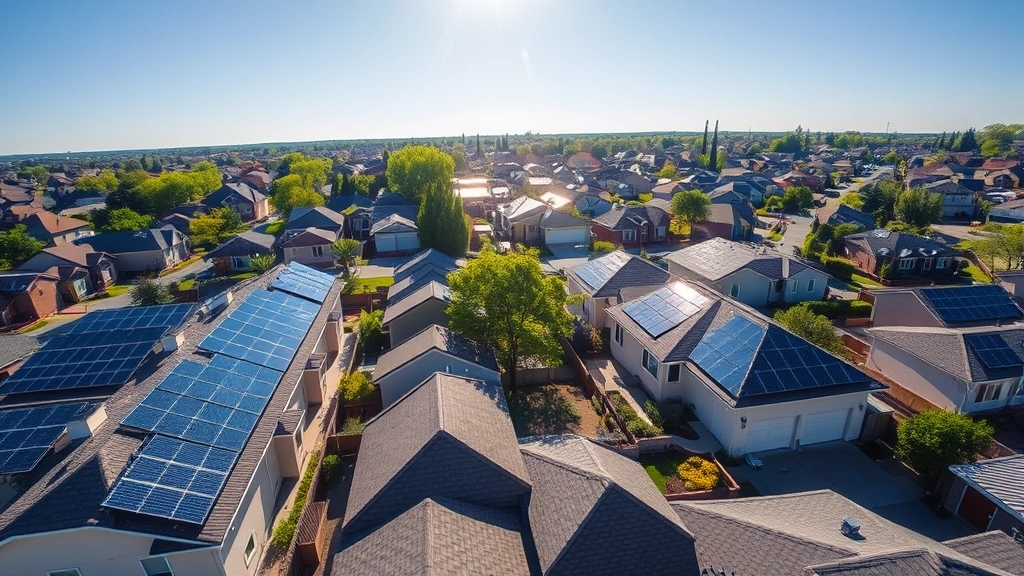
The primary barrier to green energy adoption remains the higher upfront capital investment. Installing a residential solar panel system costs between $15,000 and $25,000 before incentives, while a comparable investment in traditional grid electricity requires no initial outlay. However, this comparison misses the fundamental economic reality: green energy systems generate decades of free electricity once installed.
A typical residential solar installation produces electricity for 25-30 years with minimal degradation (approximately 0.5% annually). Over this lifespan, the average homeowner saves $10,000 to $30,000 on electricity costs, depending on location, system size, and local utility rates. Wind turbines demonstrate even longer operational lifespans, frequently exceeding 35-40 years with proper maintenance.
For businesses, the economics become even more compelling. Commercial-scale solar and wind installations benefit from economies of scale, larger tax deductions, and accelerated depreciation schedules. A manufacturing facility installing a 500-kilowatt rooftop solar system might recoup its $750,000 investment in 6-8 years through reduced electricity purchases, then enjoy 20+ years of virtually free power generation.
The levelized cost of electricity (LCOE)—the average cost per kilowatt-hour over an energy system’s lifetime—reveals the true economic advantage of renewables. According to recent analyses, wind and solar now have the lowest LCOE of any electricity generation source, including natural gas and coal. Solar LCOE has declined 90% in the past decade, while wind costs have dropped 70%, making them economically superior to fossil fuels even without subsidies in many markets.
Government Incentives and Tax Credits
Government support programs dramatically improve green energy cost-effectiveness by reducing initial capital requirements. The federal Investment Tax Credit (ITC) allows homeowners to deduct 30% of solar installation costs from their federal income taxes, effectively reducing a $20,000 system to $14,000. This incentive remains available through 2032 before gradually declining.
State and local programs offer additional benefits: rebates, performance-based incentives, net metering credits, and accelerated depreciation for commercial systems. Some utilities provide direct rebates covering 20-30% of installation costs. Net metering programs credit homeowners for excess electricity their systems generate, effectively using the grid as a free battery.
The U.S. Department of Energy maintains comprehensive databases of state and federal incentives, which can reduce effective system costs by 40-50% in well-incentivized regions. Electric vehicle owners benefit from similar programs, with federal tax credits up to $7,500 complementing state incentives that sometimes reach $10,000 or more.
For businesses, Section 179 deductions allow immediate expensing of renewable energy equipment, while Modified Accelerated Cost Recovery System (MACRS) depreciation accelerates tax benefits. These provisions transform green energy investments into powerful tax planning tools, often making them more attractive than conventional business investments.
Operational and Maintenance Costs
A critical advantage of green energy systems emerges during the operational phase. Solar panels require minimal maintenance—occasional cleaning and monitoring—with annual costs typically under $300 for residential systems. Wind turbines require more regular servicing, but modern designs incorporate redundancy and remote diagnostics that minimize unexpected downtime.
Compare this to fossil fuel plants, which require constant fuel purchases, chemical treatments, cooling water systems, pollution control equipment, and frequent repairs. A natural gas power plant operates at approximately 40-45% efficiency, meaning 55-60% of fuel energy is wasted as heat. Nuclear plants require expensive decommissioning, waste storage, and security infrastructure.
Once a renewable energy system is installed, operational costs are essentially fixed and predictable. There are no fuel price volatility risks, no supply chain disruptions, and no fuel transportation expenses. This cost stability allows for precise financial planning and protects against future energy price increases, which have historically risen 2-3% annually above inflation.
Battery storage systems, increasingly paired with solar installations, add upfront costs but dramatically improve system economics by enabling energy arbitrage—charging during low-price periods and discharging during high-price periods. As green technology innovations continue advancing, battery costs decline, making storage increasingly cost-effective for residential and commercial applications.
Return on Investment Timeline
Return on investment (ROI) timelines for green energy installations vary significantly based on location, system specifications, and financing methods. Residential solar in high-sun areas like Arizona and California achieves payback in 5-7 years, while installations in cloudier regions might require 8-12 years. After payback, homeowners enjoy 15-20 years of essentially free electricity.
The average American homeowner saves $150 to $300 monthly on electricity bills following solar installation, translating to $1,800 to $3,600 annually. Over 25 years, this represents $45,000 to $90,000 in cumulative savings. Even accounting for occasional maintenance and potential inverter replacement (typically 8,000-10,000 dollars after 15 years), the financial benefits are substantial.
Commercial installations demonstrate faster ROI due to larger system sizes and higher electricity consumption. A business using 100,000 kilowatt-hours annually might see payback in 4-6 years, with 20+ years of free electricity generation thereafter. Manufacturing facilities, warehouses, and agricultural operations particularly benefit from commercial solar installations that utilize large roof or ground areas.
Wind energy projects demonstrate different economics. Utility-scale wind farms require multi-million dollar investments but generate electricity at costs under 3 cents per kilowatt-hour in favorable locations—substantially cheaper than fossil fuel alternatives. Community wind projects and small turbine installations for farms or rural properties achieve payback in 6-15 years depending on wind resources and local electricity rates.
Regional Variations in Cost-Effectiveness
Green energy cost-effectiveness varies dramatically by geography due to differences in solar irradiance, wind resources, electricity rates, and incentive programs. The National Renewable Energy Laboratory (NREL) PVWatts calculator allows precise assessment of solar potential for any U.S. location, revealing that southwestern states receive 30-40% more annual solar energy than northern regions.
However, high electricity rates in states like California, Massachusetts, and New York actually make green energy more cost-effective in those regions, despite lower sun exposure. A solar system in Boston might have longer payback than one in Phoenix, but the annual dollar savings could be comparable due to higher utility rates. Conversely, low-electricity-rate states like Louisiana and Oklahoma require longer payback periods despite abundant renewable resources.
Wind resources concentrate in the Great Plains, Midwest, and coastal regions, making wind energy particularly cost-effective in Texas, Iowa, Kansas, and Oklahoma. These states have become wind energy leaders precisely because of superior wind resources combined with reasonable electricity rates and supportive policies. Rural landowners in these regions can generate substantial income by leasing land for wind turbines—typically $4,000-8,000 per turbine annually.
International variations are even more pronounced. Germany and Denmark have achieved 50-80% renewable electricity penetration despite moderate solar resources and high upfront costs, driven by strong policy support and cultural commitment to sustainability principles. Brazil generates 65% of electricity from hydroelectric dams, achieving near-zero marginal generation costs. These examples demonstrate that cost-effectiveness depends on multiple factors beyond simple resource availability.
Hidden Environmental Costs
A comprehensive cost-effectiveness analysis must include environmental externalities—costs imposed on society that don’t appear on utility bills. The National Renewable Energy Laboratory estimates that coal power generation creates $50-100 billion in annual U.S. health costs through air pollution, while natural gas contributes $10-20 billion. These healthcare expenses, lost productivity, and environmental remediation costs are collectively borne by taxpayers and insurance holders rather than reflected in electricity prices.
Climate change represents an even larger hidden cost. Fossil fuel combustion releases carbon dioxide and other greenhouse gases, driving climate change that damages agriculture, increases storm severity, causes infrastructure failures, and forces adaptation expenses. Economic analyses estimate climate change costs at 1-5% of global GDP annually—trillions of dollars in lost productivity, disaster recovery, and adaptation spending.
Green energy systems, by contrast, have minimal environmental externalities. Solar panels generate electricity with no air pollution, water consumption, or greenhouse gas emissions during operation. Wind turbines create negligible environmental impact beyond minimal land use and occasional bird mortality (far less than fossil fuel plants’ environmental damage). Hydroelectric facilities provide flood control and water supply benefits alongside electricity generation.
When environmental costs are properly valued and incorporated into energy pricing, green energy becomes dramatically more cost-effective than fossil fuels. Several studies suggest that true-cost pricing—incorporating environmental and health externalities—would make fossil fuel electricity 2-3 times more expensive than current market prices, while renewable energy costs would remain essentially unchanged.
Future Cost Projections
Cost projections for renewable energy remain strongly favorable. Solar panel efficiency continues improving while manufacturing costs decline, with predictions of 20-25% efficiency panels at sub-$1 per watt within a decade. Battery storage costs, currently declining 7-10% annually, are projected to fall below $100 per kilowatt-hour—the threshold where batteries become cost-effective for grid-scale applications without subsidies.
Wind turbine technology advances including larger rotor diameters, advanced materials, and floating offshore designs promise substantial cost reductions. Floating offshore wind, currently expensive, is projected to become competitive with fossil fuels by 2030-2035, unlocking vast renewable energy resources in coastal regions worldwide.
Emerging technologies including green hydrogen production, advanced geothermal systems, and next-generation nuclear power (small modular reactors) promise to further diversify renewable energy options. Green hydrogen—produced by electrolysis using renewable electricity—enables decarbonization of industrial processes and heavy transportation, areas where direct electrification is challenging.
Conversely, fossil fuel costs face upward pressure. Climate regulations increasingly penalize carbon emissions through carbon pricing, renewable energy mandates, and emissions trading systems. Reserve depletion drives extraction costs higher as easily accessible deposits diminish. The International Energy Agency projects that renewable energy will become the dominant electricity source globally by 2050, driven primarily by economic competitiveness rather than environmental mandates.
For consumers and businesses, these trends suggest that delaying green energy adoption becomes increasingly expensive. Installing solar today captures 30 years of electricity generation at current low costs. Waiting ten years to install the same system might cost 30-40% less per watt, but that savings pales compared to a decade of foregone electricity generation and continued fossil fuel expenses. Early adoption compounds benefits through maximum incentive capture, longest payback period, and protection against future energy price increases.
The transition to renewable energy represents a fundamental way to reduce environmental footprint while improving long-term financial outcomes. Residential and commercial entities that have already transitioned report satisfaction with both environmental impact and economic performance, with many experiencing faster payback than initially projected due to accelerating solar technology improvements and declining installation costs.
FAQ
What is the average payback period for residential solar installation?
The average residential solar payback period ranges from 5-12 years depending on location, system size, local electricity rates, and available incentives. In high-sun, high-electricity-rate states like California and Massachusetts, payback often occurs in 5-7 years. In cloudier or lower-rate regions, payback might extend to 10-12 years. After payback, systems typically generate 15-25 years of free electricity.
Do green energy systems qualify for tax credits?
Yes, federal Investment Tax Credit allows 30% deduction of solar installation costs through 2032. Many states offer additional rebates, performance incentives, and accelerated depreciation for commercial systems. Some utilities provide direct rebates or net metering credits. Combined incentives can reduce effective system costs by 40-50% in well-incentivized regions.
How do operational costs compare between renewable and fossil fuel energy?
Renewable energy systems have minimal operational costs—solar requires occasional cleaning (under $300 annually), while wind turbines require regular maintenance. Fossil fuel plants require constant fuel purchases, chemical treatments, and pollution control equipment. Once renewable systems are installed, operational costs are fixed and predictable, unlike fossil fuels vulnerable to price volatility.
Is green energy cost-effective in cloudy climates?
Yes, green energy can be cost-effective even in cloudy regions due to high electricity rates and available incentives. While solar output is lower in cloudy areas, reduced upfront incentives and faster payback in high-rate states often compensate. Wind energy may be more suitable than solar in some cloudy regions. Net metering and battery storage further improve economics.
What are the hidden costs of fossil fuel energy?
Fossil fuels impose substantial environmental and health costs not reflected in utility bills: air pollution causes $50-100 billion in annual U.S. health expenses, climate change creates $1-5% of global GDP in damages, and environmental remediation costs billions annually. True-cost pricing incorporating these externalities would make fossil fuels 2-3 times more expensive than current prices.
How do battery storage systems affect renewable energy cost-effectiveness?
Battery storage adds upfront costs but improves economics through energy arbitrage—charging during low-price periods and discharging during high-price periods. As battery costs decline 7-10% annually, storage becomes increasingly cost-effective. Batteries enable homeowners to maximize self-consumption and provide grid services generating additional revenue in some markets.
What are future cost projections for green energy?
Solar and wind costs are projected to decline 20-30% by 2030. Battery storage costs are declining toward $100/kWh threshold for grid-scale applications. Emerging technologies including green hydrogen, advanced geothermal, and floating offshore wind promise additional cost reductions. Conversely, fossil fuel costs face upward pressure from climate regulations and reserve depletion, making renewable energy increasingly cost-competitive.


