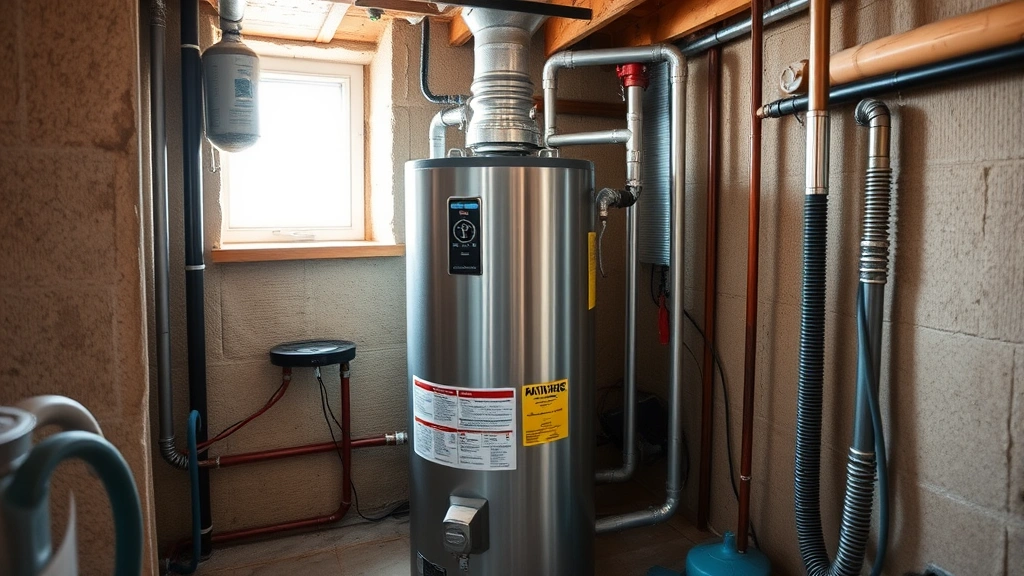
Efficient 40 Gallon Gas Water Heater: Expert Insights for Sustainable Home Energy
Choosing the right water heater is one of the most impactful decisions homeowners can make for both their utility bills and environmental footprint. A 40 gallon gas water heater represents a popular middle ground for many households, offering sufficient hot water capacity without excessive energy consumption. However, efficiency varies dramatically between models, and understanding the nuances can help you select a system that balances performance, cost, and sustainability.
Water heating accounts for approximately 17-25% of residential energy consumption in the United States, making it the second-largest energy expense after heating and cooling. When you invest in an efficient 40 gallon gas water heater, you’re not just reducing monthly bills—you’re actively contributing to sustainability goals that benefit both your household budget and the planet. This comprehensive guide explores everything you need to know about selecting, maintaining, and optimizing a 40 gallon gas water heater for maximum efficiency.
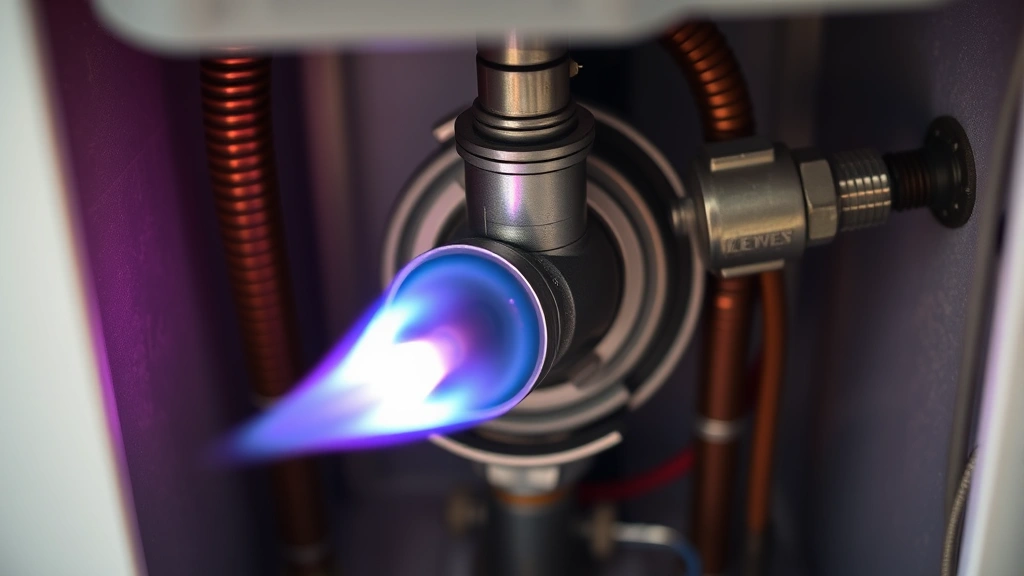
Understanding 40 Gallon Gas Water Heater Efficiency Ratings
The efficiency of a 40 gallon gas water heater is primarily measured through the Energy Factor (EF) rating, a standardized metric developed by the U.S. Department of Energy. This rating reflects how effectively a water heater converts fuel into hot water, accounting for standby losses and cycling losses. For gas water heaters, the EF typically ranges from 0.55 to 0.90, with higher numbers indicating superior efficiency.
Modern 40 gallon gas water heaters must meet federal minimum efficiency standards of 0.59 EF for standard models. Premium models with advanced insulation and improved combustion systems can achieve ratings of 0.80 or higher. Understanding these ratings helps you make informed decisions aligned with sustainable energy solutions that reduce your household’s overall energy consumption.
The First Hour Rating (FHR) is another critical metric indicating how many gallons of hot water the heater can deliver during the first hour of operation. For a 40 gallon tank, typical FHR values range from 40 to 90 gallons per hour, depending on the recovery rate and burner capacity. This measurement helps determine whether the heater meets your household’s peak hot water demand.
Recovery rate—the speed at which a water heater reheats water after use—significantly influences real-world efficiency. Gas water heaters typically recover faster than electric models, making them ideal for families with high hot water consumption. A 40 gallon gas heater with a recovery rate of 40-50 gallons per hour can reheat the entire tank in approximately 50-60 minutes.
Thermal efficiency measures the percentage of fuel energy actually transferred to water, typically ranging from 75-90% for gas water heaters. The remaining energy escapes through the flue as combustion gases. Premium models feature improved heat exchangers and insulation to maximize this efficiency percentage, directly reducing environmental footprint through lower energy consumption.
Energy Factor and Annual Operating Costs
The Energy Factor rating directly correlates with your annual operating costs and long-term savings potential. The ENERGY STAR program certifies water heaters meeting rigorous efficiency standards, typically requiring an EF of at least 0.67 for gas models. Choosing an ENERGY STAR-certified 40 gallon gas water heater can save approximately $150-$300 annually compared to standard models.
Annual operating costs depend on several factors: natural gas prices in your region, household hot water consumption, incoming water temperature, and the thermostat setting. The U.S. Department of Energy estimates that a typical family spends approximately $400-$600 annually to operate a standard 40 gallon gas water heater. Upgrading to a high-efficiency model reduces this expense by 15-30%.
To calculate your potential savings, multiply your household’s daily hot water usage (in gallons) by 365 days, then divide by the tank capacity. This provides your annual number of heating cycles. Multiply this by the energy cost per cycle to estimate annual expenses. A high-efficiency model with an EF of 0.80 versus a standard model at 0.59 EF represents approximately 26% better efficiency.
Standby losses—the heat lost through the tank walls and flue when the heater is idle—significantly impact overall efficiency. Premium 40 gallon gas water heaters feature enhanced insulation reducing standby losses to 0.5-1.0% per hour, compared to 1.5-2.0% for standard models. Over a year, this difference translates to measurable energy savings.
The payback period for upgrading to a high-efficiency model typically ranges from 3-7 years, depending on your current system’s age and your region’s energy costs. After the payback period, the superior efficiency generates pure savings, making the investment increasingly valuable over the 10-15 year lifespan of a typical gas water heater.
Comparing Tank vs Tankless Options
While this article focuses on traditional 40 gallon tank water heaters, understanding tankless alternatives provides valuable context for informed decision-making. Tankless gas water heaters heat water on-demand, eliminating standby losses entirely and delivering infinite hot water capacity. However, they require higher upfront investment ($1,500-$3,000 installed) and may struggle meeting simultaneous high-demand situations in larger households.
A 40 gallon tank heater suits households with moderate to high hot water consumption requiring storage capacity. Tankless systems excel for smaller households with predictable usage patterns or those prioritizing unlimited hot water for showers and simultaneous appliance use. Both options support green technology innovations when selected strategically.
Hybrid electric-gas water heaters represent an emerging middle-ground option, using heat pump technology to achieve exceptional efficiency (EF 0.90+) while maintaining gas backup capability. These systems cost $1,200-$2,000 but deliver superior long-term savings, particularly in moderate climates.
For households with 2-4 occupants averaging 50-80 gallons daily hot water consumption, a 40 gallon gas tank provides optimal balance between efficiency, cost, and performance. Larger families may benefit from 50-75 gallon tanks, while smaller households could consider tankless systems for enhanced efficiency.
Installation and Maintenance Best Practices
Proper installation directly impacts a 40 gallon gas water heater’s efficiency and lifespan. Professional installation ensures correct venting, appropriate gas line sizing, proper pressure relief valve configuration, and optimal thermostat settings. Improper installation can reduce efficiency by 10-20% and void manufacturer warranties.
The flue pipe diameter and length critically affect combustion efficiency. Oversized or undersized flue pipes reduce draft efficiency, allowing heated combustion gases to escape without properly warming the heat exchanger. Installation should comply with local building codes and manufacturer specifications to maximize performance.
Annual maintenance significantly extends water heater lifespan and maintains peak efficiency. Flushing sediment from the tank annually removes mineral buildup that reduces heat transfer efficiency. In hard water areas, annual flushing becomes essential for preserving the 10-15 year expected lifespan. Sediment accumulation can reduce efficiency by 15-30% over time.
Inspecting and replacing the anode rod every 3-5 years prevents internal tank corrosion, extending equipment life. The anode rod sacrificially corrodes to protect the steel tank, gradually depleting over time. Regular replacement maintains structural integrity and prevents premature failure.
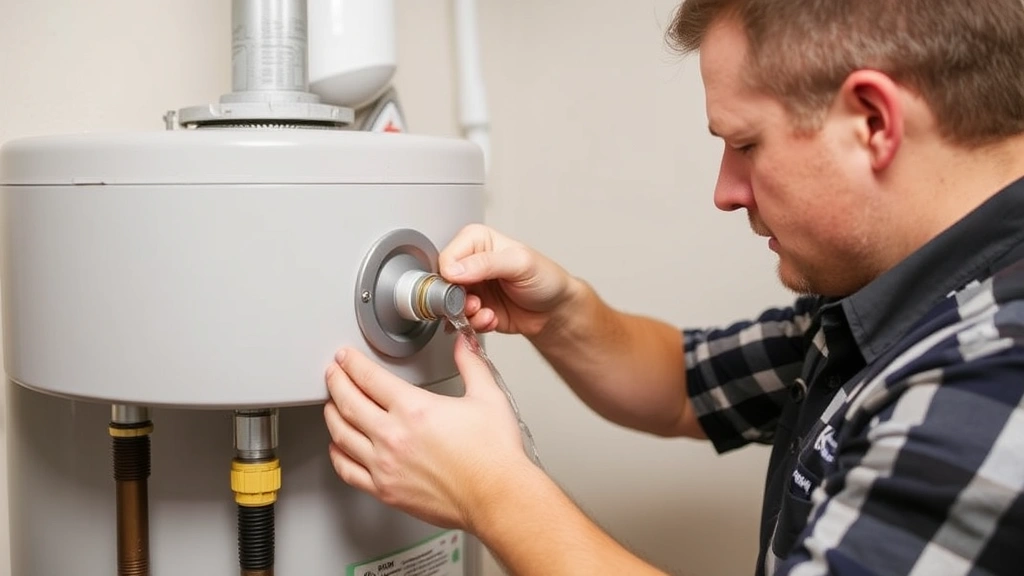
Temperature and pressure relief valve testing annually ensures proper function. This safety device prevents dangerous pressure buildup; malfunction could compromise system integrity. Testing involves briefly opening the valve to confirm water discharge, indicating proper operation.
Insulating the hot water pipes and tank exterior reduces heat loss during distribution. Pipe insulation (foam wrap or fiberglass) reduces standby losses by 5-10% and delivers faster hot water to fixtures, reducing water waste. Tank blankets provide additional insulation benefits, particularly for older units with thinner factory insulation.
Environmental Impact and Carbon Footprint
The environmental implications of a 40 gallon gas water heater extend beyond household energy consumption. Natural gas combustion produces carbon dioxide (CO₂) and methane, contributing to climate change. An average gas water heater generates approximately 2-3 tons of CO₂ annually, depending on efficiency and usage patterns.
Upgrading from a standard 40 gallon gas heater (0.59 EF) to a high-efficiency model (0.80 EF) reduces annual CO₂ emissions by approximately 500-700 pounds—equivalent to removing a car from the road for one month. Over a 12-year lifespan, this represents approximately 6-8 tons of CO₂ avoided.
Natural gas extraction and distribution create additional environmental impacts beyond combustion emissions. Methane leakage during production, processing, and transportation contributes significantly to climate change, with methane possessing 80+ times the warming potential of CO₂ over 20 years. Improving water heater efficiency reduces demand for natural gas, indirectly decreasing extraction and distribution impacts.
Water consumption represents another environmental consideration. Efficient water heaters reduce hot water waste through faster delivery and improved recovery rates. Every gallon of hot water conserved reduces both water treatment demands and energy consumption for heating, supporting broader principles of sustainability beyond energy conservation alone.
Manufacturing and disposal impacts matter too. Selecting a high-efficiency model that lasts 12-15 years reduces the embodied energy associated with manufacturing and disposal compared to replacing a failed standard unit every 8-10 years. Recycling the old unit at end-of-life recovers valuable steel and copper, minimizing landfill waste.
The EPA’s energy resources provide detailed carbon accounting tools for residential appliances, enabling homeowners to quantify environmental benefits from efficiency upgrades. Many utility companies offer rebates for ENERGY STAR water heater installations, reducing upfront costs while encouraging environmentally responsible choices.
Cost-Benefit Analysis for Homeowners
Evaluating the financial case for a high-efficiency 40 gallon gas water heater requires analyzing multiple factors: equipment cost, installation expenses, annual energy savings, maintenance costs, and expected lifespan.
Equipment Costs: Standard 40 gallon gas water heaters cost $400-$800, while high-efficiency ENERGY STAR models range from $600-$1,200. The premium typically represents 30-50% additional investment for equipment alone.
Installation Costs: Professional installation typically costs $300-$800, depending on local labor rates and existing infrastructure. Replacing an existing unit costs less than new installations, as venting and gas lines already exist.
Annual Operating Savings: A high-efficiency model (EF 0.80) versus standard model (EF 0.59) saves approximately $100-$250 annually, depending on natural gas prices and consumption patterns. Over 12 years, this represents $1,200-$3,000 in operational savings.
Maintenance Costs: Annual flushing ($100-$150) and periodic anode rod replacement ($50-$150) represent typical maintenance expenses. High-efficiency models may require slightly higher maintenance costs due to advanced combustion systems, though superior build quality often extends lifespan.
Rebate and Incentive Programs: Many utility companies and government programs offer rebates ($100-$600) for ENERGY STAR water heater installation. Federal tax credits may apply in some jurisdictions, reducing net investment requirements. Researching local programs before purchasing can significantly improve financial outcomes.
The total cost of ownership calculation reveals that high-efficiency models often achieve payback within 5-7 years, after which they generate pure savings. Given typical 12-15 year lifespans, this represents 5-8 years of pure financial benefit beyond payback.
Advanced Features for Enhanced Efficiency
Modern high-efficiency 40 gallon gas water heaters incorporate advanced technologies maximizing performance and reliability. Understanding these features helps justify premium pricing and optimize long-term value.
Condensing Heat Exchangers: Premium models feature condensing technology that captures heat from combustion exhaust gases, improving thermal efficiency to 90%+ compared to standard 80% efficiency. This advanced feature represents the most significant efficiency leap available in gas water heater technology.
Improved Insulation: High-efficiency models employ polyurethane foam insulation (2-3 inches thick) compared to fiberglass in standard units. Superior insulation reduces standby losses and maintains water temperature longer, minimizing reheating cycles.
Smart Temperature Control: Advanced thermostats with digital displays and preset settings optimize comfort while minimizing waste. Vacation modes reduce heating when homes are unoccupied, while adaptive learning features adjust heating patterns based on usage history.
Modulating Burners: Variable-output burners adjust flame intensity based on demand, avoiding unnecessary overheating and improving efficiency across varying usage patterns. This contrasts with standard on-off burners that operate at full capacity regardless of actual heating requirements.
Integrated Expansion Tanks: Some high-efficiency models include built-in thermal expansion tanks, eliminating separate component requirements and reducing installation complexity while improving system reliability.
Electronic Ignition: Spark ignition systems replace pilot lights, eliminating continuous gas consumption and improving efficiency by 1-2% while enhancing reliability and safety.
FAQ
What size water heater do I need for my household?
The 40 gallon tank suits households with 2-4 occupants and moderate hot water consumption. Calculate your peak-hour demand by considering simultaneous showers, dishwasher operation, and laundry. If peak demand exceeds 70-80 gallons per hour, consider a 50-gallon model or tankless system. Conversely, single-occupant households might manage with 30-40 gallon capacity.
How long does a 40 gallon gas water heater typically last?
With proper maintenance, a 40 gallon gas water heater lasts 10-15 years. Hard water areas may experience shortened lifespans (8-12 years) due to mineral buildup accelerating corrosion. High-efficiency models with superior construction often achieve 12-15 year lifespans, justifying premium pricing through extended value.
What temperature should I set my water heater to?
The EPA recommends 120°F for most households, balancing comfort and safety while preventing scalding injuries. Higher temperatures (130-140°F) increase energy consumption by 2-4% per 10°F increase. Some jurisdictions mandate specific temperature ranges for health and safety reasons, particularly in commercial applications.
Is professional installation necessary, or can I install it myself?
Professional installation is strongly recommended for safety, warranty compliance, and optimal efficiency. Improper gas line connections risk dangerous leaks, while incorrect venting reduces combustion efficiency and creates potential carbon monoxide hazards. Licensed plumbers ensure code compliance and proper system configuration, protecting both safety and investment.
What’s the difference between EF and thermal efficiency ratings?
Energy Factor (EF) measures overall system efficiency including standby losses and cycling losses, providing real-world performance indication. Thermal efficiency measures only the percentage of fuel energy transferred to water, ignoring standby and distribution losses. EF provides more accurate efficiency comparison between models, as it accounts for actual household operating conditions.
Can I upgrade my existing gas line to support a high-efficiency model?
High-efficiency models typically require slightly higher gas flow rates due to advanced burners. Most existing residential gas lines accommodate this without modification, but professional assessment ensures adequate sizing. Upgrading gas line diameter costs $200-$500 if necessary, still representing minimal investment relative to overall efficiency benefits.
What maintenance schedule should I follow?
Annual tank flushing removes sediment buildup, maintaining efficiency and extending lifespan. Every 3-5 years, replace the anode rod to prevent corrosion. Annually test the temperature and pressure relief valve for proper operation. Inspect insulation and pipes annually for damage or heat loss. These maintenance tasks typically cost $150-$300 annually but prevent expensive repairs and premature failure.
How do I know if my water heater needs replacement?
Signs indicating replacement include: age exceeding 10-12 years, visible rust or leaks, insufficient hot water capacity despite adequate tank size, unusual noises suggesting sediment buildup, or rapidly increasing energy bills. If repair costs exceed 50% of replacement cost, replacement typically represents better value. Professional inspection helps determine whether repairs or replacement is optimal.


