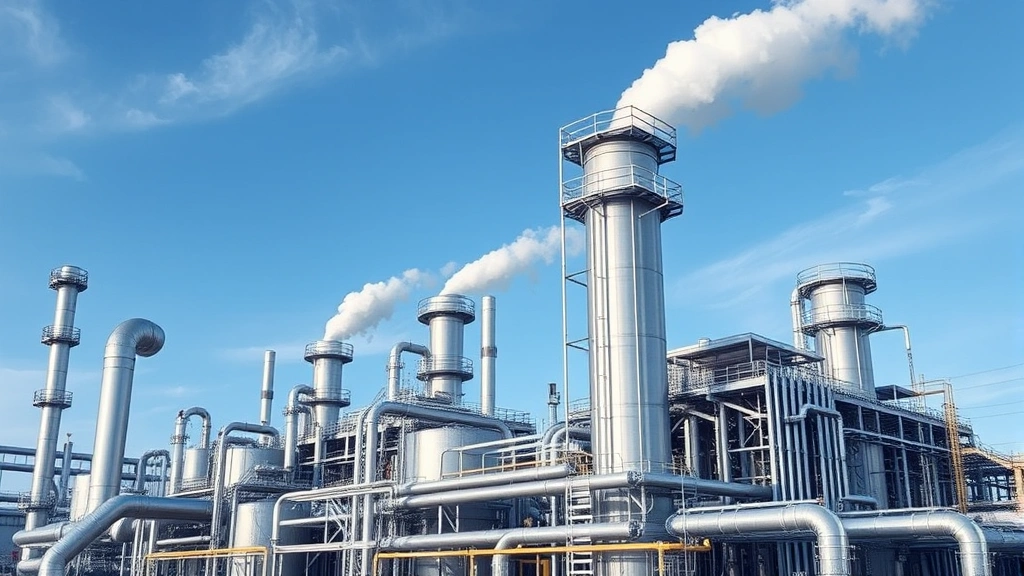
Gas to Liquid: Eco-Friendly Transition Explained
The transition from gaseous fuels to liquid alternatives represents one of the most promising pathways toward a sustainable energy future. As global carbon emissions continue to rise and climate concerns intensify, industries worldwide are exploring innovative conversion technologies that transform natural gas into liquid fuels. This shift offers significant environmental, economic, and logistical advantages that could reshape our energy infrastructure for decades to come.
Gas-to-liquid (GTL) technology converts natural gas into synthetic liquid fuels through advanced chemical processes. Unlike traditional fossil fuel extraction and refining, GTL processes can dramatically reduce emissions, improve fuel efficiency, and unlock stranded gas reserves that would otherwise remain untapped. Understanding how this technology works and its environmental implications is essential for anyone invested in our planet’s future.

What is Gas-to-Liquid Technology
Gas-to-liquid technology is an innovative conversion process that transforms natural gas into synthetic liquid fuels suitable for transportation, heating, and industrial applications. At its core, GTL represents a bridge between our current fossil fuel infrastructure and a cleaner energy future. The technology has existed for decades, but recent advances in catalytic chemistry and process efficiency have made it increasingly economically viable and environmentally attractive.
The primary advantage of GTL is its ability to monetize natural gas reserves located in remote or economically challenging regions where pipeline infrastructure doesn’t exist. Rather than flaring gas or leaving reserves untapped, companies can convert methane-rich deposits into transportable liquid hydrocarbons. This flexibility makes GTL particularly valuable for developing nations and remote energy projects.
When exploring whether natural gas is renewable, it’s important to understand that while natural gas itself isn’t renewable, the GTL conversion process significantly improves its environmental profile compared to conventional extraction and combustion methods. The resulting synthetic fuels burn cleaner and can be blended with renewable alternatives.
GTL products typically include synthetic crude oil, diesel, gasoline, naphtha, and other valuable hydrocarbons. These liquid fuels maintain compatibility with existing infrastructure, requiring minimal modifications to engines, refineries, and distribution networks. This compatibility factor is crucial for large-scale adoption and rapid market penetration.

The Chemical Process Behind GTL
The GTL process involves several sophisticated chemical transformations that convert methane (the primary component of natural gas) into longer-chain liquid hydrocarbons. Understanding these steps reveals why GTL technology represents such a significant advancement in energy conversion efficiency.
Step One: Syngas Production
The process begins with steam reforming or autothermal reforming of natural gas, which produces synthesis gas (syngas). Syngas is a mixture of carbon monoxide and hydrogen—the fundamental building blocks for liquid fuel synthesis. This initial conversion step is energy-intensive but essential for creating the reactive compounds needed for subsequent reactions.
Step Two: Fischer-Tropsch Synthesis
The syngas then undergoes Fischer-Tropsch (F-T) synthesis, a well-established catalytic process that combines CO and H₂ molecules into longer-chain hydrocarbons. Iron-based or cobalt-based catalysts facilitate this reaction under controlled temperature and pressure conditions. The F-T process is highly selective, meaning technicians can optimize catalyst properties to produce desired product distributions—whether focusing on diesel, gasoline, or specialty chemicals.
Step Three: Product Upgrading
The raw F-T products undergo hydrocracking and hydrotreating to remove impurities, optimize molecular structure, and enhance fuel properties. This upgrading stage ensures the final products meet strict quality specifications for commercial applications.
Modern GTL facilities incorporate advanced process integration, heat recovery systems, and energy efficiency measures that minimize overall energy consumption. Some facilities achieve thermal efficiencies exceeding 60%, meaning more than 60% of the energy content in natural gas is converted into usable liquid fuel.
Environmental Benefits of GTL Conversion
The environmental case for GTL technology is compelling when examined comprehensively. While the process requires energy input, the overall lifecycle emissions are substantially lower than conventional fuel production pathways.
Reduced Carbon Intensity
GTL-derived fuels typically exhibit 15-25% lower carbon intensity compared to conventional crude oil-derived fuels when accounting for full lifecycle emissions. This reduction stems from several factors: elimination of energy-intensive crude oil extraction and long-distance transportation, reduced flaring of associated gases, and the inherent efficiency of the F-T synthesis process. When GTL facilities incorporate renewable energy or carbon capture technologies, emissions reductions can exceed 50%.
Elimination of Gas Flaring
In many oil and gas operations worldwide, associated natural gas is flared—burned off at the wellhead—because extraction, compression, and transportation infrastructure doesn’t exist. This practice releases enormous quantities of methane and CO₂ into the atmosphere while wasting a valuable energy resource. GTL technology eliminates this wasteful practice by creating a profitable use for stranded gas reserves. The U.S. Environmental Protection Agency estimates that global gas flaring releases approximately 400 million tons of CO₂ annually—a problem GTL directly addresses.
Superior Fuel Quality
GTL-derived fuels are exceptionally clean, containing virtually no sulfur, aromatic compounds, or particulate matter. This purity delivers substantial air quality improvements in urban environments. Vehicles and power plants burning GTL fuels produce fewer nitrogen oxides, particulate matter, and volatile organic compounds—pollutants directly linked to respiratory disease, cardiovascular problems, and premature mortality.
Methane Avoidance
Methane is a greenhouse gas approximately 28-34 times more potent than CO₂ over a 100-year period. By converting methane into liquid hydrocarbons before combustion, GTL technology prevents methane leakage and ensures the carbon content is oxidized into CO₂ rather than releasing unburned methane. This distinction is crucial for climate mitigation.
Economic Advantages and Market Potential
Beyond environmental considerations, GTL technology offers compelling economic benefits that drive investment and adoption across energy sectors.
Monetizing Stranded Reserves
Approximately one-third of global natural gas reserves are classified as “stranded”—economically unviable for conventional development due to remote locations or small reserve sizes. GTL technology transforms these assets into valuable products, unlocking trillions of dollars in economic value. Countries like Qatar have leveraged GTL to become major energy exporters, demonstrating the technology’s commercial viability at scale.
Infrastructure Compatibility
Unlike hydrogen or electric vehicles requiring entirely new infrastructure, GTL fuels integrate seamlessly with existing distribution networks, refineries, and combustion engines. This compatibility dramatically reduces transition costs and accelerates market adoption. Companies can blend GTL products with conventional fuels without equipment modifications.
Price Stability and Hedging
GTL synthetic fuels provide price hedging opportunities, as their production economics differ from crude oil markets. This independence helps stabilize fuel prices and reduces vulnerability to geopolitical supply disruptions. Energy-intensive industries can secure long-term fuel contracts at predictable costs.
Job Creation and Economic Development
GTL facilities are capital-intensive projects requiring substantial construction investment and highly skilled permanent workforce. A single large-scale GTL complex can employ thousands of workers during construction and hundreds permanently, generating significant economic activity in developing regions.
Comparing GTL with Alternative Energy Sources
While GTL represents progress, it’s important to contextualize this technology within the broader energy transition landscape. Understanding how GTL compares with sustainable energy solutions and electric vehicle advantages helps clarify its role in our energy future.
GTL vs. Traditional Crude Oil
GTL fuels outperform conventional crude oil-derived products across multiple environmental metrics: lower sulfur content, reduced aromatic compounds, superior combustion efficiency, and eliminated flaring. For regions where electrification isn’t immediately feasible—aviation, heavy maritime transport, industrial heat applications—GTL provides a substantially cleaner alternative to conventional fuels.
GTL vs. Biofuels
Biofuels offer renewable carbon content but compete with food production for agricultural land. GTL, while fossil-derived, doesn’t create food security tensions and offers more predictable supply chains. The optimal approach likely involves both technologies—GTL for applications where biofuels face scalability constraints, biofuels for sectors where biomass is abundant.
GTL vs. Hydrogen
Hydrogen fuel cells promise zero-emission combustion but require entirely new infrastructure and face significant production challenges. GTL serves as a practical transition fuel, allowing emissions reductions today while hydrogen infrastructure develops. Many energy analysts view GTL and hydrogen as complementary rather than competing technologies.
GTL vs. Electrification
Electric vehicles represent the optimal solution for personal transportation, but electrification faces practical limits in aviation, maritime shipping, and some industrial applications. GTL fuels provide clean alternatives for these hard-to-decarbonize sectors while electrification infrastructure matures.
Current GTL Projects and Global Implementation
Several major GTL facilities demonstrate the technology’s viability at commercial scale.
Pearl GTL, Qatar
The world’s largest GTL facility, Pearl GTL in Qatar, processes 140,000 barrels of synthetic fuels daily. This mega-project showcases GTL’s potential for transforming energy markets and demonstrates that the technology can operate reliably at massive scale. The facility supplies global markets with premium synthetic crude, diesel, and specialty products.
Sasol Operations, South Africa
Sasol operates the world’s oldest and largest GTL-adjacent facilities, producing synthetic fuels from coal and natural gas. While coal-based operations face environmental criticism, Sasol’s natural gas projects demonstrate the technology’s long operational history and proven track record.
Emerging Projects and Expansion
New GTL projects are under development in Mozambique, Papua New Guinea, and the Middle East. Additionally, companies are exploring small-scale GTL facilities suitable for regional development, potentially revolutionizing energy access in remote areas. These distributed GTL systems could unlock significant economic development while maintaining environmental responsibility.
As part of broader efforts to reduce environmental footprint, GTL technology represents one component of a diversified energy strategy that also includes renewable expansion and efficiency improvements.
Challenges and Future Outlook
Capital Intensity and Project Risk
GTL facilities require massive upfront capital investments—often $5-15 billion for large-scale projects. This financial barrier limits development to well-capitalized companies and wealthy nations. Additionally, long construction timelines and technological complexity create execution risks that can derail projects or inflate costs significantly.
Natural Gas Price Volatility
GTL economics depend critically on natural gas feedstock costs. When gas prices spike, GTL projects become uneconomical relative to conventional refining. This price sensitivity has delayed several proposed GTL developments and necessitates careful financial structuring to manage commodity price risks.
Climate Imperative for Rapid Decarbonization
While GTL reduces emissions compared to conventional fuels, it remains a fossil fuel technology. The Intergovernmental Panel on Climate Change emphasizes that deep decarbonization requires rapid renewable energy expansion and electrification. GTL should complement rather than replace aggressive renewable deployment and energy efficiency improvements.
Future Directions: Blue GTL and Renewable Synthesis
Emerging innovations promise to enhance GTL’s environmental profile substantially. Blue GTL integrates carbon capture and storage (CCS) with GTL processes, potentially achieving net-zero or carbon-negative fuel production. Renewable synthesis gas production using renewable electricity for water electrolysis and CO₂ electrolysis could eventually decouple GTL from fossil fuel feedstocks entirely.
These advanced technologies represent the convergence of GTL with green technology innovations, creating pathways toward truly sustainable synthetic fuels. The International Energy Agency projects that GTL and similar synthetic fuel technologies could supply 10-15% of global transport fuels by 2050, particularly for aviation and shipping where electrification faces technical barriers.
FAQ
Is GTL technology truly environmentally friendly?
GTL is substantially more environmentally friendly than conventional crude oil refining, with 15-25% lower lifecycle carbon emissions. However, it remains a fossil fuel technology. For maximum environmental benefit, GTL should be deployed strategically for applications where electrification isn’t feasible, while prioritizing renewable energy expansion for sectors where it’s viable.
How does GTL compare to natural gas combustion?
GTL-derived fuels are cleaner than burning natural gas directly because the liquid synthesis process removes impurities and optimizes molecular structure. GTL fuels produce fewer particulates, sulfur compounds, and nitrogen oxides. Additionally, GTL eliminates methane leakage risks inherent in natural gas infrastructure.
Can GTL facilities be powered by renewable energy?
Yes, research projects demonstrate that GTL synthesis can operate using renewable electricity for syngas production. However, current commercial facilities rely on natural gas for process heat. Future renewable-powered GTL could achieve near-zero emissions, though this remains in development stages.
What is the cost of GTL-derived fuels compared to conventional fuels?
GTL production costs typically range from $40-80 per barrel depending on natural gas prices, facility scale, and location. This makes GTL competitive with crude oil refining when natural gas prices remain moderate. Price competitiveness fluctuates based on commodity markets.
How much natural gas is required to produce GTL fuel?
Modern GTL facilities achieve conversion efficiencies of 60-70%, meaning 1 barrel of crude oil equivalent of natural gas produces roughly 0.6-0.7 barrels of synthetic liquid fuel. This efficiency is comparable to conventional refining and substantially better than some alternative fuel production pathways.
Can GTL technology help developing nations access energy?
Absolutely. GTL technology enables developing nations with natural gas reserves to monetize these resources independently, generating revenue for economic development. Small-scale distributed GTL systems could provide energy access to remote communities while creating local employment.


