Best SUV for Gas Mileage? Consumer Reports Data and Sustainability Analysis
Finding the best SUV for gas mileage has become increasingly important for environmentally conscious drivers seeking to reduce their carbon footprint while maintaining the practicality and space that sport utility vehicles offer. With fuel prices fluctuating and climate concerns mounting, consumers are rightfully prioritizing fuel efficiency when selecting their next vehicle. This comprehensive guide examines Consumer Reports data, real-world performance metrics, and the intersection of vehicle choice with broader sustainability principles.
The automotive industry has witnessed remarkable advancements in fuel efficiency technology over the past decade. Modern SUVs can achieve comparable or superior gas mileage to sedans from just five years ago, making them increasingly viable for drivers who refuse to compromise on space and capability. However, not all SUVs are created equal, and understanding which models deliver genuine efficiency gains versus marketing hype is essential for making an informed purchase decision.
Top Fuel-Efficient SUVs According to Consumer Reports
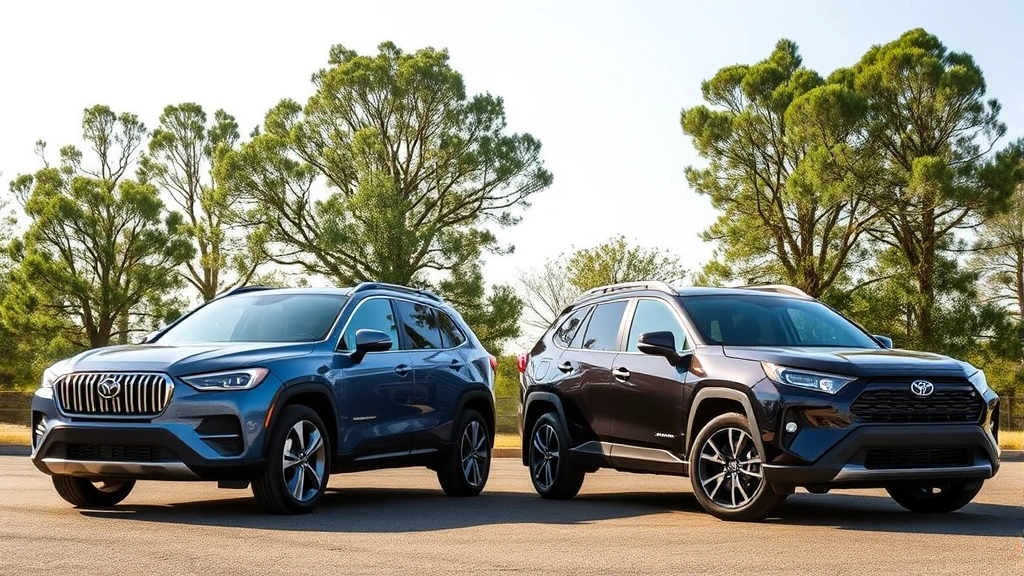
Consumer Reports consistently identifies several standout models that deliver exceptional fuel economy without sacrificing performance or interior space. The Toyota RAV4 has maintained its position as one of the most efficient mainstream SUVs, regularly achieving EPA estimates between 28-32 MPG combined depending on drivetrain configuration. The Honda CR-V follows closely behind with similar ratings, offering reliability and practicality that resonate with value-conscious buyers.
For those willing to explore hybrid technology, the Toyota RAV4 Prime plug-in hybrid variant and the new Honda CR-V Hybrid represent quantum leaps in efficiency. These vehicles can achieve 40+ MPG combined ratings, fundamentally changing the equation for SUV ownership. The Mazda CX-50 has also earned recognition for delivering respectable 26-28 MPG figures while maintaining engaging driving dynamics and premium interior appointments.
Subaru’s lineup, particularly the Crosstrek and Outback models, appeals to drivers seeking all-wheel drive capability without severe efficiency penalties. These vehicles typically achieve 25-27 MPG combined, making them competitive choices for those in climates requiring year-round traction. The Hyundai Santa Fe and Kia Sorento, as Korean manufacturers have invested heavily in efficiency, now offer compelling alternatives with EPA ratings approaching 27-29 MPG combined.

Understanding MPG Ratings and Real-World Performance
EPA fuel economy ratings provide standardized measurements allowing fair comparison across vehicle categories, yet real-world performance often diverges from laboratory results. The EPA testing cycle, while more realistic than previous standards, doesn’t fully account for aggressive driving, extreme weather, or varied terrain that drivers encounter daily. Understanding this distinction helps consumers set realistic expectations and make better purchasing decisions.
Actual fuel economy depends on numerous variables including driving habits, maintenance schedules, road conditions, and load carrying. Highway driving typically yields better mileage than city driving due to reduced acceleration and idling. Conversely, cold weather operation can reduce efficiency by 10-20% as engines require extended warm-up periods and increased fuel enrichment. Proper tire inflation, regular engine maintenance, and adherence to manufacturer service intervals significantly impact real-world fuel economy.
Consumer Reports testing methodology involves real-world driving scenarios across diverse conditions, providing valuable data that complements EPA estimates. Their findings typically show that highway MPG ratings prove more achievable than city ratings, and that driver behavior remains the single most influential factor in achieving advertised efficiency levels. Aggressive acceleration, excessive idling, and sustained high-speed driving dramatically reduce efficiency across all vehicle types.
Hybrid SUVs: The Efficiency Game-Changer
Hybrid technology represents a watershed moment in SUV fuel efficiency, combining traditional gasoline engines with electric motors to recover energy during braking and optimize power delivery. Hybrid vehicles leverage regenerative braking to capture kinetic energy that would otherwise dissipate as heat, substantially improving efficiency in stop-and-go driving. The Toyota RAV4 Hybrid consistently achieves 40-42 MPG combined, while the Honda CR-V Hybrid delivers similar performance with slightly different driving characteristics.
For premium buyers, the Lexus RX Hybrid series offers luxury appointments alongside 31-33 MPG combined ratings. These vehicles appeal to drivers seeking sophisticated interiors and advanced technology without entirely abandoning efficiency considerations. The BMW X5 Plug-in Hybrid and Porsche Cayenne Plug-in Hybrid target affluent consumers willing to invest significantly in vehicles combining performance with improved fuel economy.
Plug-in hybrid SUVs introduce an additional layer of flexibility by offering electric-only range for daily commuting while maintaining gasoline engine availability for longer journeys. The Jeep Wrangler 4xe and Range Rover Sport Plug-in Hybrid allow drivers to complete typical 30-50 mile daily commutes entirely on electricity, dramatically reducing fuel consumption and emissions. However, achieving these benefits requires access to home charging infrastructure and driving patterns compatible with plugin hybrid ownership.
The environmental advantage of hybrid vehicles extends beyond simple fuel economy improvements. Reduced fuel consumption translates directly to decreased carbon dioxide emissions and atmospheric pollution. Additionally, hybrid systems often include sophisticated emissions control technologies that further minimize particulate matter and nitrogen oxide production, contributing to improved air quality in urban environments.
Comparing Compact vs. Midsize SUVs for Mileage
Vehicle size significantly influences fuel economy, with compact SUVs typically delivering 2-4 MPG advantages over their midsize counterparts due to reduced weight and aerodynamic drag. The compact segment includes models like the Toyota Corolla Cross, Honda HRV, and Mazda CX-30, which achieve 28-32 MPG combined ratings while sacrificing minimal cargo space compared to midsize alternatives. For urban drivers and small families, these vehicles represent optimal efficiency without substantial practicality compromises.
Midsize SUVs like the Toyota 4Runner, Jeep Grand Cherokee, and Ford Explorer offer substantially more passenger and cargo capacity but typically achieve 23-27 MPG combined ratings. The trade-off between efficiency and utility varies significantly by individual needs. Drivers regularly transporting multiple passengers or substantial cargo loads will find midsize vehicles justify their efficiency penalty through increased functionality. Conversely, single occupants or couples without cargo requirements might better serve their interests and environmental goals through compact SUV selections.
The three-row SUV segment, encompassing vehicles like the Toyota Highlander and Honda Pilot, generally achieves 24-28 MPG combined despite their substantial size and weight. These vehicles appeal to larger families and represent a pragmatic middle ground between midsize efficiency and full-size capability. Modern engineering has narrowed efficiency gaps considerably, making larger vehicles increasingly defensible from an environmental perspective when actual utilization justifies their selection.
AWD vs. FWD: Impact on Fuel Economy
All-wheel drive systems add weight and mechanical complexity that invariably reduces fuel economy compared to front-wheel drive configurations. Typical efficiency penalties range from 2-4 MPG depending on AWD system sophistication and engagement characteristics. Traditional full-time AWD systems continuously power all four wheels, incurring constant efficiency losses. Modern intelligent AWD systems engage rear-wheel drive only when needed, substantially reducing this penalty under normal driving conditions.
Front-wheel drive dominates the compact and midsize SUV segments precisely because it minimizes weight penalties and mechanical complexity. Models like the Honda CR-V and Toyota RAV4 with front-wheel drive configurations achieve their highest EPA ratings, making them optimal choices for efficiency-prioritizing consumers in regions without severe winter weather. However, drivers in snow-prone areas face genuine safety and practicality concerns that may justify accepting efficiency reductions inherent to AWD systems.
The efficiency trade-off between AWD and FWD becomes increasingly marginal as vehicle size increases. Larger SUVs already incur significant aerodynamic and rolling resistance penalties, making the 2-3 MPG difference between drivetrain options proportionally less significant. Drivers requiring three-row seating and maximum passenger capacity often find AWD efficiency penalties acceptable given the substantial capabilities gained. Conversely, compact SUV buyers should carefully evaluate whether AWD necessity justifies accepting efficiency reductions in their specific climate and driving environment.
Engine Technology and Efficiency Innovations
Modern SUV powertrains incorporate sophisticated technologies that dramatically improve efficiency compared to vehicles from just a decade ago. Turbocharging allows manufacturers to downsize engines while maintaining adequate power delivery, reducing displacement and fuel consumption. Direct fuel injection provides precise fuel metering, combustion optimization, and improved efficiency. Variable valve timing and cylinder deactivation technologies further optimize performance across driving scenarios, improving both efficiency and power delivery.
Advanced transmission technology significantly influences fuel economy. Eight, nine, and ten-speed automatic transmissions optimize engine RPM across diverse driving scenarios, allowing engines to operate at lower speeds during highway cruising. This reduces fuel consumption substantially compared to older six-speed designs. Continuously variable transmissions (CVTs) in some vehicles provide infinite gear ratios, theoretically optimizing engine efficiency at all speeds, though real-world benefits vary by implementation quality.
Aerodynamic refinements including active grille shutters, underbody panels, and optimized body shapes reduce drag coefficients substantially. These seemingly minor improvements accumulate into meaningful fuel economy gains, particularly during highway driving where aerodynamic resistance dominates. Lightweight materials including aluminum, high-strength steel, and carbon fiber composites reduce vehicle weight without sacrificing structural integrity, improving efficiency across all driving conditions.
Explore sustainable energy solutions that complement efficient vehicle selection to maximize your environmental impact. Energy management extends beyond vehicle selection into charging infrastructure and power generation sources.
Cost Analysis: Fuel Savings Over Vehicle Lifetime
While premium fuel-efficient vehicles often command higher purchase prices, calculating total cost of ownership across the vehicle’s useful life provides crucial financial context. A Honda CR-V Hybrid costing $4,000 more than its gasoline counterpart will recover that investment through fuel savings within 5-6 years of typical driving, assuming $3.50 per gallon fuel prices and 15,000 annual miles. Over a ten-year ownership period, hybrid buyers save $6,000-$8,000 in fuel costs, substantially offsetting the premium.
Maintenance costs must factor into long-term ownership calculations. Hybrid systems involve additional complexity and specialized service requirements that can increase maintenance expenses, though Toyota and Honda’s hybrid reliability track records suggest these premiums remain manageable. Regenerative braking systems reduce brake wear significantly, offsetting some maintenance cost increases. Battery degradation represents another consideration, though modern hybrid batteries typically retain 80%+ capacity after 150,000 miles, well within typical vehicle ownership periods.
Insurance costs typically increase modestly for hybrid vehicles due to higher replacement parts costs and specialized repair requirements. However, this premium usually remains minimal compared to fuel savings. Depreciation patterns favor hybrid vehicles increasingly as fuel efficiency gains importance in secondary markets. A CR-V Hybrid depreciates more slowly than its gasoline counterpart, further improving long-term ownership economics.
Beyond financial calculations, fuel cost reduction produces tangible environmental benefits. Every gallon of fuel saved eliminates approximately 20 pounds of CO2 emissions. Over a vehicle’s lifetime, selecting a fuel-efficient SUV prevents 50-100 tons of carbon dioxide from entering the atmosphere. For environmentally conscious consumers, this climate impact often justifies efficiency-focused purchasing decisions independent of financial considerations.
Environmental Impact Beyond Gas Mileage
Fuel efficiency represents just one component of a vehicle’s environmental footprint. Manufacturing processes consume substantial energy and resources, with production emissions representing 20-30% of a typical vehicle’s lifetime carbon impact. Selecting vehicles with longer useful lives and better resale value amortizes manufacturing emissions across more years of operation, reducing annualized environmental impact. This consideration favors vehicles known for reliability and durability.
Natural gas vehicles present an alternative to traditional gasoline SUVs, offering lower emissions and reduced fuel costs in regions with established fueling infrastructure. However, natural gas vehicle selection remains limited in the SUV segment, and infrastructure availability varies dramatically by geographic region. For most consumers, hybrid and efficient gasoline SUVs remain more practical alternatives.
Emissions beyond carbon dioxide merit consideration when evaluating environmental impact. Particulate matter, nitrogen oxides, and volatile organic compounds contribute to air pollution and associated health problems. Modern SUVs with advanced emissions control systems produce substantially fewer harmful pollutants than older vehicles. Hybrid vehicles, by operating electric motors during low-speed urban driving, reduce local air pollution in urban centers where community exposure remains highest.
The grid electricity powering hybrid and electric vehicles influences their true environmental impact. Regions powered primarily by renewable energy see substantially greater environmental benefits from electric vehicle adoption compared to coal-dependent regions. However, even in coal-dependent areas, electric and hybrid vehicles typically produce lower lifetime emissions than gasoline vehicles due to superior efficiency and increasing renewable energy penetration.
Tire selection significantly influences rolling resistance and fuel economy. Low-rolling-resistance tires designed for efficiency vehicles can improve MPG by 2-3% compared to standard tires. Regular tire pressure maintenance prevents rolling resistance increases that reduce efficiency by 3% per 1 PSI underinflation. These seemingly minor considerations accumulate into meaningful fuel consumption reductions and associated environmental benefits.
Responsible vehicle disposal and battery recycling represent important environmental considerations for hybrid vehicle owners. Modern battery recycling programs recover 95%+ of battery materials, including valuable lithium, cobalt, and nickel. Manufacturer take-back programs and certified recycling facilities ensure responsible end-of-life vehicle management. When disposed of properly, hybrid vehicles impose minimal environmental burden despite their electronic complexity.
Green technology innovations continue transforming our future, with emerging SUV technologies promising even greater efficiency improvements. Solid-state batteries, advanced aerodynamics, and lightweight materials will enable next-generation vehicles to achieve unprecedented efficiency levels while maintaining the practicality consumers demand.
FAQ
What SUV offers the best gas mileage?
The Toyota RAV4 Hybrid consistently achieves the highest efficiency ratings among mainstream SUVs, delivering 40-42 MPG combined. For non-hybrid options, the Toyota RAV4 and Honda CR-V lead with 28-32 MPG combined ratings. Selection depends on individual priorities regarding budget, size requirements, and technology preferences.
Do hybrid SUVs truly save money on fuel?
Yes, hybrid SUVs typically recover their purchase price premium within 5-6 years through fuel savings, assuming average fuel prices and driving patterns. Over ten-year ownership periods, savings reach $6,000-$8,000, with additional benefits from reduced brake maintenance and potentially better resale value.
How much does AWD reduce fuel economy?
All-wheel drive systems typically reduce fuel economy by 2-4 MPG compared to front-wheel drive configurations. Modern intelligent AWD systems that engage selectively minimize this penalty. Drivers in severe winter climates often find safety and practicality benefits justify accepting efficiency reductions.
What factors most influence real-world SUV fuel economy?
Driver behavior represents the single most influential factor, with aggressive acceleration and high-speed driving dramatically reducing efficiency. Tire pressure, maintenance schedules, load carrying, and weather conditions also significantly impact real-world fuel economy. Highway driving typically achieves better efficiency than city driving.
Should I prioritize fuel economy over other SUV features?
Prioritization depends on individual values and circumstances. For high-mileage drivers in stable climates, fuel efficiency should rank prominently. However, drivers requiring three-row seating, severe weather capability, or specific towing capacity may find other considerations justify accepting efficiency trade-offs. Evaluate genuine utilization needs rather than aspirational capabilities.
Are compact SUVs always more efficient than midsize models?
Compact SUVs typically achieve 2-4 MPG advantages over midsize counterparts due to reduced weight and size. However, modern engineering has narrowed efficiency gaps considerably. Midsize vehicles often justify efficiency trade-offs through increased cargo space and passenger capacity for larger families.
What role does tire selection play in SUV efficiency?
Low-rolling-resistance tires designed for efficiency vehicles improve fuel economy by 2-3% compared to standard tires. Regular tire pressure maintenance prevents rolling resistance increases that reduce efficiency by approximately 3% per 1 PSI underinflation, making proper tire care essential for maximizing fuel economy.
How does plug-in hybrid efficiency compare to regular hybrids?
Plug-in hybrids offer superior efficiency for drivers with home charging access and predictable daily commutes under 50 miles. For longer commutes or drivers without charging infrastructure, regular hybrids provide more consistent benefits. Plug-in hybrids optimize efficiency when charging is convenient; regular hybrids deliver consistent improvements regardless of infrastructure.


