
Electric vs Gas Lawn Tools: Expert Comparison for Sustainable Yard Care
The choice between electric and gas lawn equipment has become increasingly important for homeowners seeking to balance convenience, performance, and environmental responsibility. As climate concerns grow and sustainability becomes central to consumer decisions, understanding the differences between these two power sources can help you make an informed choice that aligns with your values and practical needs.
Gas-powered lawn tools have dominated residential yards for decades, offering familiar performance and unlimited runtime. However, electric alternatives have evolved dramatically, now delivering comparable power with significant environmental and economic advantages. This comprehensive comparison examines the critical factors that should influence your decision, from emissions and operating costs to noise levels and maintenance requirements.
Environmental Impact and Emissions
The environmental case for electric lawn equipment is compelling and increasingly backed by scientific research. Gas-powered lawn tools produce significant emissions that contribute to air pollution and climate change. A single gas mower running for one hour produces emissions equivalent to driving a car approximately 11 miles, according to the U.S. Environmental Protection Agency.
Electric lawn tools produce zero direct emissions, making them substantially cleaner, especially when charged using renewable energy sources. When you consider your broader commitment to principles of sustainability, choosing electric equipment directly reduces your household’s carbon footprint. Gas equipment also contributes to volatile organic compounds (VOCs) and nitrogen oxides, which form ground-level ozone and contribute to respiratory health issues.
The manufacturing phase presents a more nuanced picture. Electric tools require energy-intensive battery production, which carries environmental costs. However, lifecycle analyses consistently show that electric equipment’s operational cleanliness far outweighs these manufacturing impacts within 1-2 years of typical use. Furthermore, modern battery recycling programs are improving, reducing the end-of-life environmental burden.
For those committed to reducing your environmental footprint, electric lawn tools represent one of the most accessible and impactful household changes available.
Operating Costs and Efficiency
Electric lawn equipment offers substantial long-term savings despite potentially higher upfront costs. Electricity costs significantly less than gasoline on a per-use basis. Running an electric mower typically costs $0.10-0.20 per hour, compared to $0.50-1.00 per hour for gas equipment. Over a typical mowing season, homeowners save $100-300 annually on fuel alone.
Beyond fuel costs, electric tools eliminate expenses associated with gas maintenance. You won’t need to purchase fuel stabilizers, oil, spark plugs, or air filters. Gas equipment requires annual tune-ups and seasonal maintenance that adds $50-150 to annual costs. Electric tools need minimal maintenance—primarily occasional blade sharpening and battery care—reducing your annual maintenance budget substantially.
The efficiency advantage extends to energy conversion. Electric motors convert approximately 85-90% of electrical energy into useful work, while gas engines typically achieve only 20-30% efficiency. This means electric equipment accomplishes the same job using less energy input, which translates directly to cost savings and environmental benefits aligned with sustainable energy solutions.
Battery costs have declined dramatically, with lithium-ion battery prices dropping over 80% in the past decade. This trend continues, making electric equipment increasingly cost-competitive. Many manufacturers now offer battery warranties of 3-5 years, protecting your investment.
Performance and Power Comparison
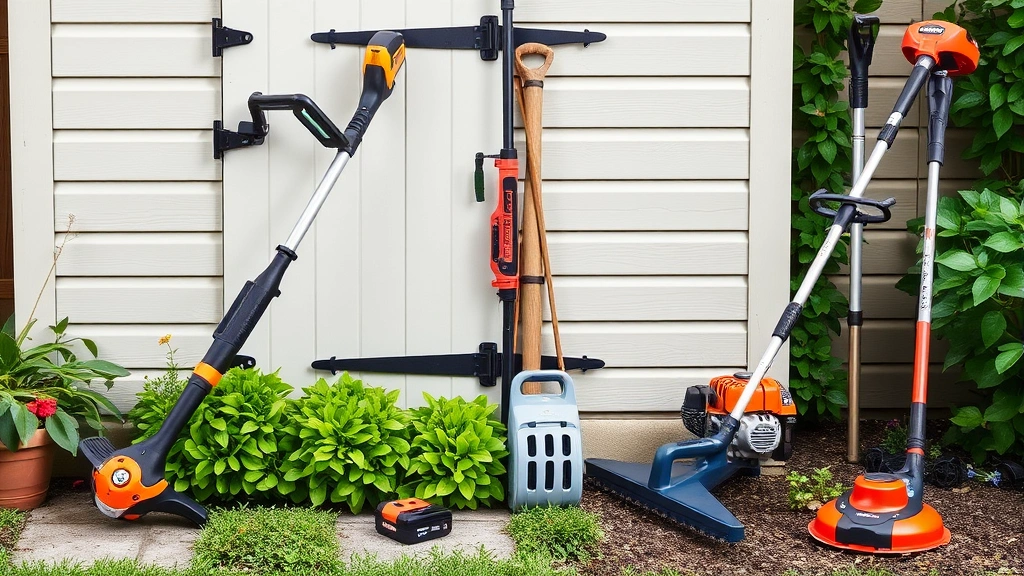
Modern electric lawn equipment rivals gas tools in cutting power and performance across most residential applications. Electric mowers deliver consistent blade speed and cutting power throughout their runtime, while gas engines produce peak power only at specific RPM ranges. This means electric equipment often provides more consistent, cleaner cuts.
For typical residential lawns up to one acre, electric equipment performs excellently. Mower models with 56-80 volt systems handle thick grass, moderate slopes, and dense weeds effectively. Comparable gas mowers don’t necessarily outperform these electric alternatives for standard homeowner tasks. Professional landscapers and those managing large properties may still prefer gas equipment for unlimited runtime and extreme terrain demands.
Electric string trimmers, leaf blowers, and chainsaws have achieved impressive performance improvements. Top-tier electric models match or exceed gas counterparts in cutting speed and power delivery. The perception that electric tools are underpowered is increasingly outdated, though entry-level electric equipment may underperform.
The steady power delivery of electric motors means you experience consistent performance from the first minute to the last, unlike gas engines that may struggle initially when cold or lose power as they age. This reliability contributes to better user experience and cleaner results.
Noise and Community Considerations
Electric lawn tools operate at significantly lower noise levels than gas equipment, providing substantial quality-of-life benefits. Gas mowers typically produce 85-95 decibels of noise, approaching the threshold for hearing damage. Electric mowers generate 60-75 decibels, roughly equivalent to normal conversation levels.
This noise difference transforms the mowing experience. You can operate electric equipment early morning or evening without disturbing neighbors, expanding your available mowing windows. The reduced noise also means less ear protection is necessary, improving awareness and safety during operation.
From a community perspective, widespread adoption of electric lawn equipment reduces neighborhood noise pollution significantly. Many municipalities now recognize this benefit, with some restricting gas equipment use during certain hours. Choosing electric aligns with broader community interests in livability and environmental quality.
The noise advantage extends beyond mowing. Electric leaf blowers, trimmers, and chainsaws create markedly quieter operation, making yard work less intrusive and more pleasant for both operators and neighbors.

Maintenance Requirements
Electric lawn tools require dramatically less maintenance than gas equipment, saving time and money throughout their lifespan. Gas engines need seasonal tune-ups, oil changes, spark plug replacement, fuel stabilizer treatment, and carburetor cleaning. These tasks accumulate to significant time and expense, particularly if professional service is required.
Electric equipment maintenance primarily involves blade sharpening, occasional cleaning, and battery care. Battery care is straightforward: store batteries in cool conditions, avoid complete discharge, and follow manufacturer charging guidelines. Modern smart chargers prevent overcharging, extending battery lifespan significantly.
Gas equipment requires winterization procedures if you live in cold climates, adding complexity and cost. Electric tools simply store safely year-round without special preparation. This simplicity appeals to casual users who may neglect gas equipment maintenance, leading to poor performance and premature failure.
The absence of oil changes, fuel management, and complex engine maintenance makes electric equipment ideal for busy homeowners or those lacking mechanical expertise. This accessibility democratizes quality yard care.
Battery Technology and Runtime
Battery technology represents the primary limitation and opportunity for electric lawn equipment. Modern lithium-ion batteries provide runtime sufficient for typical residential lawns. A 56-volt battery typically mows 0.5-1 acre per charge, while 80-volt systems extend to 1-1.5 acres. Most residential properties fall comfortably within these ranges.
Battery runtime has improved consistently, with newer models offering 45-90 minutes of operation per charge. For properties requiring longer runtime, purchasing additional batteries solves the problem, though this increases initial investment. Many homeowners strategically schedule charging, allowing battery swaps for extended sessions.
Battery degradation occurs gradually, with quality lithium-ion batteries retaining 80-85% capacity after 5 years of typical use. Manufacturer warranties typically cover this period, protecting your investment. After 5-7 years, battery replacement becomes necessary, costing $150-400 depending on system capacity.
Charging speed varies by model and charger type. Standard chargers require 30-60 minutes for full charge, while fast chargers achieve full charge in 20-30 minutes. This flexibility supports various usage patterns and lifestyle preferences.
The evolving battery landscape means advantages of electric vehicles technology increasingly applies to lawn equipment, with batteries becoming more affordable and efficient annually.
Initial Investment and Long-term Value
Electric lawn equipment typically costs 20-40% more than comparable gas models. A quality electric mower may cost $400-700, while gas mowers range from $300-500. This upfront premium concerns many shoppers, but lifecycle cost analysis reveals substantial savings over time.
Consider a 10-year equipment lifespan: electric equipment saves $1,000-2,000 in fuel and maintenance costs, offset against the initial $200-300 premium. Additionally, electric tools maintain resale value better than gas equipment, which deteriorates rapidly and becomes increasingly difficult to maintain.
Battery system investments amplify savings for multi-tool households. Purchasing a mower, trimmer, and leaf blower with compatible battery systems costs less than individual tool purchases. A single battery investment serves all equipment, creating ecosystem efficiency unavailable with gas tools.
Many manufacturers offer package deals combining tools with batteries and chargers, improving initial value. Seasonal sales and discounts frequently reduce effective purchase prices, making electric equipment price-competitive with quality gas alternatives.
Long-term value extends beyond financial metrics. Electric equipment contributes to broader sustainability initiatives and aligns with environmental values increasingly important to property owners.
Best Use Cases for Each Type
Electric Equipment Works Best For:
- Residential properties under 1-1.5 acres with typical grass types
- Homeowners prioritizing low noise and minimal environmental impact
- Those seeking lower operating and maintenance costs
- Users with limited mechanical expertise or maintenance interest
- Properties with easy access to charging facilities
- Neighborhoods with noise restrictions or community environmental standards
- Households valuing modern technology and innovation
Gas Equipment Remains Preferable For:
- Large properties exceeding 2-3 acres requiring extended runtime
- Extremely challenging terrain or dense vegetation removal
- Professional landscaping operations managing multiple properties
- Areas lacking reliable electricity infrastructure
- Users requiring unlimited operation without charging constraints
- Specialized applications like heavy-duty brush clearing or demolition
Most residential homeowners will find electric equipment adequate and advantageous. The shift toward electric represents a fundamental change in lawn care technology, similar to how smartphones replaced traditional phones across most consumer segments.
FAQ
How long do electric lawn equipment batteries last?
Quality lithium-ion batteries typically retain 80-85% capacity after 5 years of regular use. Most residential users experience 7-10 years of practical service before replacement becomes necessary. Battery lifespan depends on usage patterns, storage conditions, and charging practices. Proper maintenance—avoiding complete discharge, storing in moderate temperatures, and using appropriate chargers—maximizes longevity.
Can electric lawn tools handle thick, wet grass?
Modern electric mowers handle thick and wet grass effectively, though performance depends on specific model specifications. Higher voltage systems (56V and above) provide sufficient cutting power for challenging conditions. Wet grass may reduce runtime slightly due to increased motor load, but quality electric equipment handles this scenario competently. Gas equipment also performs less efficiently in wet conditions, so this isn’t a significant differentiation factor.
What’s the environmental impact of battery production?
Battery manufacturing does carry environmental costs, primarily from mining lithium and cobalt. However, lifecycle analyses confirm that environmental benefits from zero-emission operation far outweigh manufacturing impacts within 1-2 years. Modern battery recycling programs recover 90%+ of materials, further reducing environmental burden. The trend toward improved battery efficiency and recycling infrastructure continues improving this equation.
Are electric tools suitable for cold climates?
Electric equipment functions well in cold climates with proper care. Lithium-ion batteries perform acceptably in temperatures above freezing, though capacity may reduce slightly. Storing batteries in insulated spaces before use maintains optimal performance. Cold-weather users should avoid complete discharge and allow batteries to warm gradually before charging. Many cold-climate residents successfully use electric equipment year-round with minor adjustments.
How does the noise difference affect daily use?
The 20+ decibel noise reduction between electric and gas equipment dramatically improves the user experience and neighbor relations. You can mow early morning or evening without disturbing others, expand your available mowing windows, and reduce hearing protection requirements. This practical benefit often goes underestimated until users experience it directly.
What battery systems are compatible across multiple tools?
Major manufacturers including DeWalt, Makita, EGO, and Ryobi design battery ecosystems where single batteries power multiple tools. This strategy reduces total investment and creates convenient multi-tool systems. Before purchasing, verify battery compatibility across desired equipment to maximize ecosystem benefits.
Is professional installation necessary for electric equipment?
Electric lawn equipment requires minimal setup—typically just battery charging and minimal assembly. Most models arrive nearly ready to use, with no fuel mixing, oil changes, or engine priming necessary. Users with basic mechanical skills can manage all maintenance independently. This accessibility represents a significant advantage over gas equipment requiring specialized knowledge.


