Eco-Friendly Grilling? Expert Gas Grill Tips for Sustainable Outdoor Cooking
Grilling season doesn’t have to come at the expense of environmental responsibility. While traditional outdoor cooking methods often rely on charcoal or inefficient fuel consumption, a flat top gas grill presents a compelling opportunity to enjoy delicious meals while minimizing your carbon footprint. Modern gas grilling technology has evolved significantly, offering homeowners the ability to prepare food efficiently, reduce waste, and make conscious choices about energy consumption—all without sacrificing taste or convenience.
Whether you’re a seasoned grill master or a sustainability-conscious homeowner exploring greener alternatives, understanding how to optimize your grilling practices can make a meaningful environmental impact. This comprehensive guide explores expert strategies for eco-friendly gas grilling, maintenance tips that extend equipment lifespan, fuel efficiency techniques, and how your grilling choices fit into broader environmental sustainability examples you can implement today.

Why Flat Top Gas Grills Are More Sustainable
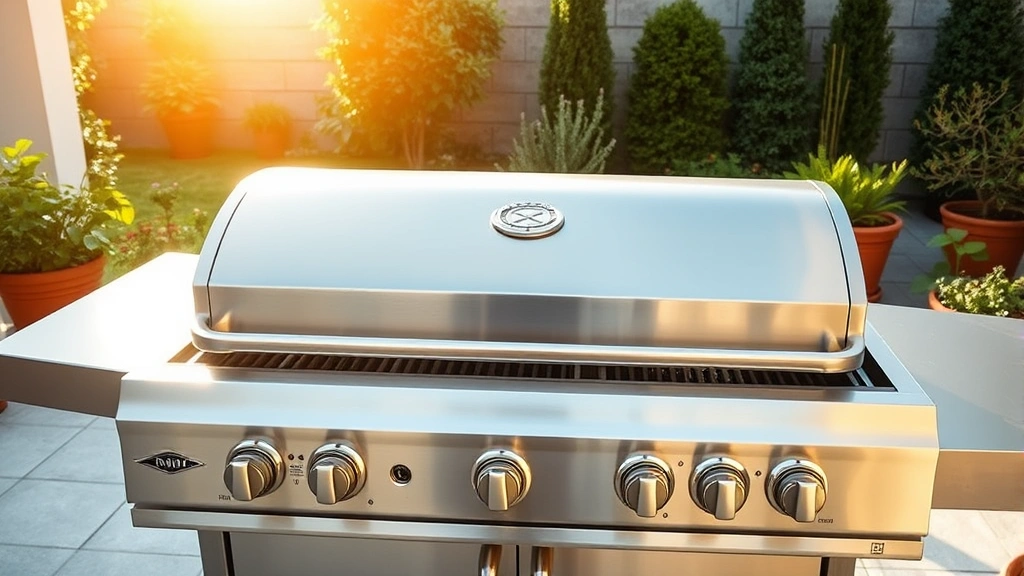
A flat top gas grill offers distinct environmental advantages over traditional charcoal grills and barrel-style cookers. The flat cooking surface provides superior heat distribution, meaning less fuel is required to achieve optimal cooking temperatures. Unlike charcoal grilling, which produces significant ash waste and requires time-intensive cleanup, gas grills operate with minimal byproducts and virtually no debris beyond occasional grease residue.
The efficiency factor cannot be overstated. Gas grills reach operating temperature in approximately 10-15 minutes, compared to 20-30 minutes for charcoal preparation. This rapid heat-up time translates directly to reduced fuel consumption and lower emissions. Additionally, flat top surfaces allow you to cook multiple items simultaneously with precision temperature control, maximizing the utility of each fuel unit burned. When compared to electric alternatives, gas grills offer superior portability and don’t require electrical infrastructure, making them practical for diverse outdoor spaces while maintaining reasonable energy consumption.
The durability of quality gas grill equipment represents another sustainability factor. Investing in a well-constructed flat top gas grill means fewer replacements over time, reducing manufacturing waste and the environmental cost of production. Many modern models feature stainless steel construction, which resists corrosion and extends functional lifespan significantly.
Understanding Fuel Efficiency in Gas Grilling
Fuel efficiency in gas grilling depends on multiple factors, including burner design, insulation quality, cooking method, and operational habits. Modern flat top gas grills utilize advanced burner technology that distributes flame evenly across the cooking surface, preventing hot spots that waste fuel. Understanding these mechanisms helps you make informed purchasing decisions and optimize your grilling practices.
The relationship between natural gas vs propane consumption varies based on your specific setup and usage patterns. Natural gas typically offers superior efficiency when connected to permanent home infrastructure, while propane provides flexibility for portable grilling situations. Both fuels produce significantly fewer emissions than charcoal alternatives, contributing to reduced air pollution and lower greenhouse gas output during cooking.
Burner quality directly impacts efficiency. Premium burners with precision orifice design deliver consistent flame patterns, reducing waste and ensuring even heat distribution. Grates and flavorizer bars—the metal components that sit above burners—play crucial roles in heat management. These elements vaporize dripping fats and oils, redistributing heat while preventing flare-ups that consume excess fuel. Regularly inspecting and maintaining these components ensures your grill operates at peak efficiency throughout the grilling season.
Temperature control represents a critical efficiency factor. Modern thermometers and temperature gauges allow precise monitoring, preventing the common mistake of running grills hotter than necessary. Cooking at appropriate temperatures not only conserves fuel but also improves food quality and reduces cooking time, creating a win-win scenario for both sustainability and culinary results.
Optimizing Your Grill Setup for Maximum Efficiency
Proper grill placement and setup dramatically influences fuel consumption and cooking performance. Position your flat top gas grill in locations that minimize wind exposure, as breezes can dissipate heat and force you to use higher flame settings to maintain cooking temperatures. If wind protection isn’t possible, consider portable windbreaks or strategic landscaping to shield your grilling area.
Preheating your grill efficiently sets the foundation for fuel-conscious cooking. Rather than preheating at maximum temperature, use medium-high settings for most applications. Most foods cook effectively at moderate temperatures, and this practice reduces fuel consumption by 15-25% compared to consistently using maximum settings. Keep your grill lid closed during cooking whenever possible—this simple habit traps heat, maintains consistent temperatures, and reduces the need for flame adjustments.
Grouping similar foods by cooking temperature and time optimizes your fuel usage. Plan your menu so items requiring similar heat levels cook simultaneously, minimizing the number of times you adjust burner settings. This batch-cooking approach reduces temperature fluctuations and prevents wasting fuel reheating the cooking surface between items.
Investing in quality grill covers protects your equipment from weather damage and extends its functional lifespan. When you’re not grilling, covers prevent rust, corrosion, and debris accumulation, all of which can compromise efficiency over time. A well-maintained grill operates more efficiently and requires fewer repairs or replacements, reducing overall environmental impact.
Maintenance Practices That Extend Equipment Life
Regular maintenance is perhaps the most underrated aspect of sustainable grilling. A well-maintained grill operates more efficiently, produces fewer emissions, and lasts considerably longer than neglected equipment. Establish a maintenance routine that includes weekly cleaning, monthly inspections, and seasonal deep cleaning.
Weekly cleaning involves brushing the grates with a grill brush to remove food residue and prevent buildup that can cause flare-ups and uneven heating. This simple 5-minute task prevents grease accumulation that reduces heat transfer efficiency. After each grilling session, allow the grill to cool slightly, then brush grates while they’re still warm—this removes debris more effectively than cold cleaning.
Monthly inspections should examine burner ports for clogs, check hose connections for leaks or damage, and verify that control knobs operate smoothly. Burner ports are particularly important; spider webs, debris, or mineral deposits can block gas flow, forcing you to use higher flame settings and wasting fuel. A simple pipe cleaner or specialized burner cleaning tool clears these obstructions within minutes.
Seasonal deep cleaning involves removing and thoroughly cleaning grates, inspecting internal components, and checking the grease management system. Empty grease traps regularly—accumulated grease not only creates fire hazards but also reduces heat efficiency by blocking airflow. Replace grease trap liners or clean collection buckets before each grilling season to ensure proper drainage and prevent overflow.
Check gas connections annually for leaks using soapy water. Apply the solution to all connection points; bubbles indicate leaks that require immediate attention. Tighten connections carefully using appropriate wrenches, and if leaks persist, contact a professional technician. Properly sealed connections prevent dangerous gas escapes and ensure all fuel combusts for cooking rather than dissipating into the atmosphere.
Natural Gas vs Propane: Making the Eco-Conscious Choice
Selecting between natural gas and propane for your flat top gas grill involves weighing environmental, practical, and economic factors. Understanding the nuances of each option empowers you to make decisions aligned with your sustainability goals and lifestyle needs.
Natural gas offers several environmental advantages when infrastructure exists. As a sustainable energy solution, natural gas produces fewer emissions than propane during combustion and eliminates the need for portable tank replacements, reducing manufacturing and transportation impacts. For homeowners with existing natural gas connections, converting grills to natural gas is straightforward and cost-effective. The continuous supply means you never run out mid-meal, and you avoid the environmental cost of manufacturing and shipping replacement propane tanks.
Propane presents advantages for those without natural gas infrastructure or requiring portable grilling capabilities. While propane tanks require periodic replacement—generating manufacturing waste—the fuel itself burns cleanly and efficiently. Propane’s higher energy density means smaller quantities produce equivalent cooking power, and portable tanks enable flexible grill placement without permanent installation requirements.
For detailed comparisons and technical information about fuel options, consult the EPA’s Energy and Environment resources, which provide comprehensive data on fuel efficiency and emissions profiles. Making informed fuel choices directly impacts your grilling’s environmental footprint and aligns with broader sustainability commitments.
Reducing Waste During Your Grilling Season
Beyond fuel efficiency, comprehensive waste reduction during grilling season demonstrates genuine environmental commitment. Every aspect of your outdoor cooking—from food prep to packaging disposal—offers opportunities for sustainable choices.
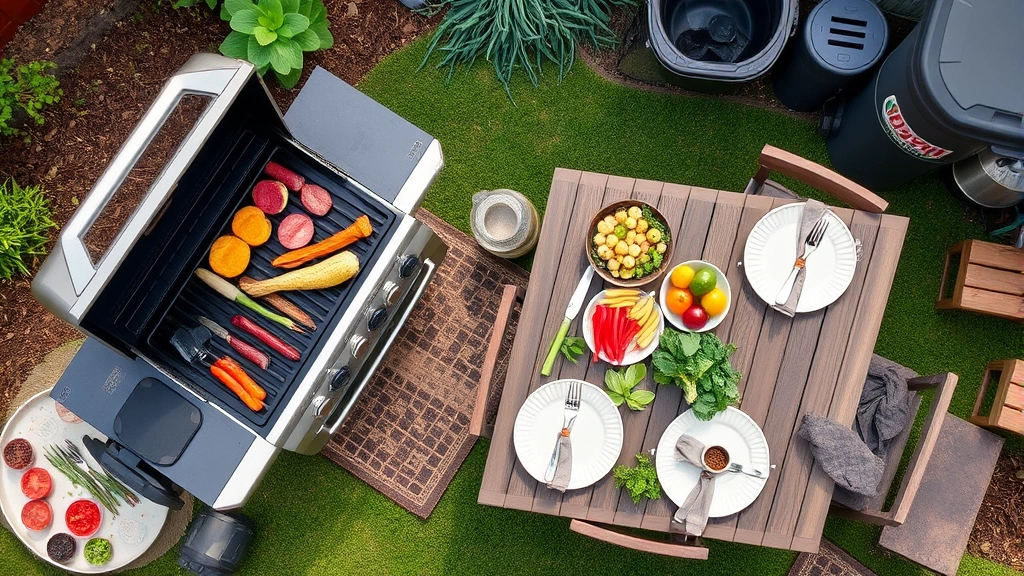
Food waste prevention begins with thoughtful meal planning. Calculate portions accurately to minimize leftovers, and repurpose any excess grilled items into subsequent meals. Vegetable scraps and trimmings can become compost rather than trash, returning nutrients to your garden. When grilling meats, consider purchasing from local sustainable sources—this reduces transportation emissions while supporting environmentally responsible farming practices.
Packaging waste accumulates quickly during grilling season. Buy bulk ingredients in minimal packaging, and use reusable containers for marinades, sauces, and prepared items. Cloth napkins replace paper alternatives, and reusable plates eliminate disposable dishware. Stainless steel or bamboo utensils outperform single-use plastic options, and durable grilling tools last for decades when properly maintained.
Grease and oil disposal requires careful attention. Never pour cooking oils down drains—they solidify in pipes, causing clogs and environmental contamination. Instead, allow grease to cool and solidify, then dispose of it in regular trash or, better yet, research local composting facilities that accept food-related waste. Some communities offer grease recycling programs that convert cooking oils into biodiesel fuel, creating a circular economy for this byproduct.
Charcoal from previous grilling sessions shouldn’t be discarded. Cold, ash-free charcoal can be reused in subsequent grilling sessions, extending the lifespan of fuel purchases. Ashes themselves make excellent garden amendments, providing potassium and other minerals that improve soil composition and support plant growth.
Integrating Gas Grilling Into Your Sustainable Lifestyle
Sustainable grilling doesn’t exist in isolation—it represents one component of a comprehensive environmental lifestyle. Connecting your grilling practices to broader sustainability commitments creates meaningful impact and reinforces positive habits.
Consider how your grilling activities relate to other green technology innovations you’re implementing. If you’ve invested in solar panels or other renewable energy systems, you might explore solar-powered grill accessories like thermometers or LED lighting. These supplementary technologies reduce reliance on batteries while adding convenience to your outdoor cooking experience.
Entertainment choices matter too. Hosting gatherings around your flat top gas grill creates opportunities for sustainable social experiences. Encourage guests to bring reusable containers for leftovers, serve food on durable dishware, and compost organic waste together. These gatherings model sustainable practices while building community awareness of environmental responsibility.
Seasonal considerations influence your grilling impact. During peak summer months, grilling reduces reliance on energy-intensive indoor cooking appliances, lowering your home’s overall energy consumption. Extending your grilling season into spring and fall months further reduces dependence on stoves and ovens, creating cumulative energy savings throughout the year.
Document your grilling practices and sustainability efforts. Tracking fuel consumption, maintenance schedules, and waste reduction provides data that demonstrates your environmental commitment and identifies opportunities for continued improvement. Many homeowners find that monitoring these metrics increases awareness and motivates ongoing optimization.
Your choices regarding grilling equipment and practices influence your social sphere. When friends and family observe your commitment to sustainable grilling, many become inspired to evaluate their own outdoor cooking approaches. This ripple effect amplifies environmental impact beyond your individual household, contributing to broader cultural shifts toward sustainability.
FAQ
Are gas grills truly more environmentally friendly than charcoal alternatives?
Yes, gas grills generally demonstrate superior environmental profiles compared to charcoal options. They produce fewer emissions, require less fuel to achieve cooking temperatures, generate minimal waste, and reach operating temperature significantly faster. The efficiency advantages of gas grills—particularly flat top models with advanced burner technology—translate to reduced environmental impact per meal cooked. However, the specific environmental benefits depend on your fuel source (natural gas versus propane) and your operational practices.
How often should I replace my grill’s components for optimal efficiency?
Most grill components last 3-5 years with proper maintenance, though some elements require more frequent attention. Grates typically need replacement every 2-3 years depending on usage intensity and maintenance practices. Burners can last 5-7 years if kept clean and protected from moisture. Flavorizer bars may require replacement every 3-4 years. Rather than replacing components on fixed schedules, inspect them regularly and replace only when performance noticeably declines. This approach minimizes waste while ensuring your grill operates efficiently.
What’s the difference in emissions between natural gas and propane grilling?
Natural gas and propane produce similar emissions during combustion, both generating primarily carbon dioxide and water vapor. The environmental distinction lies elsewhere: natural gas infrastructure eliminates manufacturing and transportation emissions associated with propane tank production and distribution. For homeowners without natural gas access, propane remains a reasonable choice, particularly when emphasizing efficiency and minimal waste in other grilling practices. The U.S. Department of Energy provides detailed comparisons of various fuel options and their environmental implications.
Can I convert my existing propane grill to natural gas?
Many grills can be converted from propane to natural gas, though the process varies by model. Conversion typically requires replacing the regulator, orifices, and connecting to natural gas infrastructure. Before attempting conversion, consult your grill’s manual or manufacturer specifications—not all models support conversion. Professional technicians can assess your specific grill and perform conversions safely and correctly. While conversion involves upfront costs, the long-term savings and environmental benefits often justify the investment.
What maintenance mistakes should I avoid to keep my grill efficient?
Common maintenance mistakes include neglecting grate cleaning, ignoring grease trap overflow, failing to inspect burner ports regularly, and storing grills without protection from weather. Avoid using excessive water for cleaning, which can damage internal components and promote rust. Don’t attempt to force stuck control knobs or valves—this can damage internal mechanisms. Never ignore gas leaks or unusual smells; address these immediately. Finally, avoid operating your grill without regular inspections; preventive maintenance prevents efficiency loss and costly repairs.
How does flat top grill cooking compare to traditional grate grilling environmentally?
Flat top grills offer environmental advantages including superior heat distribution, reduced fuel waste, and more efficient cooking of small or delicate items that fall through traditional grates. The solid cooking surface allows you to cook more items simultaneously, maximizing fuel utility per cooking session. However, flat top surfaces require more thorough cleaning to prevent grease buildup, which demands water usage. Both styles can be operated sustainably with proper maintenance and operational practices—the choice depends on your specific cooking preferences and available resources.