
Eco-Friendly Gas Can Spouts: Expert Insights for Sustainable Fuel Management
Gas can spouts are often overlooked components in our daily interactions with fuel storage and management. Yet these small devices play a surprisingly significant role in environmental protection, worker safety, and fuel efficiency. As we navigate an increasingly eco-conscious world, understanding the impact of gas can spout technology becomes essential for homeowners, businesses, and environmental advocates alike. This comprehensive guide explores how modern spout designs contribute to reducing emissions, preventing spills, and supporting sustainable practices.
The evolution of fuel storage technology reflects our growing commitment to environmental stewardship. Traditional gas can spouts were prone to spillage, vapor emissions, and inefficient fuel transfer—all contributing to unnecessary environmental contamination. Today’s eco-friendly alternatives incorporate innovative materials, precision engineering, and thoughtful design to minimize ecological impact while maximizing functionality and user safety.
Understanding Gas Can Spout Design and Environmental Impact
A gas can spout serves as the critical interface between fuel storage and consumption, making it far more important to environmental protection than most people realize. When we examine the lifecycle of fuel from storage to engine, the spout becomes a potential point of environmental concern. Poorly designed spouts allow volatile organic compounds (VOCs) to escape into the atmosphere, contributing to ground-level ozone formation and air pollution.
The environmental impact of traditional gas can spouts extends beyond simple spillage. During fuel transfer, vapors escape into the air, representing both wasted fuel and atmospheric pollutants. The EPA identifies ground-level ozone formation as a significant air quality concern, with fuel vapors playing a notable role in this process. Modern eco-friendly spouts address this challenge through sealed designs and advanced valve mechanisms that trap vapors during transfer.
Understanding the broader context of sustainable energy solutions helps us appreciate why even small components matter. When multiplied across millions of gas cans used daily, the collective environmental benefit of improved spout technology becomes substantial. This is part of the larger movement toward green technology innovations transforming our future, where incremental improvements compound into meaningful environmental progress.
The design philosophy behind eco-friendly spouts prioritizes three key principles: zero-emission transfer, spill prevention, and material sustainability. Engineers now consider the complete environmental footprint, from manufacturing through end-of-life disposal, ensuring that the spout itself doesn’t create more environmental problems than it solves.
Eco-Friendly Materials and Manufacturing Processes
Material selection represents the foundation of any truly eco-friendly gas can spout. Manufacturers increasingly turn to recyclable and sustainable materials that perform as well as traditional plastics without the environmental burden. High-density polyethylene (HDPE) and polypropylene (PP) have become industry standards, offering durability while remaining recyclable at end-of-life.
Beyond the primary materials, innovative manufacturers explore bio-based plastics derived from renewable resources. These materials reduce dependence on petroleum products and lower the carbon footprint associated with spout production. Some leading brands now incorporate recycled plastic content into their spout designs, creating a circular economy approach where old spouts become new ones.
The manufacturing process itself reflects environmental consciousness. Modern facilities employ water-based coatings, precision molding to minimize waste, and energy-efficient production methods. Learning how to reduce your environmental footprint applies not just to consumers but to manufacturers who recognize their responsibility in the supply chain.
Metal components in spouts—typically brass or stainless steel—are chosen for corrosion resistance and longevity. These materials prevent contamination of stored fuel and reduce the need for frequent replacements. Brass, in particular, offers excellent durability without requiring harmful protective coatings that could leach into fuel or soil.
Quality assurance in manufacturing ensures that every spout meets rigorous environmental and safety standards. This attention to detail prevents premature failure, which would otherwise necessitate replacement and generate additional waste. The investment in better manufacturing practices pays dividends through extended product lifespan and reduced environmental impact.
Vapor Recovery and Emission Reduction Technology
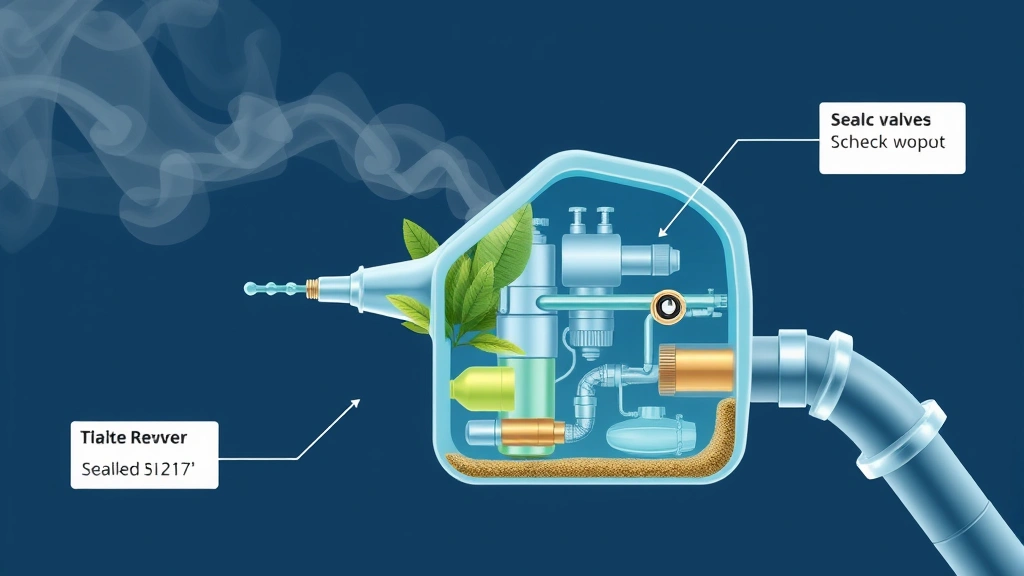
One of the most significant innovations in eco-friendly gas can spouts is vapor recovery technology. Traditional spouts allow fuel vapors to escape during the transfer process, but modern designs incorporate sealed systems that capture these vapors. This technology mirrors the systems now standard at commercial gas stations, bringing professional-grade environmental protection to residential and portable fuel management.
Vapor recovery works through a combination of check valves, pressure regulation, and sealed connections. When fuel flows through the spout, the system maintains a closed loop, preventing air from entering the can and displacing fuel as vapor. This approach simultaneously reduces emissions and prevents fuel oxidation, which improves fuel quality during storage.
The environmental benefits are quantifiable and substantial. EPA regulations on Reid Vapor Pressure demonstrate governmental recognition of vapor emission concerns. By choosing spouts with vapor recovery capabilities, consumers directly support compliance with air quality standards while protecting the atmosphere from unnecessary hydrocarbon emissions.
Advanced spouts incorporate anti-backflow mechanisms that prevent fuel from flowing backward into the supply tank—a common problem with traditional designs. This feature protects fuel supply integrity and eliminates a major source of spill incidents. The precision engineering required for these mechanisms represents a significant advancement in sustainable fuel management technology.
For those interested in understanding the broader energy landscape, exploring whether natural gas is renewable provides context for why even incremental improvements in fuel handling matter. Every reduction in vapor emissions contributes to cleaner air and more efficient energy use.
Spill Prevention and Containment Features
Fuel spills represent one of the most direct and harmful environmental consequences of poor spout design. A single gallon of gasoline can contaminate up to one million gallons of groundwater—a sobering reality that underscores the importance of spill prevention. Modern eco-friendly gas can spouts incorporate multiple features specifically designed to eliminate spillage.
Precision-engineered nozzles now feature automatic shutoff mechanisms that activate when the receiving tank reaches capacity. This prevents the common scenario where fuel overflows because the operator misjudged the remaining space. The automatic shutoff operates through a float valve system that responds to pressure changes, requiring no user intervention.
Drip trays and collection channels built into spout designs capture any residual fuel that might otherwise spill. These integrated containment systems channel fuel back into the can or a collection vessel, preventing soil and groundwater contamination. The design elegance lies in making spill prevention automatic rather than dependent on user behavior.
Material compatibility also plays a role in spill prevention. Spouts designed to accommodate various fuel types—gasoline, diesel, and ethanol blends—ensure that users select the appropriate spout for their fuel, reducing the risk of incompatible fuel mixing or handling errors. Clear labeling and color-coding systems help users quickly identify the correct spout.
Seal integrity represents another critical factor. High-quality spouts feature replaceable gaskets and seals that maintain their effectiveness over extended use. Unlike disposable spouts that degrade and leak, quality replaceable components ensure consistent performance throughout the product’s lifespan, reducing both waste and environmental risk.
Comparative Analysis: Traditional vs. Modern Spouts
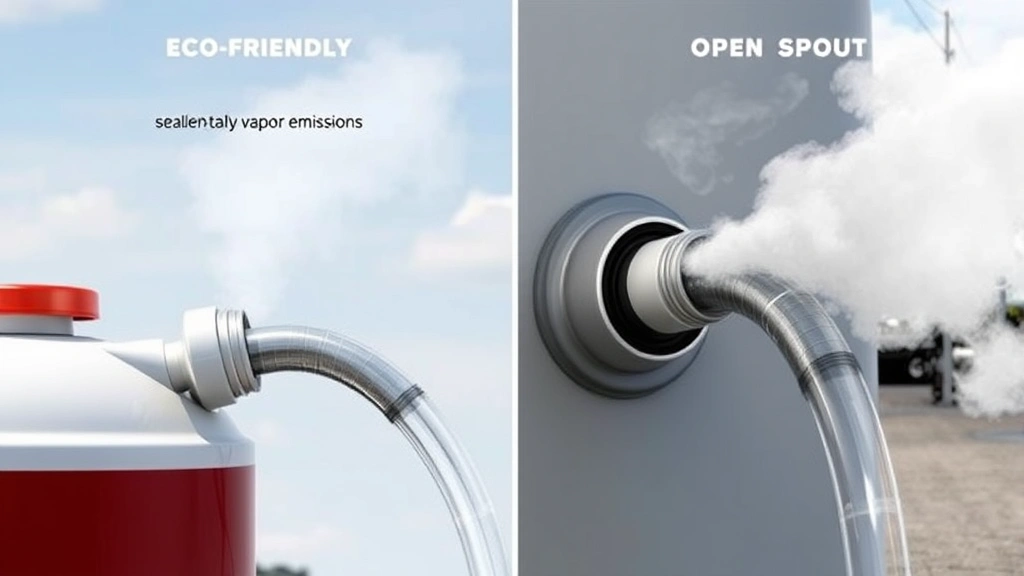
Understanding the differences between traditional and modern spouts reveals why the transition to eco-friendly designs matters. Traditional spouts typically feature simple open-tube designs with minimal safety features. Fuel transfer relies on gravity and manual tilting, with no vapor recovery or automatic shutoff mechanisms. These designs prioritize simplicity and low manufacturing cost over environmental performance.
The consequences of this approach are measurable and significant. Studies indicate that traditional spouts result in fuel vapor emissions averaging 15-25% of the fuel transferred, depending on temperature and fuel volatility. Spill rates during transfer average 2-5% of the fuel volume, creating substantial environmental and economic waste. Over a single season of use, an average household with traditional spouts contributes meaningfully to local air pollution and groundwater contamination risk.
Modern eco-friendly spouts reduce vapor emissions to less than 1% through sealed transfer systems and vapor recovery technology. Spill rates drop to nearly zero through automatic shutoff and integrated containment. This represents an improvement of 95% or more in environmental performance—a dramatic difference that justifies the modest price premium of quality spouts.
The longevity comparison also favors modern designs. Traditional spouts typically require replacement annually or biannually due to seal degradation and valve failure. Eco-friendly spouts with replaceable components maintain effectiveness for 5-10 years or longer. This extended lifespan reduces manufacturing waste and the environmental cost of production cycles.
Cost-benefit analysis reveals that despite higher initial investment, eco-friendly spouts prove economically advantageous. Reduced fuel loss, fewer replacements, and extended service life offset the purchase price premium within the first 1-2 seasons of use. For commercial operations, the savings multiply dramatically, making the environmental choice also the economically rational choice.
Selecting the Right Eco-Friendly Gas Can Spout
Choosing an appropriate eco-friendly gas can spout requires understanding your specific needs and application. First, consider the fuel type you’ll handle most frequently. Gasoline, diesel, and ethanol blends have different chemical properties that influence spout material requirements. Ensure your selected spout carries compatibility certification for your intended fuel.
Examine the spout’s vapor recovery capabilities. Look for certifications from environmental organizations or regulatory bodies indicating compliance with emissions standards. EPA compliance resources provide guidance on selecting certified equipment that meets federal environmental standards.
Evaluate the automatic shutoff mechanism. High-quality systems respond precisely to tank capacity, preventing both overflow and underfilling. Test the shutoff response if possible, ensuring it engages smoothly without excessive force or delayed activation. The mechanism should operate consistently across multiple fill cycles without degradation.
Consider the spout’s compatibility with various gas can designs. Not all spouts fit all cans, and forcing incompatible combinations can damage both components. Verify that your spout matches your can’s inlet diameter and thread pattern. Some universal spouts accommodate multiple can types, offering flexibility for households with varied equipment.
Assess the availability of replacement parts and the manufacturer’s commitment to sustainability. Companies that offer replaceable gaskets, seals, and valve components demonstrate commitment to product longevity and reduced waste. This approach aligns with our sustainability blog’s philosophy of supporting manufacturers who prioritize environmental responsibility throughout the product lifecycle.
Price should reflect quality and environmental performance rather than being the sole decision factor. Invest in spouts from established manufacturers with proven track records in environmental certification and customer satisfaction. The modest premium paid for quality spouts returns dividends through superior performance and extended service life.
Maintenance and Longevity for Sustainable Use
Proper maintenance extends the life of eco-friendly gas can spouts while preserving their environmental performance. Regular inspection should focus on seal integrity, valve function, and any visible corrosion or degradation. Monthly checks during active use seasons catch problems early before they compromise functionality.
Cleaning the spout regularly prevents fuel residue buildup that can compromise valve operation. Use appropriate solvents compatible with the spout’s materials—typically mineral spirits or commercial fuel system cleaners. Avoid aggressive scrubbing that might damage seals or valve surfaces. After cleaning, allow complete drying before storing to prevent corrosion.
Replace gaskets and seals as recommended by the manufacturer, typically annually for frequently used spouts. This preventive maintenance is far more economical and environmentally sound than replacing the entire spout when seals fail. Quality manufacturers provide inexpensive replacement kits designed for user installation.
Store spouts in cool, dry conditions away from direct sunlight and temperature extremes. Prolonged heat exposure degrades plastic components and can harden rubber seals, compromising performance. Proper storage extends service life and maintains the spout’s environmental effectiveness throughout its operational years.
Document maintenance and replacement activities. This record helps identify wear patterns and guides future purchasing decisions. It also demonstrates due diligence in environmental stewardship, which increasingly matters to insurance companies, environmental agencies, and sustainability-conscious organizations.
When a spout eventually reaches end-of-life, recycle it appropriately. Many municipalities accept plastic and metal components through standard recycling programs. Contact your local waste management authority to identify proper recycling options. Supporting the circular economy ensures that even retired spouts contribute to environmental protection rather than landfill burden.
Frequently Asked Questions
What makes a gas can spout eco-friendly?
An eco-friendly gas can spout incorporates vapor recovery technology, spill prevention mechanisms, recyclable materials, and precision engineering designed to minimize environmental impact. These spouts reduce fuel vapor emissions by 95% or more compared to traditional designs, prevent spills through automatic shutoff and containment features, and utilize sustainable materials that can be recycled at end-of-life. The focus extends beyond the spout itself to include sustainable manufacturing processes and extended product longevity.
How much can eco-friendly spouts reduce fuel waste?
Modern eco-friendly spouts reduce fuel loss through vapor emissions and spillage by approximately 95% compared to traditional designs. This translates to saving 1-2 gallons per 100 gallons transferred for typical household use. Over a year, this represents significant fuel conservation and corresponding reductions in both fuel costs and environmental impact. For commercial operations transferring thousands of gallons annually, the savings multiply substantially.
Are eco-friendly spouts compatible with all gas cans?
Most modern gas cans use standardized inlet designs, but compatibility varies. Some eco-friendly spouts feature universal designs accommodating multiple can types, while others are specific to particular manufacturers. Always verify compatibility before purchasing. Check the spout’s specifications for inlet diameter, thread pattern, and recommended can types. When in doubt, consult the manufacturer or test the fit before completing your purchase.
How long do quality eco-friendly spouts last?
With proper maintenance and care, quality eco-friendly spouts last 5-10 years or longer. Replaceable gaskets and seals can be renewed annually or biannually, extending the spout’s effective lifespan. This durability contrasts sharply with traditional spouts requiring annual replacement. The extended service life reduces manufacturing waste and makes eco-friendly spouts economically advantageous despite higher initial cost.
What certifications should I look for in an eco-friendly gas can spout?
Look for spouts certified by the EPA or meeting federal emissions standards for vapor recovery. Industry certifications from environmental organizations and third-party testing bodies indicate compliance with environmental and safety standards. Manufacturer certifications regarding material recyclability and sustainable manufacturing practices provide additional assurance. Research the manufacturer’s environmental commitment and track record before making your purchase decision.
Can eco-friendly spouts prevent groundwater contamination?
Yes, eco-friendly spouts significantly reduce groundwater contamination risk through spill prevention and vapor recovery. By eliminating spillage and reducing fuel loss, these spouts prevent contamination of soil and groundwater. A single gallon of gasoline can contaminate up to one million gallons of groundwater, making spill prevention critical. Eco-friendly spouts are essential tools for protecting this vital resource.
How do vapor recovery spouts work?
Vapor recovery spouts maintain a sealed system during fuel transfer, preventing air from entering the storage can and displacing fuel as vapor. Check valves and pressure regulation mechanisms ensure that fuel flows only in the intended direction while vapors remain trapped. This technology mirrors commercial gas station systems, bringing professional-grade environmental protection to portable fuel management. The sealed system simultaneously reduces emissions and improves fuel quality during storage.


