Gas Fireplace Repair Tips: Expert Insights for Efficient, Safe Home Heating
Gas fireplaces provide warmth, ambiance, and efficient heating for countless homes, but like any appliance, they require proper maintenance and occasional repairs to function safely and effectively. Whether you’re dealing with a pilot light that won’t stay lit, uneven flame distribution, or mysterious clicking sounds, understanding common gas fireplace issues can help you determine when to call a professional and when you might tackle minor maintenance yourself. This comprehensive guide combines expert repair insights with sustainability considerations, helping you maintain your fireplace while minimizing energy waste and environmental impact.
Proper gas fireplace maintenance not only extends the lifespan of your heating system but also ensures optimal fuel efficiency and reduces your household’s energy consumption. When fireplaces operate efficiently, they consume less natural gas while providing consistent warmth, directly contributing to lower utility bills and a smaller carbon footprint. By learning about how to save energy at home, you can integrate fireplace efficiency into your broader sustainability strategy.
Common Gas Fireplace Problems
Gas fireplaces encounter several recurring issues that homeowners should recognize early. The most prevalent problems include pilot light failure, weak or discolored flames, unusual odors, difficulty igniting the burner, and strange noises during operation. Understanding these symptoms helps you communicate effectively with repair technicians and potentially identify simple fixes before calling for professional service.
Pilot light problems represent approximately 60% of all gas fireplace service calls. When your pilot light extinguishes frequently or won’t light at all, the causes could range from simple drafts to more serious gas line issues. Flame color variations—such as yellow or orange flames instead of the normal blue—often indicate incomplete combustion, which reduces efficiency and increases emissions. Similarly, if you notice a rotten egg smell near your fireplace, this signals a potential gas leak, requiring immediate professional attention.
The importance of addressing these issues promptly extends beyond comfort; it directly impacts your home’s safety, energy efficiency, and environmental responsibility. Malfunctioning fireplaces waste fuel, increase household energy consumption, and potentially release harmful emissions. By implementing sustainable energy solutions, you ensure your heating system operates cleanly and efficiently.
Pilot Light Issues and Solutions
The pilot light serves as your fireplace’s ignition source, and its reliability directly affects your system’s functionality. Most modern gas fireplaces use one of three ignition types: standing pilot lights (always burning), intermittent pilot systems (ignite on demand), or electronic ignition systems. Each requires different troubleshooting approaches.
For standing pilot lights that won’t stay lit, begin by checking for drafts around your fireplace opening. Excessive air movement can blow out the pilot flame, so ensure doors and windows near your fireplace remain closed during operation. Next, examine the pilot light assembly for debris accumulation. Over time, dust and particles can clog the pilot orifice, restricting gas flow. Carefully clean the pilot assembly using a small, soft brush or compressed air—never insert sharp objects that could damage the orifice.
If cleaning doesn’t resolve the issue, the thermocouple may need replacement. This small device generates electrical current when heated by the pilot flame, signaling the main gas valve to open. A faulty thermocouple won’t generate sufficient current, causing the gas valve to close and extinguish the pilot light. Replacement typically costs $100-$300 and requires professional installation.
Intermittent pilot systems and electronic ignition units present different challenges. If your fireplace won’t ignite at all, check your power source first. Electronic systems require electricity, so verify that your unit receives power and that circuit breakers haven’t tripped. Battery-powered systems may simply need fresh batteries. If power isn’t the issue, the igniter electrode or control board may require professional replacement.
Thermocouple and Ignition System Repairs
The thermocouple represents one of the most important components in your gas fireplace, yet it often goes unnoticed until failure occurs. This temperature-sensitive device converts heat into electrical energy, creating a safety mechanism that prevents unburned gas from entering your home. Understanding thermocouple function helps explain why proper cleaning and maintenance prevent costly repairs.
When your thermocouple fails, you’ll typically experience repeated pilot light extinction or complete ignition failure. Before assuming replacement is necessary, verify that the thermocouple sits properly in the pilot flame. The flame should envelope the thermocouple’s bulb completely; if not, adjust its position slightly. Sometimes, simple repositioning restores function without requiring replacement.
For electronic ignition systems, common failures involve the spark electrode or the control board. Spark electrodes can become fouled with carbon deposits, preventing spark generation. Cleaning the electrode with a soft cloth often restores ignition capability. If cleaning fails, replacement electrodes typically cost $50-$150. Control board failures are more serious and usually require professional diagnosis, as multiple components could cause similar symptoms.
The environmental benefit of timely repairs extends beyond simple efficiency gains. A properly functioning ignition system ensures complete fuel combustion, reducing harmful emissions like carbon monoxide and nitrogen oxides. This protection benefits both your household and the broader environment. Learning about principles of sustainability helps you understand how home systems contribute to environmental responsibility.
Flame Quality and Gas Flow Problems
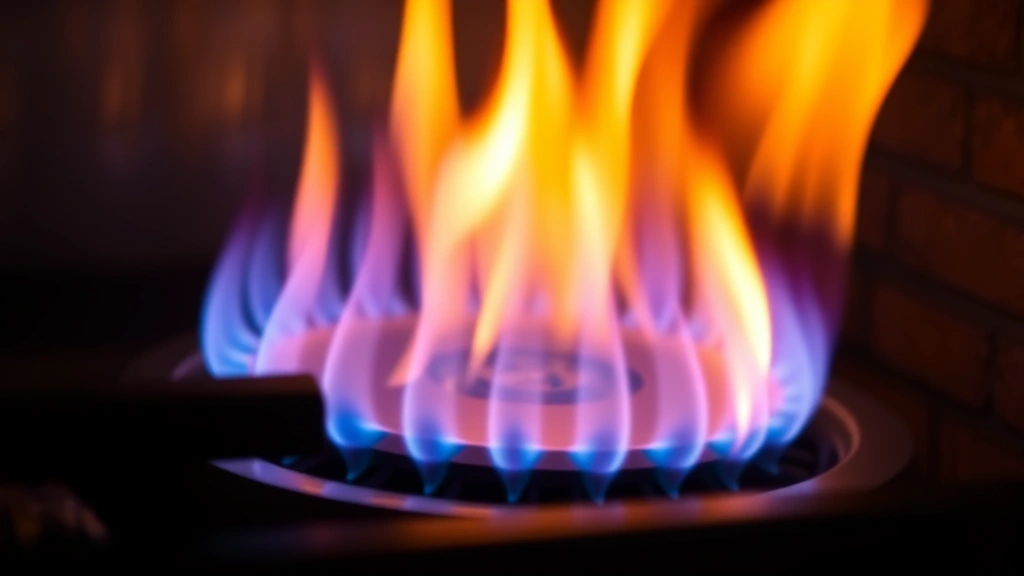
Observing your fireplace’s flame provides valuable diagnostic information. Healthy gas fireplace flames appear predominantly blue with minimal yellow or orange coloring at the flame tips. Color variations indicate combustion issues requiring attention.
Yellow or orange flames suggest incomplete combustion, often caused by insufficient oxygen or improper gas-air mixture. This condition reduces heating efficiency and increases emissions. Common causes include blocked burner ports, incorrect gas pressure settings, or inadequate ventilation around the fireplace. Carefully inspect the burner for debris, spider webs, or mineral deposits blocking gas ports. Use a soft brush to gently clean accessible areas, but avoid damaging the burner itself.
Weak or uneven flames typically result from low gas pressure or blockages in the gas line. If your fireplace operates fine but produces noticeably less heat than previously, have a professional check your gas pressure. Incorrect pressure reduces efficiency and heating capacity. Similarly, if some burner areas produce strong flames while others remain weak, localized blockages may exist in specific burner ports.
Unusual flame behavior—such as flames that flicker excessively or won’t reach full height—often indicates gas supply problems. Check that your gas shut-off valve is fully open and that no kinks or damage affect your gas line. For propane systems, ensure your tank contains adequate fuel and check for frost accumulation indicating potential pressure issues.
These flame quality issues directly impact your fireplace’s energy efficiency. Poor combustion wastes fuel while producing excess emissions, increasing your environmental footprint. Professional maintenance ensures optimal flame quality and fuel consumption, supporting both your wallet and environmental goals. Explore how to reduce your environmental footprint to understand fireplace efficiency’s role in sustainable living.
Safety Checks and Professional Maintenance
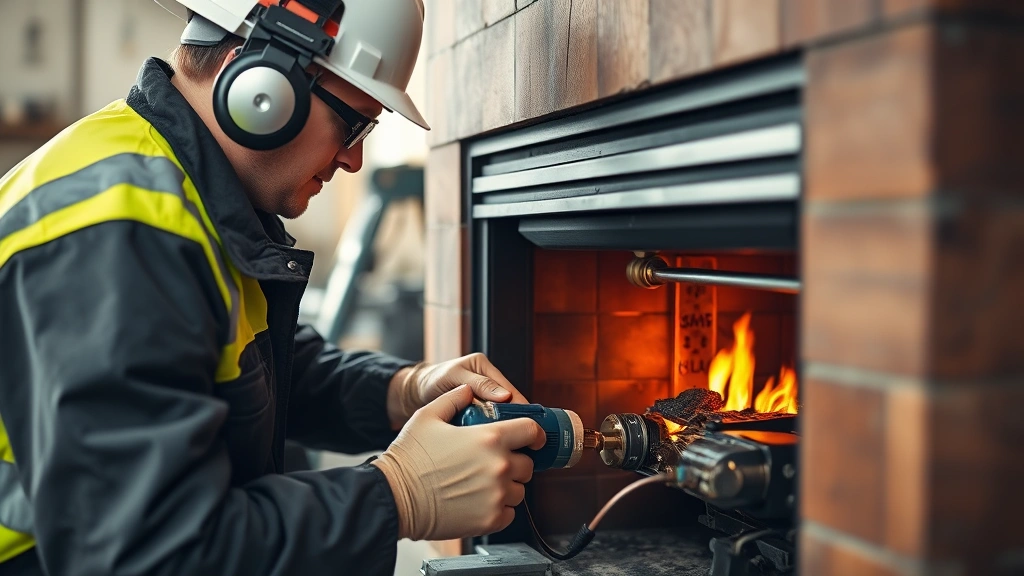
While some gas fireplace maintenance can be performed by homeowners, certain tasks require professional expertise. Annual professional inspections represent the most important maintenance investment, ensuring your system operates safely and efficiently. Certified technicians possess specialized equipment to measure gas pressure, test combustion quality, and identify potential hazards invisible to homeowners.
Never attempt repairs involving gas lines, pressure regulators, or main gas valves yourself. These components require professional tools and expertise to adjust safely. Incorrect pressure settings can create safety hazards or damage your system. Similarly, any suspected gas leaks demand immediate professional attention. If you smell natural gas or rotten egg odor near your fireplace, turn off the system, evacuate the area, and call your gas company’s emergency line.
Professional maintenance typically includes cleaning the burner and pilot assembly, inspecting the thermocouple and ignition system, checking gas pressure and flame quality, testing the safety shutoff mechanism, and inspecting the venting system. This comprehensive service costs $150-$300 annually but prevents expensive repairs and ensures safe operation.
Carbon monoxide safety deserves special emphasis. Improperly functioning fireplaces can produce dangerous carbon monoxide levels, particularly if venting becomes blocked. Install carbon monoxide detectors near your fireplace and throughout your home, testing them monthly. If your detector alarms, evacuate immediately and call emergency services.
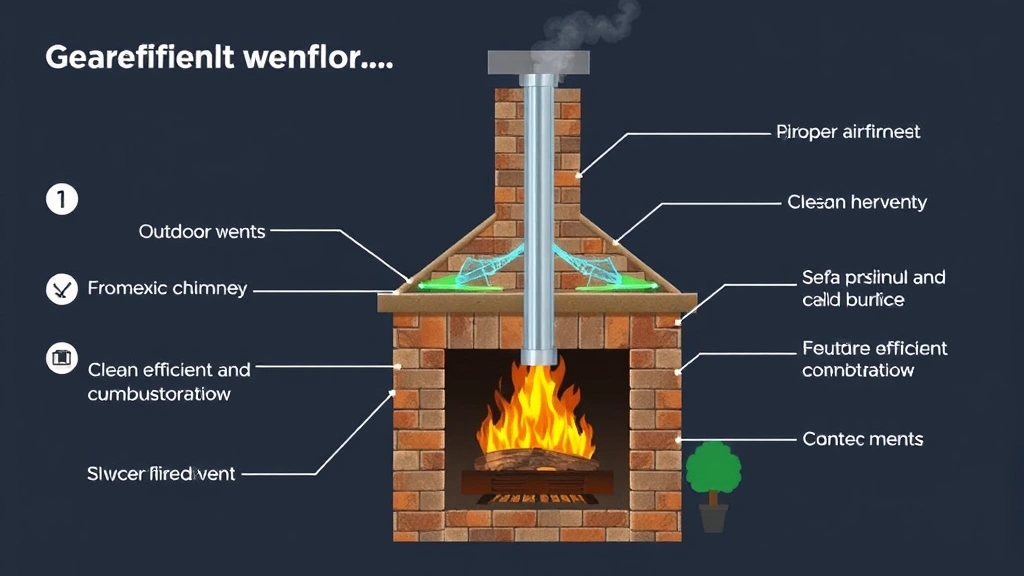
Venting system inspection proves critical for safety and efficiency. Blocked vents reduce draft, causing combustion byproducts to enter your home instead of venting outside. Inspect exterior vent openings regularly for debris, bird nests, or snow accumulation. Ensure nothing blocks the vent opening and that the vent pipe slopes correctly for proper drainage.
Professional maintenance supports sustainability by ensuring your fireplace operates at peak efficiency, consuming minimal fuel while producing maximum heat. This efficiency reduces your household’s energy consumption and environmental impact. Consider professional maintenance an investment in both safety and environmental responsibility.
Energy Efficiency and Sustainability
Gas fireplaces offer several efficiency advantages over wood-burning alternatives, but their environmental impact depends on proper operation and maintenance. Well-maintained gas fireplaces convert 70-90% of fuel energy into usable heat, compared to 50-60% for traditional wood fireplaces. This efficiency advantage translates to lower natural gas consumption and reduced household energy bills.
However, efficiency gains require commitment to maintenance. A fireplace with a fouled burner, inefficient combustion, or poor venting operates at significantly reduced efficiency, consuming more gas while producing less heat. Regular cleaning and professional inspections ensure your system maintains peak efficiency throughout its lifespan.
Modern gas fireplaces incorporate efficiency features like thermostatic controls, which automatically adjust flame height based on room temperature, and sealed combustion systems, which draw combustion air directly from outside rather than using conditioned indoor air. Understanding your fireplace’s specific features helps you operate it most efficiently.
From a broader sustainability perspective, consider your fireplace’s role in your home’s heating strategy. Using your fireplace to heat specific rooms while reducing central heating in unused areas can lower overall energy consumption. However, inefficient fireplaces may consume more energy than central heating systems. Evaluate your fireplace’s actual efficiency and operating costs to determine its role in your sustainability plan.
Explore green technology innovations to understand emerging heating alternatives, including high-efficiency heat pumps and renewable energy systems. While gas fireplaces offer improvements over older heating methods, they represent a transitional technology. Planning for future upgrades to renewable heating sources supports long-term sustainability goals.
Natural gas, while cleaner than coal or oil, remains a fossil fuel contributing to climate change. According to the EPA’s Natural Gas information, methane emissions from natural gas extraction and distribution represent significant climate concerns. Maximizing fireplace efficiency and considering renewable alternatives supports climate action efforts.
Frequently Asked Questions
How often should I have my gas fireplace professionally serviced?
Professional maintenance should occur annually, ideally before heating season begins. This ensures your system operates safely and efficiently throughout winter months. If you use your fireplace frequently, consider additional inspections mid-season.
Can I clean my gas fireplace burner myself?
You can perform basic cleaning of accessible burner areas using a soft brush and compressed air. However, avoid forcing debris from ports or disassembling components. For thorough cleaning or any adjustments, contact a professional technician.
What causes that clicking sound when my fireplace ignites?
Clicking sounds during ignition typically indicate the spark electrode firing repeatedly, which is normal for electronic ignition systems. However, continuous clicking after ignition suggests ignition system problems requiring professional diagnosis.
Is it safe to use my fireplace if flames appear yellow instead of blue?
Yellow flames indicate incomplete combustion, which is inefficient and potentially unsafe. Have your fireplace inspected and serviced immediately to identify the cause and restore proper blue flame operation.
How can I improve my gas fireplace’s efficiency?
Maintain your fireplace through annual professional service, ensure proper venting, use thermostatic controls if available, and consider upgrading to a high-efficiency sealed combustion system. Additionally, use your fireplace strategically to supplement rather than replace central heating.
What’s the difference between standing pilot and intermittent pilot systems?
Standing pilot systems keep a small flame burning continuously, ready to ignite the main burner. Intermittent pilot systems ignite the pilot only when needed, improving efficiency by eliminating continuous gas consumption. Both systems offer advantages; intermittent pilots save energy while standing pilots provide faster ignition.
Should I have a carbon monoxide detector near my fireplace?
Absolutely. Install carbon monoxide detectors near your fireplace and on each level of your home. Test detectors monthly and replace batteries annually. This simple safety measure protects your household from dangerous carbon monoxide exposure resulting from fireplace malfunctions.


