
Is Ideal Gas Law Sustainable? Scientific Insight into Energy Efficiency and Environmental Impact
The ideal gas law—a fundamental principle in physics and chemistry—describes how gases behave under varying conditions of pressure, volume, and temperature. Expressed as PV=nRT, this equation has shaped our understanding of thermodynamics for centuries. But in an era of climate urgency and environmental responsibility, we must ask: does the ideal gas law itself hold sustainable implications? More importantly, how does understanding this scientific principle help us develop sustainable energy solutions and reduce our carbon footprint?
While the ideal gas law is a mathematical abstraction rather than a physical entity requiring sustainability assessment, its applications profoundly impact our environment. From power generation to refrigeration, industrial processes to vehicle emissions, the principles governing gas behavior directly influence how efficiently we use energy resources. This comprehensive exploration examines the intersection of gas physics and environmental sustainability, revealing how scientific understanding can drive meaningful ecological change.

Understanding the Ideal Gas Law and Its Environmental Relevance
The ideal gas law represents one of chemistry’s most elegant equations, combining pressure (P), volume (V), the number of moles (n), the gas constant (R), and absolute temperature (T). This relationship emerged from the work of scientists including Robert Boyle, Jacques Charles, and Amedeo Avogadro, culminating in a unified principle that explains how gases respond to environmental changes.
In sustainability contexts, the ideal gas law becomes immediately relevant when we consider how gases—particularly those contributing to climate change—behave in our atmosphere. Carbon dioxide, methane, and other greenhouse gases follow these same physical principles. Understanding their behavior helps scientists predict climate patterns, model emission scenarios, and design technologies to capture or reduce these gases. The relationship between natural gas and renewability hinges partly on comprehending how these gases behave under different conditions.
Furthermore, the ideal gas law underpins our ability to develop more efficient industrial processes. When engineers apply thermodynamic principles derived from this law, they can optimize energy use in manufacturing, reduce waste heat, and minimize resource consumption. This direct application transforms abstract physics into concrete environmental benefits.
The sustainability question becomes: can we use our understanding of gas behavior to create a more sustainable energy future? The answer is decidedly yes, but it requires intentional innovation and systemic change in how we harness and utilize gas-based energy sources.
Energy Efficiency and Thermodynamic Principles
Thermodynamics—the science of energy transformation—relies fundamentally on the ideal gas law. The first law of thermodynamics states that energy cannot be created or destroyed, only transformed. The second law introduces entropy, the tendency toward disorder and energy dissipation. These principles directly determine how efficiently any gas-based system operates.
When natural gas powers an electricity plant, the ideal gas law helps engineers calculate maximum theoretical efficiency. Real-world plants operate below this theoretical maximum due to friction, heat loss, and other inefficiencies. Modern combined-cycle natural gas plants achieve approximately 60% efficiency, compared to coal plants at roughly 35%. This difference, explained through thermodynamic principles, represents significant environmental advantage—less fuel burned to produce equivalent electricity.
The concept of reversibility further illuminates sustainability implications. Reversible processes, theoretically possible through ideal gas behavior, represent maximum efficiency. Irreversible processes—which characterize all real-world applications—generate entropy and waste energy as heat. Sustainable technology development focuses on minimizing this irreversibility gap, approaching theoretical limits more closely.
Heat recovery systems exemplify this principle in action. Industrial facilities now capture waste heat from gas-burning processes and repurpose it for heating or additional power generation. This application of thermodynamic understanding directly reduces energy waste and associated emissions. Similarly, electric vehicles achieve superior efficiency partly because electric motors approach theoretical efficiency limits more closely than combustion engines.
The sustainability benefit emerges clearly: by understanding and applying ideal gas law principles, engineers continuously improve energy conversion efficiency. Each percentage point improvement translates to reduced fuel consumption and proportional emission reductions across billions of applications globally.
Gas-Based Technologies and Sustainability Challenges
Natural gas represents a significant portion of global energy production. Approximately 24% of worldwide electricity generation comes from natural gas, with heating and industrial applications consuming additional volumes. The ideal gas law governs how efficiently these systems operate, but fundamental challenges persist.
Methane leakage presents a critical sustainability concern. During extraction, processing, transportation, and combustion, methane—a potent greenhouse gas with 28-36 times the warming potential of carbon dioxide over a century—escapes into the atmosphere. Understanding gas behavior through the ideal gas law helps engineers design better sealing systems and detection technologies to minimize these leaks, yet the problem remains substantial.
Combustion itself, governed by gas-phase chemistry rooted in the ideal gas law, produces carbon dioxide regardless of efficiency improvements. While optimizing combustion reduces emissions per unit energy produced, it doesn’t eliminate the fundamental carbon release inherent to fossil fuel burning. This recognition drives the sustainability imperative toward renewable energy sources and electrification.
Air conditioning and refrigeration systems, which maintain controlled environments through gas compression and expansion cycles, directly apply ideal gas law principles. Traditional refrigerants contributed significantly to ozone depletion. Although replacements have been developed, many modern refrigerants remain potent greenhouse gases. Sustainable alternatives continue evolving, but the physics underlying these systems remains unchanged—only the specific gases and their environmental properties differ.
Industrial processes from steel manufacturing to semiconductor production rely heavily on precise gas control and manipulation. The ideal gas law enables these processes, but their sustainability depends on energy sources powering them and waste management systems capturing byproducts. Green technology innovations increasingly focus on powering these essential processes with renewable electricity rather than fossil fuels.
Carbon Emissions from Gas Applications
The relationship between ideal gas law applications and carbon emissions becomes starkly apparent when examining global energy statistics. Approximately 82% of worldwide primary energy still derives from fossil fuels, with natural gas accounting for roughly 23%. Each unit of natural gas combusted releases carbon dioxide—a direct consequence of chemical reactions involving the gases governed by the ideal gas law.
Power plants utilizing natural gas produced roughly 2.1 gigatons of carbon dioxide equivalent annually as of recent data. While natural gas produces approximately 50% fewer emissions than coal per unit energy, it remains a significant emissions source. The ideal gas law doesn’t change this fundamental chemistry; rather, it provides the mathematical framework for understanding and potentially optimizing these processes.
Methane emissions from natural gas systems contribute substantially to climate forcing. A single methane molecule causes approximately 84-86 times the warming of a carbon dioxide molecule over a 20-year period. Leakage rates of 2-3% from production and distribution systems mean that even efficient natural gas use carries substantial climate impact through methane escape rather than intentional combustion.
Transportation represents another major emissions source governed by gas physics. Internal combustion engines rely on precise fuel-air mixture ratios and combustion timing—principles rooted in ideal gas behavior. The typical passenger vehicle produces approximately 4.6 metric tons of carbon dioxide annually. While efficiency improvements continue, the fundamental limitation persists: burning fossil fuels necessarily produces carbon emissions.
Understanding these emissions through the lens of the ideal gas law underscores why sustainable energy transitions prove essential. The physics itself won’t change, but our energy sources can. Replacing natural gas with renewable electricity for heating, power generation, and transportation eliminates these gas-phase emission sources entirely, representing true sustainability.
Transitioning to Sustainable Alternatives
The ideal gas law remains relevant to sustainability not as a barrier but as a tool for managing transition away from fossil fuels. Renewable energy systems increasingly utilize gas-phase physics in innovative ways. Wind turbines operate through fluid dynamics principles rooted in gas behavior. Compressed air energy storage systems directly apply ideal gas law principles to store renewable electricity. Hydrogen fuel cells involve gas reactions that produce only water vapor as emissions.
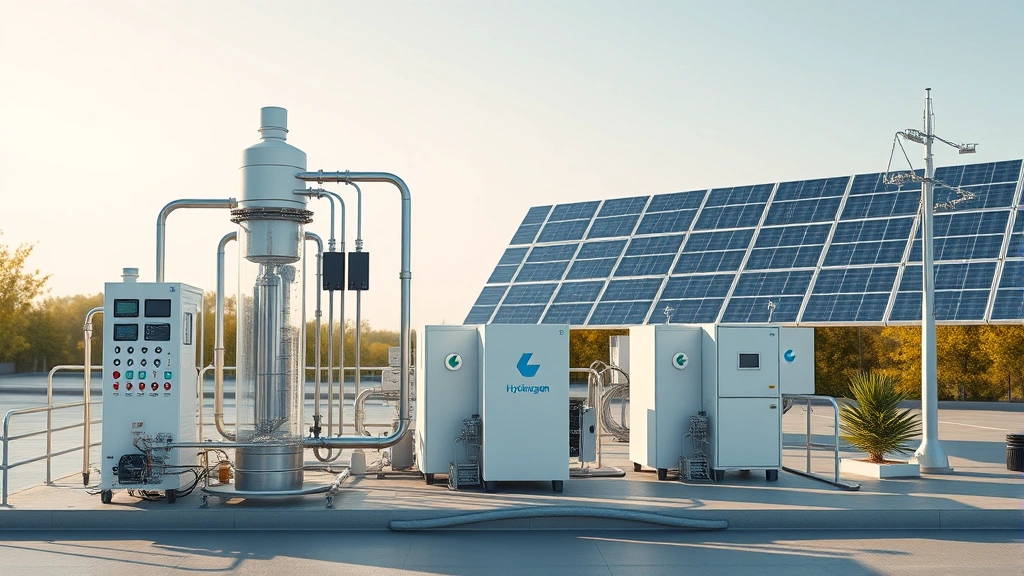
Hydrogen energy represents a particularly compelling application of ideal gas law understanding toward sustainability. When hydrogen gas combusts or reacts in fuel cells, it produces only water and energy. No carbon emissions, no methane leakage—only clean energy conversion. The latest insights from sustainability experts increasingly emphasize hydrogen’s role in decarbonizing heavy industry and transportation sectors.
The challenge lies in hydrogen production. Currently, approximately 95% of hydrogen derives from natural gas through steam reforming—a process that generates carbon dioxide. Sustainable hydrogen requires electrolysis powered by renewable electricity, splitting water molecules into hydrogen and oxygen. This approach aligns perfectly with ideal gas law physics while eliminating fossil fuel dependence.
Biogas and biomethane represent intermediate sustainability solutions. These gases, produced from organic waste decomposition or dedicated energy crops, are chemically identical to natural gas and follow identical ideal gas law principles. However, they represent renewable sources with carbon-neutral or carbon-negative lifecycle profiles when sustainably managed. Transitioning existing natural gas infrastructure to accommodate these alternatives leverages existing technology while improving environmental impact.
Carbon capture and storage technologies directly apply gas behavior principles to remove carbon dioxide from emissions streams or ambient air. These systems compress and cool gases to liquid states for permanent storage or utilization. While energy-intensive today, improving capture technology efficiency—guided by thermodynamic principles—could make this approach increasingly viable for emissions reduction.
Electric heating systems eliminate gas combustion entirely, instead converting renewable electricity directly to heat through resistance or heat pump technology. Heat pumps particularly exemplify sustainable gas-phase physics application—they move heat efficiently using refrigerant gases in thermodynamic cycles, achieving heating coefficients of performance exceeding 300% in ideal conditions.
Innovation in Clean Energy Technologies
Contemporary sustainability innovation increasingly focuses on replacing gas-based energy systems with electric alternatives powered by renewable sources. Solar photovoltaic technology converts sunlight directly to electricity without involving gas-phase processes. Wind turbines operate through mechanical energy conversion. Geothermal systems tap Earth’s internal heat. Battery technology stores electrical energy chemically rather than through gas compression.
Yet ideal gas law principles remain valuable even in renewable energy contexts. Geothermal power plants utilize steam—water in gaseous form—to drive turbines, directly applying thermodynamic principles. Enhanced geothermal systems deliberately create engineered reservoirs to expand this clean energy source. Ocean thermal energy conversion systems exploit temperature differences in seawater, utilizing gas-phase working fluids in thermodynamic cycles.
Industrial applications increasingly integrate renewable electricity with gas-phase chemistry. Green hydrogen production through renewable-powered electrolysis represents a frontier technology. Synthetic fuels created from captured carbon dioxide and renewable hydrogen could eventually replace fossil fuels in applications currently dependent on liquid energy carriers. These innovations transform ideal gas law applications from sustainability liabilities into assets.
The European Union’s Green Deal and similar global initiatives explicitly recognize that transitioning away from fossil gas requires systematic change across energy, heating, and industrial sectors. Building retrofits eliminate gas heating in favor of heat pumps. Industrial processes transition to electric furnaces powered by renewable electricity. Transportation electrifies, replacing combustion engines with electric motors.
Research institutions worldwide investigate advanced technologies applying gas physics toward sustainability. Supercritical carbon dioxide cycles offer potential efficiency improvements for renewable energy systems. Advanced refrigerants reduce environmental impact while maintaining thermodynamic performance. Aerosol technologies capture and utilize waste gases. Each innovation represents a step toward sustainability achieved through better understanding and application of gas behavior principles.
The EPA’s climate impact assessments increasingly emphasize the role of technological innovation in reducing emissions. Understanding fundamental physics like the ideal gas law enables engineers to design technologies that work with natural principles rather than against them, maximizing efficiency and minimizing environmental impact.
International climate research organizations, including the Intergovernmental Panel on Climate Change, recognize that achieving climate targets requires rapid deployment of clean energy technologies. These technologies, whether renewable electricity systems or clean hydrogen production, ultimately depend on sound physics and engineering rooted in principles like the ideal gas law.
The transition to sustainable energy represents not an abandonment of physics but rather its intelligent application toward environmental goals. By understanding how gases behave and how energy transforms, we design systems that work efficiently, produce minimal waste, and reduce our collective impact on the climate. This is how scientific insight becomes environmental action.
FAQ
Is the ideal gas law itself sustainable?
The ideal gas law is a mathematical principle describing gas behavior—it’s neither sustainable nor unsustainable in itself. However, applications of this principle directly impact sustainability. Using ideal gas law understanding to optimize energy efficiency improves sustainability; using it to burn fossil fuels more effectively merely delays necessary transitions away from carbon-intensive energy sources.
How does the ideal gas law apply to climate change?
Greenhouse gases follow ideal gas law principles. Understanding their behavior helps scientists model climate systems, predict warming scenarios, and design technologies to capture or reduce emissions. The law doesn’t cause climate change; rather, it provides the mathematical framework for understanding how gases contribute to climate forcing.
Can renewable energy systems utilize ideal gas law principles?
Absolutely. Geothermal power plants use steam in thermodynamic cycles. Hydrogen fuel cells involve gas reactions. Heat pump systems move heat using refrigerant gases. Wind turbines operate through fluid dynamics. Many renewable and clean energy technologies directly apply gas-phase physics principles while eliminating fossil fuel dependence.
What’s the sustainability advantage of natural gas over coal?
Natural gas produces approximately 50% fewer carbon dioxide emissions than coal per unit energy produced, due to its chemical composition and more efficient combustion. However, methane leakage throughout the natural gas supply chain substantially reduces this advantage. Neither represents a sustainable long-term energy source; both require transition to renewable alternatives.
How does understanding gas behavior improve energy efficiency?
Engineers apply thermodynamic principles derived from ideal gas law to optimize industrial processes, reduce waste heat, design more efficient turbines and compressors, and develop better energy storage systems. Each efficiency improvement reduces fuel consumption and associated emissions, directly advancing sustainability goals.
What role does hydrogen play in sustainable energy?
Hydrogen combustion or fuel cell reactions produce only water and energy—no carbon emissions. However, sustainable hydrogen requires production through renewable-powered electrolysis rather than natural gas steam reforming. Hydrogen represents a potential future fuel for hard-to-decarbonize sectors like aviation and heavy industry, utilizing ideal gas law principles for clean energy conversion.


