Eco-Friendly Tailgate Grills? Expert Insights on Sustainable Outdoor Cooking
Tailgating season brings excitement, community, and culinary adventure to parking lots across the country. Yet the environmental cost of traditional tailgate grilling often goes unexamined. From propane emissions to single-use charcoal briquettes, conventional grilling practices contribute measurably to carbon footprints and air quality degradation. This comprehensive guide explores how conscious consumers can enjoy tailgate season while embracing sustainable practices that protect our planet.
The tailgate gas grill represents one of the most popular outdoor cooking methods, yet it also exemplifies the environmental challenges modern consumers face. Propane, a fossil fuel byproduct, releases carbon dioxide and methane when burned. Traditional models lack efficiency features, waste heat, and often sit idle between uses. However, innovation in outdoor cooking technology now offers genuinely eco-conscious alternatives that don’t compromise on flavor, convenience, or the social experience that makes tailgating special.
Understanding the full lifecycle of tailgate grilling—from fuel sourcing to disposal—empowers us to make decisions aligned with environmental values. Whether you’re a weekend warrior or serious tailgate enthusiast, this expert analysis reveals how to grill responsibly.
Environmental Impact of Traditional Tailgate Gas Grills
The conventional propane-powered tailgate gas grill represents a significant contributor to outdoor recreation’s environmental footprint. Propane combustion releases approximately 5.3 pounds of carbon dioxide per gallon burned. For frequent tailgaters using 20-pound propane tanks multiple times monthly, annual emissions can easily exceed those of moderate driving habits.
Beyond carbon emissions, traditional grills create additional environmental concerns. Propane extraction and distribution require energy-intensive infrastructure. Leaking connections and valve failures release methane, a greenhouse gas 84 times more potent than carbon dioxide over a 20-year period. Improper tank disposal contaminates landfills, and the manufacturing process for conventional grill units generates substantial industrial waste.
Air quality degradation represents another critical concern. Propane burning releases nitrogen oxides and particulate matter that contribute to smog formation and respiratory health issues. Large tailgating events with dozens of propane grills operating simultaneously can measurably impact local air quality, particularly in enclosed or poorly ventilated stadium parking areas.
The inefficiency of standard tailgate gas grills compounds these problems. Most conventional models waste 40-50% of fuel energy through heat loss, poor insulation, and design flaws. Excess heat radiates into the atmosphere rather than cooking food, making traditional grills environmentally wasteful even before considering fuel sourcing.
Understanding these impacts is the first step toward change. Many tailgaters remain unaware that reducing your environmental footprint extends to recreational activities. By examining our tailgate cooking choices, we participate in meaningful climate action.
Sustainable Fuel Alternatives for Outdoor Cooking
Progressive manufacturers now offer propane alternatives that significantly reduce environmental impact. Renewable propane, derived from agricultural waste and animal fats, provides an identical cooking experience to conventional propane while reducing lifecycle carbon emissions by up to 70%. Several sustainable energy solutions now support renewable propane infrastructure development, making this option increasingly accessible at tailgate venues.
Biogas represents another compelling alternative. Produced through anaerobic digestion of organic waste, biogas can power specially designed grill systems. Some innovative tailgate events have begun providing biogas grilling stations, turning waste streams into cooking fuel while demonstrating circular economy principles to attendees.
Natural gas, while still fossil-fuel derived, produces approximately 25% fewer emissions than propane due to superior combustion efficiency. Portable natural gas canisters now enable tailgate use, though infrastructure access remains limited compared to propane availability. As green technology innovations expand, natural gas adoption for tailgating will likely increase.
Hybrid fuel systems represent the future frontier. Integrated grill units combining renewable propane with electric heating elements optimize efficiency while maintaining portability. These systems reduce fuel consumption by 35-40% compared to pure propane alternatives, offering practical sustainability without sacrificing performance.
Electric and Battery-Powered Grill Solutions
Electric tailgate grills have evolved dramatically over recent years. Modern battery-powered portable electric grills deliver consistent cooking temperatures while producing zero direct emissions. Advanced lithium-ion batteries enable 4-6 hours of cooking per charge—sufficient for most tailgate events. Overnight charging between events completes the sustainable cycle.
The environmental advantage of electric grilling depends entirely on electricity grid composition. In regions powered primarily by renewable energy sources, electric grills represent genuinely zero-emission cooking. Even in areas with mixed energy portfolios, electric grills produce 60-75% fewer lifecycle emissions than propane alternatives. As electrical grids continue transitioning toward renewables, this advantage grows substantially.
Induction-based tailgate grills represent the pinnacle of electric cooking efficiency. These systems heat cookware directly through magnetic induction, achieving 90% energy efficiency compared to 50-65% for traditional electric coils. The rapid heat-up time and precise temperature control appeal to serious cooks while minimizing energy waste.
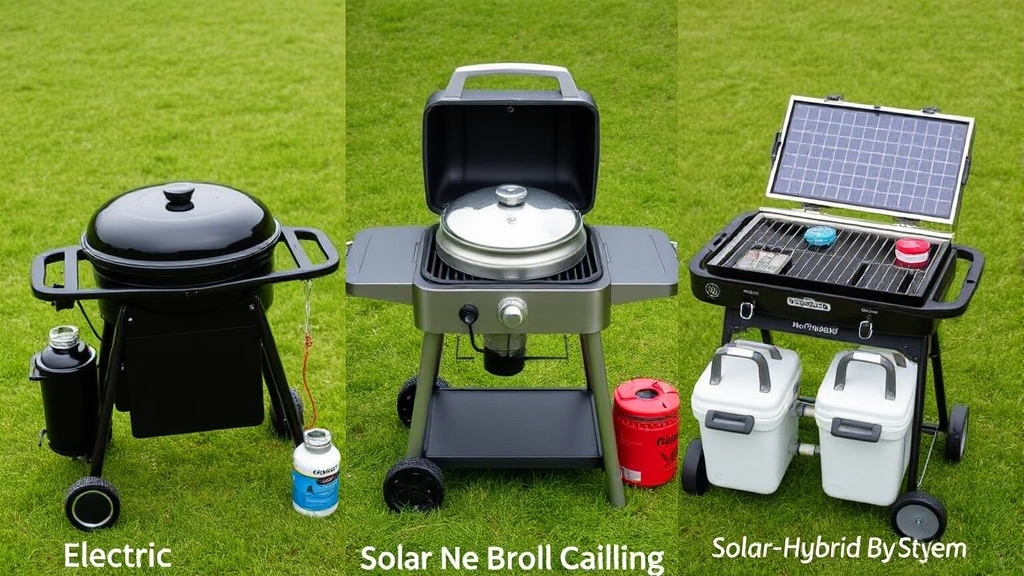
Portable electric grill technology now includes integrated solar charging capabilities. Hybrid units with built-in solar panels provide supplementary charging throughout the day, reducing grid dependency. While full-day solar charging remains impractical for heavy cooking loads, supplementary solar power meaningfully extends battery life and reduces overall energy consumption.
Weight and portability remain considerations with electric systems. Advanced models now weigh 25-35 pounds with integrated carrying handles, comparable to compact propane grills. Battery technology continues improving, with next-generation systems promising 50% greater capacity and 40% faster charging times within the next two years.
Charcoal and Biomass Grilling Considerations
Charcoal grilling presents a paradoxical sustainability profile. Hardwood charcoal, produced through controlled burning of sustainably harvested timber, qualifies as renewable when sourced responsibly. However, industrial charcoal production often involves deforestation and habitat destruction. Seeking certified sustainable charcoal brands remains essential for environmentally conscious tailgaters.
Biochar—charcoal produced from agricultural waste, nutshells, and sawmill byproducts—offers superior sustainability credentials. This emerging fuel source transforms waste streams into cooking fuel while sequestering carbon in the charcoal itself. When disposed properly, biochar actually improves soil health, creating a genuinely circular resource cycle. Several specialty outdoor retailers now stock biochar products specifically designed for portable grilling applications.
Briquette selection matters significantly. Compressed hardwood briquettes without chemical binders outperform charcoal briquettes containing petroleum-based adhesives and accelerants. Natural briquettes burn cleaner, produce superior flavor, and eliminate toxic chemical releases during cooking. The slight price premium reflects genuine environmental value.
Charcoal’s advantage over propane lies in its renewable sourcing potential and lower manufacturing emissions. Charcoal-based tailgate grills typically weigh more than gas alternatives, yet their longevity often exceeds gas models by 5-10 years, distributing manufacturing impacts across extended use periods. For tailgaters committed to sustainable practices, charcoal remains a legitimate option when sourced responsibly.
One significant disadvantage involves ash disposal. Charcoal ash cannot be composted or recycled like many organic materials. Responsible disposal requires municipal waste systems, eliminating the circular economy benefits charcoal otherwise provides. This limitation makes charcoal less ideal for frequent tailgaters seeking comprehensive sustainability.
Efficiency Features That Matter
Grill efficiency directly correlates with environmental impact. Well-designed tailgate grills minimize heat loss through superior insulation, sealed cooking chambers, and thermally efficient designs. Stainless steel construction with internal insulation reduces heat radiation by up to 45% compared to basic steel models.
Temperature control mechanisms deserve careful evaluation. Precise thermostats and adjustable burner configurations enable optimal fuel consumption for various cooking tasks. Grills lacking temperature precision waste fuel maintaining excessive heat. Conversely, efficient systems adjust fuel input precisely to match cooking requirements, reducing waste substantially.
Grill size optimization represents an underappreciated efficiency factor. Oversized grills waste fuel heating unused cooking space. Tailgate-specific compact models concentrate heat more efficiently, using 30-40% less fuel than full-size alternatives for equivalent cooking results. Matching grill capacity to typical tailgate party size enhances both efficiency and portability.
Lid design impacts efficiency significantly. Insulated lids with tight-sealing gaskets maintain cooking temperatures with minimal fuel input. Grills with transparent lids enable monitoring without opening, preventing heat loss from frequent lid lifting. Premium models incorporate heat deflectors and convection features that distribute heat evenly while minimizing fuel consumption.
Maintenance capabilities influence long-term efficiency. Grills featuring easily accessible cleaning ports and removable grates maintain peak performance across seasons. Regular maintenance preserves efficiency ratings, whereas poorly maintained grills experience 15-25% efficiency degradation annually. Choosing models designed for straightforward maintenance supports sustained environmental performance.
Portable Solar Grilling Technology
Solar-powered outdoor cooking represents the frontier of sustainable tailgate grilling. Portable solar grill systems combine photovoltaic panels with thermal mass cooking chambers, harnessing direct sunlight for cooking. Modern designs achieve temperatures exceeding 400°F, enabling genuine grilling rather than mere warming.
The environmental case for solar grilling is compelling. Zero operational emissions, zero fuel consumption, and complete energy independence create genuinely sustainable cooking. Solar grills function without batteries, grid connections, or fuel tanks, simplifying logistics while maximizing environmental benefit. For daytime tailgate events in sunny climates, solar represents an optimal choice.
Practical limitations currently restrict solar grill adoption. Cooking speed depends on solar intensity, making early morning or overcast-day cooking impractical. Thermal mass systems require 30-45 minutes of preheat time before cooking begins. Setup and breakdown involve managing panel orientation and thermal adjustments unfamiliar to conventional grillers. These factors limit solar grilling to specific circumstances rather than universal tailgate applications.
Hybrid solar-battery systems address solar limitations while maintaining sustainability. Integrated photovoltaic panels charge batteries throughout the day, enabling evening cooking with solar-harvested energy. These systems provide flexibility approaching traditional grills while maintaining renewable energy sourcing. Expect rapid innovation in this category as manufacturers recognize market demand for truly sustainable tailgate solutions.
Solar grill performance improves dramatically in southern latitudes with consistent sunshine. Tailgate events in Florida, Texas, and Arizona regions benefit most from solar technology. Northern tailgaters might utilize solar as supplementary charging for electric grills, optimizing overall system sustainability.
Materials and Manufacturing Sustainability
Grill manufacturing sustainability extends beyond operational fuel choices. Material sourcing, production processes, and end-of-life considerations shape true environmental impact. Conscientious manufacturers now prioritize sustainable material selection and ethical production practices.
Recycled steel and aluminum represent increasingly common grill construction materials. These materials require 95% less energy to produce compared to virgin metal extraction and processing. Grills manufactured from recycled materials deliver identical performance while dramatically reducing manufacturing carbon footprints. Premium brands now prominently feature recycled content specifications.
Stainless steel, while energy-intensive to produce, offers exceptional durability enabling 15-20 year lifespans. Extended product life distributes manufacturing impacts across decades of use, improving overall lifecycle sustainability. Conversely, low-cost models with 3-5 year lifespans generate greater manufacturing impact per year of use despite lower initial environmental cost.
Manufacturing location influences sustainability significantly. Domestic production reduces transportation emissions compared to overseas manufacturing requiring transoceanic shipping. Supporting manufacturers implementing renewable energy in production facilities further reduces environmental impact. Several premium outdoor cooking brands now operate carbon-neutral manufacturing facilities, providing transparency regarding production sustainability.
Packaging sustainability matters more than many consumers realize. Excessive packaging generates waste while increasing shipping weight and transportation emissions. Manufacturers prioritizing minimal, recyclable, or compostable packaging reduce overall environmental impact. Some innovative companies utilize mushroom-based packaging materials and cardboard from agricultural waste, exemplifying circular economy principles.
End-of-life considerations determine complete lifecycle sustainability. Grills designed for disassembly enable material separation and recycling. Steel components, aluminum parts, and other materials can return to respective recycling streams rather than landfills. Manufacturers offering recycling programs or take-back initiatives demonstrate genuine sustainability commitment beyond greenwashing.
FAQ
Are electric tailgate grills as effective as propane for cooking?
Modern electric grills deliver comparable cooking performance to propane alternatives. Advanced induction and resistive heating elements achieve and maintain temperatures necessary for proper grilling. The primary difference involves heating speed—electric systems may require slightly longer preheat times—rather than cooking quality. Professional chefs increasingly utilize electric grills for tailgate catering, validating performance parity with traditional propane systems.
What’s the real environmental cost of renewable propane?
Renewable propane, produced from agricultural waste and animal fats, reduces lifecycle emissions by 60-75% compared to conventional propane. However, production infrastructure remains limited, potentially involving transportation that adds emissions. Overall, renewable propane represents a significant improvement over fossil-fuel propane while remaining less sustainable than electric or solar alternatives. As production scales, renewable propane’s environmental advantages will increase further.
Can I use my existing propane grill with renewable propane?
Yes, most propane grills function identically with renewable propane. Equipment compatibility remains universal since renewable propane shares identical chemical properties with conventional propane. The transition involves sourcing renewable propane through specialty retailers rather than standard fuel suppliers. Some regions lack renewable propane availability, requiring special ordering or longer lead times.
How long do battery charges last for electric tailgate grills?
Modern battery-powered electric grills typically sustain 4-6 hours of continuous cooking per charge, adequate for most tailgate events lasting 3-4 hours. Actual duration depends on cooking temperature, ambient conditions, and battery capacity. Fast-charging technology now enables 80% recharge in 2-3 hours, supporting longer events with mid-event charging. Next-generation batteries will extend this duration to 8-10 hours within two years.
Is charcoal grilling actually sustainable?
Charcoal sustainability depends entirely on sourcing practices. Responsibly harvested hardwood charcoal and biochar from agricultural waste represent genuinely sustainable options. Conversely, charcoal from deforested regions or incorporating chemical additives creates environmental harm exceeding propane grilling. Always seek certifications from organizations like Forest Stewardship Council verifying sustainable sourcing before purchasing charcoal products.
What’s the payback period for investing in premium eco-friendly grills?
Premium sustainable grills typically cost 40-80% more than basic propane models, yet operational savings on fuel quickly offset initial investment. Electric grills save $200-400 annually on fuel costs. Extended durability of quality models—often 15+ years versus 5-8 years for budget alternatives—further improves financial returns. When calculating total cost of ownership across product lifespan, premium sustainable grills often cost less than repeatedly replacing cheaper models.


