Is Xenon Gas Sustainable? A Scientific Review
Xenon gas represents a fascinating intersection of advanced technology and environmental responsibility. As a rare noble gas increasingly utilized in lighting, propulsion systems, and medical applications, understanding xenon’s sustainability profile has become crucial for industries pursuing sustainable energy solutions. This comprehensive scientific review examines xenon’s extraction, applications, environmental impact, and role in the broader context of green technology innovations.
The sustainability question surrounding xenon gas requires nuanced analysis. Unlike fossil fuels, xenon is neither consumed nor depleted in most applications—it functions as a catalyst or medium that can be recycled and reused. However, the extraction process, energy requirements for production, and end-of-life considerations present legitimate environmental concerns that demand thorough scientific examination.
What Is Xenon Gas and Where Does It Come From?
Xenon is a colorless, odorless, and tasteless noble gas representing approximately 0.0000087% of Earth’s atmosphere. Despite its rarity in the air, xenon exists abundantly in atmospheric reservoirs, making it technically renewable through fractional distillation of liquid air. Unlike minerals extracted from finite reserves, atmospheric xenon can be continuously harvested, positioning it differently from conventional natural resources.
The primary source of xenon is atmospheric air separation, where large industrial facilities liquefy air and separate its components through fractional distillation. This process isolates nitrogen, oxygen, argon, neon, helium, and xenon in descending order of abundance. Xenon, being the rarest component, requires sophisticated separation technology and represents the final stage of the distillation process. Additionally, xenon is recovered as a byproduct from nuclear reactor operations and medical imaging facilities, providing secondary sources that reduce reliance on atmospheric extraction.
Understanding xenon’s origins is essential for evaluating its sustainability profile. Unlike rare earth elements requiring destructive mining operations, xenon extraction from the atmosphere produces minimal ecological disruption. The gas exists in the air we breathe, and separation processes don’t consume or permanently alter atmospheric composition. This fundamental characteristic distinguishes xenon from many industrial materials and positions it favorably within sustainability assessments.
Extraction and Production Environmental Impact
While xenon’s atmospheric availability seems advantageous, the extraction process demands significant energy input. Air separation plants operate continuously, liquefying air at temperatures below -190°C and maintaining complex refrigeration systems. The energy requirements for cryogenic separation represent the primary environmental cost of xenon production, typically ranging from 0.4 to 0.6 kilowatt-hours per cubic meter of separated air.
The carbon footprint of xenon extraction depends critically on the energy grid’s composition. Facilities powered by renewable energy sources demonstrate substantially lower environmental impacts compared to those relying on fossil fuels. According to research from the U.S. Environmental Protection Agency, industrial gas production represents approximately 1-2% of global industrial energy consumption. Transitioning air separation plants to renewable energy sources would dramatically improve xenon’s sustainability credentials.
Recovery of xenon from secondary sources—particularly nuclear reactor operations and medical imaging procedures—bypasses atmospheric extraction entirely. This recycling approach eliminates the energy costs associated with cryogenic air separation, representing a significantly more sustainable pathway. Medical facilities using xenon-based imaging systems increasingly implement capture and recycling protocols, recovering approximately 90% of xenon gas for reuse. This circular approach transforms xenon from a consumable resource into a managed material asset.
Transportation of liquefied xenon introduces additional environmental considerations. The gas must be maintained in specialized cryogenic containers, requiring refrigeration energy throughout distribution chains. However, xenon’s high value-to-weight ratio minimizes transportation impacts compared to bulk industrial chemicals. A relatively small volume of xenon serves numerous applications, reducing logistics-related emissions.
Major Applications of Xenon
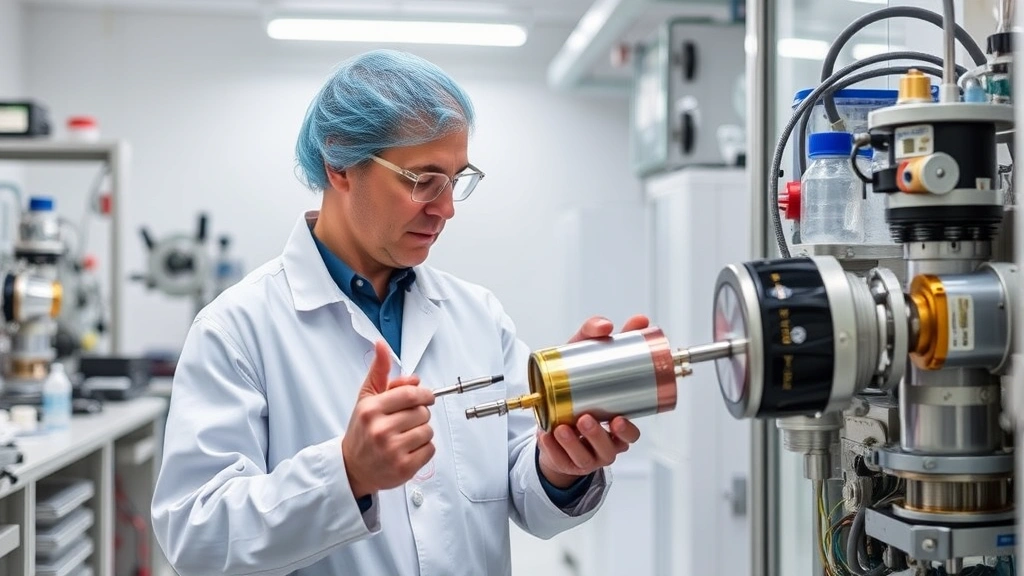
Xenon’s unique properties—including high atomic number, inert chemical nature, and exceptional light-emission characteristics—enable diverse technological applications. Understanding these uses illuminates xenon’s role in modern sustainability efforts and technological advancement.
Lighting Applications: Xenon excels in high-intensity discharge (HID) lamps used in automotive headlights, aircraft lighting, and cinema projectors. Xenon headlights provide superior illumination compared to halogen alternatives, improving visibility and road safety. While xenon lamps contain mercury (a separate environmental concern), the xenon gas itself remains inert and non-toxic. These lamps also demonstrate superior energy efficiency compared to older lighting technologies, contributing to energy efficiency improvements in transportation sectors.
Propulsion Systems: Ion propulsion systems for spacecraft utilize xenon as propellant, offering exceptional specific impulse and fuel efficiency for deep-space missions. NASA’s Dawn spacecraft and numerous satellite programs depend on xenon-based ion drives. These applications represent the pinnacle of resource efficiency—a single kilogram of xenon can propel spacecraft across billions of kilometers, demonstrating unparalleled efficiency metrics. Electric propulsion technologies like xenon ion drives represent sustainable alternatives to chemical rocket fuels.
Medical and Imaging: Xenon serves critical roles in medical imaging, particularly in computed tomography (CT) and as an anesthetic agent. The gas’s high atomic number provides excellent X-ray contrast without the radiation exposure of traditional contrast agents. Medical applications typically involve contained systems with high recovery rates, making them relatively sustainable when proper recycling infrastructure exists.
Industrial and Research: Xenon functions in semiconductor manufacturing, nuclear reactor control, and advanced research applications. In semiconductor fabrication, xenon enables precision etching processes essential for modern electronics. These applications require controlled quantities within contained systems, minimizing environmental release.
Recyclability and Circular Economy Potential
The most compelling sustainability argument for xenon centers on its recyclability and potential integration into circular economy models. Unlike combustible fuels that transform into atmospheric carbon dioxide, xenon remains chemically stable throughout its operational life. This fundamental property enables indefinite recycling without degradation or quality loss.
Medical facilities implementing xenon capture systems recover 85-95% of xenon following imaging procedures, returning it to production pipelines for reuse. Aerospace industries similarly maintain rigorous xenon recovery protocols for ion propulsion systems, recognizing both economic value and environmental responsibility. These established recycling practices demonstrate technical feasibility and economic incentive alignment—recovering expensive xenon improves operational economics while reducing environmental impact.
Industrial lighting applications present greater recovery challenges. Xenon lamps are typically discarded with other electronic waste rather than processed for xenon recovery. Establishing dedicated collection and processing infrastructure for end-of-life xenon lamps could dramatically improve sustainability metrics. Progressive manufacturers now design xenon lamps with disassembly in mind, facilitating xenon capture during recycling processes.
The circular economy potential of xenon extends beyond simple recovery. As technology advances, xenon applications continue expanding while efficiency improves. Next-generation xenon lamps consume less gas while providing equivalent illumination. Ion propulsion systems achieve higher specific impulse with reduced propellant requirements. These efficiency improvements reduce overall xenon demand while maintaining functional performance, representing genuine sustainability progress.
Comparing Xenon to Alternative Technologies
Assessing xenon’s sustainability requires contextual comparison with alternative technologies serving similar functions. This comparative analysis reveals xenon’s relative environmental performance across different applications.
Lighting Alternatives: LED technology has largely superseded xenon lamps in consumer applications, offering superior energy efficiency and longer operational lifespans. However, xenon remains superior in specific high-intensity applications where LED technology cannot match performance requirements. Automotive xenon headlights provide illumination intensity and beam characteristics unmatched by LED alternatives in certain vehicle designs. Cinema projection systems still rely on xenon lamps for brightness and color reproduction unattainable through current LED technology. Rather than viewing xenon and LED as competing technologies, they serve complementary roles within optimized lighting ecosystems.
Propulsion Alternatives: Chemical rocket propulsion represents the traditional alternative to xenon ion drives. Conventional rockets consume vast quantities of fuel—often tens of thousands of kilograms—for single missions. Xenon ion propulsion achieves equivalent mission objectives with kilogram-scale propellant quantities. From a sustainability perspective, xenon ion drives demonstrate dramatically superior efficiency, reducing launch requirements and associated environmental impacts. NASA’s ion propulsion research confirms that xenon-based systems represent the most efficient propulsion technology currently operational.
Medical Imaging Alternatives: Traditional CT contrast agents and other imaging technologies present varying environmental profiles. Xenon offers advantages as a non-toxic, non-radioactive contrast medium compared to iodine-based agents requiring careful disposal protocols. The recovery and recycling potential of xenon makes it environmentally preferable to single-use contrast agents that enter waste streams.
Across all major applications, xenon demonstrates competitive or superior sustainability performance compared to established alternatives. The critical factor determining overall sustainability involves implementation of proper recycling infrastructure and operational protocols.
Future Sustainability Outlook
The sustainability trajectory of xenon gas depends on several converging technological and policy developments. Emerging trends suggest increasingly favorable environmental profiles as industries optimize xenon utilization and implement circular economy principles.
Renewable Energy Integration: As global energy systems transition toward renewable sources, the carbon footprint of xenon extraction will decline proportionally. Air separation facilities powered by solar, wind, or hydroelectric energy produce xenon with minimal greenhouse gas emissions. European facilities increasingly utilize renewable energy for industrial gas production, establishing models for global adoption. This energy transition will fundamentally improve xenon’s sustainability metrics independent of technological innovation.
Enhanced Recovery Systems: Developing technologies for improved xenon recovery from end-of-life products promise to dramatically increase recycling rates. Advanced gas capture systems, improved lamp designs facilitating disassembly, and regulatory frameworks incentivizing recovery will transform xenon from a linear-consumption model toward true circular economy operation. Research institutions are developing cost-effective recovery methods applicable to diverse industrial contexts.
Efficiency Improvements: Continued innovation in xenon applications reduces per-unit gas requirements while maintaining or improving performance. Next-generation ion propulsion systems achieve higher specific impulse with reduced xenon consumption. Advanced lighting designs provide equivalent illumination with smaller xenon quantities. These efficiency gains reduce overall environmental impact across the product lifecycle.
Regulatory Framework Development: Emerging environmental regulations increasingly address rare gas management and recovery requirements. The European Union’s Circular Economy Action Plan includes provisions for noble gas recovery and recycling. Similar regulatory frameworks in other jurisdictions will incentivize development of recovery infrastructure and sustainable operational practices. Policy support accelerates market adoption of sustainable xenon management practices.
Atmospheric Monitoring: Continuous atmospheric monitoring confirms that current xenon extraction rates have negligible impact on atmospheric composition. Scientific research from institutions like the National Oceanic and Atmospheric Administration demonstrates atmospheric xenon abundance remains stable despite industrial extraction. This stability indicates that xenon’s renewable nature—its continuous atmospheric presence—genuinely supports sustainable long-term utilization.
Long-term sustainability assessments indicate xenon can serve as a model material for sustainable industrial practices. Its atmospheric abundance, recyclability, non-toxic properties, and efficiency advantages position xenon favorably within sustainable technology portfolios. However, realizing this potential requires intentional implementation of circular economy principles, renewable energy integration, and regulatory support.
Understanding how to reduce environmental footprint in industrial contexts increasingly involves optimizing material choices like xenon. By selecting materials with superior recyclability and efficiency characteristics, industries can meaningfully reduce environmental impact while maintaining technological performance.
FAQ
Is xenon gas toxic or harmful to the environment?
Xenon is chemically inert and non-toxic. As a noble gas, it does not participate in atmospheric chemistry or create environmental hazards when released. Unlike volatile organic compounds or greenhouse gases, xenon poses no direct environmental toxicity. The environmental concerns surrounding xenon relate to extraction energy requirements and end-of-life management rather than intrinsic chemical hazards.
Can xenon gas be recycled indefinitely?
Yes, xenon’s chemical inertness enables indefinite recycling without degradation. The gas remains chemically unchanged through multiple use cycles, supporting true circular economy models. Medical and aerospace applications demonstrate recovery rates exceeding 85%, confirming technical feasibility. Expanding recycling infrastructure across all xenon applications would enable near-complete material circularity.
How does xenon extraction impact atmospheric composition?
Current xenon extraction rates have negligible atmospheric impact. Xenon represents only 0.0000087% of atmospheric composition, and industrial extraction removes quantities too small to measurably alter atmospheric abundance. Continuous atmospheric replenishment through natural processes maintains xenon concentrations despite human utilization. Scientific monitoring confirms atmospheric stability regarding xenon levels.
What makes xenon more sustainable than alternative technologies?
Xenon’s sustainability advantages include: chemical inertness enabling indefinite recycling, atmospheric abundance preventing resource depletion, high efficiency in propulsion applications reducing fuel requirements, and non-toxic properties eliminating hazardous waste concerns. When compared to chemical rocket fuels or single-use contrast agents, xenon demonstrates superior environmental profiles across multiple metrics.
Are there any environmental concerns with xenon production?
The primary environmental concern involves energy requirements for cryogenic air separation. Facilities powered by fossil fuels generate greenhouse gas emissions proportional to electricity consumption. However, this concern diminishes as energy grids transition toward renewable sources. Secondary xenon recovery from medical and nuclear applications bypasses extraction entirely, representing sustainable alternatives. Proper end-of-life management and recycling infrastructure completion would address remaining sustainability considerations.
What is the future of xenon in sustainable technology?
Xenon’s future in sustainability appears increasingly positive. Expanding renewable energy integration for production facilities, developing enhanced recovery technologies, implementing regulatory frameworks supporting circular economy practices, and continued efficiency improvements across applications all contribute to improving sustainability profiles. Xenon exemplifies how strategic material selection—emphasizing recyclability, efficiency, and non-toxicity—supports sustainable industrial development.