4Runner Gas Mileage: Expert Efficiency Tips for Better Fuel Economy
The Toyota 4Runner is a legendary SUV known for its rugged capability and off-road prowess, but like many full-size vehicles, it’s not known for exceptional fuel efficiency. Most 4Runner models achieve between 16-22 miles per gallon depending on the generation, engine size, and driving conditions. For owners looking to maximize their investment and reduce their environmental footprint, understanding how to optimize 4Runner gas mileage becomes essential. This comprehensive guide explores practical strategies to improve fuel economy without sacrificing the vehicle’s legendary performance.
Whether you’re commuting daily, embarking on weekend adventures, or using your 4Runner for work, fuel costs represent a significant ongoing expense. By implementing proven efficiency techniques, regular maintenance practices, and mindful driving habits, you can meaningfully extend the distance your 4Runner travels on each gallon. These improvements not only benefit your wallet but also contribute to reduced emissions and a smaller environmental impact—aligning with broader sustainability principles that many vehicle owners increasingly value.
Understanding Your 4Runner’s Fuel Consumption Baseline
Before implementing efficiency improvements, it’s crucial to establish your current fuel consumption baseline. Different 4Runner generations and engine options deliver varying efficiency levels. Fifth-generation 4Runners (2010-present) with the 4.0L V6 engine typically achieve 18-22 mpg on highways and 16-18 mpg in city driving. Earlier generations with larger engines or different transmissions may see lower numbers, while newer models with advanced technologies show incremental improvements.
To calculate your actual fuel economy, fill your tank completely, note the odometer reading, drive normally until you need fuel again, then divide the miles traveled by the gallons required to refill. Track this over several fill-ups to identify patterns and establish a reliable baseline. Many modern 4Runners display real-time fuel economy through their onboard computer systems, providing immediate feedback on driving efficiency. Understanding whether your vehicle is performing within manufacturer specifications helps identify potential mechanical issues that may be dragging down fuel economy.
The EPA estimates for 4Runners serve as benchmarks, but real-world results vary based on driving patterns, terrain, climate, and vehicle condition. Aggressive driving, frequent acceleration, and highway speeds above 65 mph significantly reduce efficiency. Cold weather operation also decreases fuel economy by 10-20% until the engine reaches optimal temperature. By establishing your baseline, you create a measurable target for improvement.

Tire Maintenance and Pressure Optimization
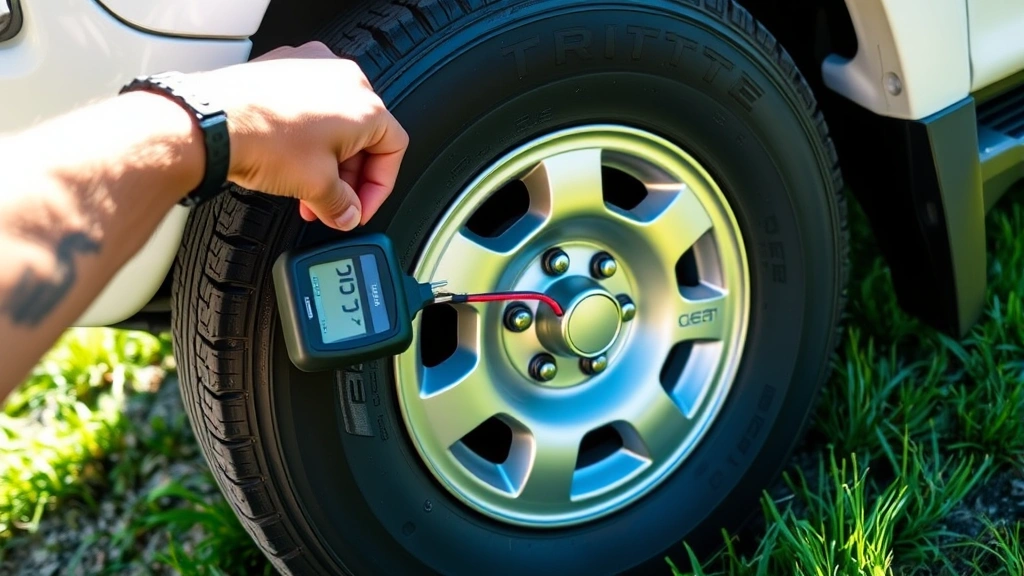
Tire condition represents one of the most impactful yet frequently overlooked factors affecting 4Runner gas mileage. Underinflated tires create increased rolling resistance, forcing the engine to work harder and consume more fuel. The EPA estimates that every 1 PSI drop in tire pressure reduces fuel economy by approximately 0.2%. For a 4Runner with four tires, this compounds quickly.
Check your 4Runner’s recommended tire pressure on the driver’s door jamb placard or in the owner’s manual—typically 32-35 PSI for most models. Inspect tire pressure monthly, preferably when tires are cold (before driving or at least three hours after driving) for the most accurate reading. Overinflation, while less common than underinflation, can also negatively affect fuel economy and tire wear patterns.
Beyond pressure, tire selection significantly influences efficiency. All-terrain tires, popular for 4Runner owners, typically have more aggressive tread patterns and slightly higher rolling resistance compared to highway-focused tires. If most of your driving occurs on paved roads, consider highway-terrain tires for improved fuel economy. Quality tire maintenance including rotation every 5,000-7,000 miles and alignment checks prevents uneven wear that increases drag.
Tire condition assessment should include visual inspection for uneven wear patterns, which indicate alignment issues or suspension problems. Properly inflated, well-aligned tires not only improve fuel economy but also enhance safety and extend tire lifespan, delivering multiple benefits simultaneously.
Engine Performance and Regular Maintenance
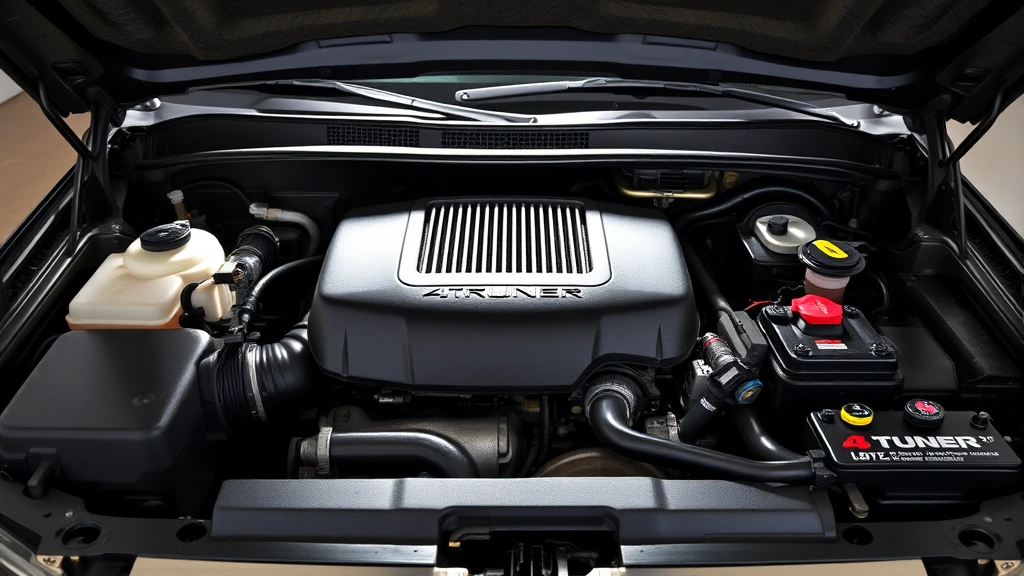
A well-maintained engine operates efficiently, directly impacting fuel consumption. Regular maintenance following your 4Runner’s service schedule—typically outlined in the owner’s manual—ensures optimal performance. Oil changes using the manufacturer-recommended grade and interval keep engine components properly lubricated, reducing internal friction and improving efficiency.
Air filter replacement deserves particular attention. A dirty or clogged air filter restricts oxygen flow to the engine, forcing it to run rich (excess fuel relative to air), reducing fuel economy. Replace your air filter every 15,000-30,000 miles depending on driving conditions, or sooner if you frequently drive in dusty environments. Similarly, cabin air filters should be inspected and replaced as needed to ensure proper HVAC operation.
Spark plugs in modern 4Runners typically last 30,000-100,000 miles depending on type, but worn plugs increase fuel consumption. When due for replacement, use quality components that support efficient combustion. Fuel injector cleaning, performed professionally or using quality fuel system cleaners, removes carbon deposits that accumulate over time and degrade efficiency.
Engine timing and fuel delivery systems require precise calibration for optimal efficiency. If your check engine light illuminates, address the underlying issue promptly—even minor sensor malfunctions can increase fuel consumption by 10-20%. Diagnostic scans reveal problems ranging from oxygen sensor failures to thermostat issues, all of which impact fuel economy.
Driving Habits That Maximize Efficiency
Driver behavior fundamentally influences fuel consumption. Aggressive acceleration and hard braking waste fuel and reduce efficiency by 10-40% depending on severity. Instead, accelerate smoothly and gradually, allowing the engine to reach optimal efficiency. Anticipate traffic conditions ahead, enabling gradual deceleration rather than emergency braking.
Maintain consistent speeds, particularly on highways. Speeds above 50 mph increase aerodynamic drag exponentially—traveling at 70 mph versus 55 mph reduces fuel economy by approximately 15-20%. While highway driving isn’t always flexible, when possible, maintaining moderate speeds significantly improves overall efficiency. Cruise control on flat highways helps maintain consistent speed without the micro-adjustments that reduce economy.
Minimize idle time, which consumes fuel while producing zero forward motion. Modern 4Runners don’t require lengthy warm-up periods; drive gently after starting for a few seconds. Avoid excessive idling while waiting in drive-throughs or parking lots. Plan efficient routes combining multiple errands into single trips, reducing overall mileage and fuel consumption.
Cold starts consume extra fuel until the engine reaches operating temperature. Combining trips into fewer, longer journeys allows the engine to maintain efficiency throughout the drive. Short trips of a few miles, where the engine never fully warms, consume disproportionate fuel relative to distance traveled.
Weight Reduction and Aerodynamic Improvements
Vehicle weight directly affects fuel consumption—every 100 pounds of additional weight reduces fuel economy by approximately 1-2%. While a 4Runner’s substantial mass is integral to its capability, removing unnecessary items from cargo areas, roof racks, and interior storage reduces weight without compromising functionality.
Remove roof racks and cargo carriers when not in use; they increase aerodynamic drag and reduce fuel economy by 5-15% depending on design and speed. If permanent roof racks are necessary, choose low-profile designs that minimize wind resistance. Avoid carrying heavy items unnecessarily—every pound counts when optimizing fuel economy.
Aerodynamic improvements offer modest but measurable gains. Ensuring your 4Runner’s undercarriage covers are intact and properly fitted reduces drag. Avoid aftermarket body modifications that increase frontal area or create turbulence. While many 4Runner owners appreciate aggressive styling modifications, they often compromise efficiency.
Towing significantly impacts fuel economy, reducing it by 10-25% depending on trailer weight and aerodynamics. If you tow frequently, proper trailer selection—choosing lighter options when possible and ensuring aerodynamic design—minimizes efficiency loss. Distribute cargo weight evenly throughout the vehicle to maintain proper suspension geometry and handling characteristics.
Technology and Fuel Monitoring Systems
Modern 4Runners include onboard computer systems displaying real-time and average fuel economy. Use these tools actively to identify driving patterns that reduce efficiency. Many vehicles show instantaneous mpg, allowing immediate feedback on acceleration, braking, and speed choices. This real-time data enables quick adjustments to optimize driving behavior.
Advanced fuel monitoring systems provide trip-specific economy data, helping identify routes, times, or conditions associated with poor efficiency. If your commute shows consistently lower economy than other driving, investigate factors like traffic congestion, hills, or speed variations. Some drivers use smartphone apps or aftermarket OBD-II scanners to access detailed engine data and identify efficiency issues.
Hybrid and plug-in hybrid technologies represent alternatives for those prioritizing extreme efficiency. While traditional 4Runners aren’t currently available in hybrid form, understanding advantages of electric vehicles and hybrid technology helps contextualize fuel economy discussions. Future 4Runner generations may incorporate electrification to improve efficiency while maintaining capability.
Consider upgrading to a vehicle equipped with advanced transmission technology if replacing your 4Runner. Newer eight and ten-speed automatic transmissions optimize gear selection across driving conditions, improving efficiency compared to older five and six-speed units.
Fuel Quality and Engine Efficiency
Fuel quality directly affects engine efficiency and longevity. Premium gasoline contains detergents and additives that keep fuel injectors clean and fuel systems functioning optimally. While most 4Runners run adequately on regular unleaded, using quality fuel from reputable stations reduces carbon deposits and maintains efficiency.
Fuel system cleaners, used according to manufacturer directions, remove carbon buildup in injectors and combustion chambers. Over time, deposits accumulate and reduce efficiency by 5-10%. Professional fuel system cleaning or quality aftermarket products help restore efficiency to like-new levels. Many mechanics recommend fuel system cleaning every 30,000-50,000 miles for vehicles showing declining economy.
Ethanol content in gasoline affects fuel economy—pure gasoline delivers approximately 3-5% better mileage than E10 (10% ethanol blend) due to ethanol’s lower energy content. In regions where E15 or higher ethanol blends are available, sticking with E10 or pure gasoline optimizes economy. Check your owner’s manual for your 4Runner’s approved fuel specifications.
Fuel additives marketed for efficiency improvement show variable results. Understanding fuel composition and energy content helps evaluate whether premium fuel or additives justify their cost relative to efficiency gains. Generally, maintaining proper maintenance and driving habits delivers better returns than premium fuel alone.
Comparing 4Runner to Alternative Vehicles
For those willing to reconsider vehicle choice, understanding fuel economy across alternatives provides perspective. Midsize SUVs like the Honda Pilot and Mazda CX-9 achieve 23-28 mpg highway, meaningfully better than 4Runner’s 21-22 mpg. Compact SUVs deliver even greater efficiency, though with reduced cargo space and capability. Crossovers prioritizing efficiency over off-road capability achieve 28-35 mpg highway.
Truck-based SUVs similar to the 4Runner—including Chevy Tahoe, Ford Expedition, and Nissan Armada—show comparable fuel economy in the 18-22 mpg range. Luxury versions of these vehicles often include efficiency technologies like cylinder deactivation and turbocharging that improve economy. If replacing your 4Runner, comparing efficiency across similar vehicles helps identify options better aligned with fuel economy priorities.
The advantages of electric vehicles for daily commuting are increasingly compelling. Full-size electric SUVs now offer three-row seating and towing capability, though at premium pricing. Plug-in hybrids provide compromise solutions, delivering electric efficiency for daily driving while maintaining fuel capability for longer trips.
For those committed to the 4Runner platform, accepting its fuel economy limitations while implementing efficiency improvements represents a practical approach. The vehicle’s legendary reliability, off-road capability, and strong resale value often justify its fuel consumption for owners prioritizing these factors. Visiting SustainWise Hub Blog provides additional perspectives on sustainable vehicle choices and efficiency strategies.
Calculating the total cost of ownership—including fuel, maintenance, insurance, and depreciation—provides clarity on whether the 4Runner’s efficiency trade-offs align with your priorities and budget. Some drivers find that improving their current 4Runner’s efficiency through the strategies outlined here delivers better value than replacing the vehicle.
Frequently Asked Questions
What is the average gas mileage for a Toyota 4Runner?
Most 4Runner models achieve 16-22 mpg depending on generation, engine size, and driving conditions. Fifth-generation 4Runners typically achieve 18-22 mpg highway and 16-18 mpg city driving. Real-world results vary based on individual driving habits, terrain, and maintenance conditions.
Can premium fuel improve 4Runner fuel economy?
Premium fuel provides modest improvements—typically 1-3% better economy due to enhanced detergents and cleaner combustion. For 4Runners designed to run on regular unleaded (confirmed in owner’s manual), premium fuel’s cost usually exceeds efficiency gains. Using quality regular fuel from reputable stations delivers better value.
How much does proper tire pressure affect fuel economy?
Underinflated tires reduce fuel economy by approximately 0.2% per PSI below recommended pressure. Maintaining correct pressure per manufacturer specifications can improve fuel economy by 3-5%, representing meaningful savings over time. Check tire pressure monthly for optimal results.
Does removing the roof rack improve gas mileage?
Yes, roof racks increase aerodynamic drag and reduce fuel economy by 5-15% depending on design and driving speeds. Removing racks when not in use provides measurable efficiency improvements. If permanent racks are necessary, low-profile designs minimize impact.
What maintenance items most impact fuel economy?
Air filter replacement, spark plug maintenance, fuel injector cleaning, and engine oil changes deliver the greatest efficiency impacts. A dirty air filter alone can reduce economy by 10%, while worn spark plugs increase consumption by similar amounts. Following manufacturer maintenance schedules ensures optimal efficiency.
Can driving habits really make a significant difference?
Yes, driving behavior dramatically affects fuel economy. Aggressive acceleration, excessive speeding, and rapid braking reduce economy by 10-40% depending on severity. Smooth acceleration, moderate speeds, and anticipatory driving can improve economy by 15-30% compared to aggressive driving patterns.
Is it worth upgrading to a more fuel-efficient vehicle?
This depends on individual priorities and usage patterns. For those driving primarily on highways and prioritizing fuel economy, switching to a more efficient vehicle may justify the cost. For off-road enthusiasts or those valuing the 4Runner’s specific capabilities, implementing efficiency improvements in the current vehicle often delivers better value.
How does cold weather affect 4Runner fuel economy?
Cold weather reduces fuel economy by 10-20% until the engine reaches optimal operating temperature. Short trips in winter consume disproportionate fuel. Combining errands into longer trips and allowing adequate warm-up time (gentle driving for several minutes) minimizes cold-weather efficiency loss.


