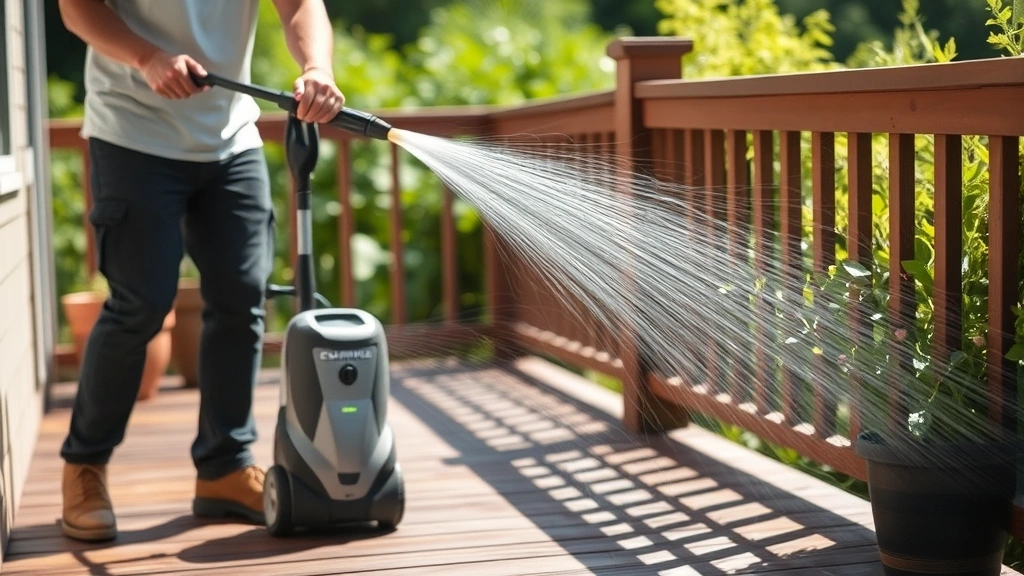
Eco-Friendly Pressure Washers: Finding the Best Gas Pressure Washer for Sustainable Cleaning
Pressure washers are essential tools for maintaining outdoor spaces, from driveways to patios to commercial facilities. However, traditional gas-powered models come with significant environmental concerns—carbon emissions, fuel consumption, and noise pollution. The good news? The market has evolved dramatically, offering homeowners and businesses genuine eco-friendly alternatives without sacrificing cleaning power. Whether you’re committed to reducing your environmental footprint or simply seeking more efficient cleaning solutions, understanding your pressure washer options is crucial for making a sustainable choice.
This comprehensive guide explores the landscape of pressure washing technology, examining why the “best gas pressure washer” narrative is shifting toward greener alternatives. We’ll investigate electric models, battery-powered options, and hybrid solutions that deliver professional-grade performance while aligning with environmental responsibility. By the end, you’ll understand how to choose a pressure washer that balances cleaning effectiveness with ecological consciousness.
Why Traditional Gas Pressure Washers Harm the Environment
Gas-powered pressure washers, despite their popularity and power, present substantial environmental challenges that extend beyond the obvious emissions. A single gas pressure washer produces approximately 80-90 decibels of noise—comparable to a lawnmower—creating noise pollution that affects neighborhoods and wildlife. More critically, these machines emit significant quantities of carbon dioxide and volatile organic compounds (VOCs), contributing directly to climate change and air quality degradation.
According to research from the EPA on volatile organic compounds, small gasoline engines like those in pressure washers are disproportionately polluting relative to their size. A single gas pressure washer can produce as much smog-forming pollution as driving a new car for several weeks. Additionally, these machines consume fossil fuels, contributing to resource depletion and petroleum dependency. Fuel spills during refueling and maintenance also pose groundwater contamination risks.
The environmental impact extends to manufacturing and disposal. Gas engines require more complex components, increasing production waste and recycling challenges. When considering whether natural gas is renewable, we must acknowledge that fossil fuel-dependent equipment perpetuates unsustainable energy systems. For environmentally conscious consumers, transitioning away from gas-powered tools represents a meaningful step toward reducing personal environmental impact.
Electric Pressure Washers: The Sustainable Alternative
Electric pressure washers represent the most straightforward eco-friendly upgrade from gas models. These machines plug directly into standard electrical outlets, eliminating emissions at the point of use. When powered by renewable energy sources or increasingly clean electrical grids, electric pressure washers become genuinely sustainable cleaning solutions.
Advantages of Electric Models:
- Zero Direct Emissions: No carbon dioxide, nitrogen oxides, or particulate matter released during operation
- Minimal Noise: Typically operating at 60-75 decibels, electric washers are neighborhood-friendly
- Lower Operating Costs: Electricity costs significantly less than gasoline, reducing long-term expenses
- Reduced Maintenance: No oil changes, spark plug replacements, or fuel stabilization required
- Instant Start: No pull-cord frustration; simply plug in and begin cleaning
- Compact Design: Most electric models are lighter and more portable than gas equivalents
Electric pressure washers deliver adequate cleaning power for most residential applications, including deck cleaning, vehicle washing, and light commercial work. Models range from 1,300 to 3,000 PSI (pounds per square inch), with flow rates between 1.2 and 2.0 GPM (gallons per minute). For typical homeowner tasks, 1,500-2,000 PSI proves sufficient and prevents surface damage that can result from excessive pressure.
Top-rated electric models from manufacturers like Karcher, Sun Joe, and Ryobi consistently deliver reliable performance while maintaining affordability. Many come with adjustable pressure settings, multiple nozzles, and detergent tanks—features once exclusive to expensive gas models. When integrated into broader sustainable energy solutions for your property, electric pressure washers complement solar panels and other renewable installations.
Battery-Powered Models: Cordless Convenience Meets Eco-Consciousness
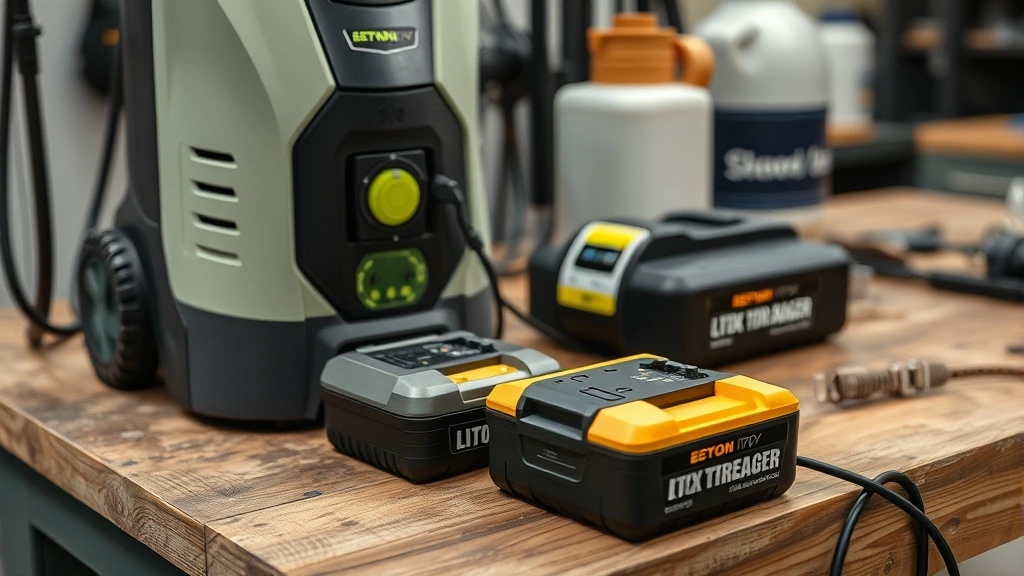
Battery-powered pressure washers represent the cutting edge of sustainable cleaning technology. These cordless machines combine the environmental benefits of electric operation with unprecedented convenience, eliminating extension cord limitations and enabling cleaning in remote areas.
Key Benefits of Battery-Powered Systems:
- Complete Portability: No cords, no outlets required—clean anywhere on your property
- Quiet Operation: Often quieter than electric corded models, typically 55-70 decibels
- Rapid Charging: Modern batteries recharge in 30-60 minutes, enabling consecutive uses
- Interchangeable Batteries: Many systems work with batteries from the same manufacturer, reducing redundancy
- Weather Flexibility: Unlike corded electric models, battery units function safely in wet conditions without extension cord hazards
- Lower Maintenance: No fuel, no oil, no spark plugs—simply charge and clean
Leading battery-powered pressure washers from DeWalt, Makita, and Milwaukee deliver impressive performance, with many offering 2,000+ PSI and 1.5+ GPM. Dual-battery systems enable extended cleaning sessions, with one battery charging while another powers the machine. This technology aligns perfectly with the broader transition toward battery-electric tools that many homeowners already use for drills, saws, and other equipment.
The environmental advantage intensifies when considering battery manufacturing advances. Modern lithium-ion batteries have significantly longer lifespans—typically 3,000+ charge cycles—and improved recycling infrastructure means end-of-life environmental impact continues decreasing. Choosing battery-powered tools represents investment in emerging sustainable technology that improves annually.
Hybrid and Smart Pressure Washing Systems
Innovation in pressure washing extends beyond simple electric and battery options. Hybrid systems and smart pressure washers incorporate advanced technology to optimize water usage, energy consumption, and cleaning efficiency.
Water-Saving Technologies: Modern eco-conscious pressure washers feature adjustable flow rates, allowing users to reduce water consumption by 20-40% compared to traditional models. Some systems incorporate recycling features that capture and filter runoff for reuse, particularly valuable in drought-prone regions. Considering environmental sustainability examples, water conservation through smart pressure washing deserves recognition as an often-overlooked sustainability practice.
Smart Features and Controls: Premium models now include pressure sensors, automatic shutoff when not actively spraying, and app-based controls that optimize performance while minimizing energy waste. Some systems adjust pressure in real-time based on surface type, preventing damage while maximizing cleaning efficiency. These innovations reduce both energy consumption and water usage—dual environmental benefits.
Hybrid Propane Options: For users requiring maximum power in remote locations, hybrid propane/electric systems offer compromise solutions. While propane produces fewer emissions than gasoline and burns cleaner, it remains a fossil fuel. These systems work best as transitional choices for professional contractors gradually shifting toward fully electric operations.
Comparing Performance: Gas vs. Electric vs. Battery
Understanding how different pressure washer types perform in real-world scenarios helps inform purchasing decisions. Each technology excels in specific applications while presenting distinct limitations.
Gas Pressure Washers: Maximum power (3,000-4,000+ PSI) makes gas models ideal for heavy-duty commercial applications, concrete preparation, and graffiti removal. However, this power comes with environmental costs, noise pollution, and higher operating expenses. For most residential users, this capability represents overkill—like using a sledgehammer for finishing nails.
Electric Corded Models: Offering 1,500-3,000 PSI with consistent power output, electric washers excel at regular maintenance cleaning, deck washing, and vehicle cleaning. The primary limitation—cord length—matters less for stationary work and residential properties with accessible outlets. For homeowners with typical cleaning needs, electric models deliver 90% of gas performance at 40% of the cost and 10% of the environmental impact.
Battery-Powered Systems: Newest battery technology delivers 1,500-2,500 PSI with excellent runtime for most residential tasks. The advantage lies in portability and convenience—ideal for properties without convenient outlet access. Battery runtime typically enables 20-40 minutes of continuous cleaning, sufficient for most residential jobs. Runtime limitations mainly affect professional contractors handling multiple large jobs daily.
For a typical residential property, electric or battery-powered models handle 95% of cleaning tasks effectively. Reserve gas power for specialized commercial applications where environmental impact concerns are outweighed by operational necessity and professional-grade requirements.
Making Your Purchase: Key Considerations
Selecting the right pressure washer involves evaluating your specific needs against environmental values and long-term economics. Consider these factors systematically:
Assess Your Actual Needs: Most homeowners require 1,500-2,000 PSI for driveways, patios, decks, and vehicles. Overpowering equipment wastes money and risks surface damage. Document the tasks you perform most frequently—this drives your optimal pressure and flow rate selection.
Evaluate Your Space: Properties with convenient outlet access favor electric corded models. Larger properties or those without outdoor outlets benefit from battery-powered systems. Urban properties where noise matters should absolutely avoid gas models.
Calculate Long-Term Costs: Compare initial purchase price against fuel costs, maintenance requirements, and lifespan. Electric and battery models typically cost less over 5-10 years despite higher initial investment. Considering advantages of electric vehicles provides useful context—similar cost-benefit analysis applies to electric pressure washers.
Examine Warranty and Support: Quality manufacturers stand behind their products. Compare warranty lengths, availability of replacement parts, and local service support. Battery-powered models benefit from existing service networks if you already use tools from that manufacturer.
Review Environmental Certifications: Look for products certified by organizations like CARB (California Air Resources Board) or Energy Star. These certifications indicate independent verification of efficiency and emissions claims. Check the EPA’s Safer Choice program for environmentally vetted products.
Maintenance Tips for Longevity and Efficiency
Proper maintenance ensures your pressure washer operates efficiently throughout its lifespan, maximizing your environmental investment.
Electric and Battery Models:
- Regular Cleaning: Rinse the intake filter after each use to prevent performance degradation
- Hose Inspection: Check hoses monthly for cracks or damage that reduce efficiency
- Detergent Tank Maintenance: Clean tanks regularly to prevent residue buildup and contamination
- Battery Care: Store batteries in cool, dry locations; avoid complete discharge cycles
- Seasonal Storage: Run clean water through the system before extended storage to prevent mineral deposits
Water Conservation Practices:
- Use Adjustable Nozzles: Narrower spray patterns concentrate pressure, reducing water waste while maintaining cleaning power
- Pre-treat Surfaces: Apply eco-friendly detergents and allow soaking time before pressure washing, reducing total water needed
- Capture Runoff: When possible, direct runoff toward landscaping or collection systems rather than storm drains
- Avoid Unnecessary Use: Not every surface requires pressure washing; regular sweeping prevents dirt accumulation requiring later cleaning
These maintenance practices extend equipment lifespan by 30-50%, reducing manufacturing waste and the environmental cost of replacement. Well-maintained electric and battery-powered pressure washers often outlast their gas counterparts due to simpler mechanical systems and fewer moving parts.
As you consider your pressure washing needs, remember that choosing electric or battery-powered alternatives represents meaningful participation in broader sustainability movements. Every fossil-fuel-dependent tool replaced with an electric equivalent reduces personal carbon footprint while supporting market demand for cleaner technologies. The transition toward sustainable cleaning solutions reflects growing recognition that environmental responsibility and practical functionality aren’t opposing forces—they’re complementary goals achievable through informed purchasing decisions.
Frequently Asked Questions
Can electric pressure washers handle tough cleaning jobs?
Yes, modern electric pressure washers deliver adequate power for most residential cleaning tasks. Models offering 2,000-2,500 PSI effectively clean driveways, decks, vehicles, and siding. For extremely stubborn stains or industrial applications, gas models provide additional power, but these represent a small percentage of typical homeowner needs. Electric models excel at routine maintenance cleaning where moderate pressure prevents surface damage.
How long do battery-powered pressure washer batteries last?
Modern lithium-ion batteries typically provide 20-40 minutes of continuous runtime, depending on pressure settings and flow rate. Most residential cleaning jobs complete within this window. Dual-battery systems enable back-to-back jobs, with one battery charging while another operates. Battery lifespan extends to 3,000+ charge cycles, typically representing 5-7 years of regular use before capacity diminishes.
Are electric pressure washers safe in wet conditions?
Corded electric models require GFCI (ground fault circuit interrupter) protection outlets to operate safely in wet environments. Battery-powered models present no electrocution risk and offer superior safety in wet conditions. Always follow manufacturer guidelines regarding water exposure and electrical safety protocols.
What’s the noise level difference between pressure washer types?
Gas models typically operate at 85-95 decibels—loud enough to disturb neighbors and wildlife. Electric corded models run at 60-75 decibels, while battery-powered systems often operate at 55-70 decibels. For residential use, electric and battery models represent significantly quieter, more neighbor-friendly options.
Can I use renewable energy to power electric pressure washers?
Absolutely. If your home features solar panels or uses renewable energy from your utility provider, electric pressure washers operate on genuinely clean power. This represents the ultimate environmental advantage—combining electric equipment with renewable energy sources creates fully sustainable cleaning solutions. Many homeowners with solar installations specifically choose electric tools to maximize renewable energy utilization.
Is propane pressure washing a good middle ground?
Propane burns cleaner than gasoline and produces fewer emissions, making it slightly preferable environmentally. However, propane remains a fossil fuel, and propane-powered pressure washers still generate noise and contribute to carbon emissions. For most residential applications, electric or battery models provide superior environmental performance. Propane systems work best as transitional options for professionals gradually shifting toward fully electric operations.


