Top SUVs with Best Gas Mileage: 2023 Report
Finding an SUV that doesn’t drain your wallet at the pump is increasingly possible in today’s automotive market. The 2023 model year brings significant advancements in fuel efficiency technology, offering drivers the space and capability they want without sacrificing environmental responsibility. Whether you’re commuting daily or planning weekend adventures, choosing an SUV with superior gas mileage represents a smart investment in both your finances and the planet’s future.
This comprehensive guide examines the most fuel-efficient SUVs available in 2023, breaking down their specifications, real-world performance, and how they compare to traditional gas guzzlers. We’ll explore hybrid options, turbocharged engines, and aerodynamic innovations that make these vehicles stand out. Understanding the factors that contribute to better fuel economy helps you make an informed decision that aligns with your sustainability goals and driving needs.
Understanding SUV Fuel Efficiency in 2023
The automotive industry has undergone remarkable transformation in recent years, with manufacturers prioritizing fuel economy alongside performance. The 2023 model year represents a pivotal moment where efficiency no longer means compromising on power or capability. Modern SUVs achieve better gas mileage through a combination of lightweight materials, advanced engine technologies, and intelligent aerodynamic design.
Fuel efficiency is measured in miles per gallon (MPG), with the EPA establishing standardized testing procedures to ensure accurate comparisons. City driving typically yields lower MPG figures because of frequent acceleration and braking, while highway driving allows engines to operate at optimal efficiency. Combined ratings provide a realistic estimate for mixed driving conditions. When evaluating best SUV gas mileage, consider both your typical driving patterns and the vehicle’s capability to meet your lifestyle needs.
Environmental consciousness drives many consumers toward more efficient vehicles. According to the EPA’s fuel economy database, reducing fuel consumption directly correlates with lower greenhouse gas emissions. By selecting an SUV with superior gas mileage, you’re actively participating in climate change mitigation while enjoying substantial fuel cost savings.

Top Fuel-Efficient SUVs Ranked
The 2023 market offers exceptional options for efficiency-conscious buyers. Leading the compact SUV category, the Toyota RAV4 LE achieves an impressive 28 city/35 highway/31 combined MPG with its standard four-cylinder engine. This proven performer combines reliability with practicality, making it an excellent choice for families and commuters.
The Honda CR-V continues its legacy as a segment leader, delivering 28 city/34 highway/30 combined MPG in standard gasoline form. Its spacious interior and reputation for longevity make it a smart investment for long-term ownership. The advantages of electric vehicles are increasingly relevant, but traditional fuel-efficient models still serve important roles in the market.
Mazda’s CX-50 represents the performance-oriented efficiency option, achieving 26 city/32 highway/28 combined MPG while delivering engaging driving dynamics. For those prioritizing three-row seating, the Kia Sorento hybrid delivers 36 city/40 highway/37 combined MPG, demonstrating how hybrid technology revolutionizes the SUV segment.
The Subaru Crosstrek stands out in the adventure-focused category, offering 23 city/30 highway/26 combined MPG with standard all-wheel drive. Its capability in various weather conditions makes it ideal for drivers who refuse to compromise on safety or functionality. Jeep’s Grand Cherokee L achieves respectable efficiency at 23 city/29 highway/25 combined MPG for a vehicle of its size and capability.
Hybrid SUVs Leading the Market
Hybrid technology represents the most significant advancement in fuel efficiency for traditional SUVs. These vehicles combine gasoline engines with electric motors, optimizing power delivery and maximizing efficiency across various driving scenarios. The Toyota RAV4 Hybrid leads this category with exceptional 40 city/36 highway/38 combined MPG ratings, making it one of the most efficient non-plug-in SUVs available.
The Honda CR-V Hybrid delivers 40 city/35 highway/37 combined MPG, providing outstanding efficiency without requiring plug-in charging infrastructure. This reliability appeals to buyers who want fuel savings without lifestyle adjustments. The Lexus NX 350h, a luxury hybrid option, achieves 38 city/36 highway/37 combined MPG while delivering premium features and refined performance.
Kia’s Sorento Hybrid and Hyundai’s Santa Fe Hybrid both achieve approximately 37 combined MPG, bringing hybrid efficiency to three-row family vehicles. These options prove that hybrid technology doesn’t require sacrificing passenger or cargo space. Understanding the distinction between hybrid and plug-in hybrid vehicles helps align your choice with available charging infrastructure and driving patterns.
The financial case for hybrids strengthens as fuel prices fluctuate. While hybrid models typically carry a higher upfront cost ($2,000-$5,000 premium), fuel savings often recoup this investment within 5-7 years of typical driving. For those prioritizing sustainable energy solutions, hybrids represent an excellent bridge between traditional and fully electric vehicles.
Technology Behind Better Mileage
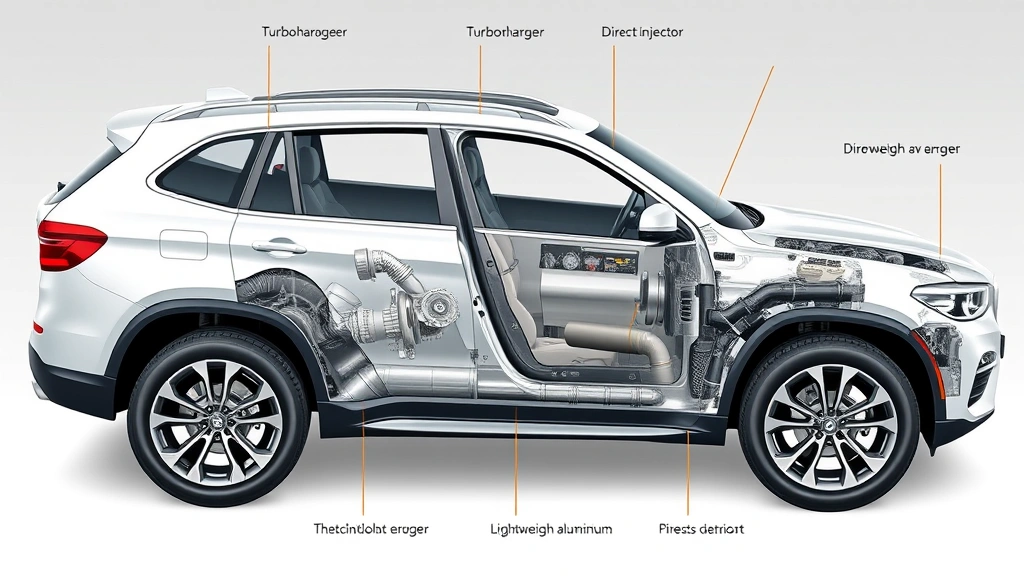
Modern SUVs achieve impressive fuel economy through sophisticated engineering innovations. Direct fuel injection precisely delivers gasoline into cylinders, improving combustion efficiency and reducing waste. Turbocharging allows smaller engines to deliver larger-engine power while consuming significantly less fuel—a turbocharged 2.0L engine can match the output of a naturally aspirated 3.5L engine while using substantially less fuel.
Advanced transmission technology plays a crucial role in efficiency gains. Eight, nine, and ten-speed automatics allow engines to operate at optimal RPM across various speeds, maximizing efficiency during highway cruising. Continuously variable transmissions (CVTs) in many models provide seamless power delivery while maintaining peak efficiency throughout acceleration ranges.
Aerodynamic refinements reduce drag, which consumes significant fuel energy at highway speeds. Modern SUVs feature optimized body shapes, active grilles that close at highway speeds, and underbody panels that smooth airflow. Lightweight materials—aluminum, high-strength steel, and composite plastics—reduce overall vehicle weight, directly improving fuel economy since engines require less energy moving lighter vehicles.
Stop-start technology automatically shuts engines off during idle periods, such as at traffic lights or in traffic jams. This simple but effective innovation can improve city driving efficiency by 3-10%, depending on driving conditions. Regenerative braking systems in hybrids capture energy typically lost during deceleration, converting it into electrical energy that powers the vehicle.
Tire technology also impacts efficiency significantly. Low-rolling-resistance tires reduce the energy required to keep wheels turning. Proper tire pressure maintenance—checking monthly and inflating to manufacturer specifications—maintains optimal efficiency. Underinflated tires increase rolling resistance by 3-5% per PSI below specification, directly reducing fuel economy.
Comparing Gas vs Alternative Fuels
While gasoline SUVs with excellent fuel economy remain practical for most drivers, alternative fuel options deserve consideration. The advantages of natural gas vehicles include lower emissions and potentially lower operating costs, though limited infrastructure remains a challenge in many regions. Natural gas SUVs are relatively rare in the consumer market but offer compelling benefits for fleet operations.
Plug-in hybrid electric vehicles (PHEVs) combine gasoline engines with larger battery packs and plug-in charging capability. Models like the Jeep Wrangler 4xe and Range Rover Sport PHEV deliver excellent efficiency for typical commutes while maintaining gasoline backup for longer journeys. These vehicles can achieve 50+ combined MPGe (miles per gallon equivalent) when charged regularly.
Fully electric SUVs continue gaining market share as battery technology improves and charging infrastructure expands. The Tesla Model Y, Volkswagen ID.4, and Ford Mustang Mach-E offer zero tailpipe emissions and lower operating costs compared to gasoline vehicles. However, electric SUVs require access to charging infrastructure and suit drivers with predictable daily mileage patterns.
Comparing lifecycle environmental impact reveals nuanced considerations. While electric vehicles produce zero tailpipe emissions, their manufacturing process—particularly battery production—generates significant carbon. Over a vehicle’s lifetime, electric SUVs typically produce 50-70% fewer emissions than gasoline vehicles, even when accounting for electricity generation methods. Gasoline SUVs with excellent fuel economy represent a practical middle ground for drivers unable or unwilling to transition to electric vehicles.
The transition toward sustainable transportation accelerates as technology improves and infrastructure develops. Exploring environmental sustainability examples demonstrates how individual vehicle choices contribute to broader climate solutions.
Real-World Driving Conditions
EPA ratings provide standardized comparison points, but real-world fuel economy varies based on numerous driving factors. Aggressive acceleration and hard braking significantly reduce efficiency—maintaining smooth, gradual speed changes improves MPG by 15-30% in city driving. Highway speeds above 55 MPH substantially increase fuel consumption; each 5 MPH increase above 50 MPH reduces efficiency by approximately 7%.
Environmental conditions dramatically impact fuel consumption. Cold weather reduces efficiency by 10-20% during initial warm-up periods as engines operate in rich fuel mixtures. Winter tire use—with higher rolling resistance than all-season tires—further reduces efficiency. Conversely, warm weather and proper tire pressure optimization enhance fuel economy.
Vehicle load significantly affects efficiency. Carrying passengers, cargo, and roof racks increases weight and aerodynamic drag. Removing unnecessary items can improve fuel economy by 1-2% per 100 pounds of weight reduction. Roof racks create disproportionate aerodynamic drag; removing them when not needed improves highway efficiency by 5-10%.
Terrain and traffic patterns influence real-world efficiency substantially. Frequent stop-and-go city driving produces lower MPG than steady highway cruising. Mountainous terrain requiring constant acceleration reduces efficiency compared to flat terrain. Heavy traffic with frequent braking wastes energy, while uncongested driving allows optimized speed maintenance.
Maintenance quality directly impacts fuel economy. Properly tuned engines, clean air filters, and correctly aligned wheels maintain optimal efficiency. Using manufacturer-recommended engine oil viscosity grade ensures proper engine lubrication without excess friction. Regular maintenance preserves the fuel economy benefits engineers designed into modern SUVs.
Cost Savings Over Time
Calculating total cost of ownership reveals why fuel-efficient SUVs represent smart financial investments. Consider comparing a 25 MPG SUV to a 30 MPG model, assuming 12,000 annual miles and $3.50 per gallon fuel prices. The 25 MPG vehicle costs $1,680 annually in fuel, while the 30 MPG model costs $1,400—a $280 annual savings. Over five years, this difference totals $1,400, often exceeding the premium charged for the more efficient model.
Hybrid SUVs demonstrate even more dramatic savings despite higher purchase prices. A Toyota RAV4 Hybrid at 38 MPG combined versus a standard RAV4 at 31 MPG combined saves approximately $150 annually. However, the hybrid’s $3,500 premium requires roughly 23 years to recoup through fuel savings alone—a less compelling financial case. The real value emerges when considering tax incentives, resale value, reduced maintenance (fewer oil changes), and personal environmental values.
Fuel price volatility introduces uncertainty into long-term calculations. Historical data shows gasoline prices fluctuating between $2 and $5 per gallon over recent decades. Choosing efficient vehicles provides insurance against future price spikes. A $0.50 increase in fuel prices makes that 5 MPG efficiency difference worth $300 annually on 12,000 miles—suddenly justifying hybrid premiums more convincingly.
Maintenance cost differences between efficient and less efficient SUVs deserve consideration. Hybrid systems require specialized service, potentially increasing maintenance costs. However, regenerative braking systems reduce brake wear substantially, offsetting increased complexity. Modern gasoline engines with turbocharging and direct injection require synthetic oil and more frequent filter changes but typically maintain reasonable maintenance costs when properly serviced.
Resale value trends favor fuel-efficient vehicles, particularly hybrids. Used hybrid SUVs command premium prices as demand grows among environmentally conscious buyers seeking used vehicles. This resale value advantage can offset higher purchase premiums, making fuel-efficient choices financially advantageous over vehicle ownership lifecycles.
Tips to Maximize Your SUV’s Efficiency
Regardless of which fuel-efficient SUV you select, driving habits dramatically influence real-world fuel economy. Accelerate smoothly and gradually, avoiding jackrabbit starts that waste fuel and increase emissions. Anticipate traffic flow changes, allowing your SUV to coast gradually rather than braking hard, which converts fuel energy into wasted heat.
Maintain steady speeds whenever safely possible. Cruise control on highways maintains constant speed more efficiently than manual acceleration variations. Plan routes to minimize unnecessary mileage and avoid traffic congestion when feasible. Combining errands into single trips reduces overall fuel consumption compared to multiple separate journeys.
Keep tires properly inflated according to manufacturer specifications found on driver’s door jambs or fuel filler doors—not maximum tire pressures printed on tire sidewalls. Check pressure monthly and before long trips, as underinflation increases rolling resistance and reduces efficiency. Rotate tires every 6,000-8,000 miles to ensure even wear and consistent performance.
Schedule regular maintenance according to manufacturer recommendations. Replace air filters when dirty—a clogged air filter reduces engine efficiency. Use the recommended engine oil viscosity grade; thicker oil creates more friction and reduces efficiency. Keep wheels properly aligned; misalignment increases rolling resistance and tire wear.
Remove unnecessary weight from your vehicle. Roof racks, cargo carriers, and excess items increase aerodynamic drag and vehicle weight. Store equipment only when needed. Clean out trunk and rear cargo areas regularly—unnecessary weight directly reduces fuel economy.
Combine driving efficiency with SustainWise Hub Blog resources for comprehensive sustainability guidance. Consider how vehicle selection fits within broader environmental responsibility practices, from energy consumption to recycling and waste reduction.
Plan maintenance proactively rather than reactively. Addressing issues before they impact performance prevents efficiency degradation. Keep detailed maintenance records documenting service dates and performed work, helping identify patterns or emerging problems affecting fuel economy.
FAQ
What MPG should I expect from a 2023 SUV?
Modern 2023 SUVs range from 23-40 combined MPG depending on engine type, drivetrain, and vehicle size. Standard gasoline models typically achieve 25-31 MPG, while hybrid models deliver 35-40 MPG. Plug-in hybrids and electric SUVs offer even greater efficiency, though measured in different units.
Are hybrid SUVs worth the extra cost?
Hybrid premiums typically range $2,000-$5,000 over comparable gasoline models. Fuel savings alone require 5-7 years to recoup this investment. However, superior resale value, reduced maintenance costs, tax incentives, and personal environmental values often justify the premium for many buyers.
How does driving style affect fuel economy?
Aggressive driving reduces efficiency by 15-30% compared to smooth, gradual acceleration. Highway speeds above 55 MPH reduce efficiency approximately 7% per 5 MPH increase. Proper tire pressure and regular maintenance preserve manufacturer-rated efficiency.
Should I consider electric SUVs instead?
Electric SUVs offer zero tailpipe emissions and lower operating costs but require charging infrastructure and suit drivers with predictable daily mileage. Fuel-efficient gasoline and hybrid SUVs remain practical for drivers with extensive range requirements or limited charging access.
Which 2023 SUV offers the best fuel economy?
The Toyota RAV4 Hybrid leads with 38 combined MPG among traditional SUVs. The Honda CR-V Hybrid delivers 37 combined MPG. For non-hybrid options, the Toyota RAV4 achieves 31 combined MPG. Plug-in hybrids and electric SUVs achieve greater efficiency but operate differently than traditional gasoline vehicles.
Can I improve my SUV’s fuel economy after purchase?
Yes. Regular maintenance, proper tire pressure, smooth driving habits, and removing unnecessary weight all improve efficiency. Upgrading to low-rolling-resistance tires and using synthetic oil can provide modest gains. However, fundamental improvements require choosing efficient vehicles initially.
What’s the difference between MPG and MPGe?
MPG measures gasoline consumption in miles per gallon. MPGe (miles per gallon equivalent) measures electric vehicles’ efficiency, with one gallon of gasoline equivalent containing 33.7 kilowatt-hours of energy. This standardizes efficiency comparisons across different fuel types.