Can Gas Freeze? Expert Explanation of Temperature, Pressure, and Phase Changes
One of the most intriguing questions in chemistry and physics is whether gaseous substances can actually freeze. The short answer is yes—gases can freeze, but the process requires extreme conditions that rarely occur in everyday life. Understanding how and why gases freeze involves exploring the fundamental principles of matter, thermodynamics, and the critical role that temperature and pressure play in phase transitions. This knowledge becomes increasingly important as we develop sustainable energy solutions and work with industrial processes that demand precise control over material states.
When we think of freezing, most people envision water turning to ice. However, the freezing process applies to all substances, including gases. The fascinating science behind gas freezing reveals how matter behaves under extreme conditions and why certain industrial applications depend on this phenomenon. Whether you’re curious about liquefied natural gas, cryogenic technology, or the broader principles of sustainability in energy production, understanding gas freezing is essential.

Understanding Gas Phase and State Changes
Matter exists in four primary states: solid, liquid, gas, and plasma. Each state represents a different arrangement of atoms and molecules, with distinct characteristics regarding density, compressibility, and particle movement. Gases are characterized by their lack of defined shape or volume—they expand to fill whatever container holds them and have molecules moving rapidly in random directions.
The transition between states involves what scientists call phase changes or phase transitions. These transformations occur when energy is added to or removed from a substance. When a solid melts, it absorbs energy and becomes a liquid. When a liquid evaporates, it absorbs additional energy and becomes a gas. Conversely, when a gas loses energy through cooling or compression, it can condense into a liquid, and if cooled further, that liquid can freeze into a solid.
The process of gas freezing directly into a solid without passing through the liquid phase is called deposition. This is the reverse of sublimation, where a solid transforms directly into a gas. Deposition occurs when gases lose sufficient energy to arrange themselves into the highly ordered, rigid structure characteristic of solids. This process is governed by the principles of thermodynamics and is essential for understanding many natural and industrial phenomena.
Temperature Requirements for Gas Freezing
The temperature at which a gas freezes depends entirely on which gas we’re discussing. Each substance has unique freezing characteristics determined by its molecular structure and intermolecular forces. Some gases freeze at remarkably low temperatures, while others require even more extreme conditions.
Nitrogen gas, one of the most abundant gases in Earth’s atmosphere, freezes at approximately 63 Kelvin (−210°C or −346°F). At this temperature, the kinetic energy of nitrogen molecules decreases sufficiently that intermolecular forces can bind them into a solid crystalline structure. Liquid nitrogen, which exists between 63K and 77K, is commonly used in medical applications, food preservation, and scientific research.
Oxygen gas freezes at about 54 Kelvin (−219°C or −362°F), making it even more challenging to solidify than nitrogen. Despite the extreme cold required, solid oxygen has practical applications in rocket propulsion and industrial processes. Hydrogen gas, the lightest element, requires cooling to just 14 Kelvin (−259°C or −434°F) to freeze, making it one of the most difficult gases to solidify.
Carbon dioxide presents an interesting case. Rather than freezing into a liquid and then a solid under normal atmospheric pressure, CO₂ undergoes deposition directly from gas to solid at −78.5°C (−109.3°F), forming what we commonly call dry ice. This direct transition makes dry ice particularly useful for cooling applications where liquid phase isn’t desired.
Understanding these specific temperatures is crucial for green technology innovations that utilize cryogenic processes. The energy required to cool gases to freezing temperatures must be carefully managed to ensure sustainable and efficient operations.
Pressure’s Critical Role in Freezing Gases
While temperature is the primary factor in freezing gases, pressure plays an equally important role in determining the exact conditions needed. The relationship between temperature, pressure, and the state of matter is illustrated on what scientists call a phase diagram—a graph showing which state of matter exists at various combinations of temperature and pressure.
For most gases, increasing pressure raises the freezing point. This means that under higher pressure, a gas requires less extreme cold to freeze. For example, while nitrogen freezes at 63K under standard atmospheric pressure, it would freeze at a slightly higher temperature if subjected to significantly increased pressure. This principle explains why industrial processes often combine both extreme cooling and high pressure to liquefy and solidify gases efficiently.
The critical point is a unique condition where temperature and pressure are so extreme that the distinction between liquid and gas phases disappears. Beyond the critical point, a substance enters a state called a supercritical fluid, which exhibits properties of both liquids and gases. Understanding these relationships helps scientists and engineers design better systems for handling gases in ways that align with environmental sustainability examples.
The intermolecular forces—van der Waals forces, dipole interactions, and hydrogen bonding—determine how readily a gas transitions to solid under pressure. Gases with stronger intermolecular attractions freeze more easily, while those with weaker attractions require more extreme conditions. This molecular-level understanding has profound implications for how we store, transport, and utilize various gases in industrial and commercial applications.
Real-World Examples of Frozen Gases
Frozen gases aren’t merely theoretical concepts—they play crucial roles in numerous real-world applications and phenomena. Understanding these examples provides insight into how the principles of gas freezing translate into practical utility.
Liquid nitrogen is perhaps the most commonly encountered frozen or liquefied gas in modern society. Produced by fractional distillation of air, liquid nitrogen boils at 77 Kelvin and is used extensively in medical cryotherapy, where it freezes and removes skin lesions. In food processing, liquid nitrogen rapidly freezes foods, preserving texture and nutritional content better than conventional freezing methods. Laboratories worldwide use liquid nitrogen to preserve biological samples, maintaining the viability of cells and tissues for extended periods.
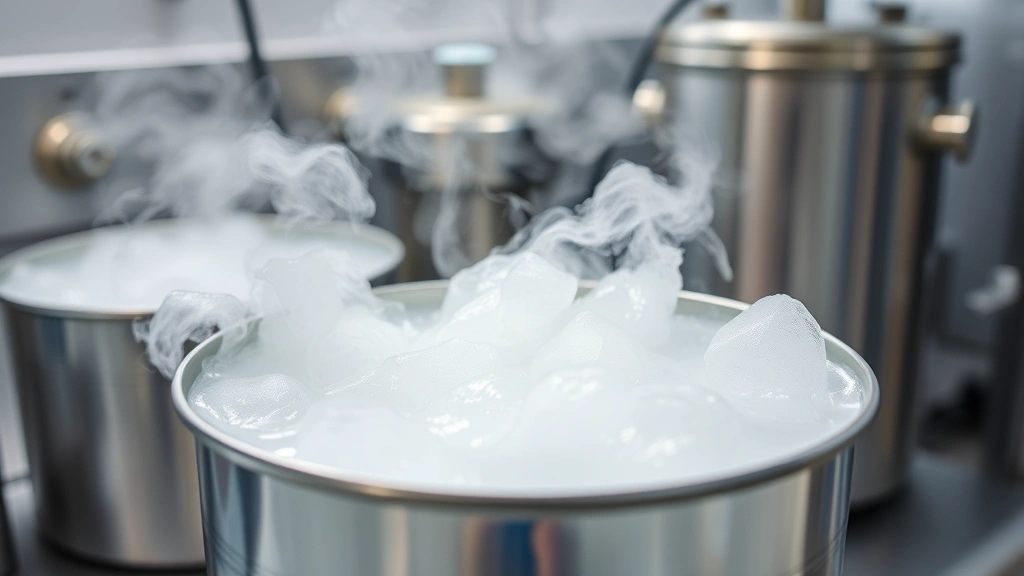
Dry ice, the solid form of carbon dioxide, creates the dramatic fog effect seen at concerts, theatrical productions, and Halloween celebrations. This fog isn’t actually the dry ice itself but rather water vapor that condenses when the cold dry ice cools the surrounding air. Beyond entertainment, dry ice is invaluable in shipping temperature-sensitive products, from pharmaceuticals to biological samples. Its non-toxic nature makes it preferable to many chemical refrigerants.
Liquid helium represents one of the most exotic applications of gas freezing. With a boiling point of just 4.2 Kelvin, liquid helium is essential for cooling superconducting magnets in MRI machines, particle accelerators, and scientific research equipment. The extreme cold required to liquefy helium makes it expensive, but its unique properties make it irreplaceable in many applications.
Cryogenic rocket propellant relies on frozen or liquefied gases like liquid hydrogen and liquid oxygen. When these substances are mixed and ignited, they produce the tremendous thrust needed to launch spacecraft. NASA and other space agencies depend on precise control of these frozen gases to achieve reliable, powerful propulsion systems.
Industrial Applications and Sustainability
The industrial use of frozen and liquefied gases raises important questions about sustainability and environmental impact. As we work toward sustainable energy solutions, understanding the energy costs and environmental implications of cryogenic processes becomes increasingly vital.
The primary concern with freezing and liquefying gases is the substantial energy required. Cooling nitrogen gas to 77 Kelvin demands significant electrical power, typically generated from fossil fuels unless renewable sources are used. However, the benefits often justify these energy costs. For instance, liquid nitrogen’s superior cooling properties in food processing can reduce overall energy consumption compared to conventional refrigeration, potentially making it more sustainable when lifecycle impacts are considered.
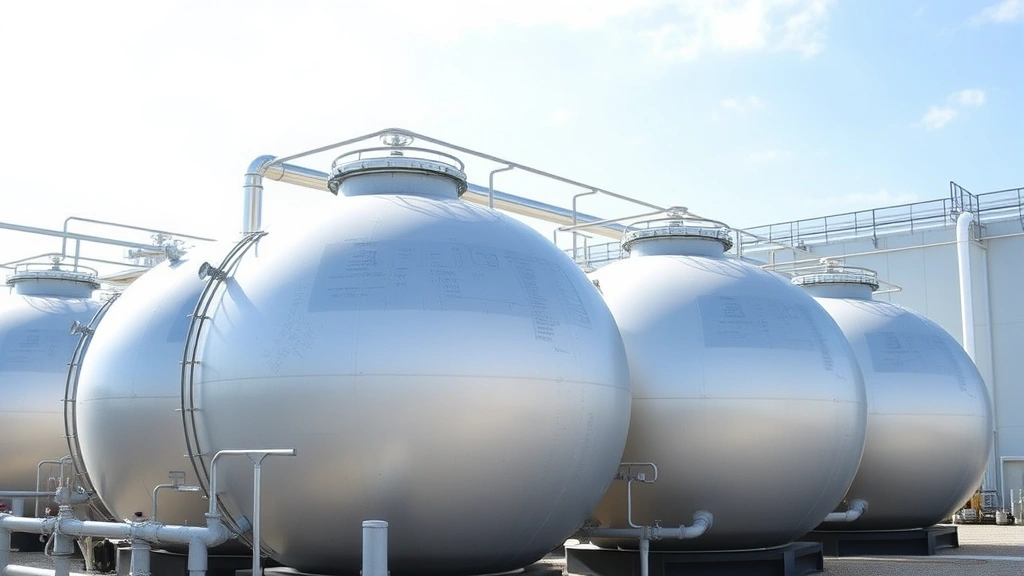
Liquefied natural gas (LNG) represents a major application where sustainability considerations are paramount. Natural gas, when cooled to −162°C (−260°F), becomes a liquid that occupies roughly 1/600th the volume of its gaseous form. This dramatic volume reduction makes transportation economically viable, enabling countries to trade natural gas globally. However, the energy required for liquefaction and the environmental implications of fossil fuel use must be weighed against the benefits of cleaner-burning natural gas compared to coal or oil.
Innovation in cryogenic technology is driving improvements in energy efficiency. New insulation materials, more efficient cooling cycles, and better process designs are reducing the energy footprint of gas liquefaction and freezing. These advances support the broader goal of sustainable practices across industrial sectors.
The recovery and recycling of cryogenic fluids also contribute to sustainability. Rather than venting gases to the atmosphere, modern facilities capture boil-off from liquid nitrogen and other cryogens, reusing them or converting them to useful products. This circular economy approach minimizes waste and reduces the need for continuous new production.
The Science Behind Sublimation and Deposition
To fully understand gas freezing, we must explore the complementary processes of sublimation and deposition. These phase transitions, which skip the liquid phase entirely, are fundamental to many natural and industrial phenomena.
Sublimation occurs when a solid transitions directly to a gas without melting into a liquid first. A classic example is dry ice—when exposed to room temperature air at normal atmospheric pressure, dry ice doesn’t melt into liquid CO₂; instead, it transforms directly into gaseous carbon dioxide. Similarly, water ice in freezers gradually disappears through sublimation, a process called freezer burn when it affects food. Snow and ice in cold, dry climates sublime away even without melting.
Deposition is sublimation in reverse—a gas transforming directly into a solid. This process creates frost on windows and surfaces during cold nights, as water vapor in the air converts directly to ice crystals without passing through a liquid phase. Deposition is essentially gas freezing, and it occurs when the gas loses sufficient energy and pressure conditions favor the solid phase.
The conditions favoring sublimation or deposition versus melting or freezing are determined by the substance’s phase diagram. Below the triple point—the unique temperature and pressure where solid, liquid, and gas phases coexist in equilibrium—a substance will sublime or deposit rather than melt or freeze. For carbon dioxide, the triple point occurs at 216.6 Kelvin and 5.1 atmospheres of pressure, explaining why dry ice sublimates at normal atmospheric pressure.
Understanding these processes has practical implications for preservation and storage. The lack of liquid phase during deposition means that water content is removed from products, making deposition-based drying (freeze drying) particularly effective for preserving sensitive biological materials, foods, and pharmaceuticals. This technique maintains nutritional value and extends shelf life while requiring minimal chemical additives, aligning with sustainability principles.
Frequently Asked Questions
At what temperature does air freeze?
Air is a mixture of gases, primarily nitrogen (78%) and oxygen (21%). Since these components have different freezing points—nitrogen at 63K and oxygen at 54K—air doesn’t have a single freezing point. However, if cooled to approximately 54 Kelvin (−219°C), all components would be solid. At temperatures between 54K and 63K, oxygen would be solid while nitrogen remains liquid.
Can you freeze carbon dioxide gas?
Yes, carbon dioxide can be frozen, but it typically sublimates directly to a solid at −78.5°C under normal atmospheric pressure, forming dry ice without becoming liquid first. Under higher pressure, CO₂ can exist as a liquid before freezing into a solid at even lower temperatures.
What happens to gas when it freezes?
When a gas freezes, its molecules lose kinetic energy and slow down significantly. The intermolecular forces, which were negligible in the gas phase, become dominant and arrange the molecules into a highly ordered, rigid crystalline structure characteristic of solids. The substance becomes incompressible and develops a defined shape.
Is frozen gas the same as dry ice?
Dry ice specifically refers to solid carbon dioxide formed by deposition. While dry ice is indeed a frozen gas, not all frozen gases are dry ice. Frozen nitrogen, frozen oxygen, and other solidified gases are distinct substances with different properties and applications.
Why do we need to freeze gases industrially?
Freezing or liquefying gases serves multiple purposes: it dramatically reduces volume for easier storage and transportation (crucial for LNG), enables specialized cooling applications in medicine and research, preserves temperature-sensitive products, and facilitates industrial processes requiring extreme cold. These applications demonstrate how understanding gas freezing supports modern technology and industry.
How does pressure affect gas freezing?
Increased pressure generally raises the freezing point of gases, meaning they freeze at less extreme temperatures under high pressure than they would under atmospheric pressure. This principle is used industrially to liquefy and solidify gases more efficiently by combining cooling with pressurization.