Gas vs Electric Bikes: Which is Greener? Expert Insight
The debate between gas-powered and electric bikes has intensified as environmental consciousness grows worldwide. Both options present distinct advantages and drawbacks when evaluating their ecological footprint, operational efficiency, and long-term sustainability impact. Understanding these differences empowers consumers to make informed decisions aligned with their environmental values and practical needs.
Electric bikes have gained significant momentum in recent years, emerging as a transformative solution for urban mobility and recreational cycling. However, gas-powered bikes still maintain relevance in specific applications where range and power requirements demand traditional fuel sources. This comprehensive analysis explores both technologies through an environmental lens, examining emissions, energy consumption, manufacturing impacts, and lifecycle assessments.
Understanding Gas-Powered Bikes
Gas-powered bikes, also known as motorized bicycles or mopeds equipped with gasoline engines, have served transportation needs for decades. These vehicles typically feature small internal combustion engines ranging from 50cc to 250cc, consuming fossil fuels directly and releasing emissions into the atmosphere. The technology remains straightforward, with established supply chains, repair infrastructure, and decades of refinement in engine design.
Traditional gas bikes offer impressive range capabilities, often traveling 100+ miles on a single tank of gasoline. This extended range makes them attractive for rural areas with limited charging infrastructure or individuals requiring longer commutes without refueling stops. The instant refueling process—typically taking minutes at gas stations—appeals to users prioritizing convenience over environmental considerations.
However, gas-powered bikes present significant environmental challenges. Small engines, particularly in older models, lack sophisticated emission control systems found in modern automobiles. Studies from the U.S. Environmental Protection Agency indicate that small gasoline engines produce disproportionately high emissions relative to their size. A single gas-powered bike can emit as much pollution as several modern cars during equivalent operating hours.
The Electric Bike Revolution
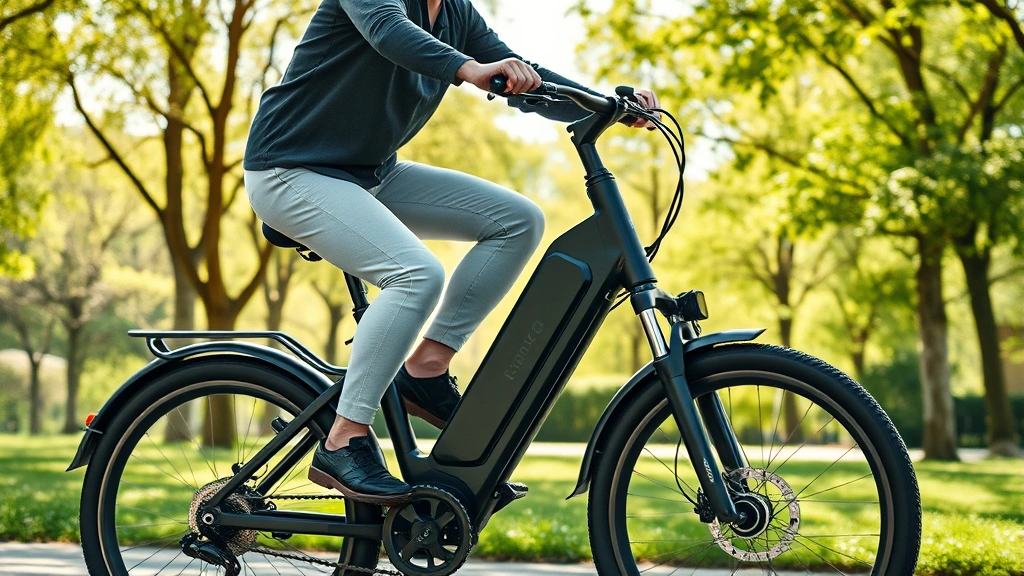
Electric bikes, or e-bikes, represent a paradigm shift in personal transportation sustainability. These vehicles combine human pedaling power with rechargeable battery systems and electric motors, offering assistance that reduces physical exertion while maintaining active engagement. Modern e-bikes range from modest 250-watt systems to powerful 750-watt or higher configurations, serving diverse riding styles and terrain requirements.
The sustainable energy solutions embodied in e-bike technology address multiple environmental concerns simultaneously. Zero direct emissions during operation, reduced air pollution in urban centers, and dramatically lower noise pollution create immediate community benefits. Battery technology continues advancing rapidly, with lithium-ion systems providing longer lifespans, faster charging times, and improved energy density compared to earlier generations.
E-bikes democratize cycling accessibility, enabling individuals of varying physical abilities to participate in active transportation. Elderly riders, those with mobility limitations, and commuters facing challenging terrain can now embrace cycling as a viable transportation option. This broader adoption potential multiplies the environmental benefits across larger population segments.

Emissions Comparison and Carbon Footprint
Comprehensive emissions analysis reveals stark differences between these technologies. Gas-powered bikes produce carbon dioxide, nitrogen oxides, particulate matter, and volatile organic compounds directly during combustion. A typical gas bike generates approximately 50-100 grams of CO2 per kilometer traveled, depending on engine efficiency and fuel consumption rates.
Electric bikes produce zero direct emissions during operation, but their overall carbon footprint depends on electricity grid composition. In regions powered predominantly by renewable energy sources, e-bike emissions approach near-zero levels. Even in areas relying on fossil fuel-based electricity generation, e-bikes typically produce 50-75% fewer lifecycle emissions than comparable gas bikes. The Carbon Brief reports that e-bikes generate approximately 10-20 grams of CO2 per kilometer when accounting for electricity production, charging losses, and battery manufacturing.
Consider long-term environmental impact: an electric bike used for five years generates roughly 2-3 tons of CO2 equivalent across its entire lifecycle. The same gas bike produces 8-12 tons during identical usage patterns. These calculations underscore why environmental sustainability examples increasingly feature electric mobility solutions.
Particulate matter emissions from gas engines contribute to respiratory diseases, cardiovascular problems, and premature mortality in urban populations. Air quality improvements from transitioning to e-bikes deliver measurable public health benefits beyond carbon reduction metrics.
Energy Efficiency Analysis
Energy efficiency comparisons heavily favor electric bikes across virtually all metrics. Internal combustion engines operate at approximately 20-30% thermal efficiency, meaning 70-80% of fuel energy dissipates as waste heat. Electric motors achieve 85-95% efficiency, converting electrical energy directly into mechanical motion with minimal losses.
A gas bike consuming one liter of gasoline (approximately 34 megajoules of energy) effectively utilizes only 7-10 megajoules for propulsion. An e-bike consuming equivalent energy from a battery delivers 6-9 megajoules of mechanical work, demonstrating superior efficiency despite battery storage losses. This fundamental physics principle explains why e-bikes travel significantly further per unit energy consumed.
Charging efficiency losses occur during battery charging and storage, typically accounting for 5-15% energy loss. Grid transmission losses add another 5-8%. Even accounting for these inefficiencies, e-bikes consume roughly one-third the energy of gas bikes for equivalent transportation distances. This efficiency advantage strengthens in regions implementing sustainable energy solutions with increasing renewable generation capacity.
The efficiency advantage extends to regenerative braking systems available on many e-bikes. These systems capture kinetic energy during deceleration, converting it back to battery charge and extending range by 10-15% in urban environments with frequent stopping.
Manufacturing and Lifecycle Impact
Battery production represents the most significant environmental concern in e-bike manufacturing. Lithium extraction, cobalt mining, and battery assembly require energy-intensive processes with potential environmental and social impacts. However, lifecycle analysis reveals that manufacturing environmental debt is recovered within 1-2 years of typical use.
A comprehensive study from the International Energy Agency demonstrates that e-bike battery production generates approximately 2-4 tons of CO2 equivalent. This initial environmental burden is offset by operational emissions savings within 12-24 months of regular use. After this payback period, every kilometer traveled represents net environmental benefit compared to gas alternatives.
Gas bike manufacturing involves fewer exotic materials but still requires energy-intensive metal processing, engine assembly, and component fabrication. However, the absence of manufacturing environmental benefits means gas bikes never achieve equivalent lifecycle sustainability profiles, regardless of operational duration.
Battery recycling programs are rapidly expanding, with 90-95% of lithium-ion battery materials recoverable for reuse. This circular economy approach further reduces lifecycle environmental impact as recycled materials replace virgin resources in new battery production. The emerging battery recycling industry transforms end-of-life e-bikes into resource recovery opportunities rather than waste streams.
Cost Considerations Over Time
Initial purchase prices favor gas bikes, with basic models available for $500-1,500 compared to e-bikes starting at $1,000-2,000. However, total cost of ownership calculations reveal e-bikes deliver superior economic value over five-year ownership periods.
Gas bike operational costs include regular fuel purchases, oil changes, spark plug replacement, carburetor cleaning, and engine maintenance. Annual fuel expenses typically reach $200-400, with maintenance adding another $150-300 yearly. Over five years, operational costs accumulate to $1,750-3,500 beyond the initial purchase price.
E-bike charging costs remain minimal, typically $0.50-1.50 monthly for average usage patterns. Battery replacement, the primary long-term expense, costs $300-800 and becomes necessary after 3-5 years depending on usage intensity. Annual maintenance focuses on tire replacement, brake adjustments, and chain lubrication—standard bicycle maintenance with minimal costs. Five-year operational expenses typically total $500-1,500.
This economic advantage intensifies when considering fuel price volatility and environmental externalities. Rising gasoline prices increase gas bike operating costs while e-bike economics remain stable. Factoring in air pollution health impacts, greenhouse gas externalities, and resource depletion costs, e-bikes demonstrate overwhelming economic and environmental superiority.
Practical Applications and Use Cases
Gas bikes excel in specific scenarios where their advantages prove decisive. Rural applications with minimal charging infrastructure, extreme distance requirements, or terrain demanding high power output justify gasoline engines. Agricultural workers, rural delivery services, and off-grid residents may find gas bikes more practical than current e-bike technology.
However, e-bikes increasingly serve these applications effectively. Improved battery technology extends range to 100+ miles on single charges, while more powerful motors (750W+) tackle challenging terrain previously requiring gas engines. Portable solar charging systems and community charging stations expand e-bike viability in rural contexts.
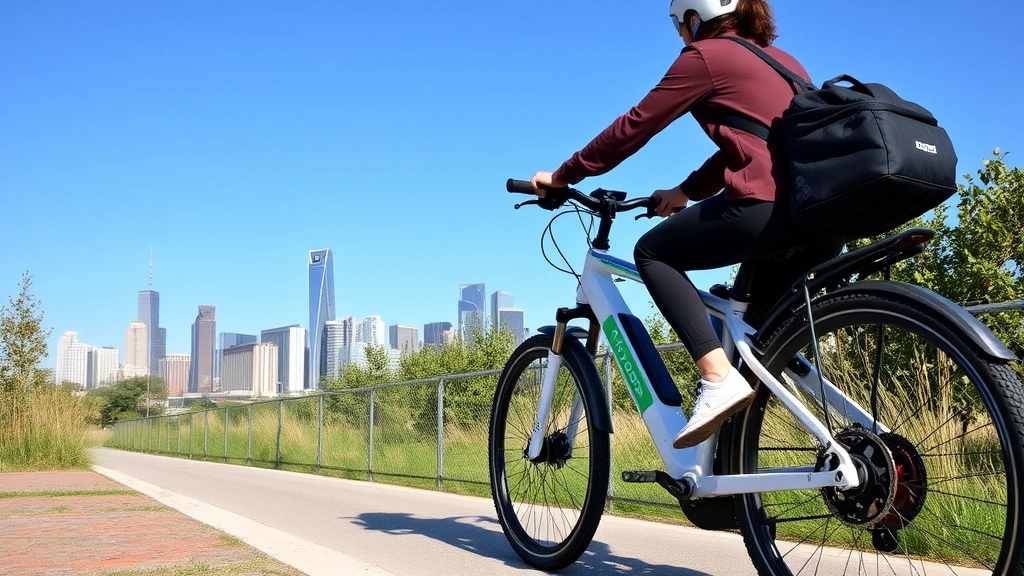
Urban and suburban environments represent ideal e-bike territory. Average commutes of 5-20 miles fall comfortably within e-bike range capabilities. Charging infrastructure proliferates rapidly in cities, with workplace charging, residential outlets, and public charging stations becoming standard. For the majority of personal transportation needs, e-bikes prove superior across environmental, economic, and practical dimensions.
Recreational cycling, delivery services, and leisure transportation all benefit from transitioning to e-bikes. The SustainWise Hub Blog regularly features case studies demonstrating successful e-bike adoption across diverse sectors.
Maintenance and Environmental Impact
Maintenance practices significantly influence environmental impact throughout vehicle lifecycles. Gas bikes require synthetic or mineral oil changes every 500-1,000 miles, generating used oil waste requiring proper disposal. Oil disposal represents an environmental hazard, with improper handling contaminating soil and groundwater. Spark plugs, air filters, and fuel filters accumulate as waste streams requiring recycling or disposal infrastructure.
E-bikes generate minimal maintenance waste. Tire replacement follows standard bicycle practices, with used tires entering established recycling programs. Brake pads, chains, and other wear components are identical to traditional bicycles, leveraging mature recycling infrastructure. Battery recycling programs, though newer, demonstrate higher recovery rates than traditional automotive waste streams.
Gas engine repairs often require specialized mechanics with diagnostic equipment, creating supply chain dependencies and transportation emissions from repair visits. E-bike maintenance frequently involves basic bicycle repair skills, with many riders performing routine service themselves. This accessibility reduces service-related emissions and increases user self-sufficiency.
The natural gas detector technology demonstrates how monitoring fossil fuel systems has become increasingly sophisticated. Conversely, e-bikes eliminate the need for such monitoring, removing another layer of complexity and environmental concern from personal transportation.
FAQ
What is the actual environmental impact difference between gas and electric bikes?
E-bikes produce 50-75% fewer lifecycle emissions than gas bikes when accounting for electricity grid composition, manufacturing impacts, and operational usage. In regions with renewable energy, the advantage exceeds 90%. Gas bikes emit approximately 50-100 grams CO2 per kilometer, while e-bikes produce 10-20 grams CO2 per kilometer equivalent across their entire lifecycle.
How long do e-bike batteries last before environmental concerns arise?
Modern lithium-ion e-bike batteries provide 3-5 years of practical use, typically completing 500-1,000 charge cycles before degradation becomes problematic. Environmental payback period occurs within 1-2 years, meaning environmental benefit accumulates throughout the battery’s operational lifespan. Battery recycling programs recover 90-95% of materials, enabling circular economy approaches.
Are gas bikes ever the greener choice?
Gas bikes rarely prove environmentally superior to e-bikes in most applications. However, specific scenarios with extreme distance requirements, minimal charging infrastructure, or specialized power needs might justify gas engines temporarily. As e-bike technology advances and charging infrastructure expands, these exceptions continue narrowing.
What about electricity grid emissions when charging e-bikes?
Even in regions relying heavily on fossil fuel electricity generation, e-bikes produce significantly fewer emissions than gas bikes. As electricity grids transition toward renewable sources, e-bike environmental advantage grows substantially. Pairing e-bikes with renewable energy charging further amplifies sustainability benefits.
How do maintenance costs compare long-term?
E-bikes cost 60-70% less to maintain over five-year periods. Gas bikes require regular oil changes, spark plug replacement, and engine maintenance, while e-bikes need only standard bicycle service. Charging costs remain negligible compared to fuel expenses.
Can e-bikes replace gas bikes for all transportation needs?
E-bikes effectively serve 85-90% of personal transportation needs in developed nations. Average commutes, local errands, and recreational riding all fall within e-bike capabilities. Specialized applications like extreme distance travel or heavy cargo hauling may still benefit from gas alternatives, though electric cargo bikes increasingly bridge these gaps.


