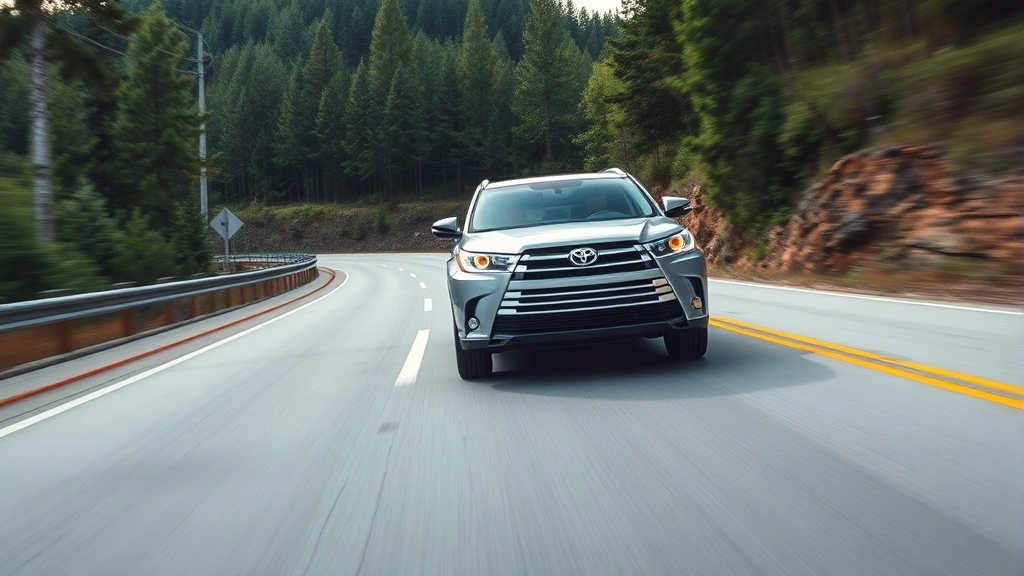
Toyota Highlander Gas Mileage: Owner Insights and Sustainability Impact
The Toyota Highlander has long been a popular choice for families seeking a reliable three-row SUV that balances performance with fuel efficiency. Understanding the real-world Toyota Highlander gas mileage from actual owners provides valuable insights into what you can expect and how this vehicle fits into your sustainability goals. This comprehensive guide explores owner experiences, factors affecting fuel consumption, and practical strategies to maximize efficiency in this midsize SUV.
As consumers become increasingly conscious of their environmental impact, vehicle selection plays a crucial role in reducing carbon footprints. The Highlander’s fuel economy performance directly influences your driving costs and emissions over time. By examining owner data and expert recommendations, you’ll gain a clearer picture of whether this vehicle aligns with your eco-conscious lifestyle and budget constraints.
Real-World MPG Reported by Owners
Owner testimonials reveal that Toyota Highlander gas mileage varies significantly based on driving conditions and individual habits. Most owners report achieving between 19-24 miles per gallon in combined driving, though highway-focused drivers often see numbers closer to 26-28 MPG. City driving typically yields lower figures, ranging from 18-21 MPG due to increased idling and acceleration.
The EPA estimates for recent Highlander models list approximately 21 MPG combined for standard gasoline engines, yet many owners report exceeding these figures with careful driving techniques. One consistent theme among owner forums is that real-world performance depends heavily on transmission type, driving patterns, and vehicle maintenance. Automatic transmission models show more variation than their predecessors, with some owners achieving impressive results through hypermiling techniques.
Owners frequently note that their first tank often shows lower mileage until the vehicle reaches optimal operating temperature and they become familiar with the transmission’s behavior. After breaking in the engine, many report improvements of 1-3 MPG. This initial learning curve is important to consider when evaluating whether the Highlander meets your fuel economy expectations.
Cold weather driving consistently reduces fuel economy across all owner reports, with winter months typically showing 2-4 MPG decreases compared to summer driving. This seasonal variation is worth planning for if you live in climates with harsh winters. Additionally, owners towing trailers report significant mileage reductions, dropping to 15-18 MPG depending on load weight and aerodynamic drag.

Factors Affecting Fuel Efficiency
Several controllable and uncontrollable factors influence how many miles your Highlander will travel on a gallon of fuel. Understanding these variables empowers you to make informed decisions about your driving habits and vehicle maintenance. The most impactful factors include driving behavior, vehicle load, maintenance condition, and environmental conditions.
Driving Habits and Behavior: Aggressive acceleration and rapid deceleration consume significantly more fuel than smooth, gradual driving patterns. Owners who maintain consistent speeds and avoid sudden braking report fuel economy improvements of 5-10%. Highway driving at moderate speeds (55-65 MPH) yields better efficiency than city driving or highway speeds exceeding 70 MPH, where wind resistance dramatically increases fuel consumption.
Vehicle Load and Weight: The Highlander’s spacious interior tempts owners to carry unnecessary cargo. Each 100 pounds of additional weight reduces fuel economy by approximately 1-2%. Removing roof racks when not in use and avoiding carrying heavy items unnecessarily can improve your MPG noticeably. This principle extends to keeping your fuel tank only partially full, though the savings are minimal compared to the convenience trade-off.
Tire Pressure and Condition: Underinflated tires create rolling resistance that forces the engine to work harder. Maintaining proper tire pressure according to manufacturer specifications improves fuel economy by 3-5%. Additionally, using low-rolling-resistance tires designed for fuel efficiency can provide modest improvements. Many owners report that regular tire rotation and alignment maintenance contribute to better mileage consistency.
Engine Maintenance: A well-maintained engine operates more efficiently. Regular oil changes, air filter replacements, and spark plug maintenance ensure optimal combustion efficiency. Owners who follow the recommended maintenance schedule consistently report better fuel economy than those who neglect routine service. Using the manufacturer-recommended oil viscosity grade is particularly important, as using thicker oil than specified increases internal friction.
Environmental Conditions: Temperature, altitude, and weather patterns all influence fuel consumption. Cold engines require more fuel to reach operating efficiency. Headwinds increase aerodynamic drag, reducing highway fuel economy. High altitudes with thinner air may require richer fuel mixtures in non-fuel-injected vehicles, though modern Highlanders adjust automatically. Humidity and barometric pressure also play minor roles in fuel economy variations.
Generation-by-Generation Fuel Economy Comparison
The Highlander’s fuel efficiency has evolved across its four generations, reflecting improvements in engine technology, aerodynamics, and transmission systems. Understanding these generational differences helps you make informed decisions if considering different model years.
First Generation (2001-2007): Early Highlanders achieved approximately 18-21 MPG combined, using V6 engines without advanced fuel-saving technologies. These vehicles were heavier and less aerodynamic than modern counterparts. Owners often report that these models are less efficient than contemporary sedans, though they valued the three-row seating and all-wheel-drive capability.
Second Generation (2008-2013): Toyota introduced refinements that improved efficiency to 19-23 MPG combined. Engine displacement remained similar, but improved combustion technology and transmission optimization yielded measurable gains. The 2008-2010 models showed slightly lower efficiency than 2011-2013 models, reflecting mid-cycle updates.
Third Generation (2014-2019): This generation marked significant efficiency improvements, with owners reporting 21-24 MPG combined. Lighter materials, improved aerodynamics, and advanced transmission systems contributed to these gains. The introduction of the hybrid option in 2015 provided owners with an alternative for even better fuel economy, achieving 28-31 MPG combined.
Fourth Generation (2020-Present): The latest Highlander models achieve 21-24 MPG for standard gasoline engines and 34-35 MPG for hybrid models. Enhanced engine efficiency, improved transmission response, and refined aerodynamics push efficiency further. Some owners report even better numbers with careful driving, though the EPA estimates remain conservative.
Practical Tips to Optimize Your Highlander’s Fuel Economy
Beyond basic maintenance, several actionable strategies help maximize your Toyota Highlander gas mileage. These owner-tested techniques require minimal effort while delivering noticeable improvements.
Master Hypermiling Techniques Safely: Anticipate traffic flow and coast gradually to red lights rather than braking hard. Accelerate smoothly and maintain steady speeds. Avoid jackrabbit starts and unnecessary idling. These techniques, when practiced safely without compromising vehicle control, can improve fuel economy by 5-15%. However, never sacrifice safety for fuel savings.
Optimize Route Planning: Combine errands into single trips, avoiding multiple cold starts. Plan routes to minimize traffic congestion and reduce time spent idling. Using GPS navigation to avoid congested areas and find efficient routes pays dividends over time. Many owners report that reducing city driving by consolidating trips yields impressive cumulative savings.
Monitor Tire Pressure Regularly: Check tire pressure monthly and before long trips. Underinflated tires are a common culprit for poor fuel economy. Modern Highlanders include tire pressure monitoring systems, but manually verifying pressure ensures accuracy. Inflate to the manufacturer’s recommended PSI found on the driver’s door jamb, not the maximum pressure listed on the tire itself.
Reduce Aerodynamic Drag: Remove roof racks and cargo carriers when not actively using them. Close windows at highway speeds and use air conditioning sparingly. While air conditioning increases fuel consumption by 3-5%, modern systems are efficient, and safety should never be compromised. Highway driving with windows down creates more drag than using air conditioning, so plan accordingly.
Follow Maintenance Schedules Religiously: Adhere to Toyota’s recommended maintenance intervals. Replace air filters when needed, use correct oil viscosity, and maintain proper transmission fluid levels. Regular tune-ups ensure your engine operates at peak efficiency. Many owners find that professional maintenance costs are offset by improved fuel economy and reduced repairs.
Consider Fuel Quality: Using Top Tier gasoline from major brands may improve fuel economy slightly by keeping fuel injectors clean. While premium gasoline isn’t required for Highlanders, using quality fuel prevents deposit buildup that reduces efficiency over time. This long-term investment often pays dividends through better mileage consistency.
Hybrid vs. Gas-Only Models: The Efficiency Choice
The availability of hybrid technology provides Highlander buyers with a compelling option for reducing fuel consumption and emissions. Understanding the differences between hybrid and standard gas models helps you align your vehicle choice with sustainability goals.
Fuel Economy Comparison: Highlander Hybrid models achieve 34-35 MPG combined, substantially better than the 21-24 MPG of standard gasoline engines. This represents approximately 40-60% improvement in fuel efficiency. Over the vehicle’s lifetime, the fuel savings can be substantial, though the hybrid model typically costs $5,000-7,000 more upfront.
Real-World Hybrid Performance: Hybrid owners report that actual efficiency often matches or exceeds EPA estimates, particularly in city driving where the electric motor provides the most benefit. Highway driving shows more modest advantages over gas-only models, as the hybrid system’s efficiency gains are primarily in stop-and-go situations. Some owners achieve 36-38 MPG in combined driving through careful driving habits.
Cost-Benefit Analysis: The higher purchase price of hybrid models breaks even over 5-7 years of typical driving, depending on fuel prices and driving patterns. High-mileage drivers benefit more significantly from hybrid ownership. Additionally, many regions offer tax incentives, carpool lane access, or reduced registration fees for hybrid vehicles, further improving the financial case.
Environmental Impact: Hybrid models produce approximately 30-40% fewer emissions than gasoline-only counterparts, contributing meaningfully to reducing your environmental footprint. Over a vehicle’s 12-15 year lifespan, this translates to thousands of pounds of CO2 avoided. For environmentally conscious buyers, the hybrid option aligns values with practical performance.
Reliability and Maintenance: Toyota’s hybrid systems have proven remarkably reliable, with many owners reporting excellent long-term durability. Hybrid batteries typically last 8-10 years or longer, with most covered by comprehensive warranties. Brake maintenance is reduced due to regenerative braking, offsetting some maintenance costs. Owners generally report that hybrid reliability matches or exceeds traditional gasoline models.
Environmental Impact and Sustainability Considerations
Choosing a vehicle involves balancing practical needs with environmental responsibility. The Highlander’s fuel economy directly influences your carbon footprint and contribution to climate change mitigation. Understanding these environmental implications helps you make decisions aligned with sustainability principles.
Carbon Emissions from Fuel Consumption: A Highlander achieving 22 MPG combined emits approximately 8.8 metric tons of CO2 annually with typical driving of 12,000 miles per year. Improving fuel economy to 25 MPG reduces this to 7.9 metric tons, preventing 0.9 metric tons of emissions yearly. Over a 12-year ownership period, this represents nearly 11 metric tons of CO2 avoided—equivalent to planting approximately 200 trees.
Lifecycle Environmental Assessment: While fuel consumption dominates a vehicle’s environmental impact, manufacturing and end-of-life recycling also matter. The Highlander’s durability and reliability mean many vehicles remain in service 15+ years, spreading manufacturing impacts across longer periods. Toyota’s commitment to green technology innovations reflects industry-wide progress toward sustainability.
Comparative Environmental Analysis: Compared to other three-row SUVs, the Highlander ranks among the more efficient options. Its fuel economy exceeds larger trucks and SUVs while providing similar cargo capacity and seating. However, smaller crossovers and sedans produce lower emissions. If environmental impact is your primary concern, considering vehicle right-sizing—choosing the smallest vehicle meeting your actual needs—provides the greatest benefit.
Sustainable Ownership Practices: Beyond fuel economy, sustainable vehicle ownership includes proper maintenance, responsible driving, and eventual recycling. Using sustainable energy solutions like renewable electricity for potential future electric vehicle charging represents the next evolution. Currently, maximizing your Highlander’s efficiency through proper maintenance and mindful driving represents the most practical sustainability action.
Supporting Green Transportation Infrastructure: Fuel-efficient vehicle ownership supports market demand for efficiency improvements and alternative technologies. By choosing efficient vehicles and providing feedback through owner reviews, you influence manufacturer priorities toward sustainability. This collective consumer action drives industry-wide progress toward lower-emission transportation solutions.
Frequently Asked Questions
What is the average Toyota Highlander gas mileage across all model years?
The average Toyota Highlander gas mileage ranges from 19-24 MPG combined for standard gasoline engines, depending on the generation and driving conditions. Hybrid models average 34-35 MPG. Most owners achieve 21-23 MPG in real-world combined driving, slightly above EPA estimates for many model years.
Can I improve my Highlander’s fuel economy significantly?
Yes, implementing proper maintenance, optimizing driving habits, and reducing vehicle load can improve fuel economy by 5-15%. Regular tire pressure checks, smooth acceleration, consistent highway speeds, and following maintenance schedules yield the most substantial improvements. However, fundamental fuel economy is limited by engine design and vehicle weight.
Is the Highlander hybrid worth the extra cost?
For many owners, yes. The hybrid’s 40-60% efficiency improvement typically breaks even financially after 5-7 years of driving. High-mileage drivers, those in high fuel-cost regions, and environmentally conscious buyers benefit most. Additionally, potential tax incentives and carpool lane access improve the financial case in many areas.
How does cold weather affect Highlander fuel economy?
Cold weather typically reduces fuel economy by 2-4 MPG as engines require more fuel for cold starts and warm-up periods. This effect diminishes after the engine reaches operating temperature. Winter tire selection also influences efficiency, as winter tires have higher rolling resistance than all-season tires.
What maintenance is most important for fuel economy?
Regular oil changes using the manufacturer-specified viscosity, maintaining proper tire pressure, replacing air filters on schedule, and keeping the engine properly tuned are most critical. These maintenance items ensure optimal combustion efficiency and minimize internal friction. Neglecting any of these directly reduces fuel economy.
Do newer Highlanders get better gas mileage than older models?
Yes, newer Highlanders are more efficient than older generations. Recent models (2020+) achieve 21-24 MPG for gasoline models and 34-35 MPG for hybrids, compared to 18-21 MPG for early 2000s models. Engine technology, transmission improvements, and aerodynamic refinements contribute to these gains.
How does driving style most impact fuel economy?
Smooth acceleration and deceleration, maintaining consistent speeds, and anticipating traffic flow represent the highest-impact driving behaviors. Aggressive driving can reduce fuel economy by 10-15% compared to calm, steady driving. Highway speeds above 70 MPH significantly increase fuel consumption due to wind resistance.
Are there differences in fuel economy between two-wheel and all-wheel drive?
All-wheel-drive Highlanders typically achieve 1-2 MPG lower fuel economy than two-wheel-drive models due to increased weight and drivetrain friction. However, this difference is minimal compared to driving style and maintenance effects. The safety and capability benefits of all-wheel-drive often outweigh the modest fuel economy trade-off.


