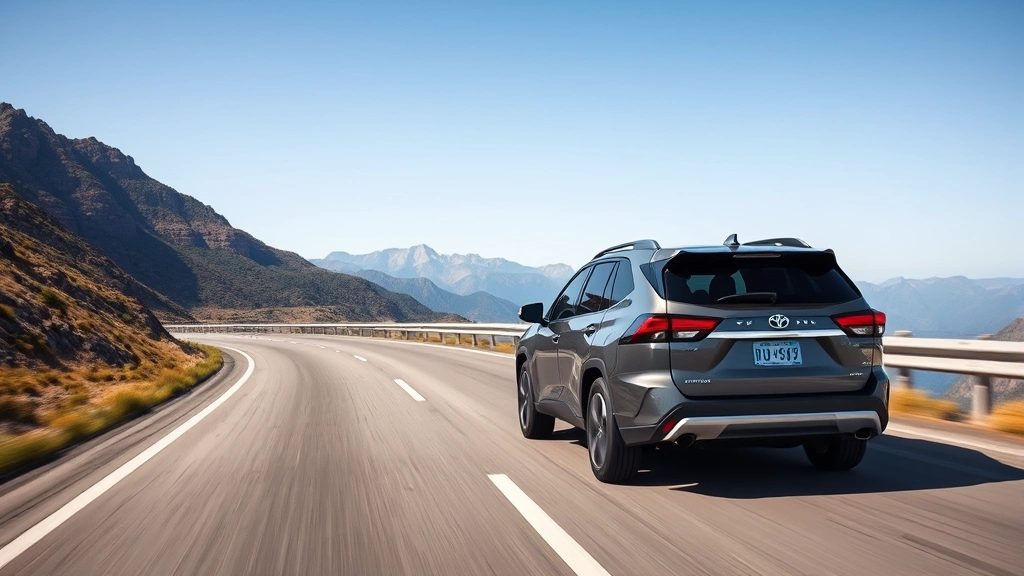
Toyota Sequoia Gas Mileage: Expert Analysis and Sustainability Insights
The Toyota Sequoia stands as one of the most capable full-size SUVs on the market, but its fuel efficiency remains a critical consideration for environmentally conscious drivers. Understanding the real-world Toyota Sequoia gas mileage performance helps buyers make informed decisions that balance utility, performance, and environmental impact. This comprehensive analysis examines fuel economy across model years, driving conditions, and practical optimization strategies that can meaningfully improve efficiency.
As consumers increasingly prioritize sustainability, the relationship between vehicle choice and carbon footprint becomes essential. While the Sequoia isn’t the most fuel-efficient option available, learning how to maximize its efficiency and understanding its environmental implications empowers drivers to make responsible choices. Whether you’re considering purchasing a Sequoia or already own one, this guide provides actionable insights for reducing fuel consumption and exploring alternatives to traditional gas-powered vehicles.
Understanding Toyota Sequoia Fuel Economy Ratings
The Toyota Sequoia’s fuel economy varies significantly based on model year, engine configuration, and drivetrain selection. Modern Sequoia models equipped with the latest V8 engine technology typically achieve approximately 16-18 miles per gallon in combined driving, with highway performance reaching 20-22 MPG and city driving yielding 15-16 MPG. These figures place the Sequoia in the mid-range for full-size SUVs, reflecting the challenge of balancing a 5,700+ pound vehicle with powerful performance capabilities.
The EPA’s fuel economy testing methodology provides standardized measurements, but real-world results depend heavily on individual driving habits and vehicle configuration. Two-wheel drive models generally outperform their four-wheel drive counterparts by approximately 1-2 MPG due to reduced drivetrain friction and weight distribution. Understanding these baseline ratings establishes realistic expectations and helps identify where optimization efforts can yield the most significant improvements.
Toyota has progressively enhanced the Sequoia’s efficiency through technological innovations including improved transmission tuning, aerodynamic refinements, and engine management systems. The transition from older eight-speed to newer ten-speed transmissions demonstrates the manufacturer’s commitment to maximizing efficiency without sacrificing performance. These engineering advancements represent incremental progress within the constraints of the full-size SUV category.
Model Year Comparison and Performance Trends
Examining fuel economy trends across Toyota Sequoia model years reveals consistent improvement in recent generations. The 2023-2024 Sequoia models represent the newest generation with significant technological upgrades, achieving slightly better efficiency than 2015-2022 models. Older Sequoias from the 2000s and early 2010s typically returned 15-17 MPG combined, making newer models marginally more efficient despite increased size and weight.
The 2023 Sequoia redesign introduced a hybrid option for certain trims, offering a meaningful efficiency improvement opportunity. Hybrid variants achieve approximately 23-25 MPG combined, representing a 30-40% improvement over conventional gas engines. This advancement aligns with broader industry trends toward electrification and demonstrates Toyota’s leadership in hybrid technology across its SUV lineup.
Historical data shows that 2018-2020 Sequoia models occupy a middle ground, achieving 16-17 MPG combined with well-maintained vehicles. The progression illustrates how continuous engineering refinement and transmission technology advances contribute to measurable efficiency gains. Prospective buyers should evaluate their specific model year’s fuel economy ratings and consider whether hybrid options align with their sustainability goals and budget constraints.
Understanding these trends helps contextualize the Sequoia within Toyota’s broader product strategy. The manufacturer balances consumer demand for large, capable vehicles with environmental responsibility through incremental improvements and alternative powertrain options. This approach reflects the reality that many buyers require the Sequoia’s capabilities, and providing more efficient options within that category serves important sustainability objectives.

Real-World Driving Conditions Impact
Actual fuel economy experienced by Sequoia owners frequently differs from EPA ratings due to driving conditions, habits, and vehicle configuration. Highway driving typically yields the best efficiency, with many drivers reporting 20-22 MPG on long interstate trips. Conversely, city driving with frequent acceleration, braking, and idling reduces efficiency to 14-16 MPG. Towing, the Sequoia’s primary use case for many owners, substantially impacts fuel consumption, reducing efficiency by 25-40% depending on trailer weight and aerodynamics.
Mountainous terrain, extreme temperatures, and high-altitude driving all negatively affect fuel economy. Cold weather particularly impacts efficiency as engines require longer warm-up periods and fuel becomes denser. Winter driving can reduce gas mileage by 10-20% compared to temperate conditions. Understanding these variables helps drivers develop realistic expectations and identify opportunities to optimize efficiency through route planning and timing decisions.
Traffic conditions significantly influence fuel consumption patterns. Stop-and-go urban driving with frequent acceleration demands generates poor efficiency, while consistent highway speeds optimize engine performance. Aggressive driving behaviors including rapid acceleration, excessive braking, and speeding can reduce fuel economy by 15-30%. Conservative driving techniques represent one of the most accessible and immediate ways to improve Sequoia efficiency without mechanical modifications.
The Sequoia’s substantial weight and aerodynamic profile create inherent efficiency challenges compared to smaller vehicles. Roof racks, cargo carriers, and other external accessories increase drag and reduce mileage. Removing unnecessary weight and streamlining the vehicle’s profile provides measurable efficiency improvements. These practical considerations help drivers understand how their specific usage patterns and vehicle configuration affect real-world performance.
Optimization Strategies for Better Mileage
Drivers seeking to improve Toyota Sequoia gas mileage can implement numerous strategies ranging from behavioral modifications to maintenance practices. Proper tire inflation represents one of the simplest and most effective improvements, as underinflated tires increase rolling resistance and reduce efficiency by 3-5%. Maintaining manufacturer-recommended tire pressure and using low-rolling-resistance tires can provide meaningful efficiency gains without compromising safety or performance.
Regular maintenance directly impacts fuel economy performance. Clean air filters, properly functioning oxygen sensors, and optimized fuel injection systems all contribute to efficient combustion. Synthetic motor oil reduces engine friction and can improve efficiency by 1-2%. Maintaining proper engine tune-ups and addressing diagnostic trouble codes promptly prevents efficiency-robbing malfunctions. These maintenance fundamentals discussed in our sustainability blog apply universally to all vehicles seeking optimal performance.
Driving technique modifications offer immediate results without any mechanical investment. Anticipating traffic flow, maintaining steady speeds, and minimizing aggressive acceleration reduce fuel consumption substantially. Reducing idle time, combining trips to minimize cold starts, and planning efficient routes all contribute to better overall efficiency. These behavioral changes align with strategies for reducing your environmental footprint while improving fuel economy simultaneously.
Technology-based optimization includes utilizing cruise control on highways to maintain consistent speeds, leveraging navigation systems to identify efficient routes, and monitoring real-time fuel economy displays to adjust driving behavior. Some aftermarket systems provide enhanced engine management tuning that can improve efficiency by 5-10%, though these modifications require careful selection to ensure reliability and warranty compliance.
For drivers considering vehicle upgrades, transitioning to the hybrid variant represents the most significant efficiency improvement available. The approximately 40% fuel consumption reduction justifies the premium cost for many owners, particularly those with high annual mileage. This aligns with broader sustainable energy solutions that reduce dependence on fossil fuels while maintaining vehicle capability.

Environmental Considerations and Carbon Footprint
The Toyota Sequoia’s environmental impact extends beyond fuel economy to encompass lifecycle emissions, manufacturing processes, and end-of-life recycling considerations. A Sequoia achieving 17 MPG combined generates approximately 11-12 metric tons of CO2 emissions annually based on typical 12,000-mile yearly driving. This carbon footprint exceeds many smaller vehicles by 50-100%, representing a significant environmental consideration for sustainability-conscious buyers.
Manufacturing the Sequoia’s substantial frame, engine, and components generates considerable embodied carbon. The vehicle’s lifespan and durability partially offset this impact, as Toyota Sequoias regularly exceed 200,000 miles with proper maintenance. This longevity reduces the per-mile environmental cost compared to vehicles requiring replacement every 100,000-150,000 miles. Understanding this lifecycle perspective provides more complete environmental accounting than focusing solely on operational emissions.
The choice between conventional and hybrid powertrains significantly impacts total environmental footprint. While hybrid batteries require mining and processing of rare earth materials, the operational emissions reductions over the vehicle’s lifetime typically offset manufacturing impacts by year three or four. For drivers committed to minimizing environmental impact, the hybrid option represents the most responsible Sequoia choice available.
Buyers with strong sustainability commitments should evaluate whether the Sequoia’s size and capability justify its environmental cost. Downsizing to smaller vehicles, exploring advantages of electric vehicles, or considering alternative transportation modes all represent legitimate considerations. However, for those requiring the Sequoia’s capabilities, optimizing its efficiency and selecting hybrid variants demonstrates responsible ownership aligned with environmental values.
The transportation sector represents approximately 27% of total U.S. greenhouse gas emissions according to the EPA’s transportation air quality resources. Individual vehicle choices, multiplied across millions of drivers, meaningfully impact climate trajectories. Choosing more efficient vehicles within preferred categories represents one concrete way consumers contribute to emissions reduction goals.
Maintenance Tips to Preserve Fuel Efficiency
Consistent maintenance practices directly preserve and enhance Toyota Sequoia fuel economy performance. Regular oil changes using the manufacturer-recommended grade prevent engine friction that wastes fuel. Engine oil degrades over time, reducing its lubricating properties and increasing parasitic drag. Following Toyota’s maintenance schedule ensures optimal engine performance and efficiency throughout the vehicle’s lifespan.
Wheel alignment significantly impacts fuel economy, as misaligned wheels increase rolling resistance and require more engine power to overcome. Annual alignment checks, particularly after hitting potholes or curbs, maintain optimal efficiency. Brake system maintenance prevents dragging brakes that silently consume fuel without driver awareness. These preventive measures cost far less than the fuel savings they generate.
Air filter replacement maintains optimal engine breathing and combustion efficiency. Clogged filters force engines to work harder, reducing fuel economy by 5-10%. Cabin air filters, while not directly affecting fuel consumption, improve HVAC efficiency and reduce engine load. Regular filter inspection and replacement represents simple preventive maintenance that supports overall vehicle efficiency.
Transmission fluid maintenance deserves particular attention in the Sequoia, as the ten-speed transmission represents a complex system requiring proper fluid condition. Degraded transmission fluid reduces shift efficiency and increases parasitic losses. Following manufacturer specifications for fluid change intervals preserves transmission performance and fuel economy. This critical maintenance often receives insufficient attention despite its significant impact.
Battery system maintenance ensures that alternators and electrical systems function optimally. Weak batteries force engines to work harder during starting, while failing alternators reduce charging efficiency. Clean battery terminals and properly functioning charging systems prevent efficiency losses that drivers often attribute to other causes. These electrical system considerations impact overall vehicle efficiency in ways that aren’t always obvious.
Comparing Sequoia to Competitors
The full-size SUV category includes several competitors with varying fuel economy profiles. The Chevrolet Tahoe achieves similar 16-17 MPG combined ratings, making it a direct competitor in efficiency terms. The GMC Yukon XL offers comparable performance with slight efficiency variations. The Ford Expedition achieves marginally better efficiency at 17-18 MPG combined, reflecting its slightly more aerodynamic design. The Nissan Armada matches Sequoia efficiency at approximately 16-17 MPG combined.
Among full-size luxury SUVs, the Lexus LX (Toyota’s luxury division offering) provides similar efficiency to the Sequoia with enhanced appointments. The Range Rover and BMW X7 offer comparable efficiency, though at substantially higher price points. The Mercedes-Benz GLS achieves similar 16-17 MPG combined ratings. Within this competitive set, the Sequoia represents a reasonable efficiency choice for drivers requiring full-size SUV capability.
Midsize SUVs including the Toyota 4Runner, Jeep Grand Cherokee, and Ford Explorer achieve moderately better efficiency at 18-22 MPG combined, though with reduced towing capacity and cargo space. Three-row crossovers like the Toyota Highlander and Honda Pilot achieve 22-28 MPG combined, representing substantially better efficiency for families not requiring maximum towing capacity. These comparisons help buyers evaluate whether the Sequoia’s size justifies its efficiency trade-offs.
The hybrid variant comparison proves particularly revealing. The 2023 Sequoia Hybrid achieving 24-25 MPG combined outperforms most competitors in its category. Only the Lexus RX450h+ hybrid achieves comparable efficiency among luxury alternatives. This positioning demonstrates Toyota’s technological leadership in hybrid SUV applications and validates the hybrid option for efficiency-focused buyers.
For buyers prioritizing fuel economy above all other factors, smaller vehicles outside the full-size SUV category offer superior efficiency. However, for those requiring the Sequoia’s specific capabilities—maximum towing capacity, three-row seating, body-on-frame construction, and off-road capability—the Sequoia represents a reasonable choice within its competitive set. Understanding these trade-offs enables informed purchasing decisions aligned with individual priorities and values.
Frequently Asked Questions
What is the average gas mileage for a Toyota Sequoia?
The average Toyota Sequoia achieves 16-18 MPG combined across recent model years, with highway driving yielding 20-22 MPG and city driving producing 15-16 MPG. The 2023+ hybrid variant achieves approximately 23-25 MPG combined. These figures represent EPA combined ratings; individual results vary based on driving conditions, habits, and vehicle configuration.
Does the hybrid Sequoia significantly improve fuel economy?
Yes, the hybrid Sequoia improves fuel economy by approximately 30-40% compared to the conventional gas engine, achieving 23-25 MPG combined versus 16-18 MPG for the standard model. While the hybrid costs more upfront, the fuel savings accumulate substantially over the vehicle’s lifespan, particularly for drivers with high annual mileage.
How can I improve my Sequoia’s gas mileage?
Key strategies include maintaining proper tire pressure, regular maintenance including air filter replacement, driving conservatively, removing unnecessary weight, and utilizing cruise control on highways. These modifications can improve efficiency by 5-15% without mechanical changes. Upgrading to the hybrid variant provides the most substantial improvement.
What affects Sequoia fuel economy most significantly?
Driving habits, particularly aggressive acceleration and excessive speeding, most significantly impact fuel economy. Towing reduces efficiency by 25-40%. Tire pressure, vehicle weight, and maintenance condition also substantially influence efficiency. Understanding these factors empowers drivers to optimize their specific vehicle’s performance.
Is the Toyota Sequoia fuel-efficient for its size?
The Sequoia achieves reasonable efficiency within the full-size SUV category, performing comparably to competitors like the Tahoe and Yukon. However, full-size SUVs inherently consume more fuel than smaller vehicles. Buyers prioritizing maximum efficiency should consider midsize SUVs or hybrid options, while those requiring full-size capability find the Sequoia acceptable within its class.
How does towing impact Sequoia fuel economy?
Towing reduces fuel economy by 25-40% depending on trailer weight, aerodynamics, and driving conditions. A fully loaded trailer can reduce efficiency from 17 MPG to 10-12 MPG. Proper trailer maintenance, aerodynamic design, and conservative driving techniques minimize this impact when towing is necessary.
What maintenance improves fuel efficiency?
Regular oil changes, air filter replacement, tire pressure maintenance, wheel alignment, and transmission fluid changes all preserve fuel efficiency. Addressing diagnostic trouble codes promptly prevents efficiency-robbing malfunctions. These preventive measures cost far less than the fuel savings they generate over time.
Should I consider alternatives to the Sequoia for better fuel economy?
For buyers prioritizing fuel economy, the hybrid Sequoia represents the best option within the full-size SUV category. Downsizing to midsize SUVs or crossovers achieves 20-28 MPG combined. Those without specific full-size SUV requirements should evaluate whether the Sequoia’s capabilities justify its fuel consumption trade-offs.


