
Best Gas Mileage Trucks 2023: Rankings and Sustainability Insights
Finding a truck with excellent fuel efficiency has become increasingly important as gas prices fluctuate and environmental consciousness grows. In 2023, manufacturers have made significant strides in developing trucks that balance power and performance with impressive gas mileage. Whether you’re a contractor needing a reliable work vehicle or someone seeking to reduce their carbon footprint, understanding which trucks deliver the best fuel economy can save you thousands of dollars annually while contributing to environmental sustainability.
The truck market has evolved dramatically over the past decade. Modern engineering innovations, including advanced transmission systems, lighter materials, and hybrid technology, have revolutionized what’s possible in fuel efficiency. This comprehensive guide explores the top-performing trucks of 2023, examining their specifications, real-world performance data, and environmental implications. We’ll help you make an informed decision that aligns with both your practical needs and your commitment to sustainable transportation choices.
Top Fuel-Efficient Trucks 2023
The 2023 model year brought several standout performers in the fuel efficiency category. The Ford F-150 PowerBoost Hybrid leads the pack with an EPA-estimated 24 mpg combined, making it one of the most efficient full-size trucks available. This truck combines a 3.5-liter EcoBoost engine with electric motor assistance, delivering impressive torque while maintaining reasonable fuel consumption for its class.
The Chevrolet Silverado 1500 with 2.7L Turbo achieves approximately 23 mpg combined, offering excellent value and performance. Chevrolet’s turbo technology reduces engine displacement while maintaining power output, a strategy that significantly improves overall fuel economy. The GMC Sierra 1500 Denali shares similar engineering with comparable efficiency ratings, appealing to those seeking luxury features alongside environmental responsibility.
For those considering smaller trucks, the Honda Ridgeline continues its reputation for exceptional fuel economy, achieving around 21 mpg combined with its V6 engine. The Toyota Tacoma offers similar efficiency with legendary reliability, making it an excellent choice for long-term ownership. Both Japanese manufacturers prioritize durability and efficiency, reducing overall environmental impact through extended vehicle lifecycles.
The RAM 1500 with EcoDiesel deserves special mention for truck owners willing to consider diesel options. With 23 mpg highway capability, it represents an important alternative for those understanding fuel composition and its environmental implications. Diesel engines typically deliver superior highway mileage, though they may lag slightly in city driving conditions.

Hybrid Truck Technology Explained
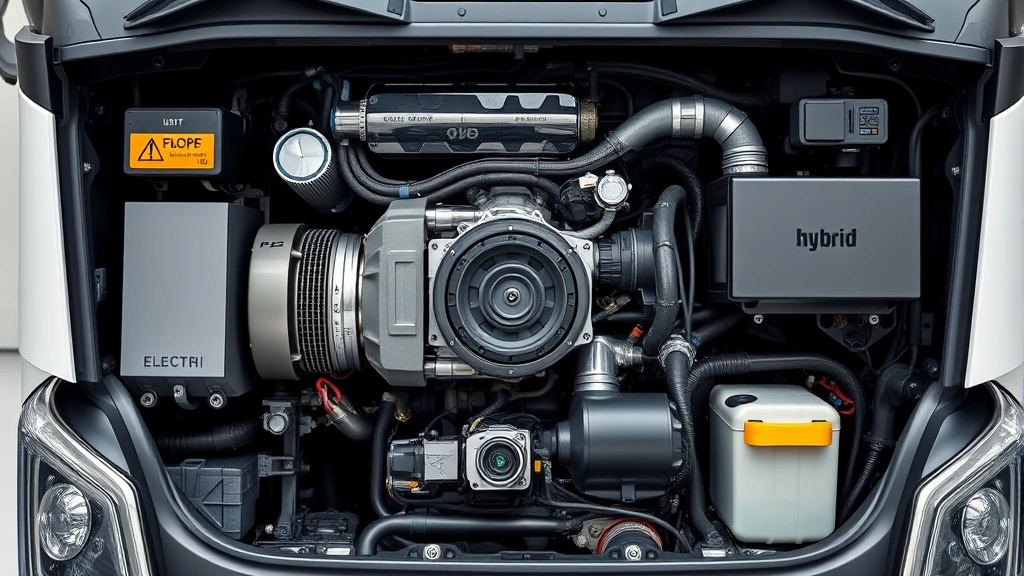
Hybrid technology represents one of the most significant advances in truck fuel efficiency. Unlike traditional engines that operate continuously, hybrid systems intelligently switch between gasoline and electric power based on driving conditions. During acceleration, both the engine and electric motor work together, providing sufficient power while the vehicle is most efficient. During deceleration and braking, the system captures kinetic energy and stores it in the battery, eliminating wasted energy.
The Ford F-150 PowerBoost system exemplifies modern hybrid engineering. Its 47-kilowatt-hour battery pack stores enough energy for short electric-only driving in parking lots or at low speeds, while the integrated motor generator assists during acceleration. This dual-power approach maintains the truck’s towing capacity (up to 14,000 pounds) while dramatically reducing fuel consumption compared to conventional gasoline engines.
Battery technology has improved exponentially, addressing earlier concerns about weight and durability. Modern truck batteries are engineered to withstand demanding work conditions, including towing and hauling. The systems require minimal maintenance beyond standard vehicle servicing, making them practical for professional and personal use. Learn more about sustainable energy solutions that extend beyond vehicles.
Environmental benefits of hybrid technology extend beyond fuel savings. Reduced fuel consumption directly correlates with lower greenhouse gas emissions. A truck achieving 24 mpg instead of 18 mpg produces approximately 25% fewer emissions over its lifetime. When multiplied across millions of vehicles, this represents substantial progress toward climate goals. Additionally, hybrid systems often feature regenerative braking, which reduces brake dust pollution—a frequently overlooked environmental concern in vehicle operation.
Diesel vs Gasoline Efficiency
The diesel versus gasoline debate remains relevant for truck buyers prioritizing fuel economy. Diesel engines operate at higher compression ratios than gasoline engines, extracting more energy from each fuel molecule. This fundamental engineering difference typically results in 20-30% better fuel economy on highway driving, where diesel engines excel. A diesel truck might achieve 25 mpg highway while a comparable gasoline model delivers 19 mpg.
However, diesel fuel contains approximately 10-15% more energy per gallon than gasoline, meaning the efficiency advantage is partly attributable to fuel composition rather than engine technology alone. When comparing true efficiency metrics, the gap narrows somewhat, though diesel still maintains advantages. The different types of gas available each present distinct environmental and economic considerations.
City driving presents a different picture. Diesel engines require higher temperatures to operate optimally, meaning they’re less efficient during frequent stop-and-go driving. In urban environments, gasoline or hybrid trucks often outperform diesel counterparts. The 2023 RAM 1500 EcoDiesel, for example, achieves 22 mpg city but 27 mpg highway—a significant difference that emphasizes understanding your primary driving patterns.
Environmental considerations extend beyond fuel consumption. Diesel engines historically produced higher nitrogen oxide emissions, contributing to air quality problems. Modern selective catalytic reduction systems have dramatically reduced these emissions, making contemporary diesel trucks much cleaner than predecessors. Particulate matter emissions have also decreased substantially through advanced filtration systems. For buyers committed to environmental responsibility, modern diesel trucks present legitimate alternatives, particularly for highway-heavy driving patterns.
Real-World MPG Performance
EPA estimates, while useful for comparisons, often differ from real-world driving results. The EPA testing protocol uses controlled conditions that may not reflect actual driving patterns. Most truck owners report fuel economy 10-15% lower than EPA highway estimates, and sometimes worse in city driving. Understanding this variance helps set realistic expectations and calculate true fuel costs.
The Ford F-150 PowerBoost Hybrid demonstrates this principle clearly. While EPA estimates 24 mpg combined, owners frequently report 20-22 mpg in mixed driving. However, this still represents remarkable efficiency for a full-size truck capable of towing 14,000 pounds. Aggressive acceleration, excessive idling, and highway speeds above 60 mph significantly reduce efficiency. Conversely, gentle acceleration, proper tire pressure, and moderate speeds can approach EPA estimates.
Payload and towing dramatically impact fuel economy. Every 100 pounds of cargo reduces efficiency by approximately 1-2%, while towing a loaded trailer might reduce mileage by 25-40% depending on aerodynamic design and weight. A truck achieving 24 mpg empty might deliver only 16-18 mpg while towing, a factor critical for contractors and those regularly transporting cargo.
Seasonal variations also affect performance. Winter driving typically reduces fuel economy by 10-20% due to cold engine operation, denser air, and increased rolling resistance from winter tires. Summer driving, with warm engines and low-rolling-resistance tires, maximizes efficiency. Climate-conscious buyers should account for seasonal variations when calculating annual fuel costs and environmental impact.
Cost Savings Over Time
Fuel efficiency directly translates to financial savings, particularly for truck owners covering significant annual mileage. Consider a contractor driving 20,000 miles annually. Choosing a truck achieving 22 mpg instead of 18 mpg saves approximately 380 gallons yearly. At average 2023 fuel prices around $3.50 per gallon, this represents $1,330 in annual savings—$6,650 over five years without accounting for potential price increases.
Hybrid trucks typically command a premium of $3,000-$5,000 over conventional counterparts. Using the above example, this premium is recovered in approximately 2.5-4 years through fuel savings alone, after which savings accumulate as pure profit. For fleet operators managing multiple vehicles, these savings multiply dramatically, making hybrid investments financially compelling beyond environmental considerations.
Maintenance costs also differ between fuel types and technologies. Diesel trucks often require more expensive oil changes and filters, while hybrid systems introduce electric components that may require specialized service. However, hybrid regenerative braking reduces brake wear significantly, potentially offsetting electrical system costs. Gasoline trucks typically present the lowest maintenance expenses, though modern engineering has made all systems reasonably affordable to maintain.
Resale value considerations matter for long-term ownership calculations. Hybrid trucks are increasingly popular, potentially commanding better resale prices as the used market recognizes fuel efficiency value. Diesel trucks maintain strong resale value due to their durability and loyal buyer base. Gasoline trucks, while potentially lower-priced used, may not appreciate as well. When factoring resale value alongside fuel savings, the financial case for efficient trucks strengthens considerably.
Environmental Impact Considerations
Selecting a fuel-efficient truck represents meaningful environmental action. Transportation accounts for approximately 27% of greenhouse gas emissions in the United States, according to EPA emissions data. Light-duty vehicles like trucks contribute substantially to this total. A truck achieving 24 mpg produces roughly 8.3 metric tons of CO2 annually (assuming 12,000 miles/year), while an 18 mpg truck produces 11.1 metric tons—a 25% difference that scales to millions of tons nationally.
Beyond carbon emissions, fuel consumption affects multiple environmental systems. Oil extraction, refining, and transportation all carry environmental costs. Reducing fuel consumption decreases pressure on these systems, protecting ecosystems from drilling impacts and reducing refining pollution. Fuel spills from transportation accidents, while rare, cause devastating environmental damage. Lower fuel consumption inherently reduces spill risk through less total fuel movement.
Consider exploring advantages of electric vehicles as complementary transportation solutions. While trucks remain necessary for many applications, electric vehicles excel for daily commuting, potentially reducing overall household fuel consumption dramatically when combined with an efficient truck for specialty purposes.
Air quality improvements from efficient trucks benefit public health directly. Reduced fuel consumption means fewer tailpipe emissions contributing to smog, particulate matter, and nitrogen oxides. These pollutants cause respiratory diseases, cardiovascular problems, and premature deaths, particularly in communities near highways and ports. By selecting efficient trucks, buyers contribute to measurable public health improvements in their communities.
The manufacturing process itself carries environmental weight. Producing a vehicle generates significant emissions through steel production, aluminum processing, battery manufacturing (for hybrids), and transportation. Extending vehicle lifespan through durability and proper maintenance amortizes these manufacturing impacts. Japanese trucks (Honda, Toyota) maintain reputations for longevity, potentially justifying their environmental impact through decades of reliable service.
Maintenance Tips for Better Mileage
Optimizing fuel efficiency extends beyond vehicle selection to daily operation and maintenance practices. Regular oil changes using manufacturer-recommended viscosity grades reduce engine friction, improving efficiency. Synthetic oils provide superior protection and efficiency benefits, particularly in hybrid systems where precise engine operation maximizes electric motor assistance effectiveness.
Tire maintenance dramatically impacts fuel economy. Underinflated tires increase rolling resistance, reducing efficiency by 3-5% for every 10 PSI below recommended pressure. Checking tire pressure monthly and maintaining manufacturer specifications costs nothing but delivers measurable efficiency gains. Selecting low-rolling-resistance tires during replacement further optimizes mileage, with premium eco-focused tires improving efficiency by 3-5%.
Engine air filters restrict airflow when clogged, forcing engines to work harder and consume more fuel. Replacing filters at manufacturer-recommended intervals (typically 15,000-30,000 miles) maintains optimal engine performance. Similarly, fuel filters prevent contaminants from affecting fuel injectors, ensuring precise fuel delivery and maximum combustion efficiency.
Wheel alignment affects tire wear patterns and rolling resistance. Misaligned wheels drag slightly, reducing efficiency and accelerating tire wear. Professional alignment checks during regular maintenance prevent this efficiency loss while extending tire lifespan, multiplying environmental benefits through reduced tire waste.
Driving behavior represents the most significant controllable factor in fuel economy. Gentle acceleration, maintaining moderate speeds (55-65 mph optimizes efficiency), avoiding excessive idling, and planning routes to minimize mileage all dramatically improve results. Removing unnecessary cargo reduces weight, directly improving efficiency. These behavioral changes cost nothing while delivering immediate efficiency improvements, making them the highest-return sustainability investments available to truck owners.
For those exploring environmental sustainability examples, truck operation optimization represents a concrete, measurable way to reduce personal environmental impact. Every gallon saved represents tangible progress toward climate goals.
FAQ
What truck has the best gas mileage in 2023?
The Ford F-150 PowerBoost Hybrid leads with EPA-estimated 24 mpg combined, making it the most fuel-efficient full-size truck available. The Chevrolet Silverado 1500 with 2.7L Turbo achieves 23 mpg combined, offering excellent efficiency without hybrid complexity. For smaller trucks, the Honda Ridgeline delivers approximately 21 mpg combined with superior reliability.
Are diesel trucks more fuel-efficient than gasoline?
Diesel engines typically achieve 20-30% better highway fuel economy than comparable gasoline trucks due to higher compression ratios and fuel energy density. However, city driving favors gasoline or hybrid trucks. Real-world efficiency depends heavily on driving patterns, payload, and towing requirements. Modern diesel engines produce significantly fewer emissions than older models through advanced emissions control systems.
How much money can I save with a fuel-efficient truck?
Savings depend on annual mileage, fuel prices, and efficiency gains. A truck owner driving 20,000 miles annually and upgrading from 18 mpg to 22 mpg saves approximately $1,330 yearly at $3.50 per gallon fuel prices. Over five years, this totals $6,650 in fuel savings, often exceeding the premium cost of hybrid or turbocharged models.
Do hybrid trucks require special maintenance?
Hybrid trucks require standard maintenance similar to gasoline models, including oil changes, filter replacements, and tire maintenance. Electric systems are highly reliable with minimal maintenance needs. Regenerative braking reduces brake wear significantly. Most manufacturers warranty hybrid batteries for 8-10 years, providing peace of mind for long-term ownership.
Can I improve my truck’s fuel economy?
Yes, multiple strategies improve efficiency: maintain proper tire pressure, replace air and fuel filters on schedule, use recommended motor oil viscosity, drive gently without aggressive acceleration, maintain moderate highway speeds (55-65 mph), remove unnecessary cargo, and ensure wheel alignment. These changes can improve efficiency by 5-15% with minimal cost.
What’s the environmental impact of choosing an efficient truck?
A 24 mpg truck produces approximately 25% fewer emissions than an 18 mpg truck over its lifetime. Reducing fuel consumption by 25% annually prevents roughly 2.8 metric tons of CO2 emissions yearly. Across millions of vehicles, efficient truck adoption contributes meaningfully to climate change mitigation while improving air quality and public health in communities.
Are used efficient trucks good purchases?
Yes, purchasing used fuel-efficient trucks extends vehicle lifecycles, amortizing manufacturing environmental impacts. The used market increasingly recognizes fuel efficiency value, with hybrid and turbo models maintaining strong resale prices. A well-maintained used efficient truck delivers years of economical operation while reducing the environmental footprint of new vehicle manufacturing.


